

Daily Quizzes
Mock Tests
No tests attempted yet.
Select Category
JEE Advanced 2026 Choice Filling Closed - What Happens Next & What To Do If You Missed It
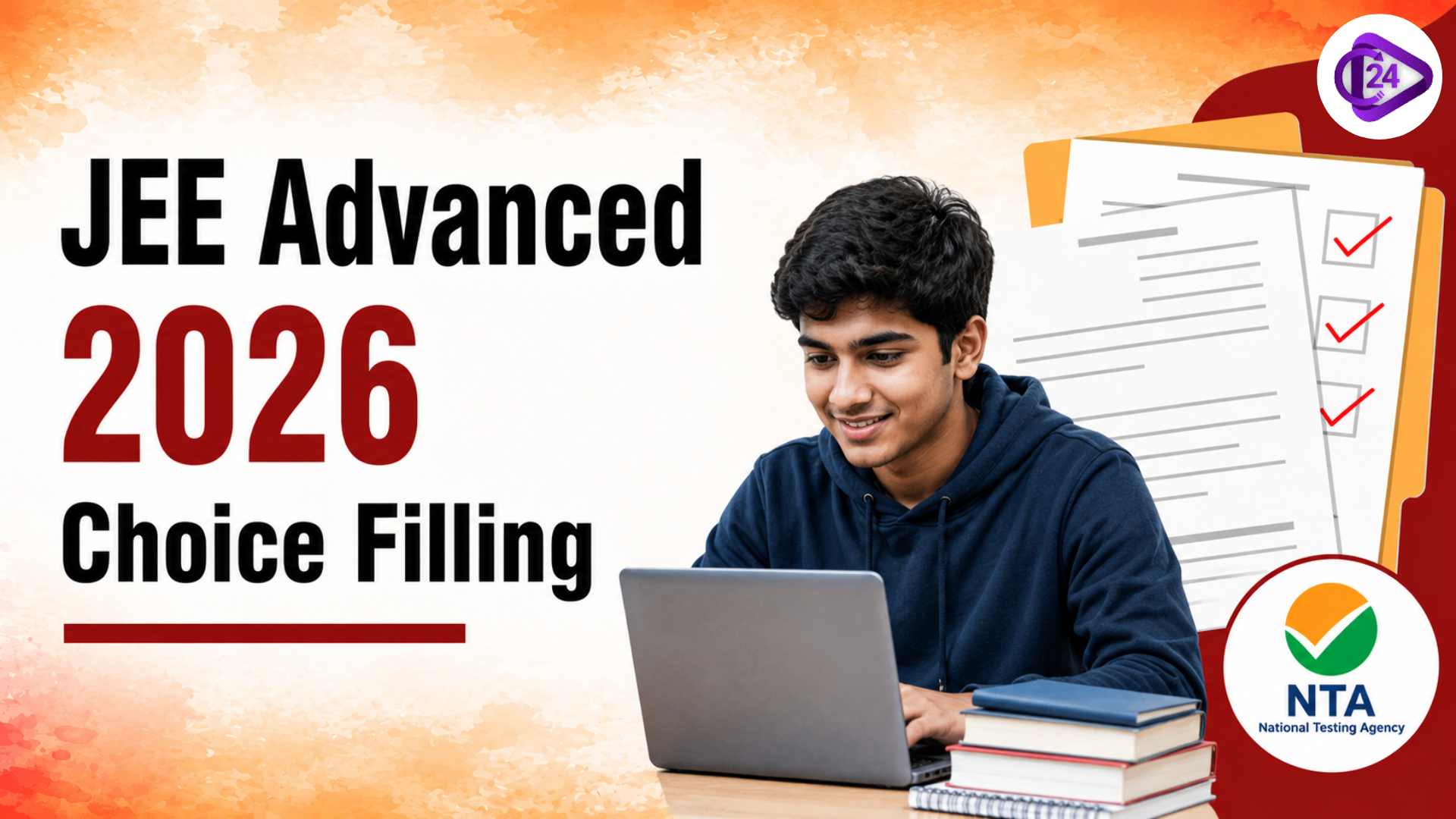
JEE Advanced 2026 Choice Filling closed on June 11 at 5 PM IST. Check Round 1 seat allotment date, next steps & options if you missed the JoSAA deadline.

Get in Touch with Class24 for All Your Needs!
JEE Advanced 2026 Choice Filling has officially closed on June 11, 2026 at 5:00 PM IST. Candidates who successfully locked their preferences on the JoSAA portal can now await the Round 1 Seat Allotment Result on June 13, 2026. Candidates who missed the JEE Advanced 2026 Choice Filling deadline still have alternatives, including NIT counselling, CSAB Special Round, and state-level admissions. Read the complete guide below.
Many candidates spend months preparing for JEE Advanced but fail to devote enough time to understanding the choice-filling process. As a result, they may miss opportunities to secure admission to their preferred IITs or branches. Therefore, understanding the JoSAA Choice Filling Process is just as important as preparing for the examination itself.
The purpose of the choice filling process is to allow candidates to arrange their preferred institute and program combinations in an order that reflects their actual interests. The seat allocation system then uses this preference list along with rank, category, and seat availability to determine the most suitable allotment.
JEE Advanced JoSAA Choice Filling 2026 - Current Status
| Event | Date | Status |
|---|---|---|
| JEE Advanced 2026 Choice Filling Started | June 3, 2026 | Completed |
| Mock Seat Allocation Round 1 | June 8, 2026 | Completed |
| Mock Seat Allocation Round 2 | June 10, 2026 | Completed |
| Choice Filling and Locking Deadline | June 11, 2026 at 5:00 PM IST | 🔴 Closed |
| Round 1 Seat Allotment Result | June 13, 2026 | Upcoming |
For Candidates Who Completed Choice Filling - What Happens Next?
If you successfully locked your choices before the deadline, the next phase of the JEE Advanced 2026 JoSAA Counselling process has now begun.
Round 1 Seat Allotment - June 13, 2026
The JoSAA Round 1 Seat Allotment Result will be declared on June 13, 2026. The system will evaluate your locked preference list along with your JEE Advanced 2026 rank, category, and available seats to determine your allotment.
How JoSAA Seat Allotment Works
- The system scans your locked preference list from top to bottom
- It allots the highest choice for which you are eligible based on your rank and category
- If your rank falls within the opening and closing rank of a choice, that seat is allotted to you
- The same locked list is used across all allocation rounds - no changes can be made
After Round 1 Result - Your Options
Once the Round 1 Seat Allotment result is declared, candidates will have three options:
| Option | What It Means |
|---|---|
| Freeze | Accept the allotted seat and withdraw from further rounds. |
| Float | Accept the current seat but remain in the queue for a higher preference in upcoming rounds. |
| Slide | Accept the current seat but remain in the queue for a better branch within the same institute. |
Important: Choosing Float or Slide does not guarantee a better allotment. It depends on seat availability in subsequent rounds.
Document Verification and Fee Payment
After accepting a seat, candidates must complete:
- Online document verification
- Seat acceptance fee payment within the specified deadline
Failing to pay the fee will result in the cancellation of the allotted seat.
JEE Advanced 2026 Choice Filling - Step-by-Step Process
Understanding the JoSAA Choice Filling Process is essential before creating your preference list.
Step 1: Login to the JoSAA Portal
Visit josaa.nic.in and log in using your JEE Advanced 2026 Roll Number and password.
Step 2: View Available Institutes and Programs
The portal displays all participating IITs along with available academic programs and their seat availability.
Step 3: Add Choices
Select institute-program combinations according to your preferences and add them to your list.
Step 4: Arrange Choices in Order of Preference
Arrange all choices from most preferred to least preferred. This ordering is critical — always put your dream choice at the top.
Step 5: Save Choices Regularly
Save your preference list frequently while making any changes to avoid data loss.
Step 6: Review Carefully
Before final submission, verify every institute name, branch name, and preference order.
Step 7: Lock Your Choices Before 5 PM Today (already passed)
Complete choice locking before the deadline. This is the final and most critical step.
Choice Filling vs Choice Locking in JoSAA 2026 - What's the Difference?
| Feature | Choice Filling | Choice Locking |
|---|---|---|
| What is it? | Searching and adding institute + branch combinations in your preferred order. | Final submission of your ordered preference list. |
| Purpose | Build and arrange your wishlist. | Confirm and freeze your final list. |
| Can you edit? | Yes, editable anytime before deadline. | No changes allowed after locking. |
| Deadline | June 11, 2026 at 5:00 PM IST. | June 11, 2026 at 5:00 PM IST. |
| Used in rounds? | No. | Yes - same locked list used across all 5 rounds. |
| Auto-action? | No. | Yes - system auto-locks if you forget. |
| Portal | josaa.nic.in | josaa.nic.in |
Note: Choice Filling always comes first. Locking is the final step. Both happen on the same portal - josaa.nic.in
JEE Advanced 2026 Choice Filling Missed - What Are Your Options?
If you were unable to complete the JoSAA Choice Filling process before the June 11 deadline, it is important to understand the situation clearly and explore all available alternatives.
Can Choice Filling Be Done After the Deadline?
No. The JoSAA portal does not allow any changes or new registrations after the official choice filling deadline. The system is completely closed for new submissions.
There is no provision for late registration or deadline extension under normal circumstances. Candidates should not rely on unofficial sources claiming otherwise.
Alternatives If You Missed JEE Advanced 2026 Choice Filling
Missing the JoSAA choice filling deadline does not mean the end of your engineering admission journey. Several strong alternatives are available.
1. JEE Main 2026 Counselling - JoSAA for NITs, IIITs, and GFTIs
If you qualified JEE Main 2026, you may still be eligible for admission to:
- NITs (National Institutes of Technology)
- IIITs (Indian Institutes of Information Technology)
- GFTIs (Government Funded Technical Institutes)
Check the JoSAA portal for NIT+ counselling schedules and eligibility criteria, as these processes may have separate or extended timelines
2. State-Level Engineering Counselling
Most states conduct their own engineering admission counselling processes. Based on your JEE Main score or state-level entrance exam score, you can apply to:
- State government engineering colleges
- Deemed universities accepting JEE Main scores
- Private universities with separate admission processes
3. CSAB Special Round (Central Seat Allocation Board)
After JoSAA rounds are completed, CSAB conducts special rounds for vacant seats in NITs, IIITs, and GFTIs. Candidates who missed JoSAA or were not allotted a seat can participate in CSAB Special Round. Watch for official announcements on csab.nic.in.
4. Private Universities and Deemed Universities
Several reputed private and deemed universities accept JEE Main and JEE Advanced scores for direct admission:
- BITS Pilani (BITSAT - separate exam)
- VIT University
- Manipal Institute of Technology
- SRM Institute of Science and Technology
- Thapar Institute of Engineering and Technology
These institutions have strong placement records and offer quality engineering education.
5. Prepare for JEE Advanced 2027
If your goal is specifically an IIT seat, you still have one more attempt at JEE Advanced if you have not exhausted your two attempts. Use this year to strengthen your preparation and aim for a stronger rank in JEE Advanced 2027.
What Candidates Who Completed Choice Filling Should Do Right Now
- Keep all original documents ready for verification
- Have scanned copies of required documents prepared
- Stay updated on the official JoSAA portal - josaa.nic.in
- Do not rely on unofficial sources for seat allotment results
- Decide in advance whether you will Freeze, Float, or Slide based on your allotted seat
Documents Typically Required for Verification
| Document | Purpose |
|---|---|
| JEE Advanced 2026 Scorecard | Rank verification |
| Class 10 Certificate | Date of birth proof |
| Class 12 Marksheet | Academic eligibility |
| Category Certificate (if applicable) | SC/ST/OBC/EWS reservation |
| PwD Certificate (if applicable) | PwD category reservation |
| Passport-size Photographs | Identity |
JEE Advanced 2026 Seat Allotment - Key Points to Remember
- The same locked preference list is used across all JoSAA rounds
- Seat allotment always gives you the best eligible option from your list
- Opting for Float gives you a chance at a higher preference in later rounds
- The seat acceptance fee must be paid within the deadline to confirm your seat
- Multiple rounds of allotment give candidates several opportunities to improve their seats
Important Links for JEE Advanced 2026
| JEE Advanced 2026 Toppers List | JEE Advanced 2026 Result |
| JEE Advanced 2026 Cut-Off | JEE Advanced 2026 Marks vs Rank |
| JEE Advanced 2026 Scorecard | JEE Advanced 2026 Counselling |
Conclusion - JEE Advanced 2026 Choice Filling Closed
The JoSAA Choice Filling process for JEE Advanced 2026 has officially closed. Candidates who completed their choice filling and locking should regularly check the JoSAA portal for seat allotment updates and complete the admission process within the prescribed timeline. For candidates who missed the deadline, multiple alternative pathways remain available, including NIT counselling through JoSAA, CSAB special rounds, state-level counselling, private universities, and preparation for JEE Advanced 2027.
It is important to stay calm, evaluate all available options, and make informed decisions based on long-term career goals. The IIT admission journey through JEE Advanced 2026 JoSAA Counselling continues for registered candidates, and several strong opportunities remain open for those who missed the choice-filling window.


Post a Comment
Your email address will not be published. Required fields are marked *