

Daily Quizzes
Mock Tests
No tests attempted yet.
Select Category
Biotechnology Principles and Processes NEET 2026 Notes – Class 12 Chapter 11 Complete Guide
Complete NEET 2026 study notes on Biotechnology: Principles and Processes (Class 12 Chapter 11). Covers all NCERT topics — restriction enzymes, PCR, cloning vectors, pBR322, bioreactors, gene therapy, and transgenic organisms with diagrams and NEET tips.


Get in Touch with Class24 for All Your Needs!
Biotechnology Principles and Processes is one of the highest-scoring chapters in NEET 2026, contributing 8–12 marks every year. This Class 12 NCERT Chapter 11 covers all essential topics - from restriction enzymes and cloning vectors to PCR, bioreactors, gene therapy, and transgenic organisms. With 90%+ questions directly from NCERT, mastering this chapter with the right notes and diagrams can give you a significant rank advantage in NEET 2026.
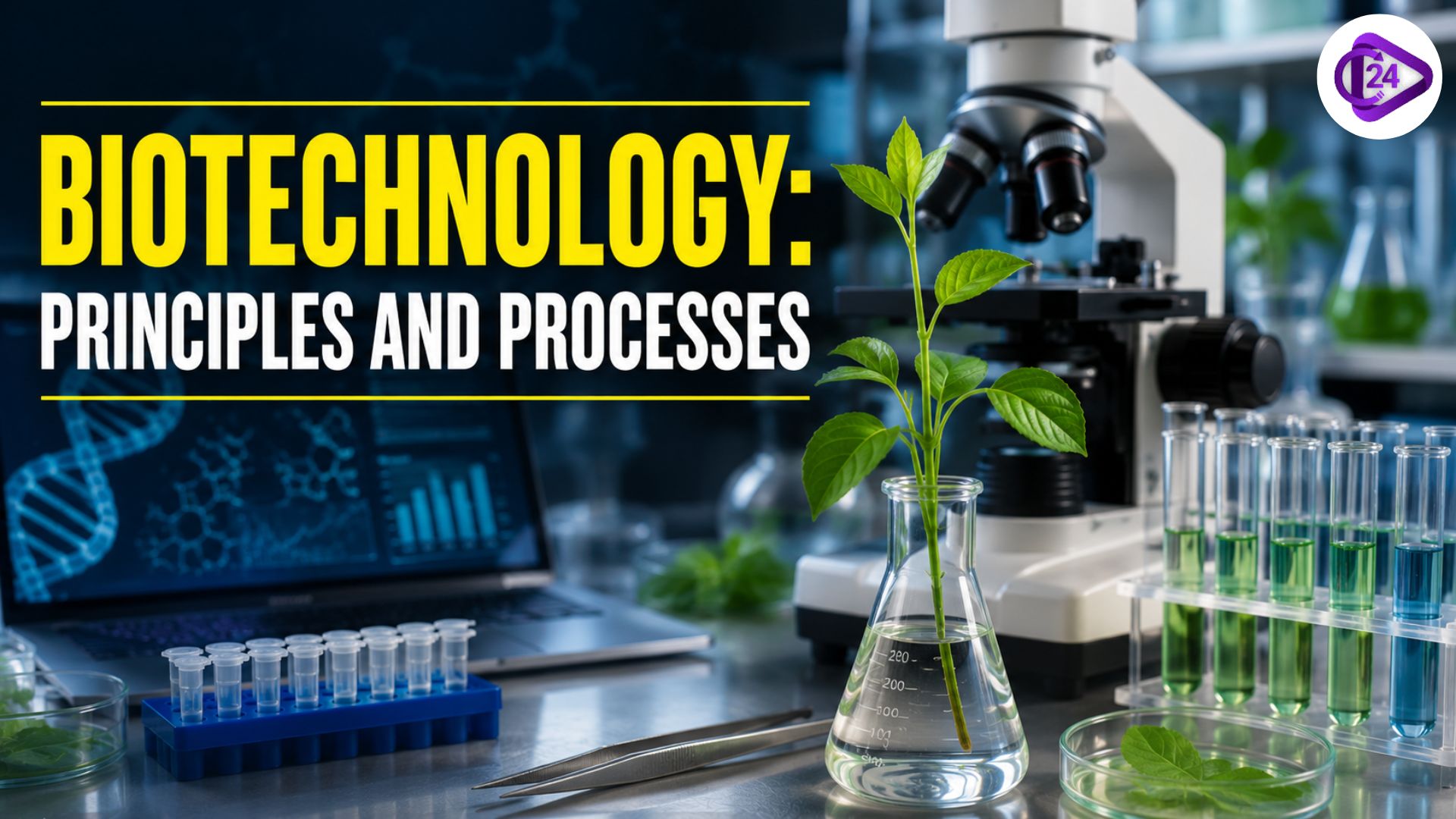
Biotechnology is defined as the integration of natural science and organisms, cells, their parts, and molecular analogues for products and services. It involves the use of living organisms or their components to develop useful products for human welfare.
1. Traditional vs Modern Biotechnology
| Aspect | Traditional Biotechnology | Modern Biotechnology |
|---|---|---|
| Definition | Use of microbes without full understanding | Use of defined organisms with genetic manipulation |
| Examples | Curd, bread, wine making | Insulin production, Bt crops, gene therapy |
| Scale | Small / domestic | Industrial / large-scale |
| Basis | Empirical | Scientific / Molecular |
| Products | Food, beverages | Pharmaceuticals, vaccines, GM crops |
European Federation of Biotechnology (EFB) Definition
The EFB defines biotechnology as: The integration of natural science and organisms, cells, parts thereof, and molecular analogues for products and services.
NEET TIP: Two core techniques of modern biotechnology: (1) Genetic Engineering - altering the chemistry of genetic material. (2) Bioprocess Engineering - maintaining sterile conditions to enable use of microbes/eukaryotic cells for manufacturing.
2. Tools of Recombinant DNA Technology
Recombinant DNA Technology (rDNA) involves manipulation of DNA by introducing foreign DNA into a host organism. Three essential tools are required:
• Restriction Enzymes (Molecular Scissors)
• Cloning Vectors (Molecular Vehicles)
• Host Organisms (for gene expression)
Restriction Enzymes - The Molecular Scissors
Restriction enzymes (restriction endonucleases) are enzymes that cut DNA at specific sequences called restriction sites or palindromic sequences.
Discovery and Types
| Type | Feature | Example |
|---|---|---|
| Type I | Cut DNA randomly, far from the recognition site | — |
| Type II | Cut DNA at or near the recognition site (NEET focus) | EcoRI, HindIII, BamHI |
| Type III | Cut DNA outside the recognition site | — |
Palindromic Sequences
A palindrome in DNA means a sequence that reads the same on both strands in the 5'→3' direction. This is the recognition site for restriction enzymes.
Sticky Ends vs Blunt Ends
| Feature | Sticky Ends | Blunt Ends |
|---|---|---|
| Definition | Single-stranded overhangs after cutting | No overhangs; flush cuts |
| Example Enzyme | EcoRI, HindIII, BamHI | SmaI, HaeIII |
| Recombination Efficiency | Higher (complementary pairing) | Lower |
| Ligation | Easy — spontaneous annealing | Requires blunt-end ligase |
Important Restriction Enzymes to Know
| Enzyme | Recognition Sequence | End Type | Source Organism |
|---|---|---|---|
| EcoRI | 5'-G↓AATTC-3' | Sticky (5' overhang) | E. coli |
| HindIII | 5'-A↓AGCTT-3' | Sticky (5' overhang) | H. influenzae |
| BamHI | 5'-G↓GATCC-3' | Sticky (5' overhang) | B. amyloliquefaciens |
| SmaI | 5'-CCC↓GGG-3' | Blunt | Serratia marcescens |
| PstI | 5'-CTGCA↓G-3' | Sticky (3' overhang) | Providencia stuartii |
NEET TIP: Restriction enzymes are named after the organism they come from: Eco = E. coli, Hin = H. influenzae, Bam = B. amyloliquefaciens. The roman numeral indicates the order of discovery of that organism.
Gel Electrophoresis - Separating DNA Fragments
After restriction digestion, DNA fragments are separated by size using gel electrophoresis.
| Key Facts About Gel Electrophoresis | Details |
|---|---|
| Gel Material | Agarose (obtained from seaweed algae Gracilaria) |
| Stain Used | Ethidium Bromide (EtBr) — intercalates into DNA |
| Visualization | Under UV light — bright orange fluorescent bands |
| DNA Charge | Negatively charged — moves toward the positive electrode (anode) |
| Separation Basis | By size — smaller DNA fragments travel farther and faster |
| Buffer Used | TAE or TBE buffer to maintain pH and conductivity |
Cloning Vectors - The Molecular Vehicles
A cloning vector is a DNA molecule that can carry a foreign gene into a host cell and replicate there. Think of it as a 'vehicle' that transports foreign DNA.
Essential Features of a Cloning Vector
| Feature | Function | Example |
|---|---|---|
| Origin of Replication (ori) | Allows the vector to replicate inside the host cell | pBR322 has ColE1 ori |
| Selectable Marker | Identifies transformed cells through antibiotic resistance | ampR, tetR genes |
| Cloning Sites (MCS) | Specific sites where foreign DNA is inserted | EcoRI, BamHI sites |
| Low Copy Number / High Copy Number | Controls the number of vector copies per cell | pBR322 = ~20 copies |
| Small Size | Facilitates easy manipulation and transformation | <10 kb preferred |
Types of Cloning Vectors
| Vector Type | Max Insert Size | Use | Example |
|---|---|---|---|
| Plasmid | ~10 kb | Routine cloning, gene expression | pBR322, pUC19 |
| Bacteriophage (λ Phage) | ~15–20 kb | Construction of genomic libraries | Lambda phage |
| Cosmid | ~35–45 kb | Large gene cloning | pJB8 |
| BAC (Bacterial Artificial Chromosome) | ~100–300 kb | Human Genome Project, large DNA fragments | pBeloBAC11 |
| YAC (Yeast Artificial Chromosome) | ~200–2000 kb | Cloning very large genomic regions | pYAC4 |
pBR322 - The Most Important Plasmid for NEET
Insertional Inactivation - Concept
When foreign DNA is inserted into the tetR gene of pBR322, the tetR gene is disrupted (inactivated). The cell becomes sensitive to tetracycline but remains resistant to ampicillin. This is called Insertional Inactivation.
Method to identify recombinants:
• Plate bacteria on ampicillin medium → All transformed cells survive (have plasmid)
• Replica plate onto tetracycline medium → Recombinants die (tetR disrupted)
• Cells that grow on Amp but NOT on Tet → Recombinant clones!
NEET TIP: pBR322: p = plasmid, BR = Bolivar and Rodriguez (discoverers), 322 = plasmid number. It has TWO antibiotic resistance genes: ampR and tetR. Foreign DNA inserted at BamHI or SalI sites → disrupts tetR → insertional inactivation.
Recombinant Selection using Blue-White Screening (pUC Vectors)
In pUC vectors, the lacZ gene (codes for β-galactosidase) is used as a marker. The MCS (Multiple Cloning Site) is within the lacZ gene.
• Without insert: lacZ intact → β-gal produced → X-gal cleaved → BLUE colonies
• With insert: lacZ disrupted → No β-gal → X-gal not cleaved → WHITE colonies
• WHITE colonies = Recombinants!
The process of rDNA technology involves 5 key steps:
Host Organisms
| Host | Advantages | Examples |
|---|---|---|
| E. coli | Well-studied, fast growth, easy genetic manipulation | Most common laboratory host |
| Bacillus subtilis | No endotoxins, efficiently secretes proteins | Industrial biotechnology applications |
| Saccharomyces cerevisiae (Yeast) | Eukaryotic system — allows post-translational modifications | Insulin production |
| Plant Cells | Used for the production of genetically modified crops | Agrobacterium-mediated transformation |
| Animal Cells | Suitable for producing complex proteins and antibodies | CHO cells, HEK293 cells |
3. Processes of Recombinant DNA Technology
The process of rDNA technology involves 5 key steps:
Step 1 - Isolation of DNA
To isolate pure DNA from cells:
• Treat cells with detergent (SDS) to lyse cell membranes
• Add RNase to remove RNA contamination
• Add Proteinase K to remove protein contamination
• Add Chilled ethanol → DNA precipitates as threads (spooled out with glass rod)
• High molecular weight DNA obtained - can be used for restriction digestion
Step 2 - Cutting DNA (Restriction Digestion)
Both the vector DNA and insert (foreign) DNA are cut with the SAME restriction enzyme. This ensures matching sticky ends for ligation.
• Partial digestion: Use enzyme for short time → partial cutting
• Complete digestion: Full cutting with enzyme
NEET TIP: Always use the SAME restriction enzyme to cut both vector and insert. This produces compatible sticky ends that can be joined by DNA ligase.
Step 3 - PCR (Polymerase Chain Reaction)
PCR amplifies specific DNA sequences millions of times. Invented by Kary Mullis (Nobel Prize 1993).
| PCR Component | Role |
|---|---|
| Template DNA | Original DNA that serves as the template to be amplified. |
| Primers (2 Types) | Short oligonucleotide sequences that define the target region for amplification. |
| Taq Polymerase | Thermostable DNA polymerase obtained from Thermus aquaticus; remains active at high temperatures (up to 94°C). |
| dNTPs | Building blocks of DNA — dATP, dGTP, dCTP, and dTTP. |
| Buffer + MgCl₂ | Provide optimal pH and ionic conditions required for enzyme activity. |
NEET TIP: Taq polymerase is heat-stable (thermostable) — obtained from Thermus aquaticus, a bacterium found in hot springs. It does NOT denature at 94°C unlike normal DNA polymerases.
Step 4 - Ligation (Joining DNA)
The insert DNA and vector DNA (both cut with the same enzyme) are joined using the enzyme DNA Ligase. This creates a Recombinant DNA molecule.
• DNA Ligase seals the phosphodiester bonds between vector and insert
• Also called 'molecular glue'
• Source: Bacteriophage T4 DNA Ligase is commonly used
Step 5 - Transformation (Introducing DNA into Host)
Recombinant DNA is introduced into the host organism by various methods:
| Method | Principle | Used For |
|---|---|---|
| Chemical Transformation (CaCl₂) | Ca²⁺ ions make cells competent and more permeable to DNA. | Bacteria (E. coli) |
| Heat Shock | Brief exposure to 42°C allows DNA to enter competent cells. | Bacteria |
| Electroporation | Electric pulses create temporary pores in the cell membrane. | Bacteria, yeast, and plant cells |
| Microinjection | DNA is directly injected into the nucleus using a micropipette. | Animal cells |
| Biolistics (Gene Gun) | DNA-coated gold or tungsten particles are fired into cells. | Plant cells (GM crops) |
| Disarmed Agrobacterium | Uses a modified Ti plasmid of a natural plant pathogen as a vector. | Dicot plants |
| Liposome-Mediated Transfer | DNA is enclosed within liposomes that fuse with the cell membrane. | Mammalian cells |
NEET TIP: Competent cells = Cells made permeable to take up DNA. For E. coli: treat with CaCl₂ (on ice) then heat shock at 42°C for 90 seconds. The Ca²⁺ ions neutralize the negative charges on DNA and membrane.
4. Bioreactors - Industrial Scale Biotechnology
A bioreactor is a vessel in which living organisms are used to carry out biochemical reactions under controlled conditions for the production of useful products.
Parts and Functions of a Bioreactor
| Bioreactor Component | Function |
|---|---|
| Stirrer / Impeller | Mixes the contents for uniform nutrient and oxygen distribution. |
| Sparger | Introduces sterile air/O₂ as tiny bubbles from the bottom of the bioreactor. |
| Foam Breaker | Breaks foam produced during mixing and prevents loss of culture. |
| Temperature Control Jacket | Maintains the optimal temperature required for microbial growth (usually 37°C for bacteria). |
| pH Probe | Monitors and helps control the pH of the culture medium. |
| Dissolved O₂ Probe | Measures and monitors dissolved oxygen levels in the medium. |
| Sampling Port | Allows withdrawal of small samples for testing without contaminating the culture. |
| Exhaust Condenser | Prevents aerosol loss and reduces the risk of contamination. |
Types of Bioreactors
| Type | Principle | Use |
|---|---|---|
| Stirred Tank | Impeller agitation; most commonly used bioreactor type. | Production of antibiotics, enzymes, and insulin. |
| Sparged / Air-Lift | Air bubbles create circulation and mixing; gentle on cells. | Shear-sensitive animal cell cultures. |
| Packed Bed | Immobilized cells grow on a solid support matrix. | Continuous production processes. |
| Hollow Fibre | Cells grow on hollow fibres while culture medium flows through them. | Mammalian cell culture and biopharmaceutical production. |
NEET TIP: Stirred Tank Bioreactor is the most important for NEET. Key: It maintains sterile, controlled conditions for mass production of desired products (e.g., insulin, antibiotics, enzymes, vitamins).
5. Downstream Processing
After the product is made in the bioreactor, it must be separated and purified. This is called downstream processing. It includes:
| Step | Process | Purpose |
|---|---|---|
| 1. Separation | Centrifugation, filtration | Separate cells from the fermentation broth. |
| 2. Disruption | Sonication, French press, lysozyme treatment | Break open cells to release the desired product. |
| 3. Extraction | Solvent extraction, precipitation | Remove and isolate the product from cell debris. |
| 4. Purification | Chromatography (affinity, ion exchange, gel filtration) | Obtain a highly purified product. |
| 5. Formulation | Add stabilizers, buffers, and excipients | Prepare the product for storage, transport, and use. |
| 6. Quality Control | Safety testing, clinical trials | Ensure the product is safe, effective, and meets quality standards. |
Types of Chromatography Used
| Type | Principle | Use |
|---|---|---|
| Affinity Chromatography | Product binds to a specific ligand attached to the column matrix. | Highly specific purification of proteins, enzymes, and antibodies. |
| Ion Exchange Chromatography | Separation based on differences in molecular charge. | Purification of proteins and biomolecules with different charges. |
| Gel Filtration (Size Exclusion Chromatography) | Separation based on molecular size and shape. | Separation of molecules according to molecular weight. |
| HPLC (High-Performance Liquid Chromatography) | Uses high pressure to pass samples through a column for precise separation. | High-resolution final purification of biomolecules and pharmaceuticals. |
NEET TIP: Downstream processing ensures the final product meets quality standards. For therapeutic proteins like insulin: must be 99.9%+ pure. Even tiny impurities can be dangerous.
6. Genetically Modified Organisms (GMOs) - Key Applications
Transgenic Bacteria
| Product | Bacterium/Host Used | Significance |
|---|---|---|
| Human Insulin (Humulin) | E. coli | First recombinant DNA pharmaceutical; approved in 1982 and replaced animal-derived insulin. |
| Human Growth Hormone (hGH) | E. coli | Used for the treatment of growth hormone deficiency and growth disorders. |
| Interferon (α, β, γ) | E. coli | Used for antiviral, anticancer, and immunomodulatory therapies. |
| Erythropoietin (EPO) | CHO Cells (Mammalian Cells) | Used to treat anaemia by stimulating red blood cell production. |
| Hepatitis B Vaccine (HBsAg) | Saccharomyces cerevisiae (Yeast) | Produced using recombinant DNA technology; contains hepatitis B surface antigen. |
Insulin Production - Step by Step
Human insulin is made of two polypeptide chains: Chain A (21 amino acids) and Chain B (30 amino acids) connected by disulfide bonds. The pro-insulin form (with C-peptide) is inactive.
NEET TIP: Key for NEET: Human insulin has TWO chains (A and B). C-peptide connects A and B in proinsulin but is removed to form mature insulin. Eli Lilly produced the first recombinant insulin in 1982. In rDNA insulin production, the A and B chains are produced separately in E. coli and then combined.
7. Gene Therapy
Gene therapy is a technique to correct defective genes responsible for disease. The normal functional gene is inserted into the patient's cells to replace the defective gene.
Types of Gene Therapy
| Type | Target | Advantage/Disadvantage |
|---|---|---|
| Somatic Gene Therapy | Body (somatic) cells only | Effect is not passed to offspring; considered safer and is important for NEET. |
| Germline Gene Therapy | Germ cells (eggs/sperm) | Changes are heritable; ethically controversial and not practiced in humans. |
ADA Deficiency - First Gene Therapy Case
ADA (Adenosine Deaminase) deficiency causes SCID (Severe Combined Immunodeficiency) — absence of functional immune system. This was the first disease to be treated by gene therapy.
• ADA gene is absent/defective in patients
• Lymphocytes extracted from patient's blood
• Functional ADA gene introduced into lymphocytes using a retroviral vector
• Corrected lymphocytes returned to patient
• Patient's immune system partially restored
NEET TIP: ADA Deficiency (SCID) = First gene therapy. ADA enzyme is essential for immune function. Alternative treatment: Bone marrow transplant or enzyme replacement therapy with PEG-ADA. Gene therapy gives a long-term cure, but periodic infusions may still be needed.
8. Molecular Diagnosis Techniques
Traditional diagnostic methods like blood tests and X-rays are slow and non-specific. Molecular diagnostics detect diseases at the DNA/RNA/protein level.
PCR-Based Diagnosis
PCR can detect:
• HIV in blood even at very low levels (before antibodies appear)
• Genetic disorders - sickle cell anaemia, cystic fibrosis
• Cancer mutations
• Pathogen identification (COVID-19, tuberculosis)
ELISA (Enzyme-Linked Immunosorbent Assay)
ELISA detects antigens (proteins from pathogens) or antibodies (immune response) using enzyme-linked antibodies.
Southern Blotting
Technique to detect specific DNA sequences by transferring DNA from a gel to a membrane and hybridizing with a labeled probe.
| Technique | Target | Used For |
|---|---|---|
| Southern Blotting | DNA | Detection of specific DNA sequences. |
| Northern Blotting | RNA | Detection of specific mRNA and analysis of gene expression. |
| Western Blotting | Protein | Detection and identification of specific proteins. |
| Eastern Blotting | Post-translational Modifications | Detection of modified proteins such as glycoproteins and lipoproteins. |
NEET TIP: Memory trick: SNoW DRoP - South = DNA, North = RNA, West = Protein. Probe used in blotting = complementary DNA or RNA sequence labeled with radioactive/fluorescent marker.
9. Transgenic Animals and Plants
Transgenic Animals
Transgenic animals have a foreign gene (transgene) introduced into their genome. They are used as:
| Use | Example | Significance |
|---|---|---|
| Biological Models for Human Disease | Transgenic mice with Alzheimer's disease or cancer-related genes | Helps study disease progression and develop treatments. |
| Production of Biological Products | Rosie the cow producing human alpha-lactalbumin in milk | Provides nutritionally enriched proteins for infant nutrition. |
| Vaccine Safety Testing | Transgenic mice used instead of monkeys | Reduces animal usage while ensuring vaccine safety evaluation. |
| Studying Gene Regulation | Gene knockout and gene knockin mice | Helps understand the function and regulation of genes. |
| Chemical Safety Testing | Mice carrying human P450 genes | Provides better models for studying drug metabolism and toxicity. |
Important Transgenic Animal Examples
• Rosie: First transgenic cow - produced milk with human protein alpha-lactalbumin (1997)
• Dolly: First cloned mammal (sheep) - Somatic Cell Nuclear Transfer (SCNT) - 1996 — NOT transgenic, but cloned
• OncoMouse: First patented transgenic animal - mice susceptible to cancer
• GloFish: Transgenic fish with jellyfish GFP gene - glows in the dark
NEET TIP: Dolly was NOT transgenic - she was a CLONE. Dolly was created by somatic cell nuclear transfer (SCNT) by Wilmut and Campbell (1996) using the nucleus from a mammary gland cell of a Finn Dorset sheep.
Transgenic Plants (GM Crops)
| GM Crop | Gene Introduced | Benefit |
|---|---|---|
| Bt Cotton | cry gene from Bacillus thuringiensis | Pest resistance — kills bollworm. |
| Bt Brinjal | cry gene | Pest resistance — approved for cultivation in Bangladesh. |
| Golden Rice | Phytoene synthase + lycopene cyclase (from daffodil) | Rich in β-carotene; helps combat Vitamin A deficiency. |
| Flavr Savr Tomato | Antisense polygalacturonase gene | Delayed ripening and extended shelf life. |
| Herbicide-Tolerant Crops | EPSPS gene from Agrobacterium | Tolerates glyphosate herbicide (Roundup Ready crops). |
NEET TIP: Bt toxin: The cry gene encodes Cry proteins (crystal proteins) that are toxic to specific insects. In plant cells, Cry proteins are produced as inactive protoxins and activated in the insect gut (alkaline pH). Different Cry genes are toxic to different insects: cryIAc, cryIIAb → cotton bollworms; cryIAb → corn borer.
10. Ethical Issues in Biotechnology
Biopiracy
Biopiracy refers to the unauthorized use of biological resources and traditional knowledge from developing countries by multinational companies for profit without sharing benefits with the country of origin.
• Example: Turmeric patent (a U.S. company patented the wound-healing property of turmeric — India challenged and won)
• Example: Neem patent (W.R. Grace patented neem's antifungal properties — challenged by India/Europe)
• Example: Basmati rice patent by RiceTec Inc. (USA)
GEAC - Genetic Engineering Appraisal Committee
GEAC is the apex body in India that approves genetically modified organisms and their use in research and product release. It ensures the safety of GMOs.
• Under the Ministry of Environment, Forest and Climate Change (India)
• Responsible for evaluating risks of GMO release into the environment
• Has approved Bt cotton for commercial cultivation in India
IPR - Intellectual Property Rights
Patents protect inventions. In biotechnology, patents can be granted for:
• New genetically modified organisms
• New genes or gene sequences
• Biotechnological processes
• But NOT for naturally occurring genes without modification (in most countries)
Quick Revision - Scientists and Contributions
| Scientist | Contribution |
|---|---|
| Werner Arber (1968) | Discovered restriction enzymes in bacteria. |
| Hamilton Smith (1970) | First isolated a restriction enzyme (HindII). |
| Daniel Nathans (1971) | First used restriction enzymes to cut DNA. |
| Werner Arber, Hamilton Smith & Daniel Nathans | Awarded the Nobel Prize in 1978 for the discovery and application of restriction enzymes. |
| Stanley Cohen & Herbert Boyer (1972) | Created the first recombinant DNA molecule; pioneers of recombinant DNA technology. |
| Kary Mullis (1983) | Invented Polymerase Chain Reaction (PCR); awarded the Nobel Prize in 1993. |
| Eli Lilly (1982) | Produced the first recombinant human insulin (Humulin). |
| Ian Wilmut & Keith Campbell (1996) | Cloned Dolly, the first mammal cloned using Somatic Cell Nuclear Transfer (SCNT). |
| Anderson (1990) | Conducted the first successful gene therapy trial for ADA deficiency. |
| Alec Jeffreys (1985) | Developed DNA fingerprinting using VNTR analysis. |
Common NEET Mistakes to Avoid
- Restriction enzymes cut at palindromic sequences - NOT anywhere in the DNA. They ALWAYS cut at specific sites.
- Sticky ends are produced by restriction enzymes that cut in a STAGGERED manner (not straight). Blunt ends = straight cuts.
- Taq polymerase is heat-STABLE (from hot springs). Normal DNA polymerase is heat-labile and gets destroyed in PCR.
- Dolly was a CLONE, NOT a transgenic animal. She had no foreign gene - just nucleus transferred from another sheep.
- pBR322 has TWO antibiotic resistance genes (ampR and tetR). Insertion in tetR → cell loses tetracycline resistance (insertional inactivation) but remains ampicillin-resistant.
- In gel electrophoresis, DNA moves toward the POSITIVE electrode (anode) because DNA is NEGATIVELY charged (phosphate backbone).
Previous Year NEET Questions
| Question | Answer | Year |
|---|---|---|
| Which enzyme joins Okazaki fragments in recombinant DNA technology? | DNA Ligase | Multiple Years |
| The 'ori' in a cloning vector stands for? | Origin of Replication — where DNA replication begins. | NEET |
| Which of these is NOT a feature of a cloning vector? | Ability to integrate into the host chromosome is not always required. | NEET |
| Restriction endonucleases recognize sequences known as? | Palindromic sequences. | NEET 2019 |
| In pBR322, the foreign DNA inserted at the BamHI site disrupts which gene? | tetR (Tetracycline resistance gene). | NEET |
| Taq polymerase is isolated from? | Thermus aquaticus (thermophilic bacterium from hot springs). | NEET |
| The first clinical gene therapy was done for? | ADA (Adenosine Deaminase) deficiency in an SCID patient. | NEET 2016 |
| In Bt cotton, the cry gene comes from? | Bacillus thuringiensis. | NEET 2018 |
| GEAC stands for? | Genetic Engineering Appraisal Committee. | NEET |
| Which is true about the genetic code? | Universal, non-overlapping, commaless, degenerate, and unambiguous. | NEET |
Important Links
Conclusion
Biotechnology Principles and Processes is a high-scoring topic in NEET 2026 that every Class 12 student must master thoroughly. From restriction enzymes and the pBR322 plasmid to PCR, bioreactors, gene therapy, and transgenic organisms - all these concepts are directly asked in NEET. Revise NCERT diagrams, practice previous year questions, and focus on NEET tips given in these notes to confidently score 8–12 marks from this chapter in NEET UG 2026.
FAQs
Our Courses







Post a Comment
Your email address will not be published. Required fields are marked *