

Day: April 18, 2025

World Heritage day 2025: Safeguarding identity amid disasters and conflicts

Our heritage extends past physical remains of stones and historical ruins and scripted documents. Our heritage exists in every temple wall whisper and all carved structures on ancient forts along with all historic folk music throughout the generations. Our heritage reveals the identity of our people alongside their major values and methods of survival. The heartwarming purpose of World Heritage Day exists to remind everyone that these magnificent eternal possessions require both admiration and protection. World heritage requires immediate protection according to the 2025 signature theme “Heritage under Threat from Disasters and Conflicts” because preserving the past ensures a safe future.

Introduction

  • The annual observance of World Heritage Day holds 18th April as its celebration date to safeguard cultural and natural heritage.

  • The primary focus of 2025 revolves around “Heritage under Threat from Disasters and Conflicts: Preparedness and Learning from 60 years of ICOMOS Actions.”


Background of World Heritage Day

  • World Heritage Day which the International Day for Monuments and Sites formally occurs on 18th April every year. 

  • The celebration of human heritage through the individuals who dedicate themselves to conservation began in 1982 when ICOMOS established the calendar which UNESCO accepted in 1983. 

  • Each year brings a specific heritage-centered theme that directs worldwide events for heritage awareness together with protection activities.

Understanding the World Heritage Convention

  • Under the guidance of UNESCO (United Nations Educational Scientific and Cultural Organization) the World Heritage Convention enables global heritage preservation since its adoption in 1972. 

  • Among the provisions of this agreement member states find methods to detect and secure places having either natural or cultural importance. 

  • India became a member of the Convention by November 1977. 

  • The World Heritage Site network includes 1,223 unique locations throughout 196 territorial nations that house 952 cultural, 231 natural and 40 combined properties as of October 2024.

World Heritage Sites: Protecting the Future

  • International organizations check places for their exemplary value before giving them World Heritage Site designation. 

  • The World Heritage Sites consist of cultural features together with natural wonders or consist of these elements combined. 

  • The “Moidams: The Mound-Burial System of the Ahom Dynasty” in Assam received its designation as a cultural property from India in July 2024. 

  • UNESCO recognized 62 more Indian sites while increasing the national total to 43 sites.

  • Since 1983 India has maintained its heritage journey through site listings of Agra Fort and the Taj Mahal and Ajanta and Ellora Caves which protect historical and cultural heritage and serve educational purposes.

Government Initiatives to Promote India’s Rich Cultural Heritage

The nation continues to take many initiatives which protect and strengthen both cultural heritage and natural resources:

  • Since 1976 and up to 2024 the Archaeological Survey of India (ASI) has retrieved 655 foreign antiquities yet 642 of these objects were retrieved after 2014.

  • This scheme called Adopt a Heritage allows public-private partnerships to build heritage site amenities through CSR funds which received a makeover in 2023. 21 Memoranda of Understanding have already been executed.

  • The World Heritage Committee session took place during July 2024 in Delhi and welcomed over two thousand nine hundred delegates from multiple countries across 140 nations for cultural and natural heritage preservation initiatives.

  • The country protects its National Importance monuments through 3,697 building monuments. ASI provides visitor amenities together with maintenance programs for conservation purposes through services that include accessible pathways, signage and sound and light presentations and souvenir shops.

  • Numerous heritage site projects focus on Kashi Vishwanath Corridor, Mahakaal Lok, Maa Kamakhya Corridor, Chardham Road Project, Somnath revamp and Kartarpur Corridor.

  • The ASI online portal presents viewers with nearly 100 significant sites along with World Heritage properties which they can see. The website provides panoramic view visuals together with visitor information services that support cultural tourism programs.

  • NMMA established the National Mission on Monuments and Antiquities which digitized 11,406 heritage sites together with 12.3 lakh antiquities. During 2024-25 the mission received a budget allocation of ₹20 lakh.

  • Three additional languages received classical language status on October 3rd 2024 at which point there were 11 documented classical languages in India.

  • On 16th January 2025 Vadnagar welcomed its first Archaeological Experiential Museum that displays 5,000+ artifacts across 12,500 sq. m of interactive galleries.

  • The Humayun's Tomb World Heritage Site Museum began its operations at New Delhi on 29th July 2024 with a purpose to deliver diverse information about site architectural aspects and conservation matters.

  • India took a major step toward preserving its literary heritage by registering Ramcharitmanas Panchatantra and Sahrdayāloka-Locana on MOWCAP Regional Register on May 8th 2024.

Conclusion

The purpose of World Heritage Day teaches us we need to dedicate ourselves to operational preservation work in addition to passive admiration. Nationwide initiatives along with international support allow India to protect both cultural and natural properties of its heritage. The consistent preservation activities will secure India's cultural heritage for all people to explore and celebrate in the future.

Cap-and-Trade Model in Surat Cuts Pollution by 30%, Lowers Regulatory Costs

The emissions trading scheme in Surat succeeded in diminishing pollution levels by 20-30% together with decreasing regulatory expenses by 11% per study in The Quarterly Journal of Economics. The implementation of Cap-and-Trade pollution permit trading in Surat functions as a market-based policy approach to environmental management. The existing model proves applicable for future national-scale implementation to combat industrial pollution throughout India as it promotes sustainable environmental solutions.

Context:

  • Scientists published research about Surat’s Emissions Trading Scheme in The Quarterly Journal of Economics which established the program as India’s initial experimental particulate emissions market. 

  • This program proved to be highly effective by cutting pollution levels across the city through Cap-and-Trade system implementation.

  • The research investigation recorded pollution decreases by 20-30% coupled with an 11% decrease in financial compliance expenses.

  • The ETS model implemented in Surat delivers important lessons which can help expand Cap-and-Trade systems throughout various Indian cities.

What is Cap-and-Trade?

  • Under Cap-and-Trade policy the government announces pollution emission limits that determine the total allowable pollution output by industrial enterprises.

  • Government entities distribute pollution permits to companies that restrict their allowed pollutant emissions.

  • The excess pollution permits belonging to a company whose emissions stay under the designated threshold may be sold to companies that have difficulty reaching their pollution limits.

  • Cap-and-Trade serves as a financial mechanism which both drives companies to minimize pollution because permit sale brings profits.

How Cap-and-Trade Works:

  • Regulatory Cap Settings: The government establishes a pollution control threshold that represents their predetermined environmental targets (air quality and climate targets).

  • Permit Distributions: Pollution permits get distributed either without fee fees according to historical emission rates or through marketplace auctions to establish permit value.

  • Trading System: Through their trading system companies could sell any excess permits to other entities that purchase them.

  • Penalties: The law imposes financial consequences against firms which exceed their emission limits while lacking sufficient permits.

Challenges of the Cap-and-Trade Model:

  • Monitoring Gaps: The system requires exact real-time emissions data therefore needs continuous system monitoring through Continuous Emissions Monitoring Systems (CEMS) and strict enforcement of their use.

  • High expenses: Manufacturing facilities with limited budgets face high expenses when they establish CEMS systems along with other required installation costs.

  • Market manipulation: When proper regulatory control is absent industries are able to manipulate permit prices for their own benefits which leads to corruption within the system.

  • Sectoral Variations: The costs for pollution control vary among different industrial sectors as select businesses gain higher profitability in the permit market.

  • Policy Instability: Aptitude instability within pollution regulations induces doubt about clean technology investments because changes may occur unpredictably.

Way Ahead for Cap-and-Trade in India:

  • Expansion to other cities: The ETS should expand to polluted urban industrial centers across the nation including Delhi and Ahmedabad because this move would establish a unified framework for pollution management across the country.

  • Covering more pollutants: The ETS should expand its scope by incorporating sulfur dioxide (SO₂) and nitrogen oxides (NOx) among the targeted pollutants because this addition addresses a wider range of industrial pollution.

  • Investment in CEMS: The installation of tamper-resistant CEMS technology demands increased financial backing because it will improve regulatory compliance with integrity measurements.

  • Dynamic Emission Caps: Emission caps of a dynamic nature must be put in place because these limitations need to adjust based on seasonal changes in pollution alongside regular changes in industrial operations.

  • Direct Stakeholder participation: The successful adoption of the program will result from direct stakeholder participation including industries and citizens because of improved awareness initiatives.

Conclusion:

The emissions trading system of Surat proves that market-driven cap-and-trade approaches enable compatible developments of business expansion with environmental safeguards. This successful pollution control system proved capable of cutting pollution and enforcement costs simultaneously thus providing essential knowledge for national expansion. Implementing this scheme across additional industrial cities while increasing pollutant oversight will enable India to meet its clean air objectives through efficient industrial development.

X

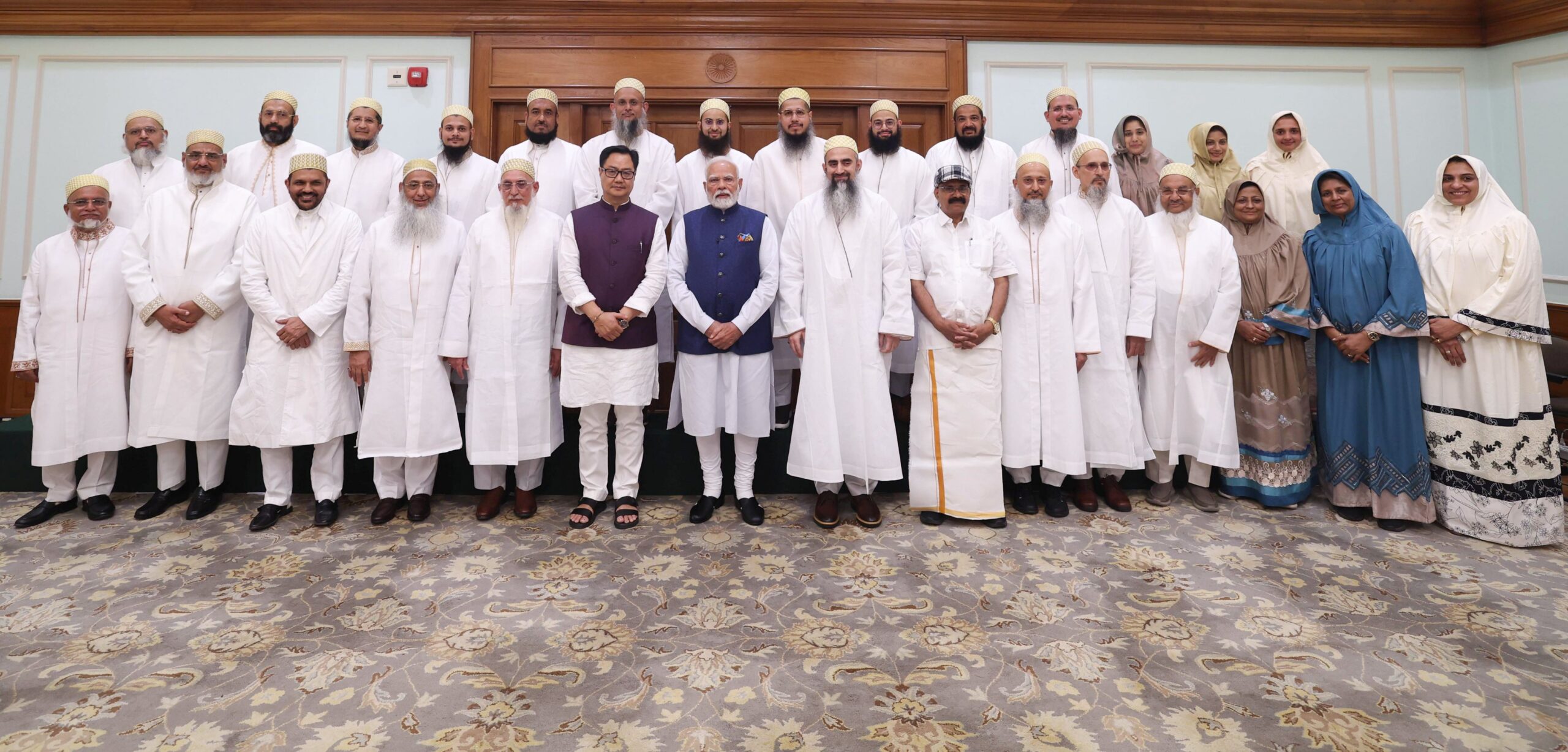
PM Modi meets Dawoodi Bohra Community, earns Praise for Waqf Reform: About Dawoodi Bohra Community

Prime Minister Narendra Modi conducted a meeting with Dawoodi Bohra Community delegation members at his official house. The Prime Minister received thanks from the delegation about the Waqf Amendment Act for fixing their long-running issue of Waqf authorities wrongfully taking their properties. Public applause for Prime Minister Narendra Modi highlighted both his leadership qualities and his dedication to minority community empowerment along with his policy of inclusive governance. The group praised his plan for Indian development by 2047 and declared their dedication to participate in accomplishing this mission. The Prime Minister recognized that the community maintained essential roles throughout Act development through their support as well as the significant contribution of Syedna Mufaddal Saifuddin.

Context:

  • The Waqf Amendment Act:

    • Dawoodi Bohra community members have endured persistent difficulties because Waqf authorities illegally claimed their properties over many years.

    • The Waqf Amendment Act becomes essential through its purpose to protect community member rights while resolving previous rights violations.

    • According to the Prime Minister the existing system created an unfair situation for widows así well as women in general which motivated authorities to create this new Act.

Key Points:

Who are Dawoodi Bohras?

  • As a different subsection of Shia Muslims the Dawoodi Bohras demonstrate both distinctive community awareness and collective independence. 

  • The community functions under the Al-Dai-Al-Mutlaq who leads both the spiritual and social aspects of the Dawoodi Bohra sect while their members have built their reputation from trade and business operations. 

  • Their religion-based customs alongside leadership systems along with unique language express their historic customs and their dedication to spiritual needs and community vitality.

Religious Affiliation:

  • As Shia Muslim community members the Dawoodi Bohras follow their own unique religious requirements and social customs. 

  • The community's religious leader, the Al-Dai-Al-Mutlaq, holds supreme authority over religious and spiritual matters.

Community Leadership:

  • As the religious authority Al-Dai-Al-Mutlaq holds dual positions of ultimate spiritual leadership and the capacity to ban members from the community. 

  • In the Dawoodi Bohra community excommunication denies access to religious buildings as well as burial facilities.

Community Structure and Occupation:

  • The Bohra community operates independently because its members primarily pursue trading along with business and entrepreneurial activities. 

  • As a community with shopkeeper backgrounds they have maintained their trader traditions throughout history particularly through their economic presence in Gujarat.

  • As per Gujarati linguistic heritage the term "Bohra" derives from "vohrvu" or "vyavahar" which indicates business or trading activities thus showing their historical business association.

Geographical Spread:

  • Members of the Dawoodi Bohra community live throughout the world most densely in India along with Pakistan, Yemen, East African territories and the Middle Eastern lands. 

  • People of Dawoodi Bohra heritage are primarily found in India yet their greatest number settles within Gujarat.

Language:

  • Members of the community communicate through Lisan al-Dawat which developed from Gujarati along with features from Urdu and Arabic. 

  • This particular linguistic system functions as a sacred means of communication for cultural and religious purposes between Dawoodi Bohra members.

Leadership and Influence:

  • His Holiness Dr Syedna Mufaddal Saifuddin serves as the present leader of the Dawoodi Bohra community in his position as the 53rd leader. 

  • The spiritual and administrative management of the community has operated from India for more than four centuries under Indian leadership.

Conclusion:

Prime Minister Narendra Modi meets with Dawoodi Bohra Community members because his government supports minority empowerment alongside consistent assistance for their particular requirements. The Waqf Amendment Act demonstrates his dedication to social welfare alongside justice work designed to benefit female members of the community especially. Special cooperation between government departments and minority communities arises from the Prime Minister's leadership style together with Syedna Mufaddal Saifuddin's efforts.

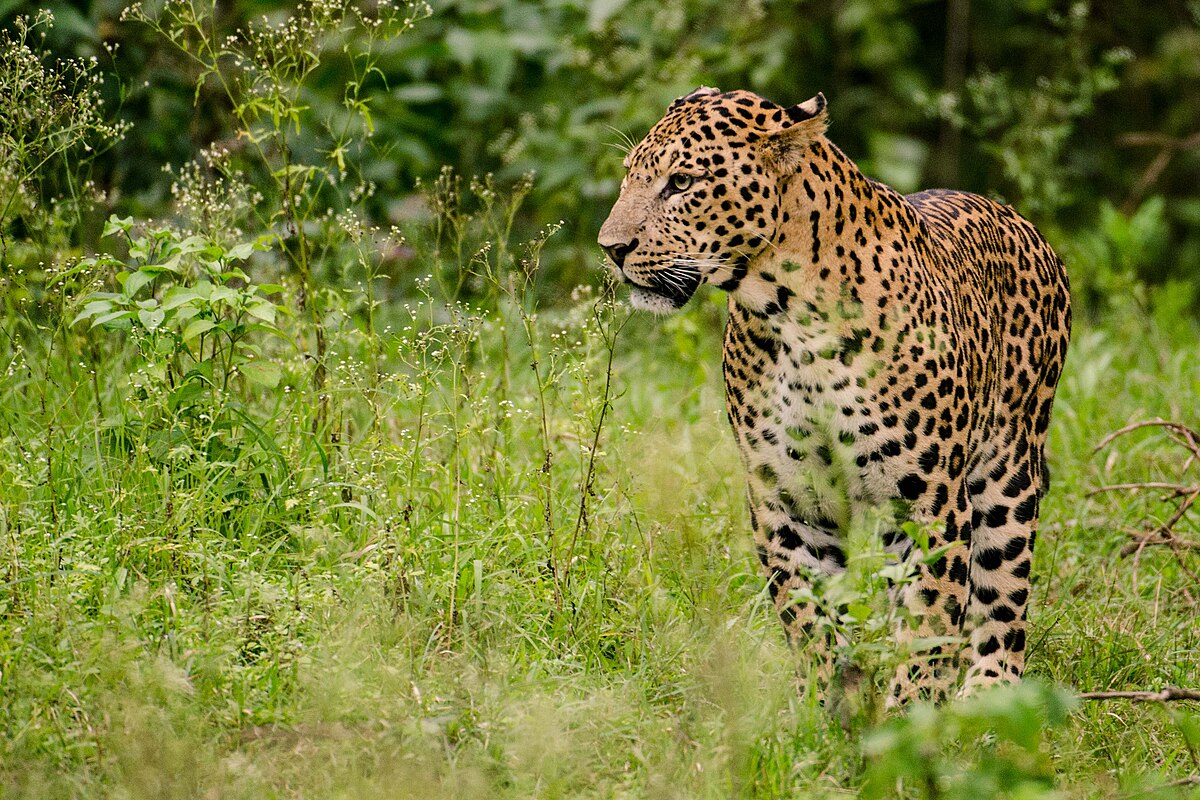
Leopard Spotted in Asola Bhati Wildlife Sanctuary

The Delhi Forest and Wildlife Department discovered another leopard in the Asola Bhati Wildlife Sanctuary thus increasing the total sanctuary leopard population to 12 since last September. The leopards actively breed at the sanctuary which represents a positive development in preserving biodiversity in the area. The sanctuary stretches across 32.7 square kilometers and it functions as an vital ecological region that retains water for the cities of Delhi, Faridabad, Gurugram while serving as wildlife migration path from Sariska National Park in Rajasthan.

Context:

  • The Delhi Forest and Wildlife Department announced another sighting of a leopard in the Asola Bhati Wildlife Sanctuary which increased the sanctuary's leopard population to 12 since September last year.

Asola Bhati Wildlife Sanctuary Overview:

Location:

  • The sanctuary occupies 32.7 square kilometers of land that borders Tughlakabad in Delhi.

  • The ecological connection between Sariska National Park in Rajasthan extends through Mewat in Haryana and continues to Faridabad and Gurugram before reaching its final destination.

Biodiversity:

  • This area contains an extensive selection of trees together with shrubs along with herbs while supporting grasses.

  • A variety of animals such as mammals, reptiles and amphibians together with butterflies and dragonflies inhabit the sanctuary area.

  • It also hosts around 200 species of birds, both resident and migratory.

  • The sanctuary provides vital water recharge services to Delhi, Faridabad and Gurugram creating an essential region to maintain local water resources.

Leopard Population Growth:

  • A new leopard sighting has resulted in a greater leopard population within the sanctuary where currently 12 leopards remain.

Eco-Sensitive Zone Tag:

  • The authorities are evaluating whether the sanctuary meets the requirements for an Eco-Sensitive Zone designation because of its significant importance to biodiversity preservation combined with its essential water recharging function.

  • By obtaining the ESZ tag the area will experience improved management and conservation practices and receive enhanced protection together with regulation for sustainably developing the region.

Conclusion:

As an important ecological area The Asola Bhati Wildlife Sanctuary supports both Delhi alongside its adjacent areas. The environmental health of Delhi-NCR region depends heavily on the sanctuary because it now houses more leopards while supporting diverse plant and wildlife populations.

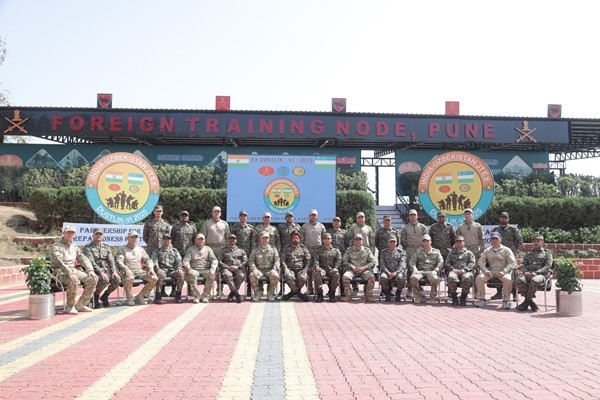
India Conducts DUSTLIK-6 with Uzbekistan and Tiger Triumph 2025 with U.S.

In Pune Maharashtra, DUSTLIK-6 exercise is currently running between India and Uzbekistan while India executed Tiger Triumph 2025 exercise with the United States in Andhra Pradesh. The defensive exercises focus on building coalition military relationships together with tactical unity and operational readiness. The emphasis of DUSTLIK-6 lies on sub-conventional operations yet Tiger Triumph 2025 concentrates on boosting amphibious warfare alongside humanitarian assistance capabilities.

Context:

  • Exercise DUSTLIK-6 continues as a collaborative defense relationship-building attempt between India and Uzbekistan after concluding its Pune-based operations. 

  • Similarly Exercise Tiger Triumph 2025 in Andhra Pradesh finished with the participation of United States forces. 

  • India demonstrates its dedication to enhance military tactical cooperation and international defensive alliances by conducting these joint exercises.

Key Points:

Exercise DUSTLIK-6:

  • Host Nation: India (Pune, Maharashtra)

  • Participating Nations: India and Uzbekistan

  • Objective:

    • The aim is to maximize sub-conventional operation tactical coordination.

    • The participating forces exchanged valuable information about their joint military operational procedures.

    • The promotion of defense alliances should focus on Uzbekistan along with other members of Central Asia.

    • India demonstrates its dedication to develop defense relations with Central Asia through this strategic military exercise that emerges at a time when regional security challenges increase.

Exercise Tiger Triumph 2025:

  • The military operation takes place in India through Duvvada Firing Range located in Andhra Pradesh.

  • Multiple Nations take part in this exercise where India and the United States serve as participants.

  • Objective:

    • The military units should develop operational capabilities to work together in amphibious amphibious warfare actions.

    • India needs to improve its readiness to support HADR operations.

    • This exercise provides essential benefits to enhance the defense cooperation between India and the United States through combined military operations and disaster relief coordination capabilities.

Conclusion:

The military ties of India with its global partners are reinforced through Exercise DUSTLIK-6 and Exercise Tiger Triumph 2025. The exercises enhance strategic defense capabilities of participating nations because they emphasize tactical coordination together with interoperability and disaster relief preparedness. India is showing its growing ability to promote international defense collaboration through these exercises.

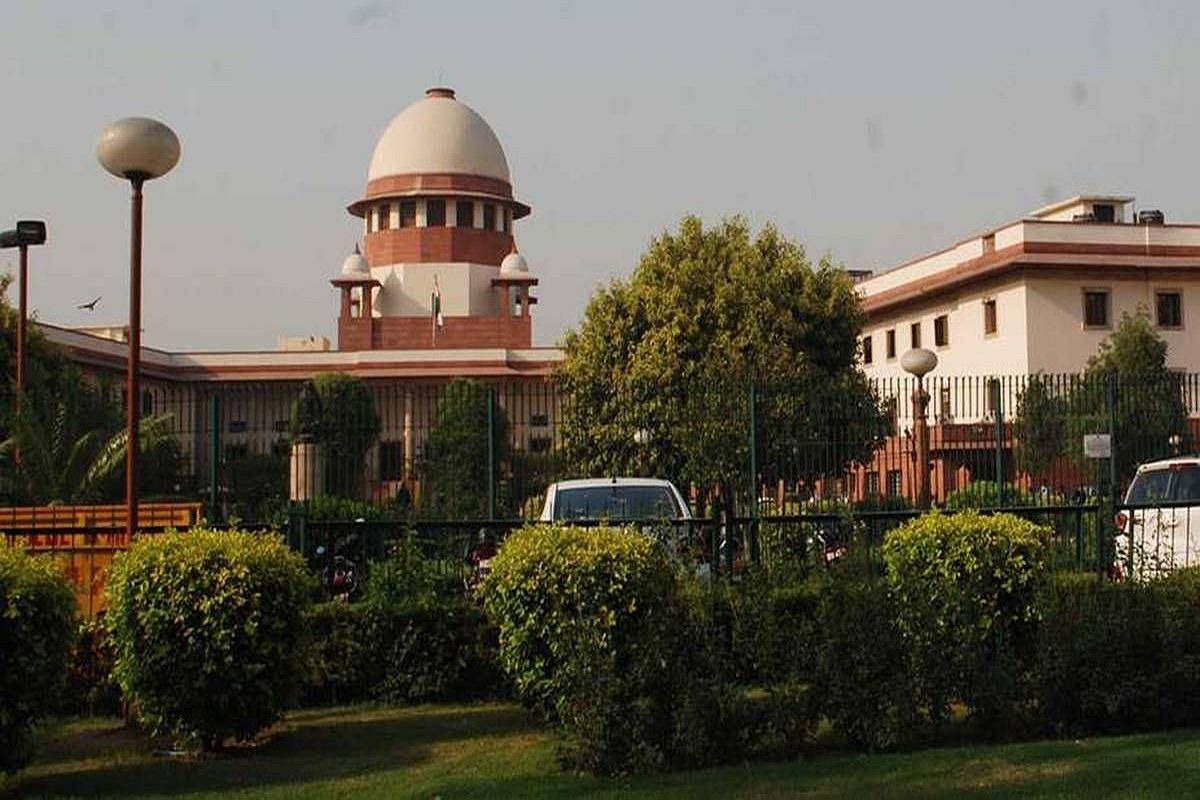
Supreme Court Sounds Alarm on Rising Child Trafficking: Urges Parental Vigilance

The Supreme Court of India issued a firm statement about child trafficking to all parents because the problem continues to worsen in the nation. Traffickers take advantage of juveniles' protection rights to push children into committing crimes. Between 2018 and 2022 there were more than 10,000 documented trafficking cases yet the court conviction rates reached only about 5 percent. The Supreme Court stressed the immediate requirement of higher national alertness and tougher enforcement measures to suppress this threatening problem. Through India's juvenile justice legislation together with the Protection of Children from Sexual Offences Act the country establishes a framework to block traffickers and support survivors.

Context:

  • The Supreme Court of India issued a critical warning to parents about child trafficking being on the rise in the country. 

  • The supreme court emphasized that traffickers abuse juvenile protection laws to push children into working as forced labor and sexual exploitation or forcing illegal adoptions. 

  • Recent statistics indicate more than 10,000 trafficking cases but the courts convicted fewer than 1% of the offenders. 

  • The court has instructed all members of society including authorities and parents to take active steps for stopping child trafficking.

Child Trafficking Overview:

  • Definition describes child trafficking as occurring when anyone recruits or transports or receives children to exploit them.

Forms of Trafficking:

  • Forced Labor: Children who fall victim to trafficking operations end up working in domestic and agricultural sectors as well as construction sites.

  • Sexual exploitation: Online exploitation combines with sexual exploitation to make victims serve as commercial sex workers.

  • Illegal Adoption: Criminal networks participate in illegal adoption through child abductions for selling to prospective parents.

Current Scenario and Statistics:

  • Verifiable statistics reveal that 1,031 convictions emerged from over 10,000 trafficking cases during 2018 to 2022.

  • States with highest number of Child Trafficking: Uttar Pradesh, Bihar, Andhra Pradesh.

  • The 3098 children saved between 18 and 22 years of age in NCRB 2022 data demonstrates both the magnitude of the situation and rescue work progress.

Challenges in Addressing Child Trafficking:

  • Low conviction rate: Investigative and prosecution methods are failing to secure enough convictions because the current conviction rate does not exceed 5%.

  • Lack of awareness: Trafficking victims fail to file reports because they experience both intimidation and social judgment and do not understand the laws.

  • Interstate network: Traffickers move their operations between states which creates difficulties for law enforcement officials to intersect trafficker networks.

Legal and Institutional Framework:

  • Article 23: The Indian constitution through Article 23 prohibits trafficking along with forcing people to work against their will.

  • Immoral Traffic (Prevention) Act, 1956 (ITPA): Criminal trafficking offenses including sexual exploitation of humans obtain their legal classification from the Immoral Traffic (Prevention) Act, 1956 (ITPA).

  • Protection of Children from Sexual Offences (POCSO) Act, 2012: The protection system known as Protection of Children from Sexual Offences (POCSO) Act, 2012 has established itself as the primary instrument aimed at safeguarding children from sexual abuses and pornography activities.

  • Juvenile Justice (Care and Protection of Children) Act, 2015: Under the Juvenile Justice (Care and Protection of Children) Act, 2015 governmental institutions work towards helping children who face trafficking risks get rehabilitation services.

  • Bharatiya Nyaya Sanhita (BNS) 2023: Under the Bharatiya Nyaya Sanhita (BNS) 2023 the government provides tools to fight human trafficking alongside organized criminal activities.

Anti-Trafficking Initiatives:

  • Anti Human Trafficking Units (AHTUs): The current number of 827 Anti Human Trafficking Units (AHTUs) operates as frontline forces against human trafficking operations.

  • Crime Multi Agency Centre (Cri-MAC): Crime Multi Agency Centre (Cri-MAC) functions as a system that enables different law enforcement agencies to exchange information about crimes and criminals.

  • Ujjawala Scheme: Ujjawala Scheme runs as a rehabilitation program which helps trafficking victims transition back home after prevention.

Global Initiatives:

  • Palermo Protocol: In its 2000 release the Palermo Protocol delivers nations framework tools to stop trafficking by establishing prevention, protection and prosecution measures.

  • Global Report on Trafficking in Persons: The Global Report on Trafficking in Persons from the UNODC reveals that among all detected trafficking victims worldwide children make up 38% (UNODC).

  • International Labour Organization (ILO): As a member of the United Nations development system the International Labour Organization (ILO) devotes its mission to ending child labor which constitutes trafficking activities.

Conclusion:

The Supreme Court has issued urgent advice for parents and authorities and social systems to protect children from increasingly prevalent child trafficking. The court's actions serve to create momentum for more effective measures that will fight against this despicable criminal activity. Trafficking receives effective protection through the combination of current legal structures and institutional and international intervention methods. The minimal trafficking convictions together with extensive cross-border criminal networks constitute substantial barriers which demand immediate responsible action from all public sector agencies to safeguard vulnerable children while delivering justice effectively.

MacGregor Memorial Medal Awarded to Five Military Personnel for Reconnaissance and Adventure Excellence

During an official ceremony the MacGregor Memorial Medal honored five members of the military who displayed superseding abilities in military reconnaissance and exploration and adventure activities. Chief of Defence Staff General Anil Chauhan conducted the presentation of awards at the United Service Institution of India (USI). Wing Commander D. Panda together with Electrical Artificer Rahul Kumar Pandey received the MacGregor Memorial Medal for 2023 and Chief Electrical Aircraft Artificer Ram Ratan Jat and Sergeant Jhumar Ram Poonia were selected for the 2024 awards. Colonel Ranvir Singh Jamwal received the medal for his work at the National Institute of Mountaineering and Adventure Sports although he could not attend due to his Mt. Kangchenjunga mountaineering expedition.

Context:

  • Major General Sir Charles Metcalfe MacGregor established the United Service Institution of India (USI) therefore the MacGregor Memorial Medal began its existence on July 3, 1888. 

  • When the medal system got established it was meant to reward soldiers who led reconnaissance missions and reconnaissance travels. 

  • The organization widened its reach in 1986 to embrace military missions after achieving independence. 

  • During the years 2023 and 2024 five exceptional military individuals received prestigious awards for their outstanding performance.

MacGregor Memorial Medal Awardees:

Year

Recipient Name 


2023

D. Panda 

Wing Commander

Air Force

Rahul Kumar Pandey

Electrical Artificer (Radio) 

Navy

2024

Ram Ratan Jat

Chief Electrical Aircraft Artificer (Radio) 

Navy

Jhumar Ram Poonia 

Sergeant 

Air Force

Ranvir Singh Jamwal

Colonel 

Director of the National Institute of Mountaineering and Adventure Sports in Arunachal Pradesh

The MacGregor Memorial Medal:

  • Major General Sir Charles Metcalfe MacGregor established the United Service Institution of India as USI in 1870 thus the commemorative medal was named after him.

  • The MacGregor Memorial Medal began its history in 1888 by honoring military reconnaissance activities followed by a change to include adventurous exploratory work.

  • Any member from the Territorial Army, Reserve Forces, Rashtriya Rifles and Assam Rifles can apply for the award.

Notable Past Recipients:

  • Various notable recipients have received this prestigious medal including:

    • Captain F.E. Younghusband (1890) 

    • Major General Orde Charles Wingate (1943)

    • Major Z.C. Bakshi (1949)

    • Col. Narinder Kumar obtained it during his Siachen Glacier exploration period (1978-81).

  • The journey around the globe performed by Cdr Dilip Donde and Lt. Cdr. Abhilash Tomy earned them recognition through the prestigious award.

Book Launch:

  • At the event they launched "Bravest of the Brave" which narrates the courageous existence of Naib Subedar Chunni Lal through an authored book written by Lt. Gen

  • Satish Dua (retd.). Retired Lt. Gen. Satish Dua authored the book which served as the subject of publication.

Conclusion:

The MacGregor Memorial Medal functions as a highly prestigious honor presented to military personnel who perform outstanding feats in military reconnaissance together with exploration and adventure activities. Such awards showcase military exploration's lengthy heritage by confirming essential roles in safeguarding national defense while explaining their global adventure significance. A celebration featured the legacy of Major General MacGregor while demonstrating that Indian Armed Forces uphold their commitments to military exploration along with adventure activities. The introduction of Bravest of the Brave serves as a new tribute to the outstanding bravery demonstrated by Indian military forces.

New Frog Species Leptobrachium aryatium Discovered in Assam After 21-Year Study

A team investigated Assam's Garbhanga Reserve Forest for 21 years before they discovered the frog species Leptobrachium aryatium. The frog obtained its name due to the partnership between Arya Vidyapeeth College in Guwahati which contributed to improving the area's recognition. Studies have shown that this discovery proves the region contains diverse wildlife but such biodiversity faces threats from urban development and habitat loss. Scientists utilized frog appearance together with DNA identification as well as call pattern analysis to establish its unique characteristics. The research examines why Garbhanga Reserve Forest demands immediate conservation efforts.

Context:

  • Scientists discovered the new frog species Leptobrachium aryatium after conducting a 21-year study at Garbhanga Reserve Forest located in the southwestern area of Guwahati, Assam. 

  • Scientific findings about the reserve's biodiversity have become more significant due to its pending destruction from urbanization expansion. 

  • Arya Vidyapeeth College received recognition through its activities in transforming a premises that originally manufactured country liquor into its modern identity. 

  • This recently discovered frog along with its unique traits reveals that the area needs immediate protection measures due to its rich biodiversity profile.

Key Points:

Discovery and Naming:

  • Scientists chose the name Leptobrachium aryatium to honor the educational institution Arya Vidyapeeth College based in Guwahati.

Study and Findings:

  • The frog researchers studied for the first time in 2004 and originally scientists identified it as Leptobrachium smithi.

  • Science has confirmed this organism to be a fresh addition to the Leptobrachium frog lineage which stands apart from other existing members within its genus.

  • The frog displays three distinctive features: dark orange and black eyes combined with its special throat pattern and its melodic nocturnal vocalization.

About Garbhanga Reserve Forest:

  • Garbhanga Reserve Forest located on the border of Assam and Meghalaya serves as a vital area that maintains both the climate regulation and water management of Guwahati.

  • Many kinds of wildlife thrive within this reserve including elephants as well as butterflies and uncommon birds but also numerous reptiles and amphibians.

Ecological Importance of Garbhanga Reserve Forest:

  • Garbhanga Reserve Forest hosts a diversity of species including elephants together with threatened birds and butterflies as well as the amphibian species Leptobrachium aryatium.

  • The Guwahati region uses the forest to control its weather patterns and water resources yet faces destruction from expanding cities and habitat eradication programs.

Conservation Significance:

  • The study emphasizes the immediate necessity for preserving Garbhanga Reserve Forest because this essential natural resource supports area and regional ecosystems.

Conclusion:

Leptobrachium aryatium serves as a new frog species that proves the biological richness of the Garbhanga Reserve Forest in Assam where urban development projects represent major threats. Such ecological hotspots require preservation because of their distinct frog population along with Arya Vidyapeeth College's local development achievements. The scientific community benefits from this new frog discovery at the same time highlighting why protecting the ecosystem requires immediate action against growing urban development.

Potential Biosignatures Discovered on Exoplanet K2-18b by JWST

The team of astronomers identified a noteworthy possible biosignature on K2-18b which exists at 124 light-years away from Earth. Scientists at the team utilized the James Webb Space Telescope (JWST) to spot atmospheric chemical indicators like Dimethyl Sulfide (DMS) and Dimethyl Disulfide (DMDS) on K2-18b. The substances exist in Earth microbial life publications and marine phytoplankton specifically produce these compounds. Scientists detect promising signs of life on K2-18b through their observations yet conclusive evidence remains under investigation by researchers.

Context:

  • Astronomers have discovered possible hints of potential life beyond our solar system on K2-18b which exists 124 light years away from the earth.

About K2-18b:

Introduction

  • Human exploration of K2-18b remains impossible due to its 124 light-year distance and its two-and-a-half Earth-size dimensions.

  • The small red star orbited by K2-18b exists in the habitable zone which allows liquid water to exist on its surface.

James Webb Space Telescope (JWST) Capabilities:

  • Through its strong capabilities the JWST examines exoplanet atmospheres by making observations of stellar light that passes through the planet's orbit.

  • The observation revealed possible traces of dimethyl sulfide (DMS) and dimethyl disulfide (DMDS) which exist on Earth due to biological processes. Marine phytoplankton together with bacteria produce these chemical substances.

Potential Significance of DMS and DMDS:

  • Scientists confirm that DMS and DMDS remain strictly microbial products which occur only within ocean environments on Earth.

  • Atmospheric observations of these molecules point in the direction of possible biological processes as well as microbial life existing on K2-18b.

  • The molecules exist in two forms and these compounds might form naturally without biological processes which creates uncertainty about the evidence.

Further Research:

  • Researchers ask for additional observations together with data confirmation to draw firm conclusions about the matter.

  • Future research teams will determine whether DMS and other selected chemical markers exist or not.

Conclusion:

Scientists have accomplished a landmark discovery through detecting plausible biosignatures on the exoplanet K2-18b. The recent discovery creates new potential for scientists to evaluate the capabilities of planets existing outside our solar system. Through its new measurements the James Webb Space Telescope functions as an essential tool to study these mysteries as it introduces a new era of astrobiology and space science.

Frequently Asked Questions (FAQs)

The current affairs cover recent national and international events related to UPSC, SSC, Banking, Railways, and State PCS.

You need to read about the current affairs daily, and revise them every week and every month to keep them longer in your memory.

Yes, Class24 provides free downloadable Daily Current Affairs PDFs for easy revision.

Yes, you can practice MCQs and quizzes to boost your exam preparation.

Absolutely. The content is written in simple, easy-to-understand bilingual language suitable for beginners.

Go to class24.com and click on the current affairs section directly, where you find everything that you need.

ssc-toppers

Start Learning Today with Class24

Related current affairs

Class24 offers free video lectures for smart preparation, covering CGL, CPO, CHSL, MTS, and GD exams. Learn from expert faculty, revise concepts easily, practice with PYQs, and improve speed and accuracy through high-quality, exam-focused video lessons anytime, anywhere.

Get success in your hand. Start study anytime anywhere.

The journey becomes simple and enjoyable when you start taking interest in it. And through our app “Class24”, we will be your trusted partners in developing that interest.

Daily Quizzes
Mock Tests
Ongoing

No ongoing tests right now.