
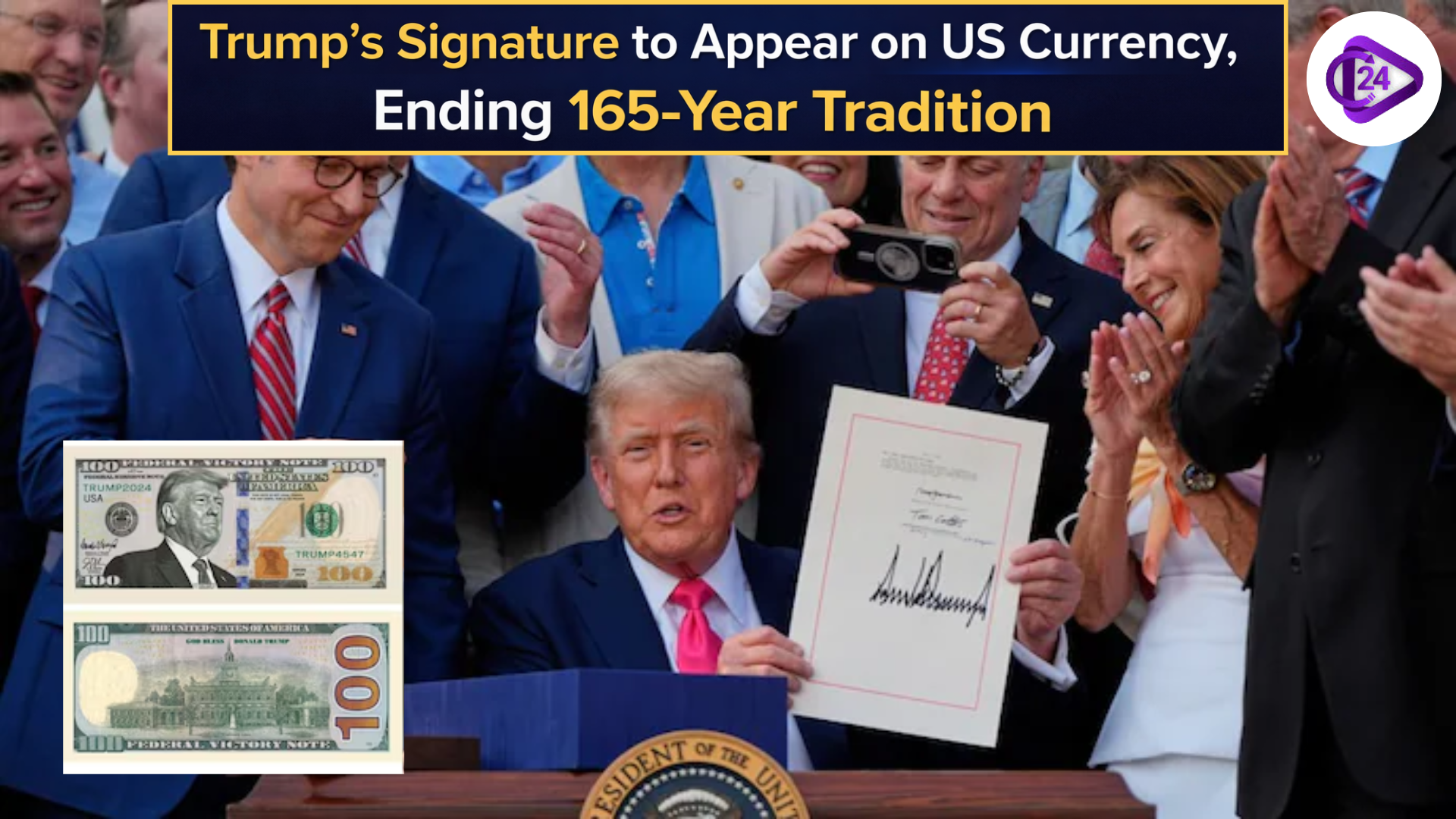
The move to have Donald Trump on the currency of the US is generating colossal political and social controversy. With this move in place, it would be breaking a tradition of 165 years: never putting a living or a recent political figure on American currency. The proponents pose that it is a comment on the work of Trump and his legacy, whereas critics claim that it politicises national symbols. The proposal has already spread widely in world media, questioning the past standards, administrative systems, and future of the US currency design.
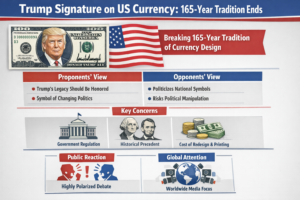
Trump Signature on US Currency: 165-Year Tradition Ends
- Since the 19th century, the United States has had a tradition of having historical figures such as presidents and national icons printed on its currency to prevent being associated with modern political leaders.
- The introduction of the signature of Donald Trump would be a significant change, the beginning of the breakage of the time-honoured traditions of institutional currency design.
- According to the supporters, the presidency of Trump changed the face of American politics and deserved a symbolic representation on the money.
- Opponents state that this would be dangerous because it would expose the country to more political manipulation, and this would likely polarise people further.
- Law scholars point out that the currency design in the US is regulated by the federal government and other bodies such as the Treasury Department, and as such, any change to this is intricate and cannot be implemented easily without significant acceptance.
- There are such historical precedents as George Washington and Abraham Lincoln, who were added after their deaths, which contributed to the continuation of the tradition of commemorating the past leaders instead of the present ones.
- The proposal also casts doubt on precedent; in that case, it would allow any other political personality to request the same honour.
- Economic experts observe that there is also the cost of logistics in changing the currency design, such as currency redesign, printing, and updating, to make it circulate.
- The response of the public is very polarised, and this type of polarisation is also more of a political polarization of the United States.
- The move is being monitored around the world, as it might be the re-invention of how national symbols are handled by democratic countries.
William Dalrymple Wins 2026 Mark Lynton History Prize
Conclusion – Trump’s Signature to Appear on US Currency
The idea to put Donald Trump on US money is a great break to the tradition that maintained the idea of being neutral and preserving history. It is being perceived as an acknowledgement of the political power by supporters, whereas critics fear the danger of politicising national symbols. Historically, such figures as George Washington and Abraham Lincoln received posthumous recognition, which strengthened the balance of institutions. This would involve complicated legal requests and may create a precedent. Finally, symbolism, democracy, and maintenance of established norms in existing governance are underlying tensions that are expressed in the debate.