


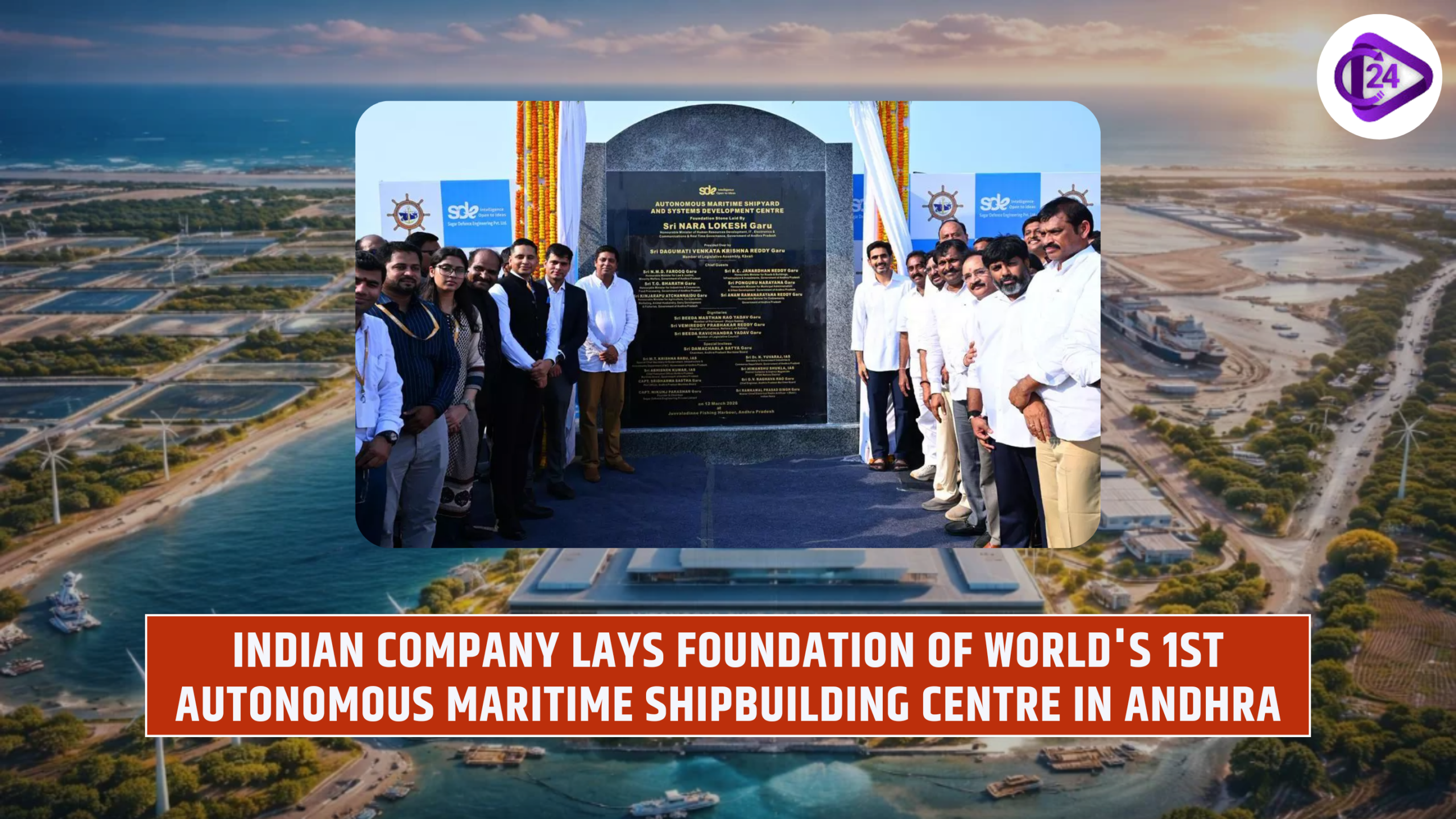
India has taken a significant step toward the future of maritime technology with the foundation of the world’s first autonomous maritime shipbuilding centre in Andhra Pradesh. The initiative, led by Sagar Defence Engineering, marks a major milestone in India’s ambition to become a global hub for advanced shipbuilding and maritime innovation. The facility will focus on developing autonomous surface vessels, integrating artificial intelligence, robotics, and advanced manufacturing techniques. Located in Visakhapatnam, the project is expected to boost India’s maritime capabilities, strengthen coastal security, and generate new opportunities in defence technology, research, and skilled employment across the region.
India moves toward next-generation naval technology with autonomous shipbuilding hub
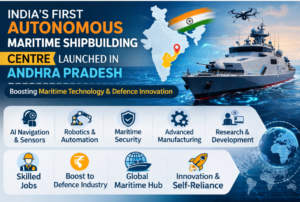
- The new centre aims to develop and manufacture autonomous maritime vessels capable of operating without human crews. These vessels will rely on advanced AI navigation systems, sensors, and real-time data processing.
- Establishing the facility in Andhra Pradesh highlights the state’s growing importance in India’s defence manufacturing and maritime technology ecosystem.
- The project is being developed with support from the Indian Navy and aligns with India’s broader push toward self-reliance in defence under the Make in India initiative.
- Autonomous maritime vessels can play a crucial role in surveillance, intelligence gathering, and maritime security across the Indian Ocean region.
- The shipbuilding centre will incorporate advanced robotics, digital ship design, and automated manufacturing systems to streamline production.
- Experts believe the facility could place India among the leading countries developing autonomous maritime technology.
- The centre will also function as a research and development hub where engineers and scientists can test new unmanned vessel technologies.
- Collaboration with academic institutions and defence research organizations is expected to accelerate innovation in maritime robotics.
- The project will generate skilled jobs in engineering, software development, robotics, and shipbuilding.
- Local industries and supply chains around Visakhapatnam are expected to benefit from increased demand for advanced manufacturing components.
- Autonomous ships can operate for longer durations at sea, reducing operational costs and human risk.
- The initiative strengthens India’s strategic maritime presence and supports the modernization of the country’s naval capabilities.
Merchant Ships Continue to be Stranded Upstream of Strait of Hormuz
Conclusion
The foundation of the world’s first autonomous maritime shipbuilding centre marks a transformative moment for India’s maritime and defence sectors. Led by Sagar Defence Engineering in Visakhapatnam, the initiative demonstrates India’s growing focus on advanced technologies such as artificial intelligence, robotics, and unmanned systems. By enabling the development of next-generation autonomous vessels, the project will strengthen coastal security, enhance naval capabilities, and support long-term innovation. It also reinforces the goals of the Make in India initiative by promoting indigenous defence manufacturing. Overall, the centre is expected to position India as a key player in the future of global maritime technology