


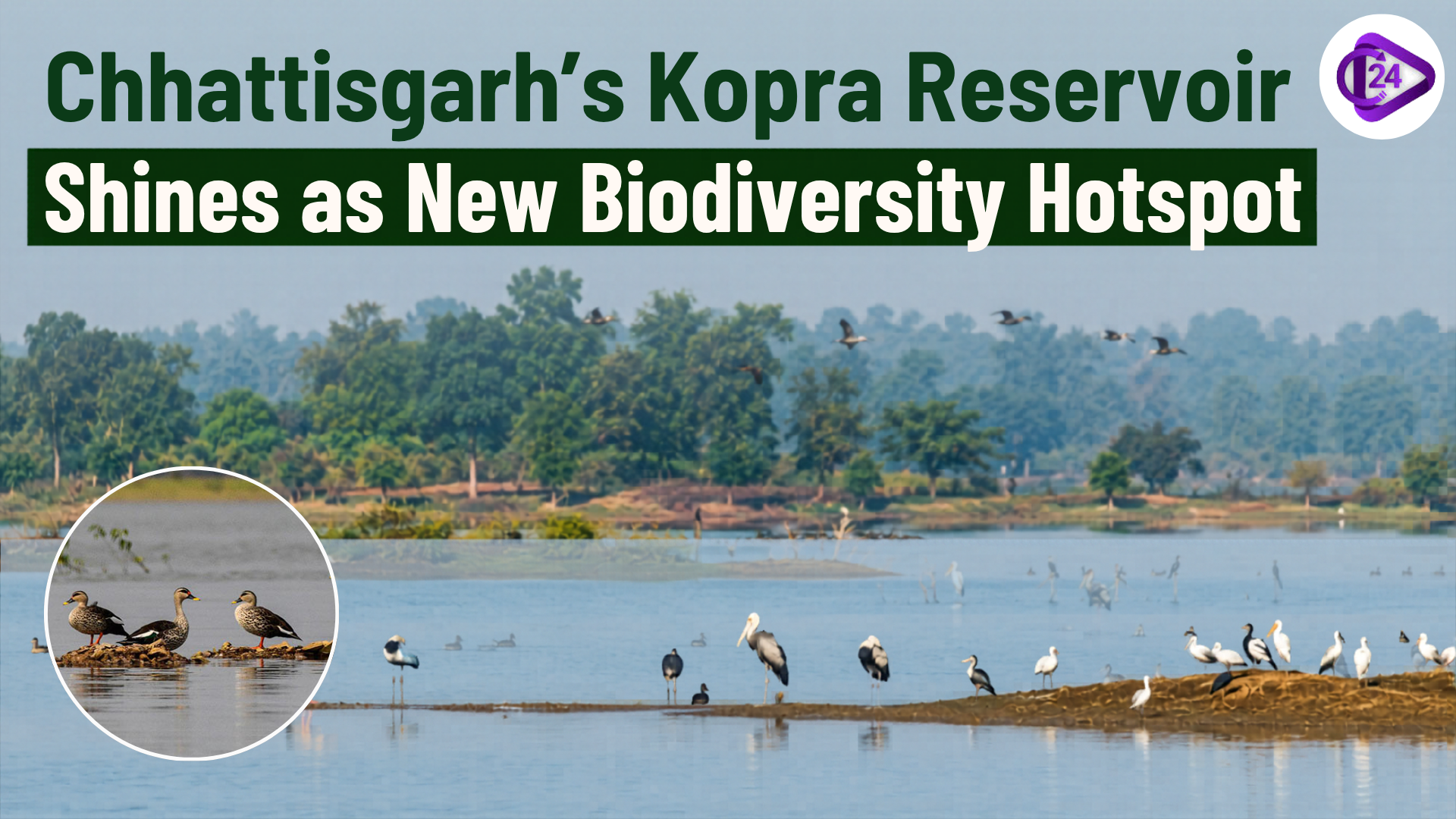
The Kopra Reservoir in Bilaspur district is now a significant bird species site and a biodiversity hotspot in Chhattisgarh, as it was accorded the status of an International Wetland of significance for birds under the Ramsar endorsement. The reservoir serves as a stopover site for migratory birds, supports breeding fish species, and provides irrigation and local livelihoods. This Ramsar tag emphasises its ecological value and reflects the theme of International Day for Biological Diversity 2026: “Local Action, Global Impact”. The wetland is now recognised as a symbol of India’s conservation and climate resilience and sustainable development efforts.
Importance of Kopra Reservoir as a Biodiversity Hotspot
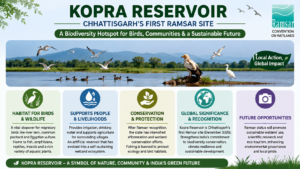
- Kopra Reservoir is the first Ramsar site in Chhattisgarh since the state acquired the status of RAMSAR site in December 2025, and is located in Bilaspur district.
- Ramsar Sites are areas of wetlands designated under the Ramsar Convention as of international importance for their wetland values.
- It’s a significant site for migratory and local birds such as river tern, common pochard and Egyptian vulture.
- Highly productive in terms of fish, amphibians, reptiles, insects, and aquatic plants.
- The wetland irrigates and supplies drinking water to villages in the vicinity and agriculture in the area.
- It was constructed as an artificial irrigation project but has developed into a self-maintained wetland community.
- The government of Chhattisgarh took up more serious afforestation and conserving wetlands activities following the recognition as a RAMSAR site.
- Banning fishing in the reservoir to preserve the ecological and migratory bird habitats.
- Overall, the site symbolises India’s priorities and objectives for biodiversity conservation and resilience in the face of climate change.
- It is hoped that Ramsar recognition will lead to sustainable use of wetlands, scientific research and eco-tourism.
- The reservoir is an expression of the increasing role of wetlands in environmental governance.
- India’s inventory of RAMSAR sites is still growing in order to enhance the conservation of wetlands and ecological sustainability.
PYQs on Ramsar Sites
| Exam Name | Year | Question | Options | Answer |
| UPSC Prelims | 2025 | The Ramsar Convention is related to the conservation of which of the following? | A. Forests B. Wetlands C. Grasslands D. Coral Reefs | B. Wetlands |
| SSC CGL | 2024 | Which of the following is the first Ramsar Site in India? | A. Chilika Lake B. Keoladeo National Park C. Wular Lake D. Loktak Lake | A. Chilika Lake |
| Railway NTPC | 2023 | Ramsar Convention was signed in which country? | A. India B. Switzerland C. Iran D. France | C. Iran |
| SSC CHSL | 2024 | Which Indian state has the largest number of Ramsar Sites? | A. Gujarat B. Tamil Nadu C. Uttar Pradesh D. Rajasthan | B. Tamil Nadu |
| UPSC CDS | 2023 | Which among the following is a Ramsar Site? | A. Sundarbans B. Gir National Park C. Kaziranga D. Jim Corbett | A. Sundarbans |
| SSC GD | 2024 | World Wetlands Day is observed on: | A. 5 June B. 22 April C. 2 February D. 21 March | C. 2 February |
| State PCS | 2025 | Loktak Lake, a Ramsar Site, is located in which state? | A. Assam B. Meghalaya C. Manipur D. Tripura | C. Manipur |
| SSC MTS | 2023 | Keoladeo National Park, a Ramsar Site, is located in: | A. Gujarat B. Rajasthan C. Madhya Pradesh D. Odisha | B. Rajasthan |
| UPSC Prelims | 2022 | Which organization maintains the Ramsar List of Wetlands of International Importance? | A. UNESCO B. UNEP C. Ramsar Secretariat D. IUCN | C. Ramsar Secretariat |
| Railway Group D | 2024 | India joined the Ramsar Convention in which year? | A. 1971 B. 1982 C. 1990 D. 2001 | B. 1982 |
President Murmu to Confer Padma Awards
Conclusion on Kopra Reservoir
The success of the conservation of this wetland and protection of biodiversity has certainly made Kopra Reservoir the symbol of conservation efforts in India. Its designation as a Ramsar site underscores the need to ensure the conservation of wetlands for ecological functions, climate change response and living livelihoods. The reservoir is the first Ramsar of the Chhattisgarh State and an example to the world on how local effort can turn the conservation effort into a global drive. It also enhances India’s international standing in conservation activities of biodiversity and promotes an understanding of the ecological and economic benefits of wetlands.