

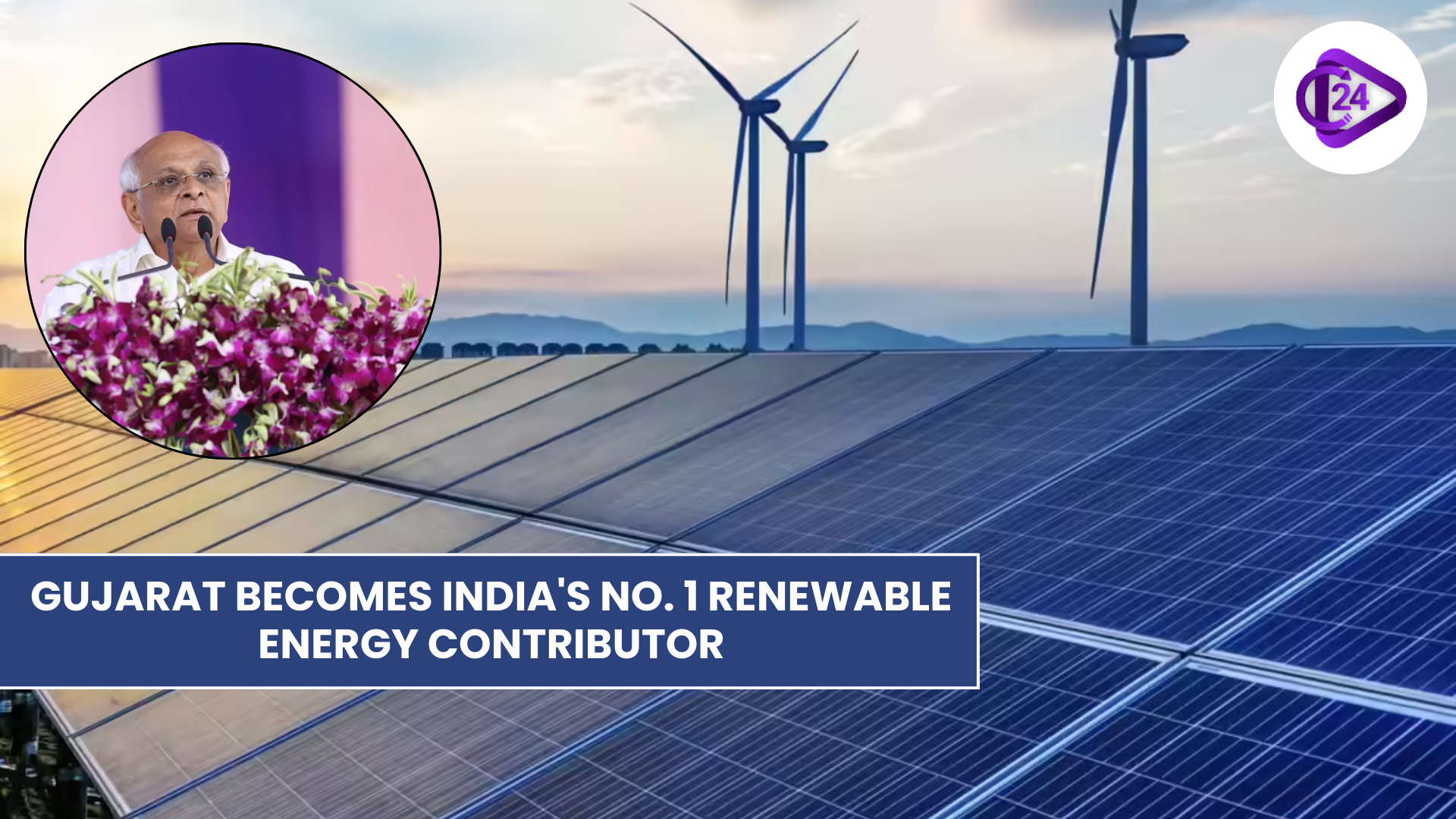
Gujarat has now become the largest contributor of renewable energy in India, with approximately 16.5 percent of the total installed renewable power in the nation as of December 2025, and it boasts approximately 42.58 GW of clean energy capacity. The success of this puts Gujarat at the forefront of the rest of Indian states in the development of clean energy infrastructure, particularly wind and hybrid sources, spearheaded by the state government. The performance of the state fortifies the overall transition of India to its 2030 clean energy objectives and net-zero emission objectives, evidencing the central role that Gujarat plays in the future transformation of the country towards sustainable and low-carbon energy systems.
Gujarat’s Renewable Energy Leadership in India
-
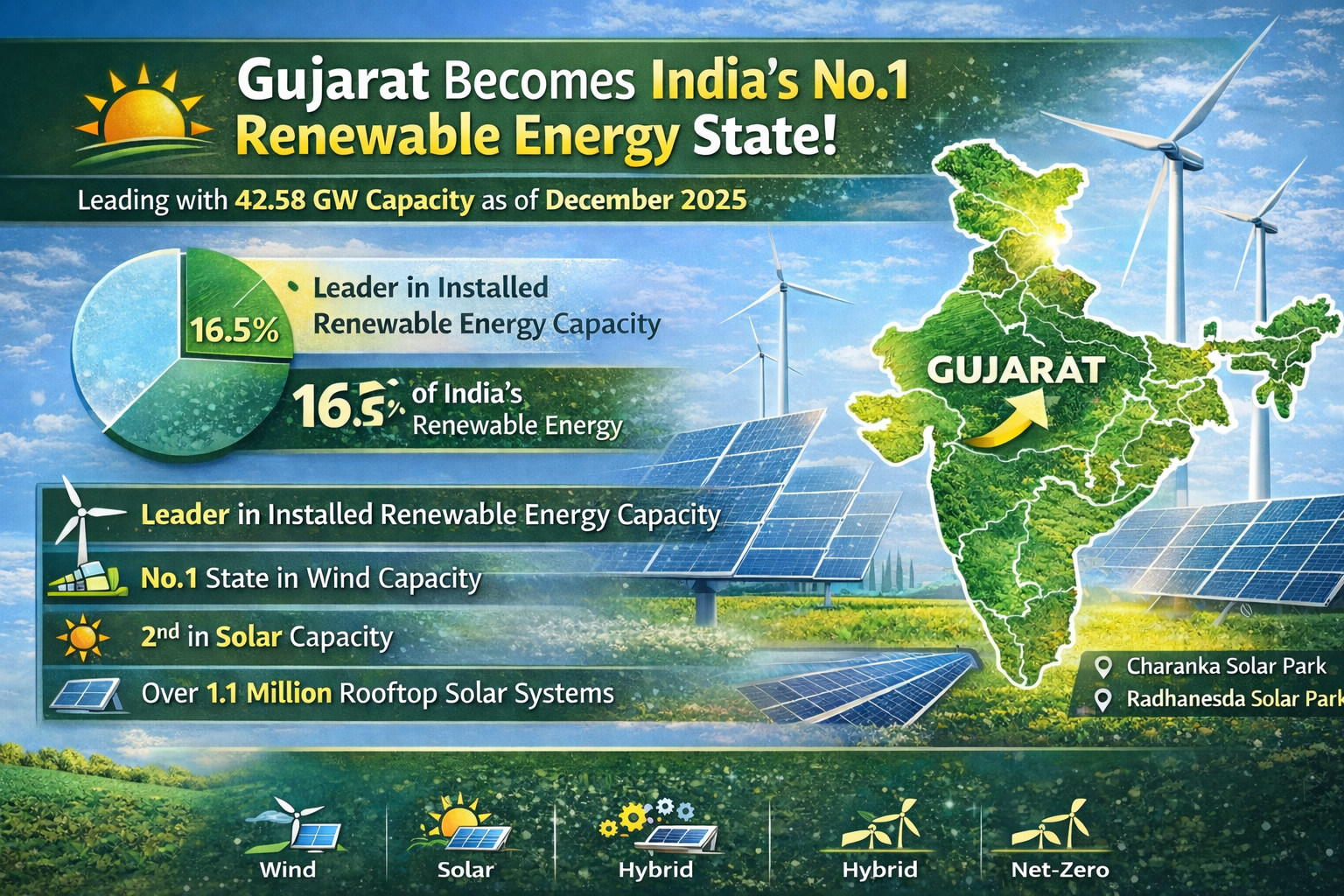
Gujarat is now the greatest contributor in the field of renewable energy, and the installed capacity has gone to 42.583 GW as of December 31, 2025.
-
India has a total capacity of 16.50 percent of renewable energy in the state.
-
Gujarat is the leader in installed renewable energy and wind power capacity.
-
It is second among states in India in terms of solar power capacity.
-
Gujarat has the highest number of rooftop solar installations of more than 1.1 million systems.
-
Charanka and Radhanesda are major solar parks in Gujarat.
-
The clean energy development of the state promotes the net-zero and climate objectives of India.
-
The Gujarat state continues to receive investments in wind, solar, and hybrid renewable projects.
Latest Previous Year Questions on Renewable Energy
| Exam Level | Question | Options | Answer |
|---|---|---|---|
| SSC | Which of the following is not a renewable energy source? | A. Solar energy B. Wind energy C. Biomass D. Fossil fuel | D. Fossil fuel |
| SSC | Which renewable energy source has the greatest potential in India? | A. Solar power B. Biomass power C. Small hydel power D. Waste to energy | A. Solar power |
| UPSC | Geothermal energy is primarily classified as | A. Renewable B. Non-renewable C. Fossil fuel D. Nuclear | A. Renewable |
| UPSC | Statements on energy sources | A. 1 & 2 only B. 2 & 3 only C. 1 & 3 only D. All | A. 1 and 2 only |
| SSC | Bio-diesel crop among the following is | A. Cotton B. Sugarcane C. Jatropha D. Potato | C. Jatropha |
| SSC | Biomass energy can be produced from | A. Wood B. Crop residues C. Animal waste D. All | D. All of the above |
| SSC | Which gas is obtained from biomass gasification? | A. Methane B. Producer Gas C. Hydrogen D. CO | B. Producer Gas |
| UPSC | Geothermal energy is generated from | A. Solar radiation B. Earth’s heat C. Tides D. Wind | B. Earth's internal heat |
| Railway | Solar photovoltaic converts | A. Heat→Electricity B. Light→Electricity C. Motion D. Wind | B. Light to electricity |
| UPSC/SSC | Best for reducing GHG emissions | A. Coal B. Wind C. Diesel D. Gas | B. Wind |
| State PSC | India’s first tidal project is at | A. Sunderbans B. Gulf of Kutch C. Khambhat D. Chilika | C. Gulf of Khambhat |
| Railway | Hybrid renewable system means | A. Solar + Wind B. Solar only C. Wind only D. Biomass | A. Using solar and wind together |
| Bank PO | Which is a clean energy source? | A. Coal B. Oil C. Wind D. Diesel | C. Wind |
| UPSC | Bio-diesel is mainly produced from | A. Jatropha B. Cotton C. Sugarcane D. Potato | A. Jatropha |
| SSC/UPSC | Hydroelectric power is | A. Non-renewable B. Renewable C. Fossil D. Nuclear | B. Renewable |
Conclusion (Gujarat Becomes India's No. 1 Renewable Energy)
Gujarat, as the largest renewable energy producer in India, represents its dominance in solar, wind, and hybrid energy. Having more than 42 GW of clean energy potential, the state stimulates sustainable development, reinforcement of national climate priorities, and demonstrates to other states the good example of the development of green energy and the minimization of carbon emissions.