

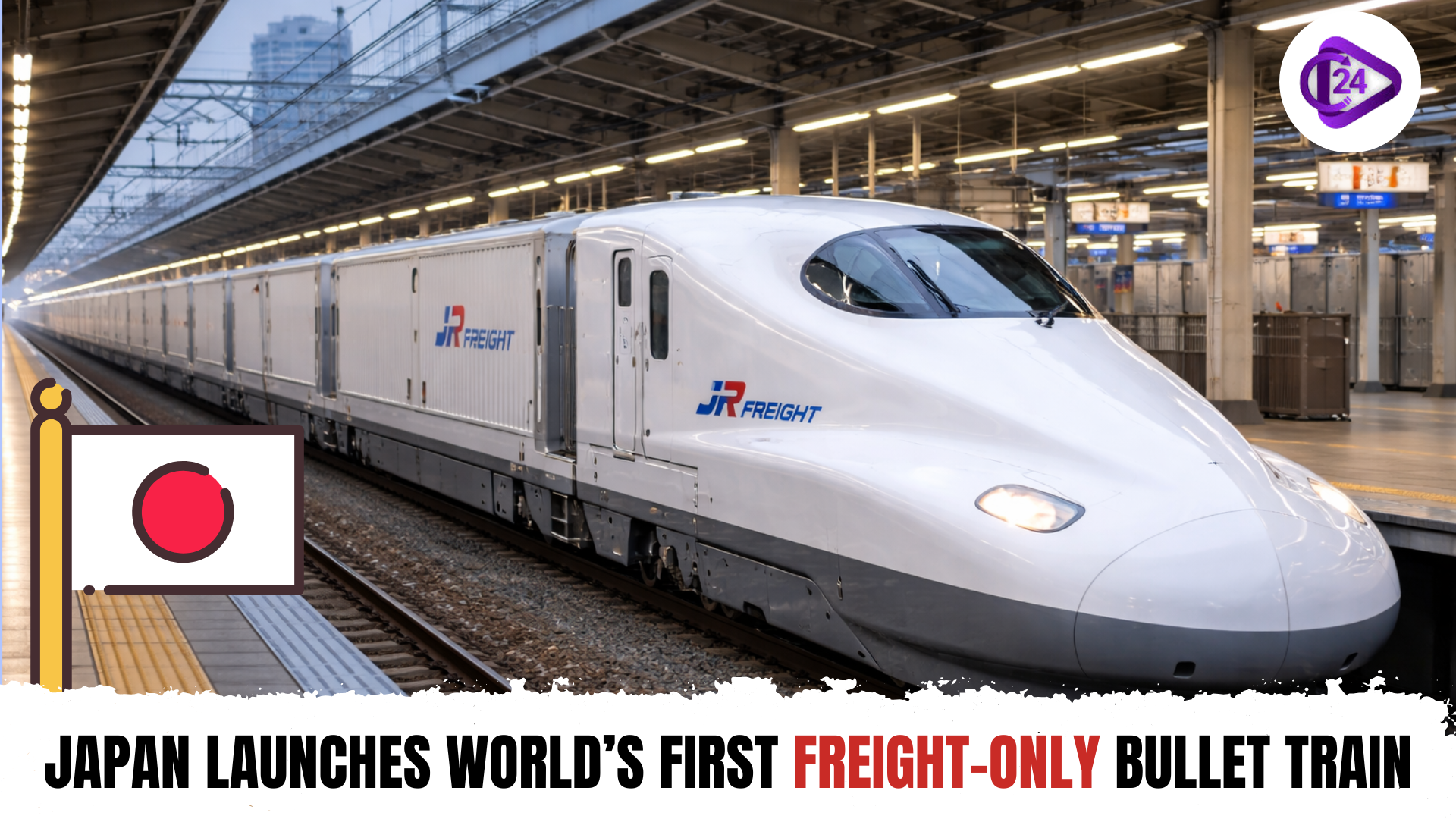
Japan has made a significant breakthrough in the transportation and logistics sector with the introduction of the first freight-only bullet train in the world, thus transforming the usage of high-speed rail. The Shinkansen system, which has been traditionally used in passenger transportation, has been modified to feature cargo transportation conveniently and speedily. This innovation is timely because the world’s supply chains are currently in need of quicker, safer, and more dependable delivery networks. Japan has integrated speed and sustainability by modifying the current train models into cargo trains. The project will transform the logistics sector because it will eliminate the use of road and air transport and will guarantee the delivery of high-value and perishable products in time across the regions.
Japan’s Freight-Only Bullet Train: Features, Speed & Key Highlights
-
Japan has brought the first freight-only bullet train in history to transform logistics.
-
It is operated by the East Japan Railway Company, which is a large railway company.
-
It is anchored on the enhanced Shinkansen technology.
-
One of the existing E3 Series Shinkansen trains has been redesigned for cargo.
-
The first one is that passenger seats are eliminated to allow the establishment of massive storage areas for goods.
-
The train can carry huge loads of cargo during a trip.
-
It has a top speed of approximately 270-275 km/h, hence very high regarding the speed of commerce.
-
The service primarily links to Tokyo as well as the north, such as Morioka.
-
It is perfect for transporting perishable goods such as seafood, fruits, and medical supplies.
-
The fast movement will provide a timely delivery and less spoilage of goods.
-
The vibration in the train is low, which makes it suitable for delicate and high-value items.
-
It assists in minimizing road jams and reliance on truck deliveries.
-
This system promotes the sustainability of the environmental aspect through the reduction of carbon emissions.
-
The concept was accelerated throughout the pandemic, when trains were carrying freight.
-
It bridges the price disparities between the slow rail freight services and the costly air truck services.
-
Other countries can be encouraged by this innovation to use high-speed freight rail systems in the future.
Asked PYQs on Bullet Point
| Question | Options | Answer |
|---|---|---|
| What is the name of Japan’s high-speed rail network? | A. Maglev B. Eurostar C. Shinkansen D. TGV |
C |
| In which year was the first bullet train introduced? | A. 1950 B. 1964 C. 1975 D. 1980 |
B |
| Which country introduced the first bullet train system? | A. China B. USA C. Japan D. France |
C |
| Which organisation implements bullet train projects in India? | A. Indian Railways B. IRCTC C. National High Speed Rail Corporation Limited D. NHAI |
C |
| High-speed rail systems generally operate at speeds of: | A. 100–150 km/h B. 150–200 km/h C. 200–250 km/h D. Above 250 km/h |
D |
| Which country recently launched a freight-only bullet train? | A. Germany B. France C. Japan D. USA |
C |
| Bullet trains are primarily powered by: | A. Diesel B. Petrol C. Electricity D. Steam |
C |
| Which country has the largest high-speed rail network? | A. USA B. China C. UK D. Germany |
B |
| What is the main advantage of bullet trains? | A. Low cost B. High speed C. Heavy load D. Less maintenance |
B |
| Bullet trains help reduce which environmental issue? | A. Soil erosion B. Water pollution C. Carbon emissions D. Deforestation |
C |
India Ranks 116th in World Happiness Report 2026
Conclusion – Japan’s Freight-Only Bullet Train
The freight-only bullet train in Japan is a game-changer in high-speed logistics with its efficiency, sustainability, and innovativeness. Through the developed Shinkansen system, Japan has shown how it is possible to use the current infrastructure and update it to suit the current supply chain requirements. This project will save on time taken to make deliveries, decrease carbon emissions, and decrease road transport pressures. It provides a global precedent to the use of technology and sustainable development in the transportation and logistics industry.