

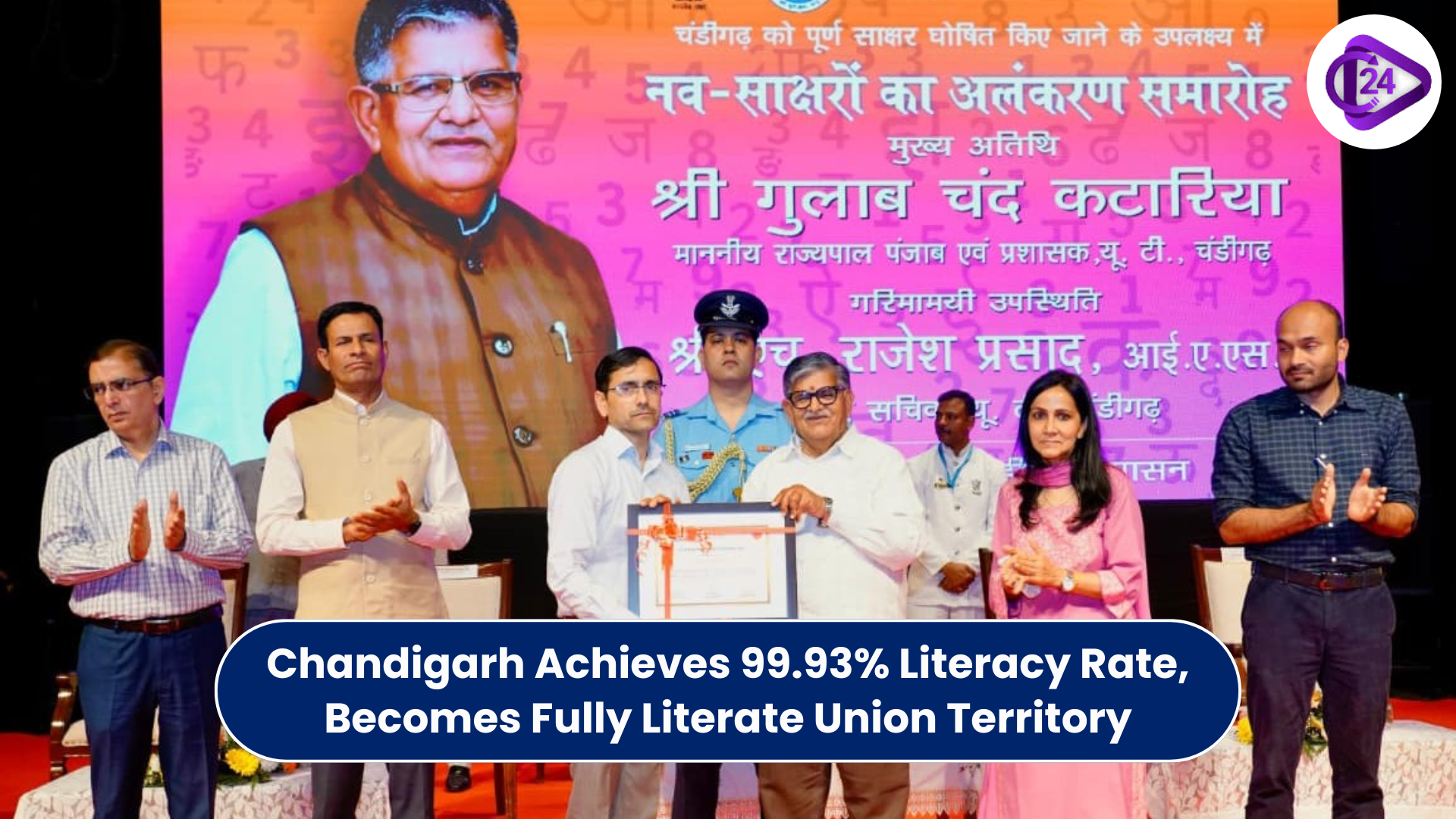
Chandigarh has achieved a significant milestone by recording a literacy rate of 99.93%, officially becoming a fully literate Union Territory in India. This achievement reflects consistent efforts by the administration, educators, and community organizations to promote universal education and adult literacy. Through targeted awareness campaigns, volunteer-led teaching initiatives, and improved access to schools, the region has successfully ensured that almost every resident possesses basic reading and writing skills. The accomplishment highlights the strength of Chandigarh’s education system and demonstrates how coordinated policies and community participation can eliminate illiteracy and promote inclusive development across society.
Key Highlights of Chandigarh Becoming a Fully Literate Union Territory
-
Chandigarh has achieved an impressive literacy rate of 99.93 percent, meeting the criteria required for a region to be considered fully literate. This milestone indicates that nearly the entire eligible population can read and write with understanding.
-
The success is largely attributed to sustained government initiatives that focused on improving access to education, expanding learning opportunities, and promoting literacy among individuals who previously lacked formal schooling.
-
Adult literacy programs played a crucial role in this achievement. Special classes, community learning centers, and volunteer-driven education programs helped thousands of adults acquire basic reading and writing skills.
-
A strong educational infrastructure in Chandigarh, including well-established schools, colleges, and training institutions, has contributed to maintaining high enrollment levels and reducing dropout rates.
-
Community participation has been a key factor in the literacy campaign. Teachers, volunteers, and social organizations actively worked to identify non-literate individuals and encourage them to join educational programs.
-
The rise in literacy levels supports broader social and economic development by improving employment prospects, increasing awareness about health and rights, and strengthening civic participation among citizens.
Best PYQs on Literacy
| Question | Options | Correct Answer | Exam | Year |
|---|---|---|---|---|
| Which state has the highest literacy rate in India according to Census 2011? | (A) Tamil Nadu (B) Kerala (C) Maharashtra (D) Himachal Pradesh |
(B) Kerala | UPSC Prelims | 2014 |
| Which Union Territory recorded the highest literacy rate in India according to Census 2011? | (A) Delhi (B) Chandigarh (C) Lakshadweep (D) Puducherry |
(C) Lakshadweep | SSC CGL | 2017 |
| Literacy rate in India is calculated for which age group of population? | (A) 5 years and above (B) 7 years and above (C) 10 years and above (D) 15 years and above |
(B) 7 years and above | SSC CHSL | 2019 |
| Which programme was launched in 1988 to eradicate adult illiteracy in India? | (A) Sarva Shiksha Abhiyan (B) National Literacy Mission (C) Mid-Day Meal Scheme (D) Operation Blackboard |
(B) National Literacy Mission | UPSC Prelims | 2012 |
| Which state became the first fully literate state in India? | (A) Tamil Nadu (B) Kerala (C) Karnataka (D) Goa |
(B) Kerala | UPSC Prelims | 2009 |
| The National Literacy Mission mainly targeted which age group? | (A) 6–14 years (B) 10–20 years (C) 15–35 years (D) 18–40 years |
(C) 15–35 years | SSC CGL | 2015 |
| Which authority conducts the Census that provides official literacy data in India? | (A) NITI Aayog (B) Registrar General of India (C) Planning Commission (D) Ministry of Education |
(B) Registrar General of India | UPSC Prelims | 2016 |
| Which program aims to provide universal elementary education in India? | (A) Rashtriya Madhyamik Shiksha Abhiyan (B) Sarva Shiksha Abhiyan (C) Skill India Mission (D) Digital India |
(B) Sarva Shiksha Abhiyan | SSC CGL | 2018 |
Andhra Pradesh Considers Rs 25,000 Incentive for Second Child
Conclusion
The achievement of a 99.93 percent literacy rate marks an important milestone for Chandigarh and highlights the success of long-term educational initiatives in India. Becoming a fully literate Union Territory demonstrates the effectiveness of collaborative efforts between government authorities, educators, and local communities. Higher literacy levels not only improve individual opportunities but also contribute to stronger social and economic development. Chandigarh’s accomplishment sets a strong example for other states and union territories working to eliminate illiteracy. Continued focus on quality education, lifelong learning, and skill development will help sustain this progress and support inclusive growth in the future.