

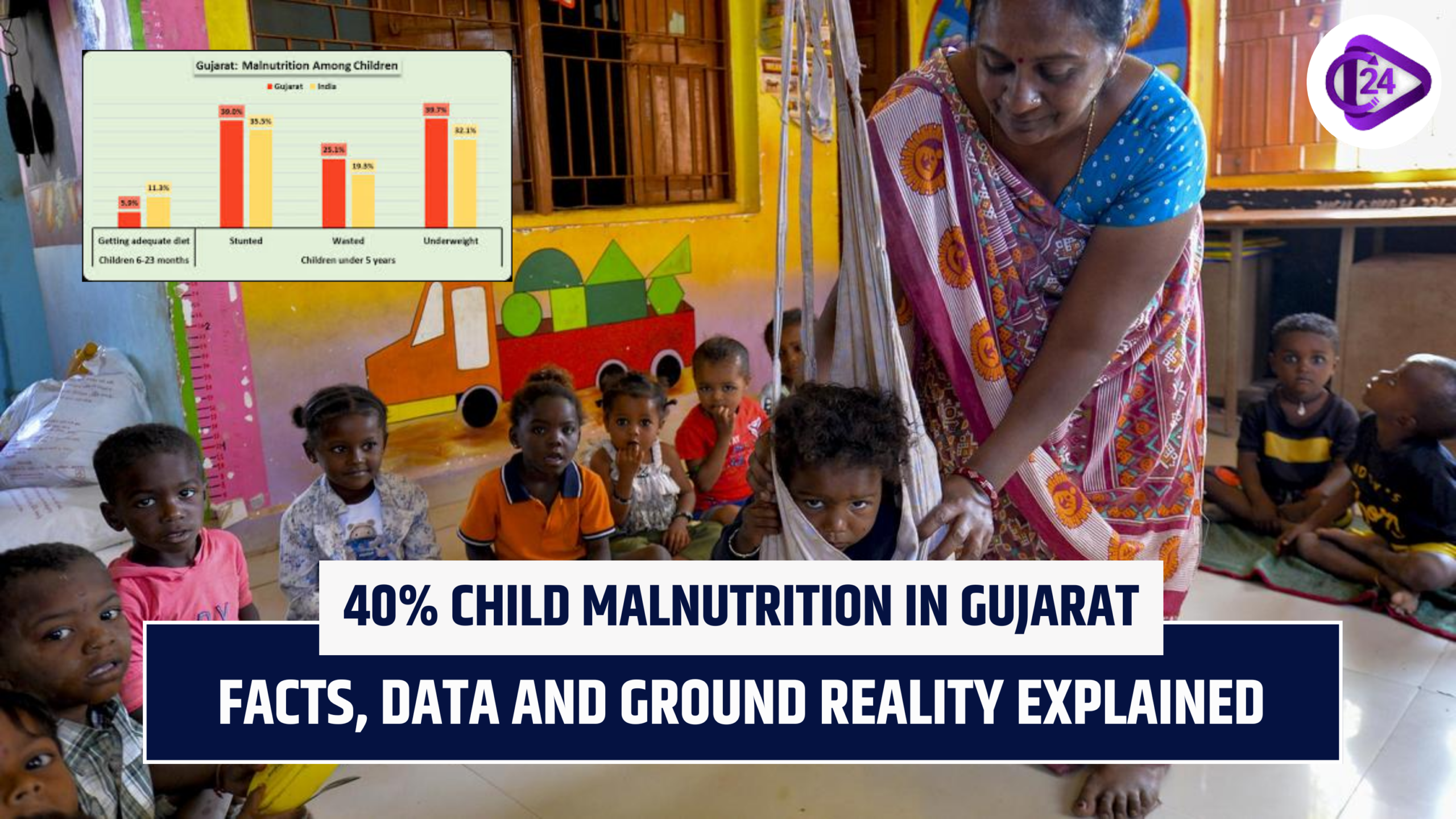
Child malnutrition remains a critical public health concern in Gujarat, despite significant economic growth and development. Reports and surveys, including findings from the National Family Health Survey, have highlighted worrying trends in undernutrition, stunting, and wasting among children. The claim that 40% of children are malnourished has sparked debate, drawing attention to gaps in healthcare access, maternal nutrition, and social inequalities. Understanding the real data, underlying causes, and regional disparities is essential to assess the situation accurately and design effective interventions for improving child health outcomes.
Key Facts and Ground Reality of Child Malnutrition in Gujarat
-
Malnutrition includes stunting (low height), wasting (low weight), and underweight conditions
-
Data from the National Family Health Survey indicate significant levels of child undernutrition in Gujarat
-
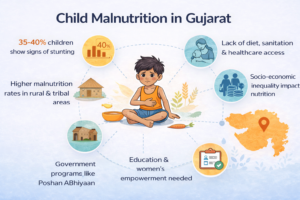
Around 35–40% children show signs of stunting, reflecting chronic malnutrition
-
Wasting levels remain high, indicating acute nutritional deficiencies
-
Rural and tribal regions face higher malnutrition rates compared to urban areas
-
Maternal health and nutrition directly impact child growth and development
-
Lack of a balanced diet, sanitation, and healthcare access contributes to the issue
-
Government schemes like Poshan Abhiyaan aim to reduce malnutrition
-
Integrated Child Development Services provides supplementary nutrition and health services
-
Awareness gaps regarding child feeding practices and breastfeeding persist
-
Socio-economic inequality plays a major role in nutrition outcomes
-
Improvements seen in some indicators, but progress remains uneven
-
Need for data-driven policy implementation and monitoring
-
Focus on nutrition-sensitive interventions like sanitation, education, and women’s empowerment
-
Tackling malnutrition requires a multi-sectoral approach involving health, education, and welfare sectors
Important Nutrition Schemes in India
| Scheme Name | Launched By | Year | Key Objective |
|---|---|---|---|
| Integrated Child Development Services (ICDS) | Govt. of India | 1975 | Supplementary nutrition, preschool education, maternal & child care |
| Mid-Day Meal Scheme (PM POSHAN) | Govt. of India | 1995 | Improve the nutrition of schoolchildren. |
| Poshan Abhiyaan | Govt. of India | 2018 | Reduce stunting, wasting & anaemia. |
| National Nutrition Policy | Govt. of India | 1993 | Improve overall nutritional status |
| Anaemia Mukt Bharat | Govt. of India | 2018 | Reduce anaemia among women & children |
| Pradhan Mantri Matru Vandana Yojana | Govt. of India | 2017 | Financial support for pregnant women |
| Scheme for Adolescent Girls | Govt. of India | 2010 | Nutrition support for adolescent girls |
| National Food Security Act | Govt. of India | 2013 | Food security & subsidised grains |
| Eat Right India | Food Safety and Standards Authority of India | 2018 | Promote safe & healthy food habits |
| POSHAN 2.0 | Govt. of India | 2021 | Strengthen the nutrition delivery system |
Asked about Malnutrition Diseases
| Disease | Deficiency | Key Symptoms |
|---|---|---|
| Kwashiork | Protein deficiency | Swollen belly, oedema, skin changes |
| Marasmus | Protein + calorie deficiency | Severe wasting, thin body |
| Anemia | Iron deficiency | Fatigue, pale skin |
| Rickets | Vitamin D deficiency | Weak bones, bowed legs |
| Scurvy | Vitamin C deficiency | Bleeding gums |
| Night Blindness | Vitamin A deficiency | Poor vision at night |
| Goitre | Iodine deficiency | Swollen thyroid gland |
| Beriberi | Vitamin B1 deficiency | Weak muscles, nerve issues |
India Overtakes China as Largest Exporter of Cotton Products to the US
Conclusion (40% Child Malnutrition in Gujarat)
Child malnutrition in Gujarat remains a serious concern despite policy efforts. While schemes and data show gradual improvement, challenges like regional inequality, poor maternal health, and awareness gaps persist. A focused, multi-sectoral approach with effective implementation, monitoring, and community participation is essential to achieve sustainable nutrition outcomes and ensure healthier future generations.