
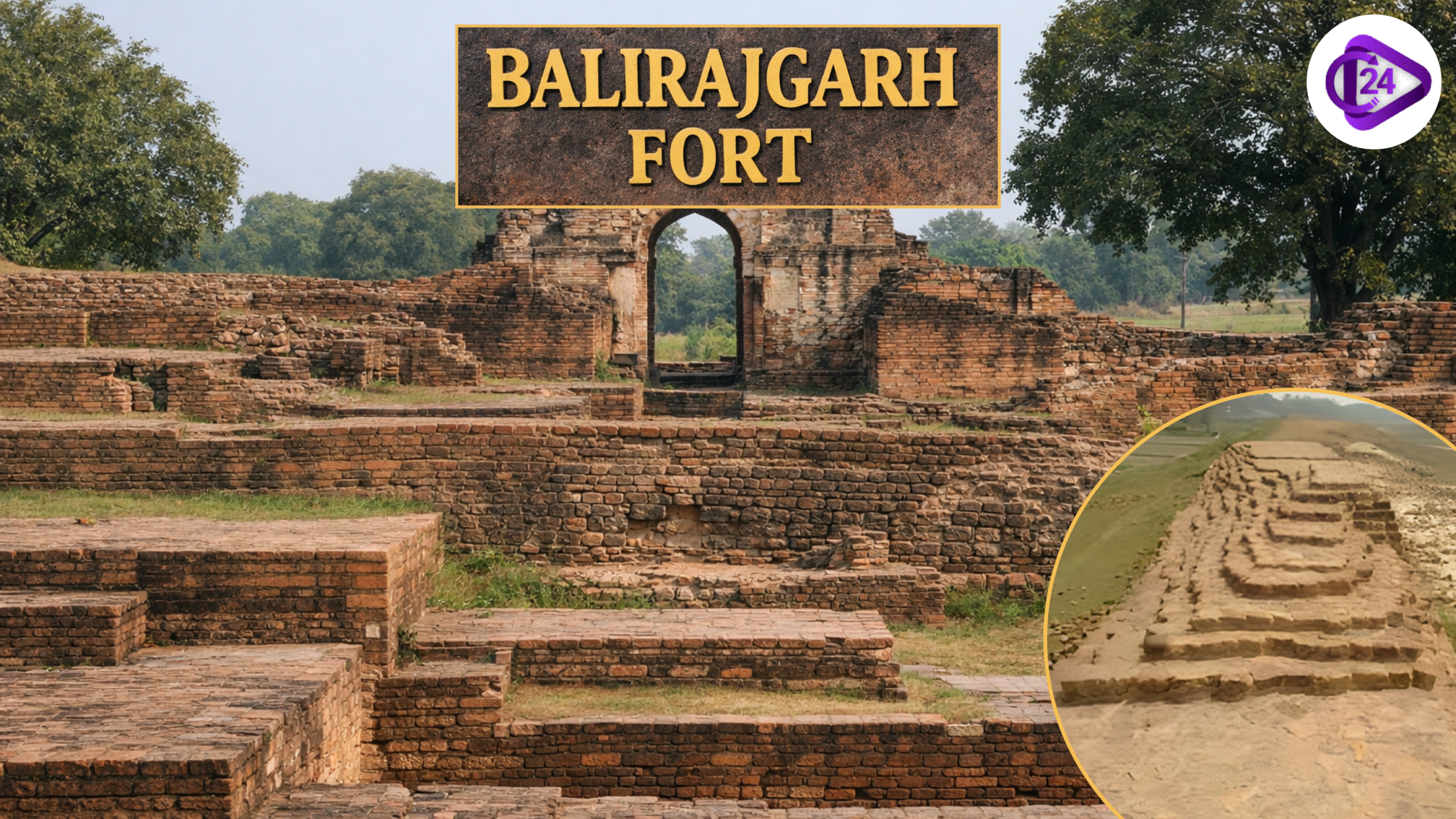
Balirajgarh Fort is an important archaeological and historical site located in the Madhubani district of Bihar. Believed to date back to ancient times, the fort is associated with the legendary King Bali and holds immense cultural and historical significance. Spread across a vast area, its ruins reflect the architectural style and urban planning of early civilisations in the region. Excavations by the Archaeological Survey of India have revealed fortifications, pottery, and other artefacts, indicating a well-developed settlement. Today, it stands as a symbol of Bihar’s rich heritage and attracts historians, researchers, and tourists alike.
Historical and Archaeological Significance of Balirajgarh Fort
-
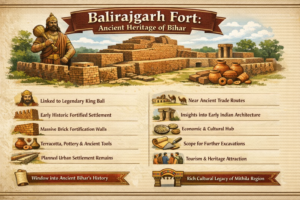
Believed to be linked with the mythological King Bali from ancient Indian traditions
-
Identified as a major fortified settlement from the early historic or pre-Mauryan period
-
Excavations conducted by the Archaeological Survey of India revealed massive brick fortification walls
-
Fort walls extend over several kilometres, indicating strong defence planning
-
Discovery of terracotta objects, pottery, beads, and ancient tools
-
Evidence of planned urban settlement with drainage and structural remains
-
Suggests the existence of a prosperous and organised civilisation in the region
-
Located near ancient trade routes, highlighting its economic importance
-
Provides insights into early Indian architecture and construction techniques
-
Associated with the cultural history of the Mithila region
-
Potential site for further archaeological discoveries and research
-
Plays a key role in understanding ancient Bihar’s political and social structure
-
Attracts historians, archaeologists, and heritage enthusiasts
-
Scope for development as a major tourism and heritage site in Bihar
List of Important Forts of India
| Fort Name | Location | Built By / Dynasty | Year / Period | UNESCO Status (Year) |
|---|---|---|---|---|
| Red Fort | Delhi | Shah Jahan | 1638–1648 | Yes (2007) |
| Agra Fort | Uttar Pradesh | Akbar | 1565–1573 | Yes (1983) |
| Amber Fort | Rajasthan | Raja Man Singh I | 1592 | Yes (2013 – Hill Forts) |
| Mehrangarh Fort | Rajasthan | Rao Jodha | 1459 | No |
| Chittorgarh Fort | Rajasthan | Maurya rulers (later Sisodias) | 7th century | Yes (2013 – Hill Forts) |
| Kumbhalgarh Fort | Rajasthan | Rana Kumbha | 1443 | Yes (2013 – Hill Forts) |
| Jaisalmer Fort | Rajasthan | Rawal Jaisal | 1156 | Yes (2013 – Hill Forts) |
| Gwalior Fort | Madhya Pradesh | Various dynasties | 8th century | No |
| Golconda Fort | Telangana | Kakatiya dynasty | 13th century | No |
| Daulatabad Fort | Maharashtra | Muhammad bin Tughlaq (developed) | 14th century | No |
| Raigad Fort | Maharashtra | Chhatrapati Shivaji Maharaj | 1674 | No |
| Shivneri Fort | Maharashtra | Yadava dynasty | 12th century | No |
| Bangalore Fort | Karnataka | Kempe Gowda I | 1537 | No |
| Bekal Fort | Kerala | Shivappa Nayaka | 1650 | No |
| Murud-Janjira Fort | Maharashtra | Siddis | 17th century | No |
| Kangra Fort | Himachal Pradesh | Katoch dynasty | Ancient (4th century BCE) | No |
| Lohagarh Fort | Rajasthan | Maharaja Suraj Mal | 1733 | No |
India Builds World’s 1st Autonomous Shipyard in Andhra
Conclusion – Balirajgarh Fort
Balirajgarh Fort stands as a valuable link to India’s ancient past, reflecting early urban planning and cultural richness. Continued archaeological research and preservation efforts can unlock deeper historical insights. Promoting it as a heritage site will not only protect its legacy but also boost tourism and awareness about Bihar’s significant contribution to India’s history.