

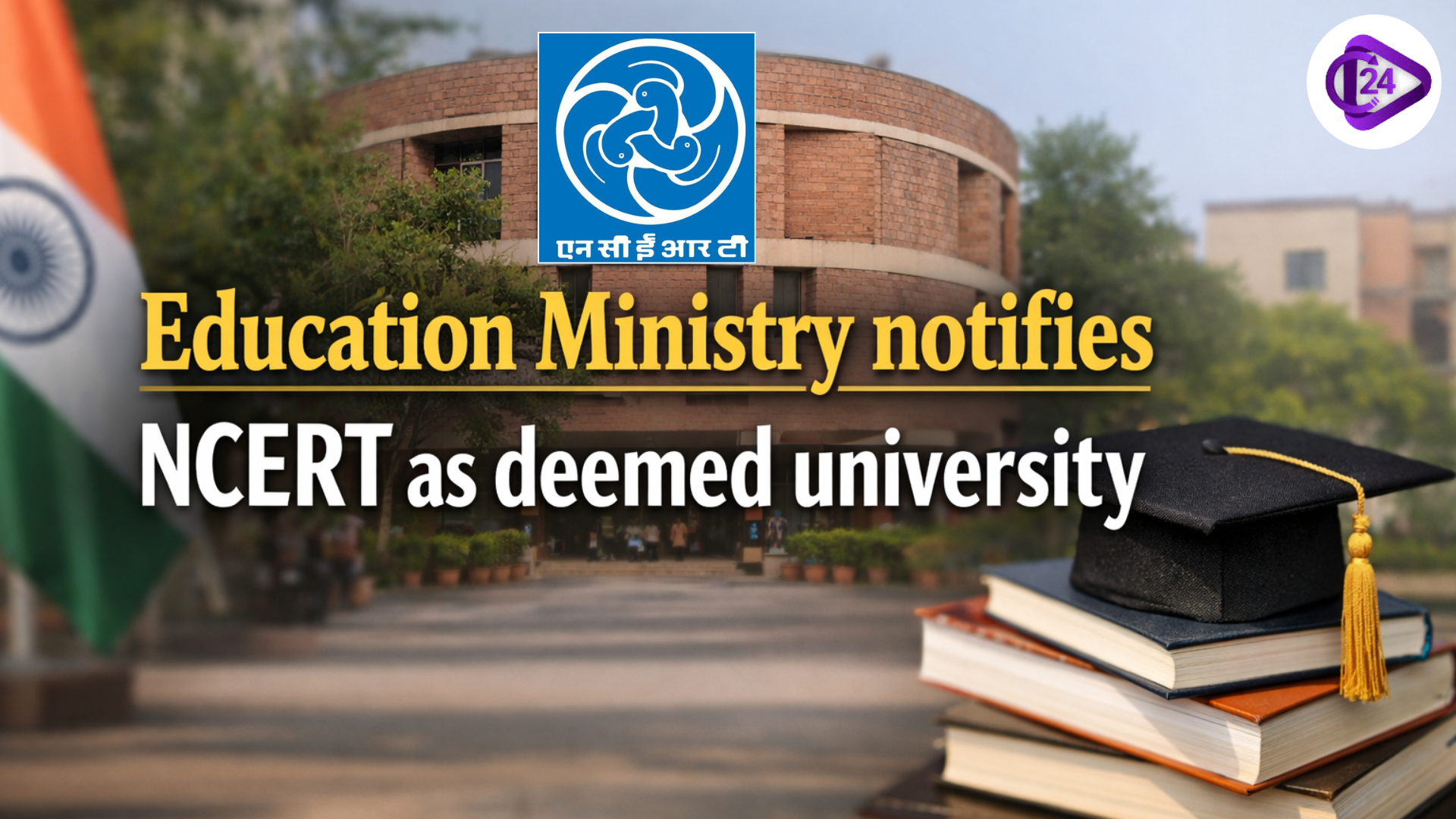
The major development in India’s education system: the Ministry of Education has formally given the National Council of Educational Research and Training the status of a deemed university. This move has been arrived at in accordance with the University Grants Commission Act of 1956, which permits individual institutions to operate with academic freedom. It can now design its own courses, grant degrees, and increase its research activities with this status. The relocation is meant to enhance the teaching and learning process, curriculum and creativity in school education in the country with more leniency in the academic system.
NCERT Gets Deemed University Status
-
The National Council of Educational Research and Training has been officially notified by the Ministry of Education as a deemed-to-be university.
-
This is granted by the University Grants Commission Act, 1956, Section 3.
-
Being a deemed university gives institutions more academic freedom.
-
NCERT is now able to provide its own degree programmes, in particular, teacher education and educational research.
-
The move is aimed at improving the quality of teacher training in India.
-
Traditionally, NCERT has been in charge of school textbooks and curriculum development.
-
Through this upgrade, it can incorporate research into teaching practices.
-
The ruling favours the objectives of the National Education Policy 2020.
-
It will assist in developing creative courses in accordance with the contemporary educational requirements.
-
NCERT will also be in a position to cooperate with national and international institutions.
-
The school will be able to establish its own syllabus and assessment procedures.
-
This measure enhances institutional independence in the education sector in India.
-
It is likely to increase pedagogical and school education research.
-
The relocation will increase the international awareness of NCERT as an educational institution.
-
In general, the notification is a significant reform that will help transform teacher education and enhance the learning outcomes in India.
Previous Year Questions on National Education Policy
| Exam Name | Year | Question | Options | Correct Answer |
|---|---|---|---|---|
| UPSC Prelims | 2021 | Which policy replaced the earlier National Policy on Education (1986)? | (A) Education Policy 1968 (B) NEP 2020 (C) RTE Act (D) None |
(B) NEP 2020 |
| SSC CGL | 2022 | What is the new school education structure under NEP 2020? | (A) 10+2 (B) 5+3+3+4 (C) 8+4 (D) 6+3+3 |
(B) 5+3+3+4 |
| State PCS | 2023 | NEP 2020 recommends which medium of instruction at the primary level? | (A) English (B) Hindi (C) Mother tongue (D) Sanskrit |
(C) Mother tongue |
| RRB NTPC | 2022 | Which ministry is responsible for implementing NEP 2020? | (A) Finance Ministry (B) Home Ministry (C) Education Ministry (D) HRD Commission |
(C) Education Ministry |
| UPSC Prelims | 2020 | Which body regulates higher education under NEP 2020 (except medical & legal)? | (A) UGC (B) AICTE (C) HECI (D) NITI Aayog |
(C) HECI |
| SSC CHSL | 2023 | NEP 2020 aims to achieve a GER in higher education by 2035. | (A) 25% (B) 50% (C) 75% (D) 100% |
(B) 50% |
| State TET | 2021 | NEP 2020 focuses on which type of learning? | (A) Rote learning (B) Conceptual learning (C) Only theoretical (D) Exam-based |
(B) Conceptual learning |
| UPSC Prelims | 2022 | Which stage includes ages 3–8 years in NEP 2020? | (A) Preparatory (B) Foundational (C) Middle (D) Secondary |
(B) Foundational |

Conclusion – NCERT Attains Deemed University Status
The establishment of the National Council of Educational Research and Training as a deemed university by the Ministry of Education is a great leap towards enhancing the education system in India. It gives it more academic freedom, allowing NCERT to design courses, research and even issue degrees. This action is in line with the National Education Policy 2020 and will likely enhance teacher training, curriculum development, and innovation, which will eventually lead to the quality of school education throughout the country.