


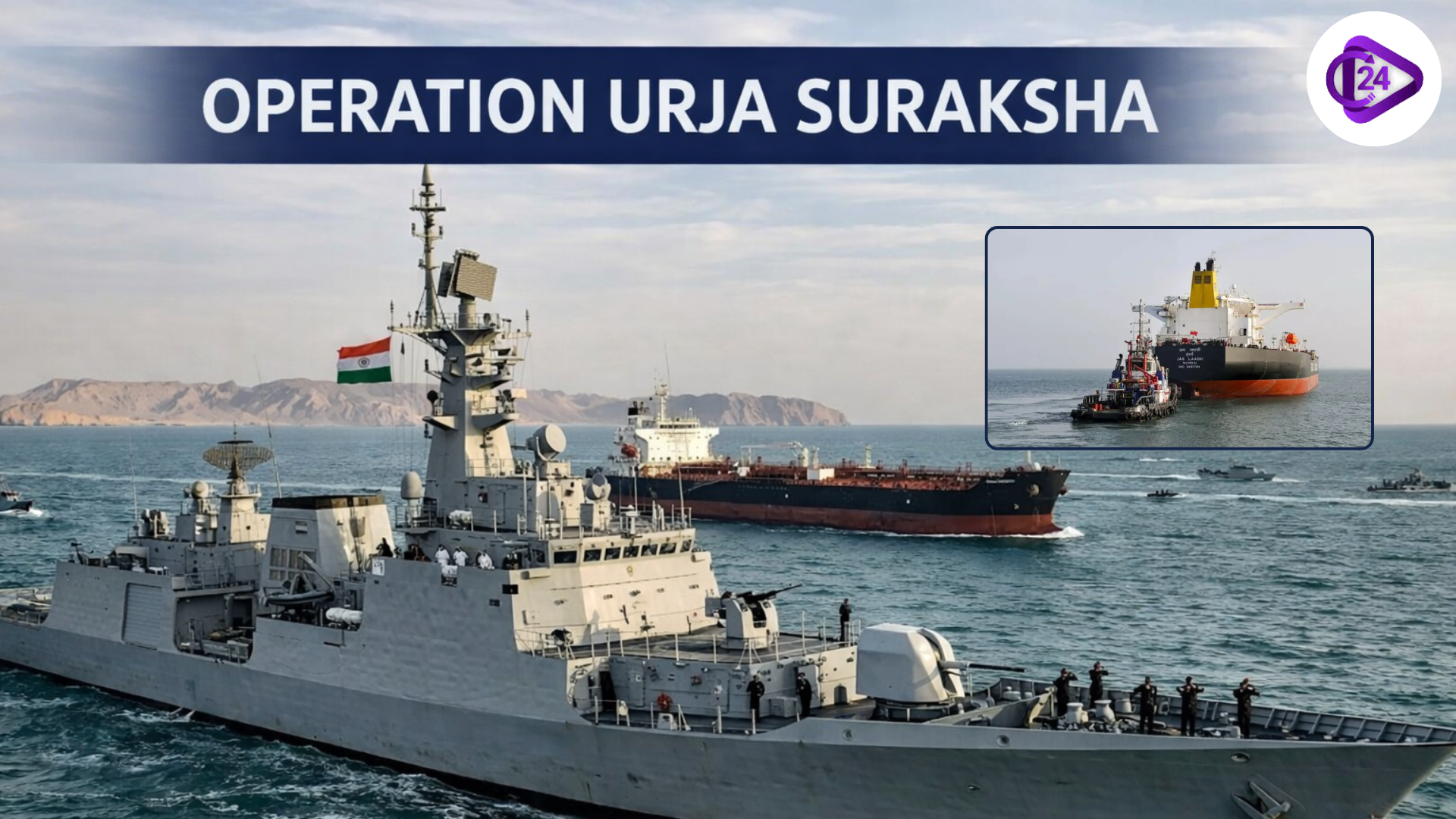
The Indian Navy has initiated Operation Urja Suraksha to provide security to the critical energy supply routes traversing the Strait of Hormuz, a strategic waterway. This is being done against a backdrop of growing geopolitical tensions and growing security threats to maritime security in the region. India is a large importer of crude oil, and therefore, as a country, it greatly relies on the safe sea routes to ensure a continuous supply of energy. The operation will widen the surveillance, provide safe transportation of oil tankers, and improve the national energy security and the stability of global trade.
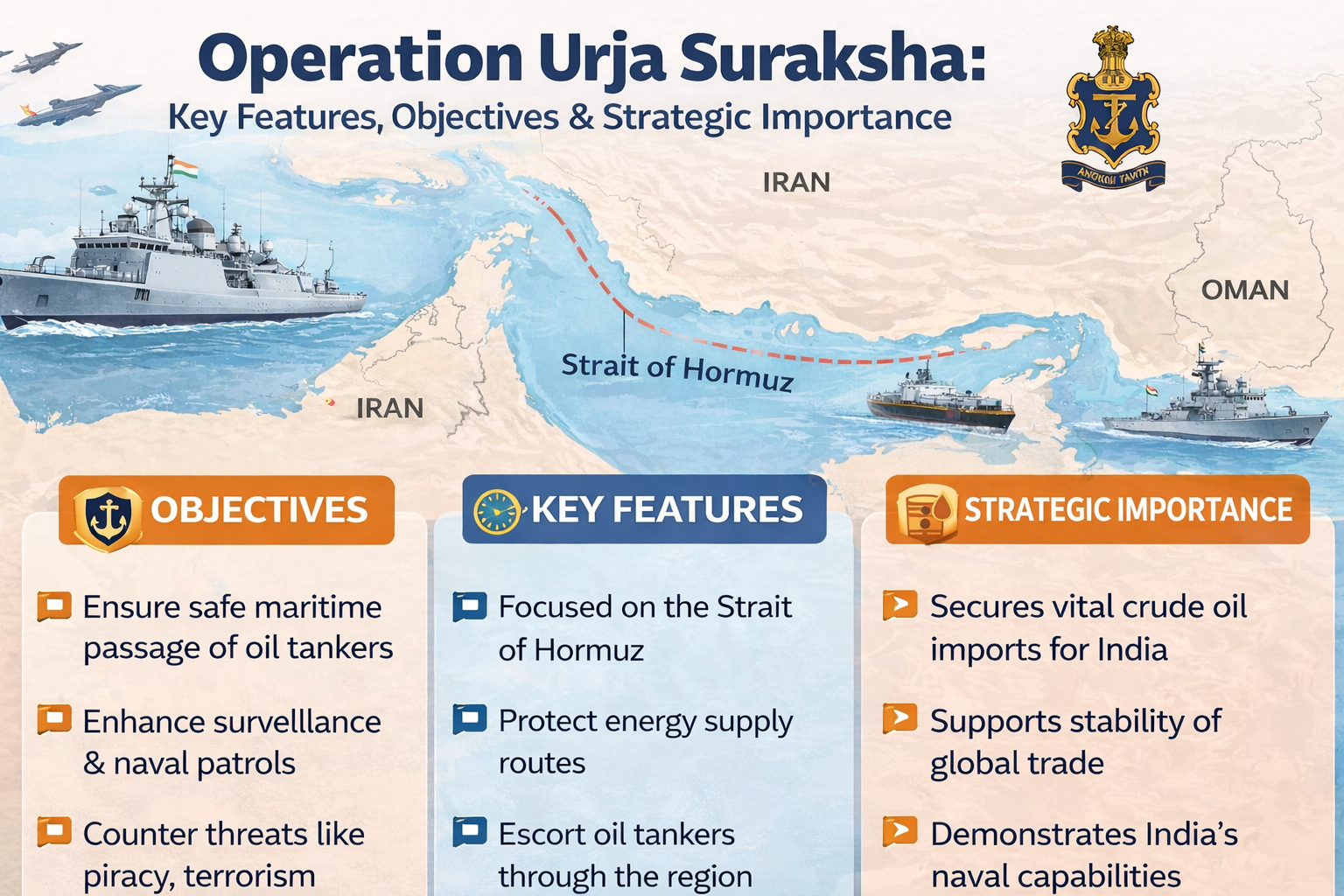
Operation Urja Suraksha: Key Features, Objectives & Strategic Importance
-
The operation Urja Suraksha is a tactical operation initiated by the Indian Navy.
-
It is concerned with guarding energy supply channels that are vital in the Indian economy and energy demands.
-
The Strait of Hormuz is a strategically important location around which the operation is centred.
-
There is a lot of oil trade in this region, and hence, it is very sensitive.
-
This is the route through which India imports a big percentage of its crude oil, making it more dependent.
-
The mission will be to provide safe and secure movement of oil tankers in international waters.
-
It involves countering threats by navy patrols, surveillance, and escort.
-
The exercise enhances the maritime security system and naval preparedness of India.
-
It is also a deterrent to piracy, terrorism and regional confrontations.
-
The programme indicates the rising nature of India in the international maritime security cooperation.
-
It favours a continuous energy chain, which is essential to the stability of the economy.
-
There is an increase in the coordination with the international forces at sea.
-
It shows the Indian determination to guard the world trade routes.
-
The mission is in line with the overall energy security and foreign policy in India.
-
In general, Operation Urja Suraksha can be viewed as a proactive measure to protect the national interests and provide security in one of the most significant marine channels in the world.
Important Operation of Indian Military
| Operation Name | Year | Location | Conducted By |
|---|---|---|---|
| Operation Vijay | 1999 | Kargil, Jammu & Kashmir | Indian Army |
| Operation Meghdoot | 1984 | Siachen Glacier | Indian Army |
| Operation Cactus | 1988 | Maldives | Indian Armed Forces |
| Operation Blue Star | 1984 | Amritsar, Punjab | Indian Army |
| Operation Rakshak | 1990 | Jammu & Kashmir | Indian Army |
| Operation Maitri | 2015 | Nepal | Indian Armed Forces |
| Operation Rahat | 2015 | Yemen | Indian Navy & Air Force |
| Operation Ganga | 2022 | Ukraine | Indian Government (IAF support) |
| Operation Devi Shakti | 2021 | Afghanistan | Indian Air Force |
| Operation Sankat Mochan | 2016 | South Sudan | Indian Air Force |
| Operation Kaveri | 2023 | Sudan | Indian Armed Forces |
Conclusion – Operation Urja Suraksha
Operation Urja Suraksha indicates the increased strategic role of the Indian Navy in the protection of the vital Indian interests in energy. The operation intensifies maritime security by concentrating on the protection of key sea routes, such as the Strait of Hormuz, to ensure a continuous supply of energy to the country. It points to the active mode in relation to geopolitical risks as well as safeguarding global trade routes, which India has adopted. On top of the national interests, the initiative also strengthens the desire of India in terms of stability in the region and international collaboration. In general, Operation Urja Suraksha is an important move towards the energy security of India and dominance at sea.