

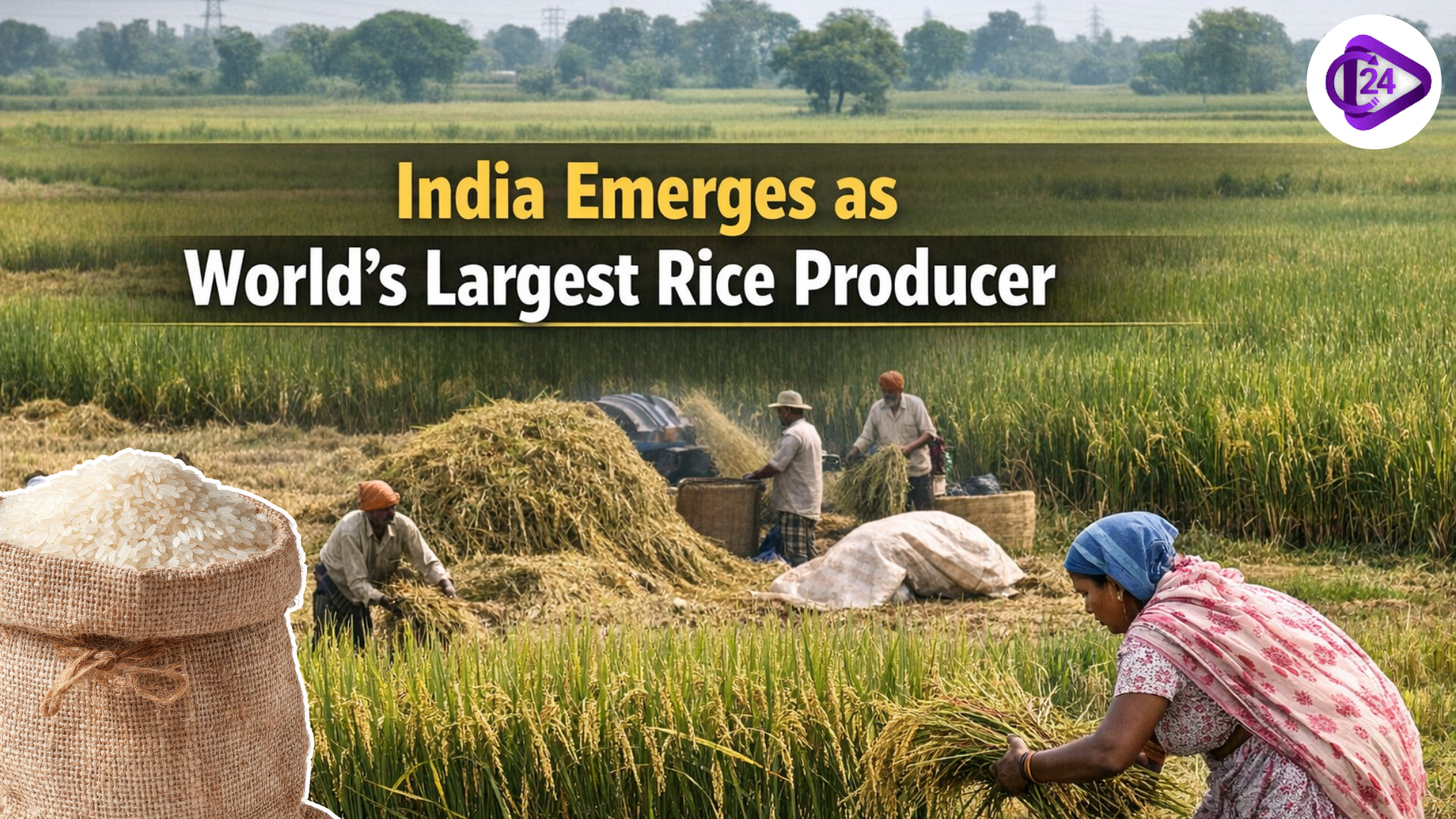
India has officially become the world’s largest rice producer, surpassing China, with an all-time high of 150.18 million tonnes of rice produced in the 2024-25 season, as announced by Union Agriculture Minister Shivraj Singh Chouhan. This is the result of decades of agricultural development, the adoption of high-yielding seed varieties that can withstand harsh climates, and long-term policy support for farmers. India’s transition from a food-deficient country to a global leader in rice production indicates strong food security and export potential. The milestone also reflects increased involvement of science and larger-scale cultivation to strengthen the country’s agricultural sector.
India Overtakes China to Become the World’s Top Rice Producer
-
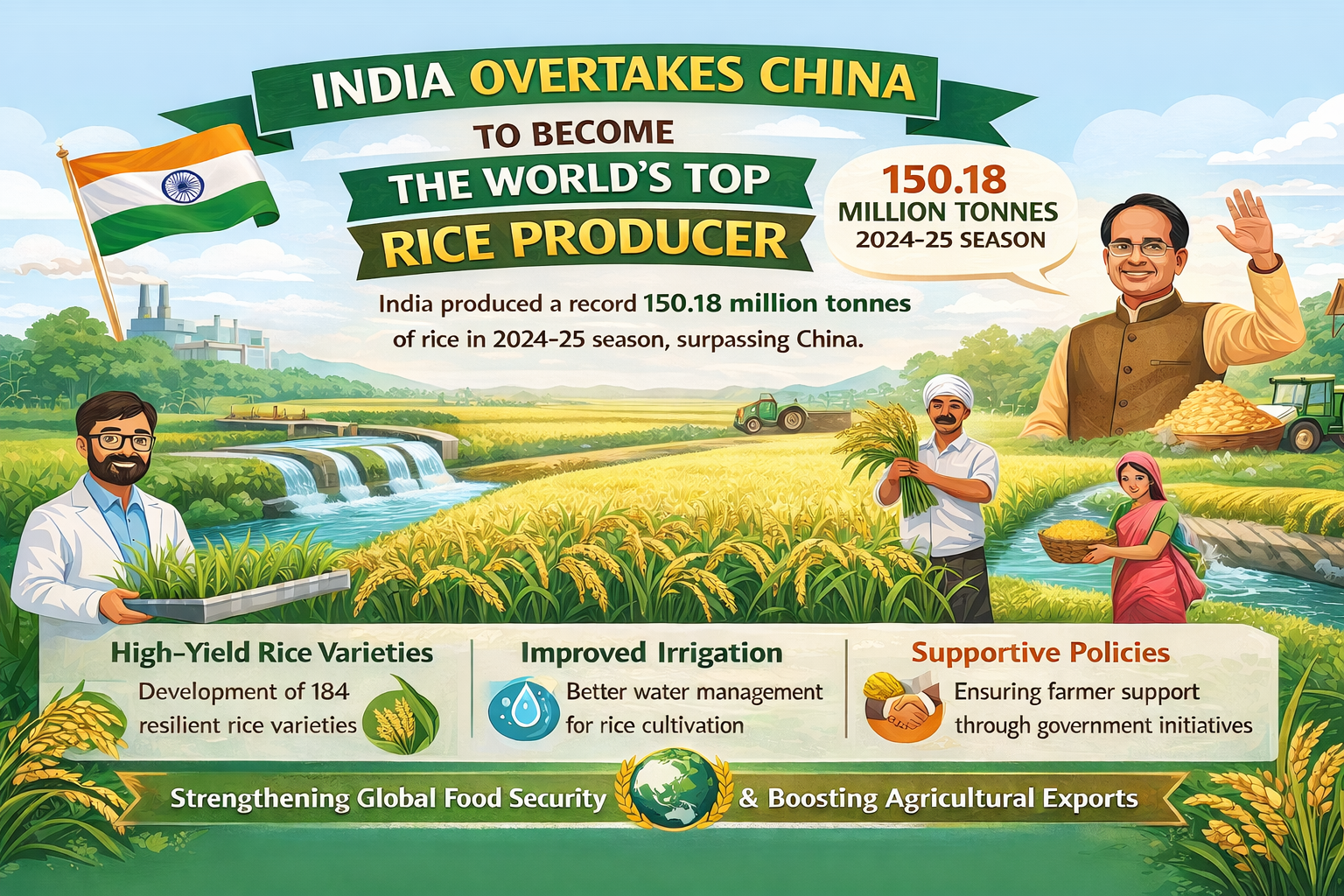
India has emerged as the largest rice producer in the world, having produced 150.18 million tonnes of rice in the 2024–25 season, beating China.
-
The milestone was announced by Union Agriculture Minister Shivraj Singh Chouhan and made known the success of India regarding the rice production.
-
In an effort to enhance productivity, the government published 184 new varieties of rice seeds that had high yields and were developed by the Indian Council of Agricultural Research (ICAR).
-
Such an accomplishment is due to years of agricultural research and development, better irrigation, and proper government policies to assist farmers.
-
The production of records in India helps in consolidating its role in the food security of the world and its presence in rice exports.
-
The milestone is an indication of the increasing influence of science, technology and sustainable farming methods in the Indian agriculture industry.
Expected Questions for (India become the world’s largest rice producer)
According to the 2024–25 data, India has overtaken which country to become the world’s largest rice producer?
A. Japan
B. China
C. Thailand
D. Vietnam
Answer: B. China
Explanation: India’s rice production reached 150.18 million tonnes, surpassing China’s output, marking a record achievement in global rice production.
Who announced India’s milestone as the world’s largest rice producer?
A. Narendra Modi
B. Piyush Goyal
C. Shivraj Singh Chouhan
D. Ramesh Pokhriyal
Answer: C. Shivraj Singh Chouhan
Explanation: The Union Agriculture Minister officially announced this milestone, highlighting India’s agricultural progress.
How many new high-yielding rice varieties were released by ICAR to boost India’s production?
A. 120
B. 184
C. 200
D. 150
Answer: B. 184
Explanation: The Indian Council of Agricultural Research (ICAR) developed and released 184 high-yielding varieties to improve productivity.
Which of the following is NOT a reason for India becoming the world’s largest rice producer?
A. Use of high-yielding varieties
B. Improved irrigation facilities
C. Adoption of sustainable farming
D. Reduction in rice exports
Answer: D. Reduction in rice exports
Explanation: India’s production increased due to technology, government policies, and farming practices, while exports have been growing, not reducing.
Consider the following statements:
-
India produced 150.18 million tonnes of rice in 2024–25.
-
This makes India the largest rice producer, overtaking China.
-
The milestone was achieved without releasing any new seed varieties.
Which of the statements is/are correct?
A. 1 and 2 only
B. 2 and 3 only
C. 1 and 3 only
D. All three
Answer: A. 1 and 2 only
Explanation: Statement 3 is incorrect because ICAR released 184 new high-yielding rice varieties to support production.
Conclusion (India’s Rise as the Global Leader in Rice Production)
India has become the largest producer of rice in the world is an indication of decades of agricultural research, the introduction of high yielding plants and government policies that have facilitated this. This achievement consolidates the Indian contribution to food security on the global stage, increases exports, and puts into the limelight the fact that India is able in its efficiency to maintain and improve crop production.