
CBSE Ignored Online Marking Glitches Despite Panel’s Recommendation to Delay Rollout
CBSE (The Central Board of Secondary Education) is under the scanner after it was reported that its own expert panel had highlighted serious problems with the recently introduced On-Screen Marking (OSM) system during a dry run in January 2026 and said its countrywide implementation should be deferred by at least a year. Nevertheless, CBSE implemented it for evaluation of students in the Class XII board examination. Following complaints about random non-checked answers, answer-sheet mismatches and blurred scan sheets in the law entrance exam since its introduction last month, technical glitches and cybersecurity concerns have sparked a larger debate on digital governance when it comes to education.
CBSE On-Screen Marking (OSM) System: A Digital Reform Under Question
CBSE implemented the On-Screen Marking (OSM) system intending to modernise the assessment and make it more efficient, transparent and secure. This was just one part of a broader push for digital transformation in education administration. Under the system, physical copy answer scripts were scanned and uploaded to a secure digital interface on which evaluators evaluated them online.
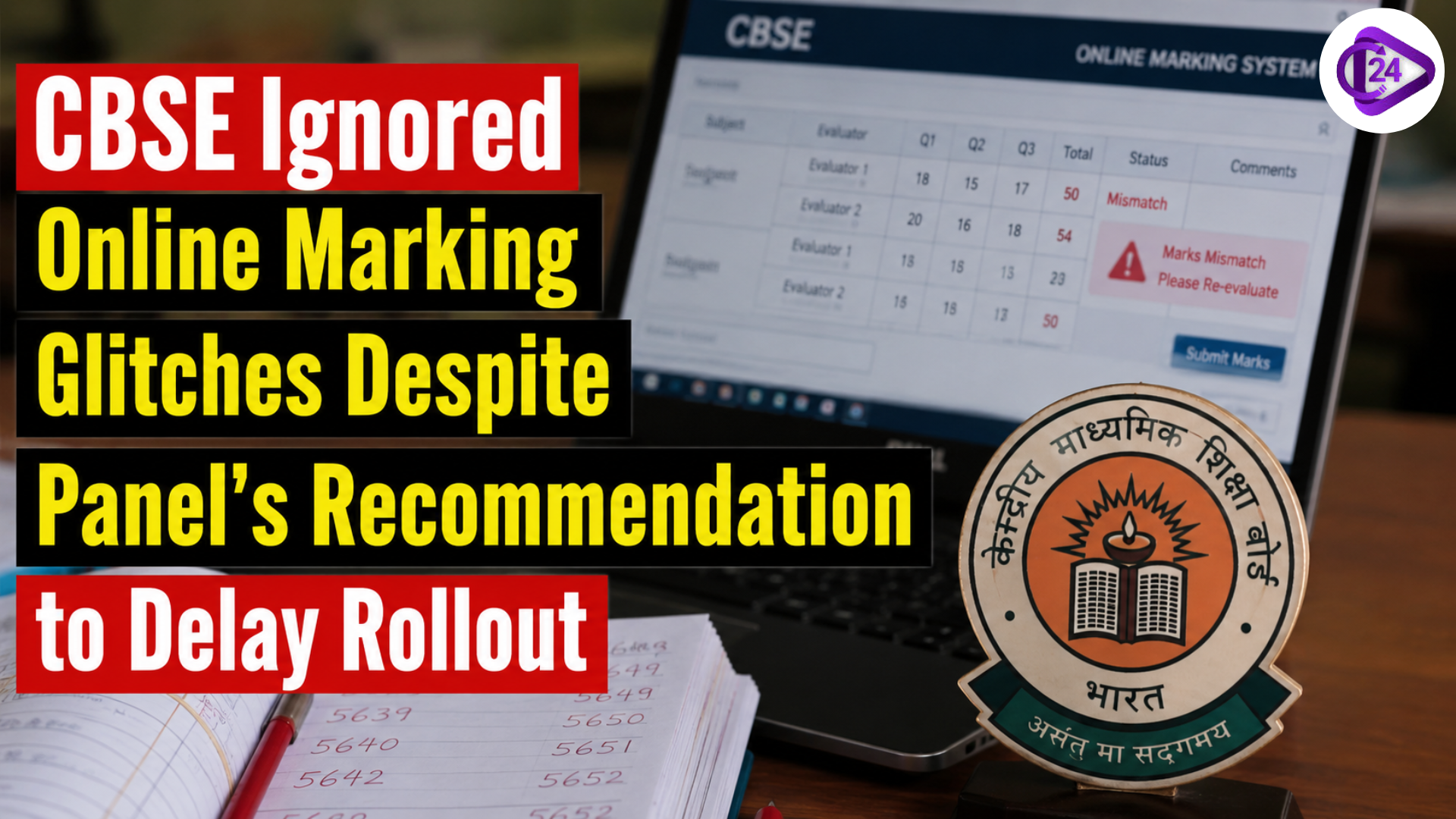
But reportedly, a dry run conducted in Delhi for the same in January 2026 showed several issues. Initial responses from testers flagged problems such as the system hanging, marks going missing in evaluation interfaces, progress not being saved, a mismatch between marking schemes and displayed marks being at the corner of correctness plots and even mark increases apparently being logged as deductions. They have recommended that the platform be tested and improved further before being rolled out across the country.
The row escalated after the Class 12 results were announced. Irregularities, such as unchecked replies, partial assessment of marks, bad scan quality and answer sheets with different correct answers were reported from students in various states. That in turn evolved into calls for whiter transparency and a re-evaluation of the evaluation.
What Did the CBSE Dry Run Reveal?
A pilot exercise conducted in Delhi in January 2026 reportedly exposed significant operational and technical shortcomings in the OSM platform.
- System instability during answer-sheet evaluation
- Random increase and decrease in marks
- It was hard to use the marking || is extremely difficult to navigate.
- Inadequate evaluator training.
- Dependence on sophisticated digital infrastructure.
- Scalability Concerns for Country-Wide Implementation
Two independent evaluations submitted to CBSE recommended that further rounds of testing and refinement were necessary before the system was scaled up, it is learnt. The panel, apparently, recommended rolling back implementation for a minimum of two years.
Digital Governance in Education: Innovation vs. Readiness
The Indian nation in a period of fast adoption of technology in education.
Initiatives such as:
- Digital India
- DIKSHA
- National Digital Education Architecture (NDEAR)
- Online assessment platforms
- AI-based learning systems
- This reflects a growing push for modernisation in education.
But the CBSE episode epitomises a flaw that is common to many digital transformations.
Technology Adoption Without Institutional Readiness
Successful digital reforms require
Robust Infrastructure
More definitive servers, secure complex networks and stable software architecture.
Human Resource Preparedness
Before implementing new systems, teachers and evaluators need to be thoroughly trained.
Cybersecurity Preparedness
Safeguard sensitive student data against breaches and cyberattacks.
Pilot-Based Scaling
Some PCTs have installed these systems nationally; however, systems should have been rolled out slowly.
Anything that fails on these fronts may negate the benefits offered by digitisation.
Why is This Issue Important?
This is not simply a software problem you are trained in. It also raises broader questions about how governance is carried out with accountability and the implementation of tech-enabled reforms.
Importance of Board Examination Evaluation
- Board examination results influence:
- Higher education admissions.
- Scholarship opportunities.
- Competitive examination eligibility.
- Career prospects.
- Academic progression.
- It is important to note that evaluation errors can affect students deeply.
Some students and parents flagged the following issues:
- Unchecked answers.
- Missing marks.
- Answer-sheet mismatches.
- Blurred scanned copies.
- Re-evaluation difficulties.
Digital Governance in Education: Opportunities and Challenges
- Faster processing of examination results.
- Reduced logistical costs.
- Improved monitoring of evaluators.
- Better record management.
- Greater transparency.
- Enhanced administrative efficiency.
Challenges in Technology-Driven Assessment
- Software instability.
- Connectivity issues.
- Cybersecurity risks.
- Lack of user training.
- Data management challenges.
- Operational scalability concerns.
The CBSE episode shows that technological reforms need to be supported by institutional readiness.
Cybersecurity Concerns and Data Protection Issues
The third pressing issue that sprung up in the OSM controversy was regarding cybersecurity.
The Significance of Cybersecurity in Examination Systems
- Educational databases contain:
- Student records.
- Personal information.
- Examination data.
- Academic performance records.
- An intrusion might place not only student privacy but examination integrity at risk.
Key Cybersecurity Challenges
System Vulnerabilities
There were concerns about the security architecture of the evaluation platform, reports said.
Data Protection Risks
Securing student information As noted above, it is important to put strong safeguards in place and implement encryption protocols.
Platform Reliability
Educational systems at scale need to be able to cope with millions of transactions without any downtime.
With digital governance initiatives expanding in India, cybersecurity needs to be the core element of education reform.
Why Pilot Testing Matters in Public Administration
Pilot projects are an essential step for the effective execution of public policies.
Functions of a Pilot Project
Risk Identification
Recognises operational and technical deficiencies in advance of full-scale rollout
Stakeholder Feedback
Enables actionable suggestions with respect to teachers and evaluators.
Scalability Assessment
Tests the system in real-world environment.
Policy Refinement
Gives you the chance to fix systems before national rollout
Reforms that discount pilot feedback suffer from implementation risks and are less effective.
Editorial Perspective: Innovation Must Be Matched by Accountability
Click here to know more about CBSE online marking: the issue was only a symptom of a much larger ailment coming straight from the governance framework where timelines are treated as sacrosanct while institutional readiness may take a back seat. While it is true that digital transformation enhances efficiency and transparency, technology alone does not guarantee better governance. Reforms are supported if there is a strong infrastructure, confidence in the stakeholders and evidence-based decision-making. The controversy shows how even small-scale pilot exercises can undermine public trust when warnings to proceed with caution are ignored. In the case of an examination system that impacts millions of students, reliability and accountability are strong arguments—you cannot run an industry without them.
Conclusion
The controversy over the on-screen marking by the CBSE is an informative case of good governance and a desirable educational reform at both national and global levels. There have been reports that some issues raised during the pilots were not dealt with, which indicates serious implementation challenges. Even though streamlining answer-sheet evaluation is a worthy goal, this episode highlights the importance of rigorous testing, stakeholder engagement, cyber-preparedness, and institutional accountability. Amidst this transition to a technology-based governance framework by India, the future success and acceptability of several reforms will depend upon not only innovation but also the willingness of institutions to prioritise readiness first, transparency and finally public trust before rolling out any provisions on a timely basis.