
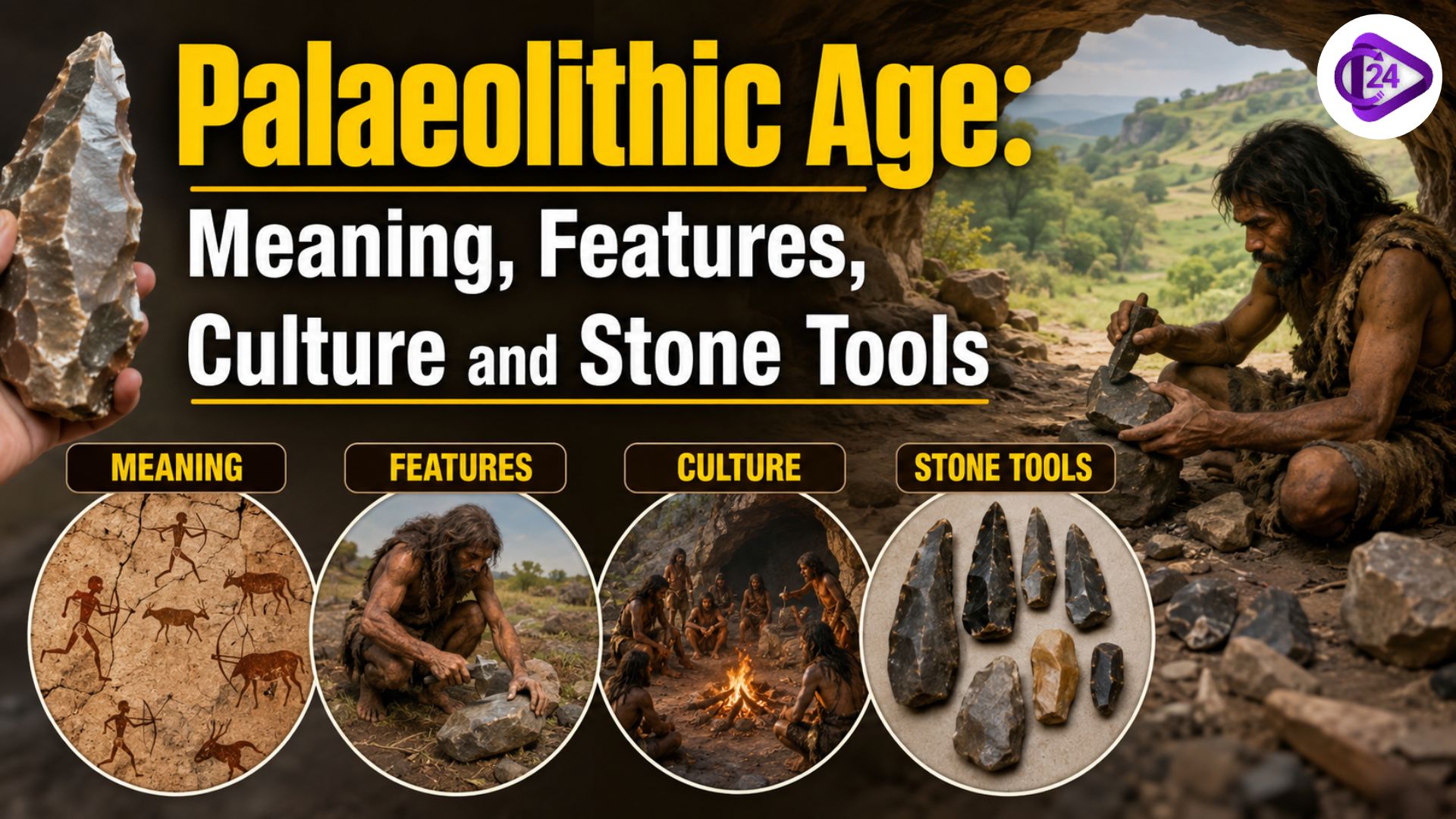
The Old Stone Age, or Palaeolithic Age, is the earliest period of human history, the time before prehistoric culture began. Throughout this period, hunter-gatherer early human beings hunted animals, fished, and gathered wild vegetation. They used basic stone tools like hand axes, choppers, cleavers and scrapers made from quartzite and other hard rocks. In general, humans lived in caves and rock shelters; sites like Bhimbetka provide evidence of early habitation and rock art. It is mentioned by the Archaeological Survey of India (ASI) that the Palaeolithic age created a base for subsequent cultural and technological progress in the Indian subcontinent.
Lower Palaeolithic Age in India (2.5 Million–100,000 BC)
The Lower Palaeolithic Age is the earliest phase of Old Stone Age and begins with Human life in prehistoric India. These early humans, such as Homo habilis and Homo erectus, lived as nomadic hunter-gatherers; Hunting animals and gathering fruits, roots, nuts, and other plants supported their subsistence. Farming, growing pottery and permanent settlements were unknown.
Key Features of the Lower Palaeolithic Age
| Feature | Details |
| Period | c. 2.5 Million–100,000 BCE |
| Human Species | Homo habilis and Homo erectus |
| Lifestyle | Nomadic hunter-gatherers |
| Food | Meat, fruits, roots, nuts, seeds, and tubers |
| Occupation | Hunting and food gathering |
| Shelter | Caves, rock shelters, open plains, and river valleys |
| Main Tools | Hand axes, cleavers, choppers, flakes, knives |
| Tool Material | Quartzite, basalt, sandstone, and other hard rocks |
| Agriculture | Not practiced |
| Animal Domestication | Not practiced |
Stone Tool Traditions
The Lower Palaeolithic Age saw the emergence of two major stone tool traditions.
Soanian Tradition
- Mainly found in Soan Valley and north-western India.
- Feature choppers and chopping Tools.
- Pebble tools were commonly used.
Acheulean Tradition
- Most widespread Lower Palaeolithic culture.
- Where you are famous for hand axes, cleavers!
- Widespread throughout peninsular India especially in southern and central parts.
Lower Palaeolithic Lifestyle
- They equipped themselves in little wandering gatherings.
- Hunting and gathering was the only means of survival.
- They gathered fruits and roots, nuts, and tubers.
- Because wild animal meat was a substantial portion of the diet.
- They sought protection in natural shelters like caves, rock shelter and river valleys.
- Primitive humans communicated with primitive sounds, gestures, and signs.
- They knew nothing of farming, clay pots, woven baskets or metal tools.
Middle Palaeolithic Age in India (100,000–40,000 BC)
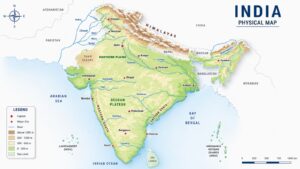
Middle Palaeolithic Age is the second stage of Old Stone Age in India. Within this time frame, the early humans produced smaller, sharper and more efficient stone tools in comparison to those of the Lower Palaeolithic Age. For most of human history, where people lived in nature as nomadic hunter-gatherers for most of human history relying on hunting, fishing, and foraging plants. They lived in caves, rock shelters, river valleys, and they moved around looking for food and water.
Key Features of the Middle Palaeolithic Age
| Feature | Details |
| Period | c. 100,000–40,000 BCE |
| Culture | Nevasian Culture |
| Human Species | Early Homo sapiens |
| Lifestyle | Nomadic hunter-gatherers |
| Main Industry | Flake Tool Industry |
| Tool Technology | Prepared-core and flake technique |
| Shelter | Caves, rock shelters, and open-air sites |
| Food | Hunting and food gathering |
| Agriculture | Not practiced |
Stone Tools Uses Middle Palaeolithic Age
During the Middle Palaeolithic, smaller, lighter and more specialized flake tools appeared than those of previous hand-axe tradition.
- Flakes
- Scrapers
- Points
- Borers
- Knives
- Small Hand Axes
- Cleavers
- Hammer Stones
Upper Palaeolithic Age in India (40,000–10,000 BC)
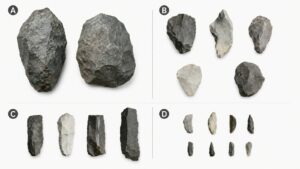
The last and final stage of the Old Stone Age (40000 BC -10,000BC) in India is known as Upper Palaeolithic Age. This is a time in which there were major developments in stone tool technology, including blade and burin tools that were widely used. The present human type (Homo sapiens) became to dominant psychosocial variety, demonstrating better hunting skills, creative stupefaction and adaption to environmental circumstances. Archaeological records also point to bone tools, ornaments and early rock art at some sites.
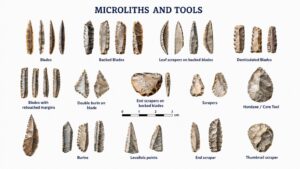
Key Features of the Upper Palaeolithic Age
| Feature | Details |
| Period | c. 40,000–10,000 BCE |
| Stage | Final phase of the Old Stone Age |
| Human Species | Homo sapiens |
| Stone Industry | Blade and Burin Industry |
| Lifestyle | Nomadic hunter-gatherers |
| Food | Hunting, fishing, and food gathering |
| Shelter | Caves, rock shelters, and open-air camps |
| Main Tools | Blades, burins, scrapers, points, bone tools |
| Art | Early rock paintings and ornaments |
| Agriculture | Not practiced |
| Animal Domestication | Not practiced |
Also Read – Ancient History
| Revolt of 1857, Complete History | Lodhi Dynasty (1451–1526) |
| Sayyid Dynasty (1414–1451) | Tughlaq Dynasty (1320–1414 AD) |
| Khilji Dynasty (1290-1320 AD): | Mamluk Dynasty (1206 – 1290 AD) |
Stone Tools Upper Palaeolithic Age
Long and thin blade tools, which were lighter, sharper and more efficient than previous flake tools–developed in the Upper Palaeolithic Age
- Blades
- Burins
- End Scrapers
- Points
- Bone Tools
- Awls