
India-U.S. Trade Relations: Focus After Proposed 12.5% Tariff
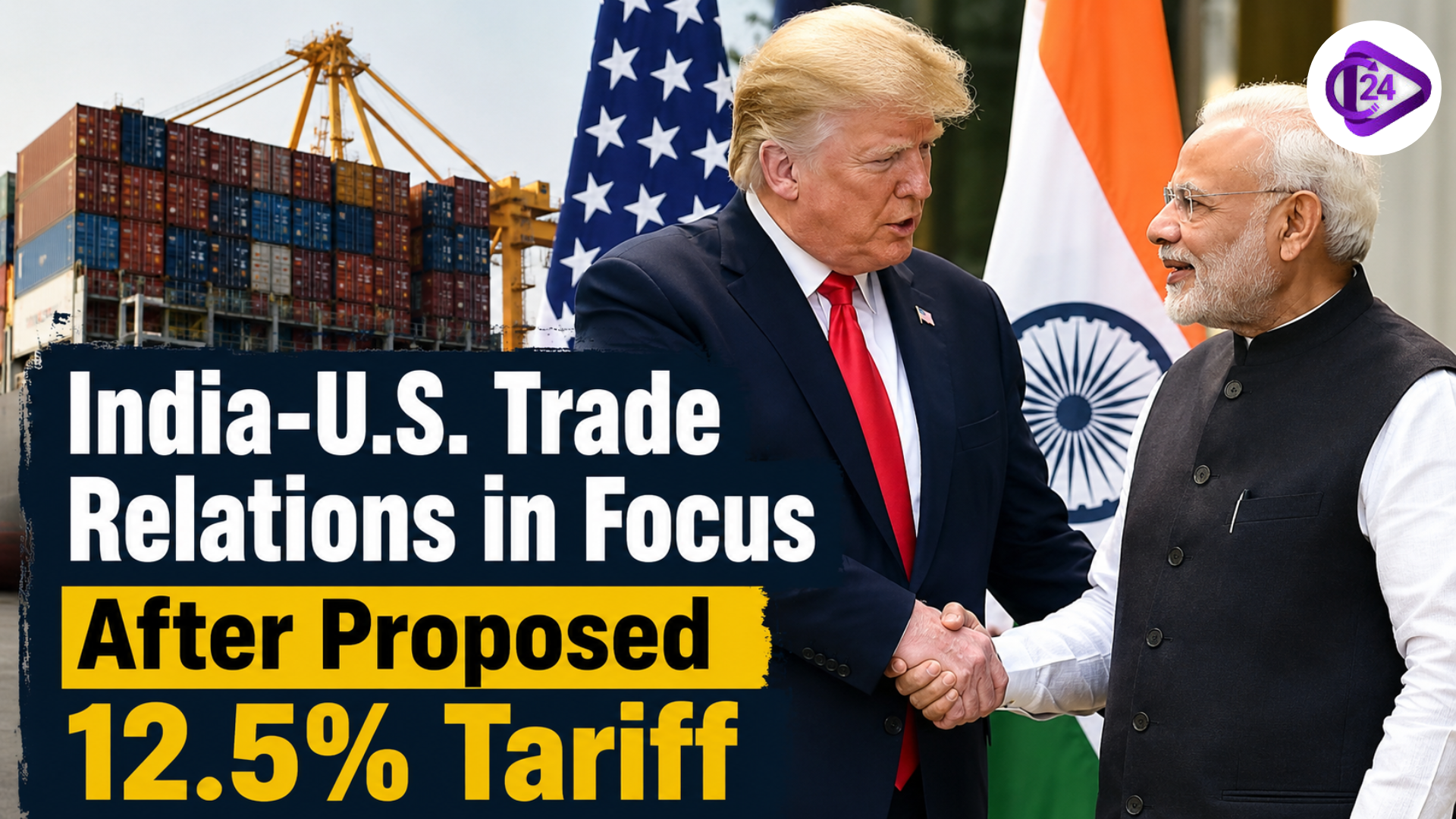
India-US: The state of U.S. trade relations has now become a pivotal part of the strategic partnership between the world’s oldest and largest democracies. The new 12.5 % tariff proposal has reignited India-US trade tensions . Trade Relations, adding new apprehensions over exports, investments and market access. And with both countries still tightening economic co-operation, trade policies continue to be a major determinant of the deteriorating bilateral ties. Though the tariff proposal will no doubt complicate matters in the short term, it represents an opportunity for constructive dialogue and enhanced economic engagement.
Understanding the Proposed 12.5% Tariff
A tariff is a tax on imports which serves to protect an industry or correct a trading imbalance between countries. Economically, this additional 12.5% tariff proposal could hinder trade flows between the US and India at the expense of businesses and consumers on both sides of the Pacific Ocean.
In addition, imposed tariffs often push businesses to retreat to their home markets, which can lead to lower competitiveness and absolute influence on investment decisions. As a result, industry stakeholders are keeping a close watch on what happens with the proposal.
Importance of India-U.S. Trade Relations
India-US. Trade Relations have expanded significantly over the last two decades. The United States is among India’s largest trading partners, while India is an important destination for American exports and investments.
Key areas of cooperation include:
- Information Technology
- Pharmaceuticals
- Energy
- Agriculture
- Defense Manufacturing
- Digital Services
Key Highlights of India-U. S. Trade Relations
- 12.5% tariff tabled has revived interest in bilateral trade
- The US is still one of India’s largest trading partners.
- Bilateral trade includes goods, services, technology and investments.
- Areas of strategic cooperation include semiconductors, AI, defence and clean energy.
- Some of the major areas tariffs can impact are exports, imports and international investment decisions as well as supply chains.
- The two countries are still negotiating to bolster economic cooperation.
- Strong India-US. Steve also spoke about how.
- New technology is opening up new partnerships.
Importance of India-U. S. Trade Relations
India and the US have an economic relationship that provides millions of jobs and also enables heavy cash flow.
Benefits for India
- A large export market
- Increased foreign investment
- Technology transfer
- Employment generation
- Enhanced industrial competitiveness
Benefits for the United States
- Access to a fast-growing market
- Expansion opportunities for businesses
- Strong technology partnerships
- Skilled workforce collaboration
- Supply chain diversification
Major Sectors Driving India-U. S. Trade Relations
The central role of India and bilateral economic cooperation lies in the fact that its IT sector. Indian tech firms render software, consulting and digital services to US corporations.
Pharmaceuticals
India supplies a large part of the much cheaper medicines and pharmaceutical products to global markets, most notably in the United States.
Agriculture
Agricultural trade forms a key component of bilateral economic relations.
Energy Cooperation
Transforming space: Both countries are advancing cooperation in:
Renewable Energy
Clean Energy Technologies
- LNG Trade
- Energy Security Initiatives
- Defense Manufacturing
Defence cooperation has emerged as one of the key pillars of the India-US relationship. strategic relations.
Emerging Technologies
- Artificial Intelligence
- Semiconductors
- Quantum Computing
- Cybersecurity
- Space Technology
Key Takeaways on India-US Trade
- The tariffs, however, have once again sharpened the focus on India-US. Trade Relations.
- The basis of the strategic partnership is bilateral trade.
- Some sectors can see challenges in the near term.
- Economic co-operation remains the priority for both countries.
- This creates huge potential for growth in many emerging technologies.
- Trade negotiations are a crucial necessity for conflict resolution.
- There is still a long-term positive outlook for bilateral relations.
Conclusion
Rising aversion to India-US. This area of knowledge places the US. Trade Relations front and centre, providing insight into both opportunities and challenges of one of the most significant economic partnerships in the US. history. Even if tariff measures will cause short-term worry for exporters, businesses and investors alike, they reinforce the importance of further discussion and positive negotiations. Strong India-U. S. Trade Relations remain crucial to trade expansion, technological collaboration, investment flows and strategic stability. Against the backdrop of bolstering cooperation in modern fields like artificial intelligence, semiconductors, and clean energy, a balanced and cooperative approach will work to preserve advantages for long-term economic development for both sides.