

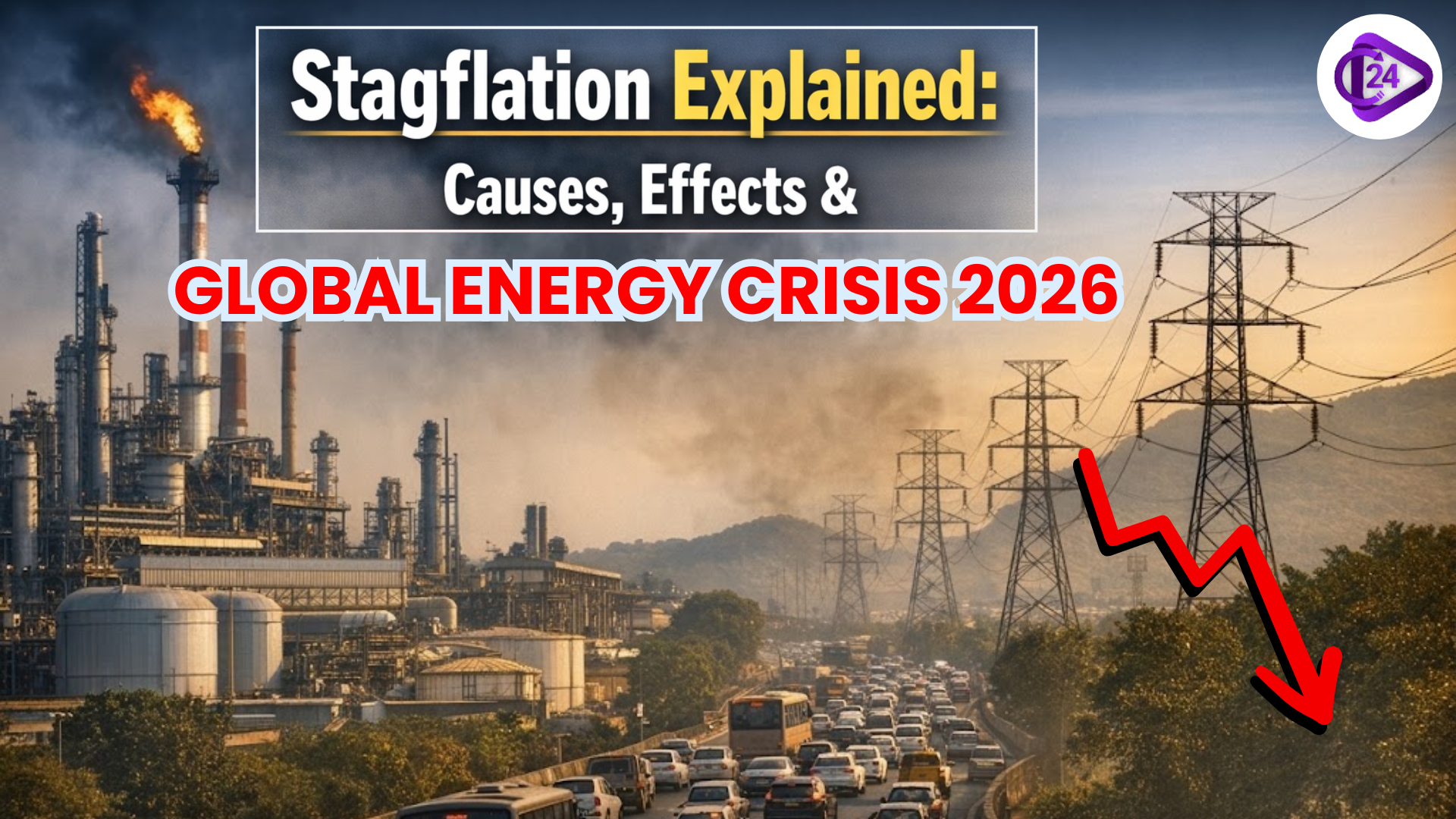
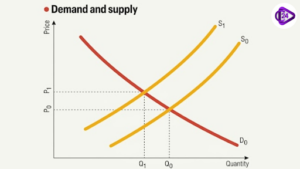
Stagflation has returned to the world economic agenda, particularly amid rising energy costs and decelerating growth. Institutions such as the World Bank define stagflation as a rare economic state in which high inflation is coupled with poor economic growth and rising unemployment, making the formulation of sound policies challenging. The current energy crisis affecting the world due to supply shocks and geopolitical tensions is raising the cost of production and contributing to inflation and undermining economic activity. This combination presents grave threats to the established and emerging economies, and stagflation is one of the most difficult economic situations to control.
Key Causes of Stagflation in 2026: Role of Global Energy Crisis
- Global Energy Price Shock: The World Bank also shows that the increase in the price of oil and gas has greatly pushed down the cost of production and transportation, which results in high inflation across the world.
- Supply Disruptions: Continuing geopolitical tensions and conflicts have affected the energy supply networks across the world, decreasing supply and increasing prices.
- Cost-Push Inflation: The increase in energy prices has led to an increase in the cost of inputs in the industries, which are then passed on to customers by the businesses, which is a major cause of stagflation.
- Slow Economic Growth: According to the International Monetary Fund, high inflation will cut the consumer purchasing power and thus will decelerate both demand and economic growth.
- Tightening of Monetary Policy: Central banks are raising interest rates to control inflation, but in effect, this inhibits investment and economic activities.
- Increase in food and commodity prices: The rise in the price of energy has a direct effect on agriculture and logistics, which contributes to an increase in food prices and inflation in general.
- Unemployment Pressure: The slow growth compels firms to reduce expenditures, which on many occasions leads to loss of jobs and an increase in unemployment.
- Weak World Demand: The high inflation decreases consumer spending, which again weakens the economic momentum.
- Currency Depreciation: A lot of developing nations have a weaker currency, which increases the cost of energy imports and aggravates inflation.
PYQs on Supply, Demand & Stagflation
| Exam | Year | Question | Options | Answer |
| UPSC Prelims | 2020 | Which of the following best describes ‘stagflation’? | (A) High growth with low inflation (B) High inflation with low growth and high unemployment (C) Low inflation with high growth (D) Deflation with high employment | B |
| UPSC Prelims | 2018 | What will happen if demand increases while supply remains constant? | (A) Fall in price (B) Rise in price (C) No change (D) Fall in demand | B |
| SSC CGL | 2019 | The law of demand states that, other things being constant: | (A) Price and demand move in same direction (B) Price and demand move in opposite direction (C) Demand is constant (D) Supply affects demand | B |
| RBI Grade B | 2021 | Cost-push inflation is mainly caused by: | (A) Increase in demand (B) Increase in cost of production (C) Increase in supply (D) Decrease in wages | B |
| UPSC Prelims | 2017 | When supply decreases, and demand remains constant, what happens to price? | (A) Decreases (B) Increases (C) Remains same (D) Becomes zero | B |
| SSC CHSL | 2020 | What happens when supply exceeds demand in a market? | (A) Prices rise (B) Prices fall (C) No effect (D) Demand rises | B |
| RBI Assistant | 2019 | Stagflation is difficult to control because: | (A) Inflation and growth move together (B) Inflation and unemployment move in opposite policy direction (C) Demand is stable (D) Supply is constant | B |
| UPSC Prelims | 2016 | The concept of the ‘invisible hand’ in economics is associated with: | (A) Government control (B) Market forces of demand and supply (C) Monetary policy (D) Fiscal deficit | B |
| SSC GD | 2021 | Equilibrium price is determined when: | (A) Demand > Supply (B) Demand = Supply (C) Supply > Demand (D) Price is fixed by govt | B |
| NABARD | 2022 | Which situation can lead to stagflation? | (A) High demand growth (B) Supply shock like rise in oil prices (C) Increase in exports (D) Decrease in taxes | B |
Governor Bound by State Cabinet Advice on Remission
Conclusion – Stagflation
Stagflation is regarded as one of the most complicated economic issues because it is characterised by elevated inflation, stagnating growth, and increased unemployment at the same time. It puts a hard task on policymakers, as inflation control policies have the potential of further decelerating growth. The recent energy crunch experienced globally has increased the risks of stagflation in economies. To address this concern, it is critical to have effective policy coordination, supply-side reforms, and stable energy management. To solve stagflation, it is necessary to have a moderate solution that achieves sustainable economic stability and sustainable economic growth.