
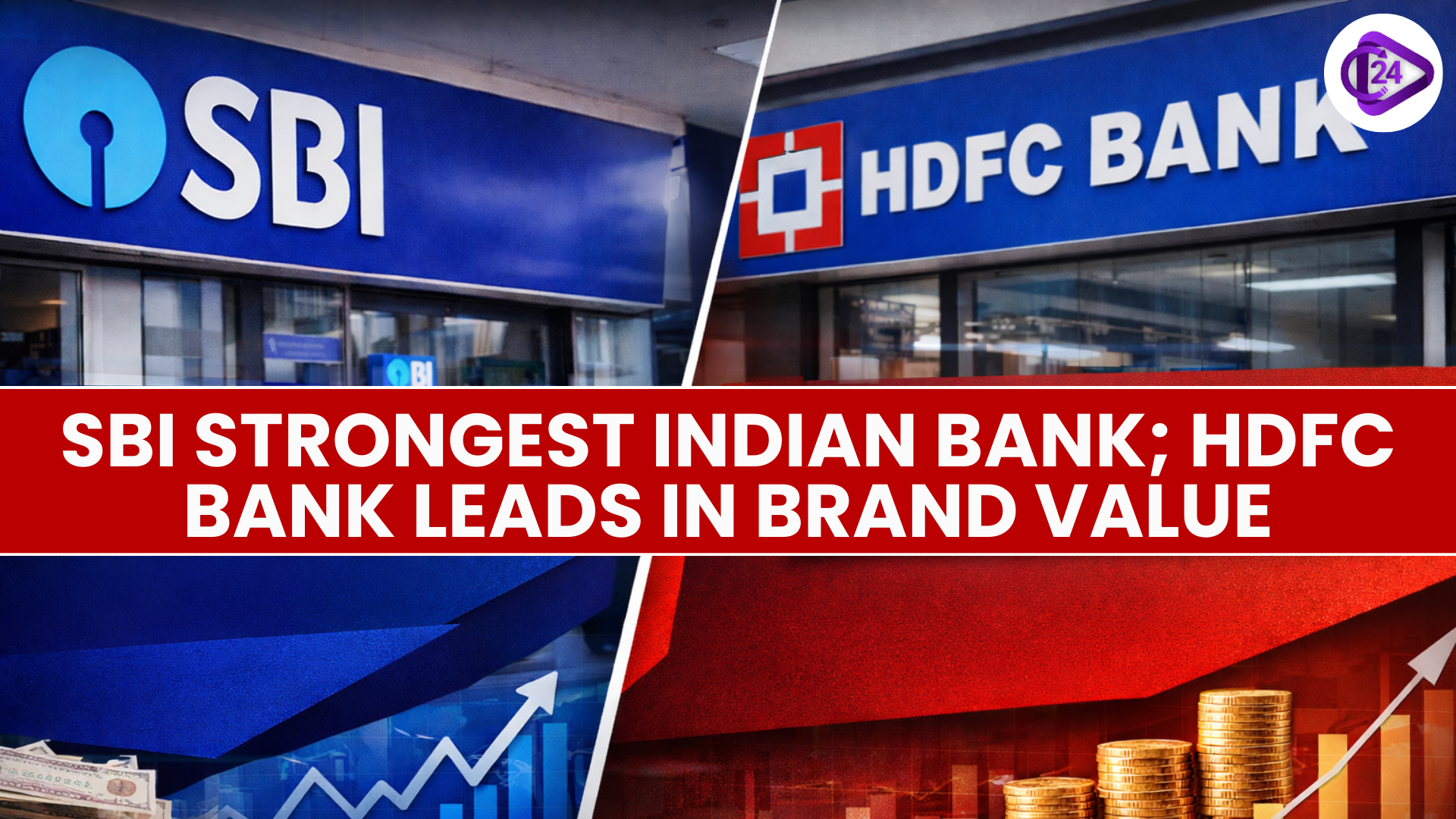
India’s banking sector continues to demonstrate resilience and growth, with two giants standing out for different strengths. State Bank of India (SBI) is widely recognized as the strongest bank in the country due to its vast customer base, government backing, and nationwide branch network. Meanwhile, HDFC Bank leads in overall brand value, reflecting its strong market reputation, consistent profitability, and digital innovation. Together, these banks represent the stability and evolution of India’s financial ecosystem. SBI’s legacy and scale make it a pillar of trust, while HDFC Bank’s modern approach and customer-focused services highlight the future of banking in India’s rapidly expanding financial landscape.
Banking Leaders of India: SBI for Strength, HDFC Bank for Brand Value
-
State Bank of India (SBI) is widely regarded as the strongest bank in India due to its massive scale, strong government backing, and long-standing reputation in the financial sector. It plays a crucial role in supporting India’s economic development.
-
With thousands of branches and ATMs spread across urban, semi-urban, and rural areas, SBI has one of the largest banking networks in the country. This extensive reach allows it to serve millions of customers efficiently.
-
SBI’s strong balance sheet and capital strength contribute to its position as the most stable and reliable public sector bank in India, making it a preferred choice for many individuals and businesses.
-
On the other hand, HDFC Bank leads the Indian banking sector in terms of brand value. Its reputation for innovation, customer service, and consistent financial performance strengthens its brand image.
-
HDFC Bank has built strong trust among customers through its focus on digital banking, seamless online services, and advanced mobile banking solutions.
-
The bank has also maintained steady growth in profits, asset quality, and market capitalization, which has enhanced its brand recognition both domestically and globally.
-
Both SBI and HDFC Bank play a major role in providing loans, supporting businesses, and promoting financial inclusion across India.
-
Their continued investment in technology, customer experience, and financial services innovation ensures they remain leaders in the rapidly evolving Indian banking industry.
Most Important MCQs
The recommendation to establish the State Bank of India was made by which committee?
A. Narasimham Committee
B. Hilton Young Commission
C. All India Rural Credit Survey Committee
D. Banking Commission
Answer: C. All India Rural Credit Survey Committee
Explanation: The All India Rural Credit Survey Committee (1951-54) recommended creating a strong state-partnered bank to expand rural credit. This led to the formation of SBI in 1955.
The State Bank of India was established in which year?
A. 1949
B. 1955
C. 1969
D. 1980
Answer: B. 1955
Explanation: SBI was created in 1955 when the Government of India nationalized the Imperial Bank of India under the State Bank of India Act, 1955.
SBI was formed after nationalizing which bank?
A. Bank of Hindustan
B. Imperial Bank of India
C. Bank of Bengal
D. Oudh Commercial Bank
Answer: B. Imperial Bank of India
Explanation: The Imperial Bank of India was taken over by the government and transformed into SBI to strengthen public sector banking and rural credit delivery.
The Imperial Bank of India was formed in 1921 by merging which banks?
-
Bank of Bengal
-
Bank of Bombay
-
Bank of Madras
-
Bank of Hindustan
A. 1, 2 and 3 only
B. 1 and 4 only
C. 2, 3 and 4 only
D. 1, 2, 3 and 4
Answer: A. 1, 2 and 3 only
Explanation: In 1921, the three Presidency banks—Bank of Bengal, Bank of Bombay, and Bank of Adras—were merged to form the Imperial Bank of India.
Who was the first Chairman of SBI?
A. John Mathai
B. Sir Osborne Smith
C. Benegal Rama Rau
D. R. K. Talwar
Answer: B. Sir Osborne Smith
Explanation: Sir Osborne Smith became the first Chairman of SBI in 1955 when the bank was created after nationalizing the Imperial Bank of India.
The State Bank of India Act was passed in which year?
A. 1934
B. 1949
C. 1955
D. 1969
Answer: C. 1955
Explanation: The State Bank of India Act, 1955 provided the legal framework for establishing SBI and transferring the Imperial Bank of India to government ownership.
The headquarters of SBI is located in which city?
A. New Delhi
B. Mumbai
C. Kolkata
D. Chennai
Answer: B. Mumbai
Explanation: The headquarters of State Bank of India is in Mumbai, India’s financial capital.
In 2017, how many associate banks merged with SBI?
A. 4
B. 5
C. 6
D. 7
Answer: B. 5
Explanation: In 2017, five associate banks of SBI were merged with it along with Bharatiya Mahila Bank, making SBI one of the world’s largest banks by assets.
Which of the following banks were merged with SBI in 2017?
-
State Bank of Travancore
-
State Bank of Mysore
-
State Bank of Patiala
-
Bharatiya Mahila Bank
A. 1, 2 and 3 only
B. 1, 2, 3 and 4
C. 2 and 4 only
D. 1 and 4 only
Answer: B. 1, 2, 3 and 4
Explanation: All these banks were merged with SBI in April 2017, significantly expanding its size and operational capacity.
The main objective behind establishing SBI was to:
A. Promote private banking
B. Expand rural banking and credit
C. Control inflation
D. Regulate stock markets
Answer: B. Expand rural banking and credit
Explanation: The creation of SBI aimed to strengthen rural credit, expand banking access, and support agricultural and economic development in India.
Conclusion
State Bank of India continues to stand as the strongest bank in India due to its vast network, strong government support, and deep reach across urban and rural markets. At the same time, HDFC Bank leads in brand value, reflecting its innovation, customer trust, and consistent financial performance. Together, these two banking giants highlight the strength, stability, and evolving future of India’s dynamic banking sector.