

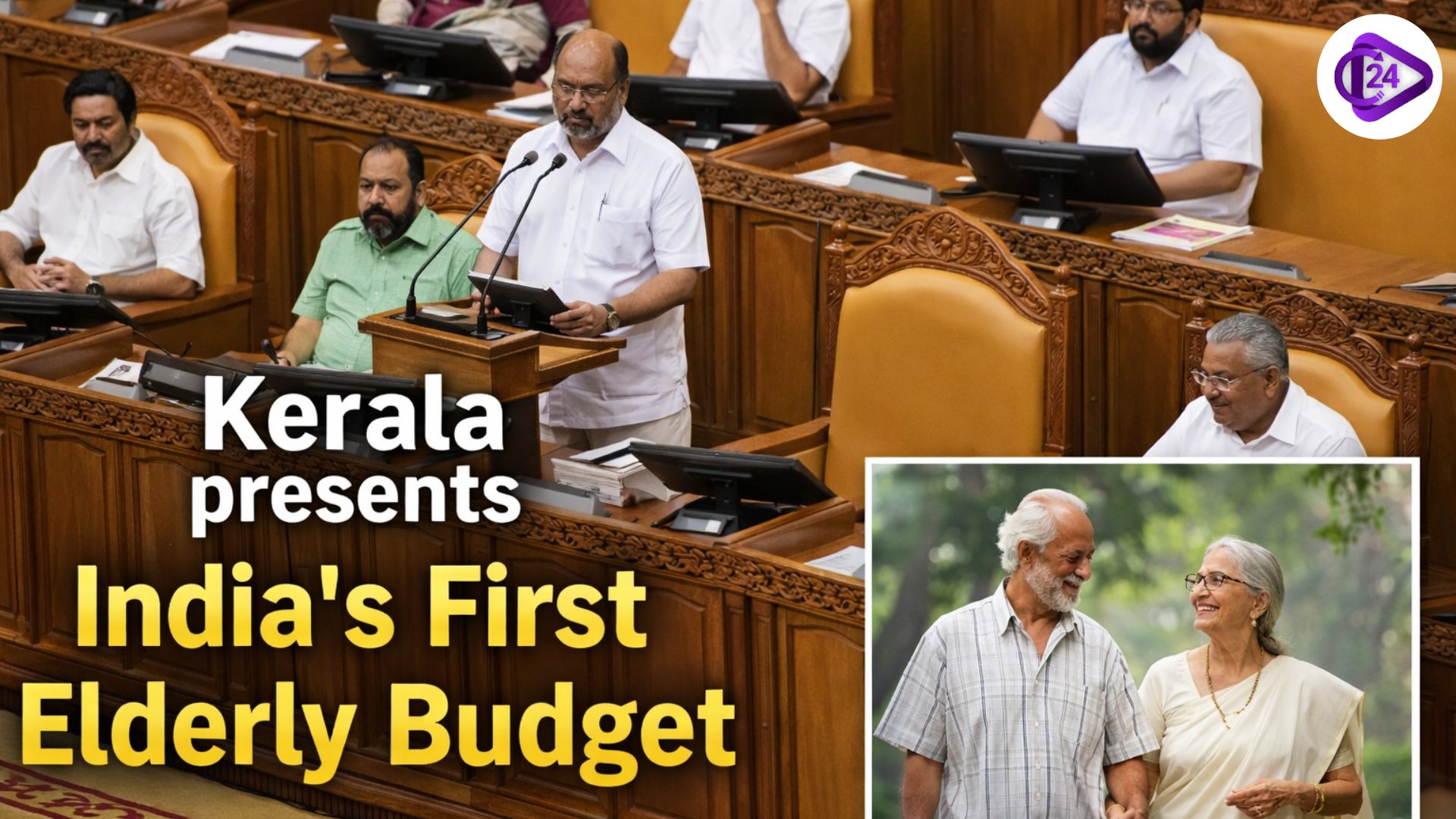
Kerala has been a history-maker by introducing the first elderly budget in India to meet the needs of the rapidly aging population. Since the elderly population makes up almost 18.7 percent of the state population, the separate budget document will bring together all the allocations made towards the welfare of the elderly, which include pensions, healthcare, and community support services. It also adds the criterion of correlating the devolution of local body funds with the percentage of senior citizens to achieve focused planning and services. The relocation highlights the prioritisation of Kerala in the care economy and rights-based welfare in its socio-economic planning for older adults.
What is the Elderly Budget?
-
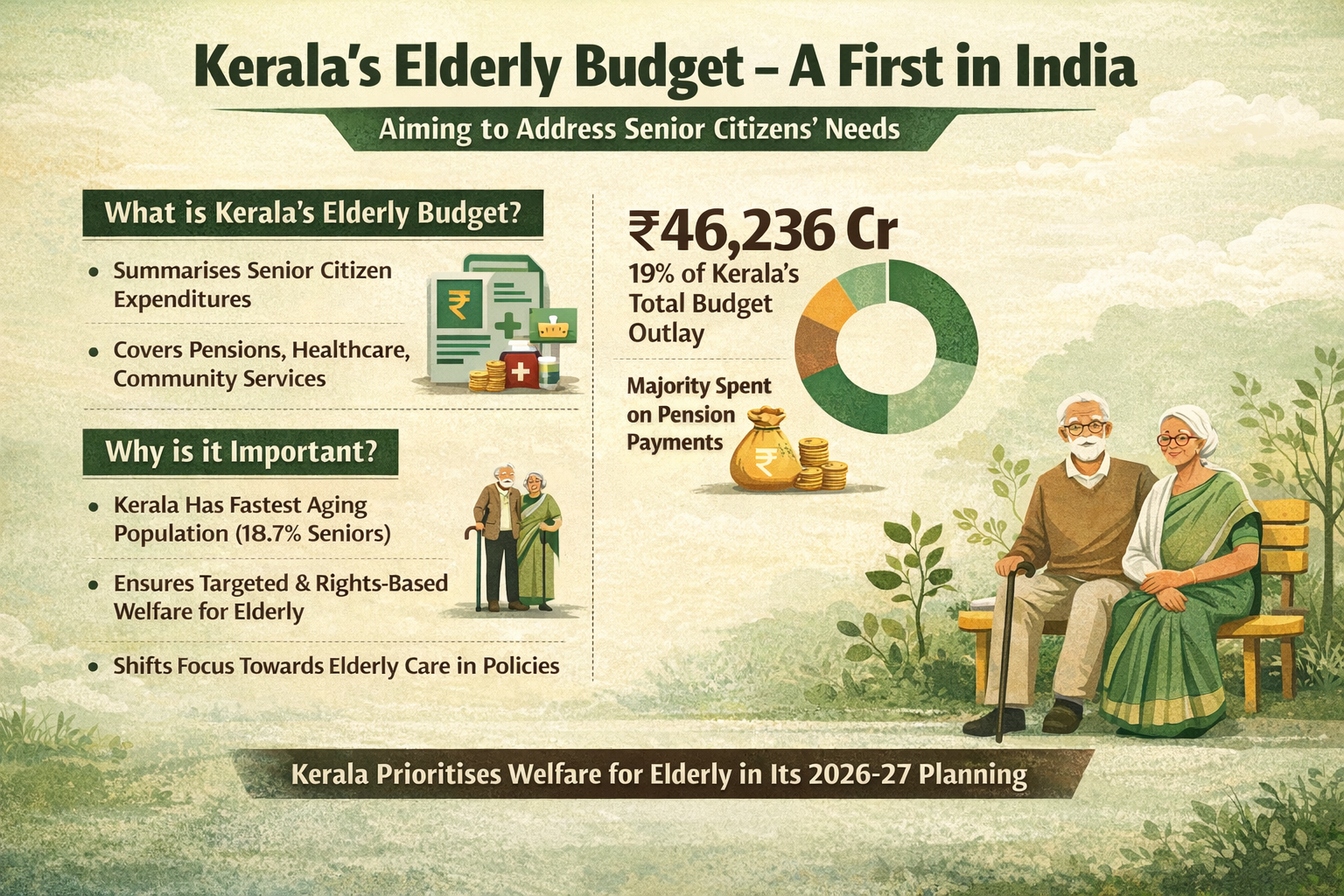
Kerala is the first state in India to put forward a special state budget on the elderly as part of its state budget for 2026-27.
-
It is not an independent financial budget but a combined report of all expenditures directly benefiting the senior citizens.
-
The budget determines and categorises expenditures related to the elderly in pensions, health care, welfare, and community services.
-
It follows an organised pattern according to which schemes that are only applicable to the aging group are labelled Part A, and partially useful schemes are categorised as Part B.
-
The elderly budget covers approximately 46,236.52 crore, which is about 19 percent of the total budget expenditure of the state.
-
Almost two-thirds of this budget is associated with the payment of pensions, such as welfare pension and retirement benefits.
Why Does the Kerala Elderly Budget Matter?
-
There is a fast-growing aging population in Kerala, with senior citizens making up approximately 18.7 percent of the population, which is the largest in India.
-
This share is estimated to skyrocket in the next few years, eventually boosting the need for income support, long-term care, and healthcare services.
-
The Elderly Budget offers more transparency on the amount spent as well as the areas in which the money is used for the welfare of the elderly.
-
It is a change towards the traditional welfare policy to a policy on the rights-based and structured approach to aging.
-
The relocation has been a demonstration of demographic planning in general, which predicts future financial and social requirements of the ageing population.
Previous Year Questions on Budget and Kerala
| Exam | Year | Question (with Options) | Answer |
|---|---|---|---|
| UPSC CSE Prelims | 2017 | The Annual Financial Statement mentioned in the Constitution is under: (A) Article 110, (B) Article 112, (C) Article 114, (D) Article 266 | (B) |
| SSC CGL | 2019 | The Union Budget of India is presented first in: (A) Rajya Sabha, (B) Lok Sabha, (C) Joint Session, (D) Both Houses together | (B) |
| RRB NTPC | 2021 | Revenue Deficit occurs when: (A) Revenue receipts exceed revenue expenditure, (B) Revenue expenditure exceeds revenue receipts, (C) Capital expenditure exceeds capital receipts, (D) Fiscal deficit increases | (B) |
| UPSC CSE Prelims | 2020 | A finance bill can be introduced in: (A) Rajya Sabha only, (B) Lok Sabha only, (C) Either House, (D) Joint Sitting | (B) |
| Kerala PSC | 2020 | Which is the longest river in Kerala? (A) Bharathapuzha, (B) Pamba, (C) Periyar, (D) Kabini | (C) |
| SSC CHSL | 2016 | Anamudi Peak is located in: (A) Tamil Nadu, (B) Karnataka, (C) Kerala, (D) Andhra Pradesh | (C) |
| RRB Group D | 2019 | Silent Valley National Park is situated in: (A) Wayanad, (B) Palakkad, (C) Idukki, (D) Kannur | (B) |
| UPSC CSE Prelims | 2018 | The Western Ghats run parallel to India’s: (A) Eastern Coast, (B) Western Coast, (C) Northern Plains, (D) Indo-Gangetic Plain | (B) |
| SSC CPO | 2018 | Mohiniyattam is a classical dance form of: (A) Odisha, (B) Kerala, (C) Assam, (D) Manipur | (B) |
| RRB NTPC | 2020 | Kathakali originated in: (A) Tamil Nadu, (B) Kerala, (C) Karnataka, (D) Andhra Pradesh | (B) |
| UPSC CSE Prelims | 2017 | Kalaripayattu is associated with: (A) Gujarat, (B) Kerala, (C) Rajasthan, (D) Punjab | (B) |
| SSC MTS | 2022 | The predominant soil type in Kerala is: (A) Black Soil, (B) Laterite Soil, (C) Alluvial Soil, (D) Desert Soil | (B) |
Conclusion (First Elderly Budget in Kerala)
The Kerala Budget on the Elderly is a positive move towards dealing with the elderly segment. The initiative can increase the transparency and targeted planning by consolidating welfare, pension, and healthcare allocations. It dictates a precedent of inclusive governance and age-responsive fiscal policy on sustainable social development at a national level.