


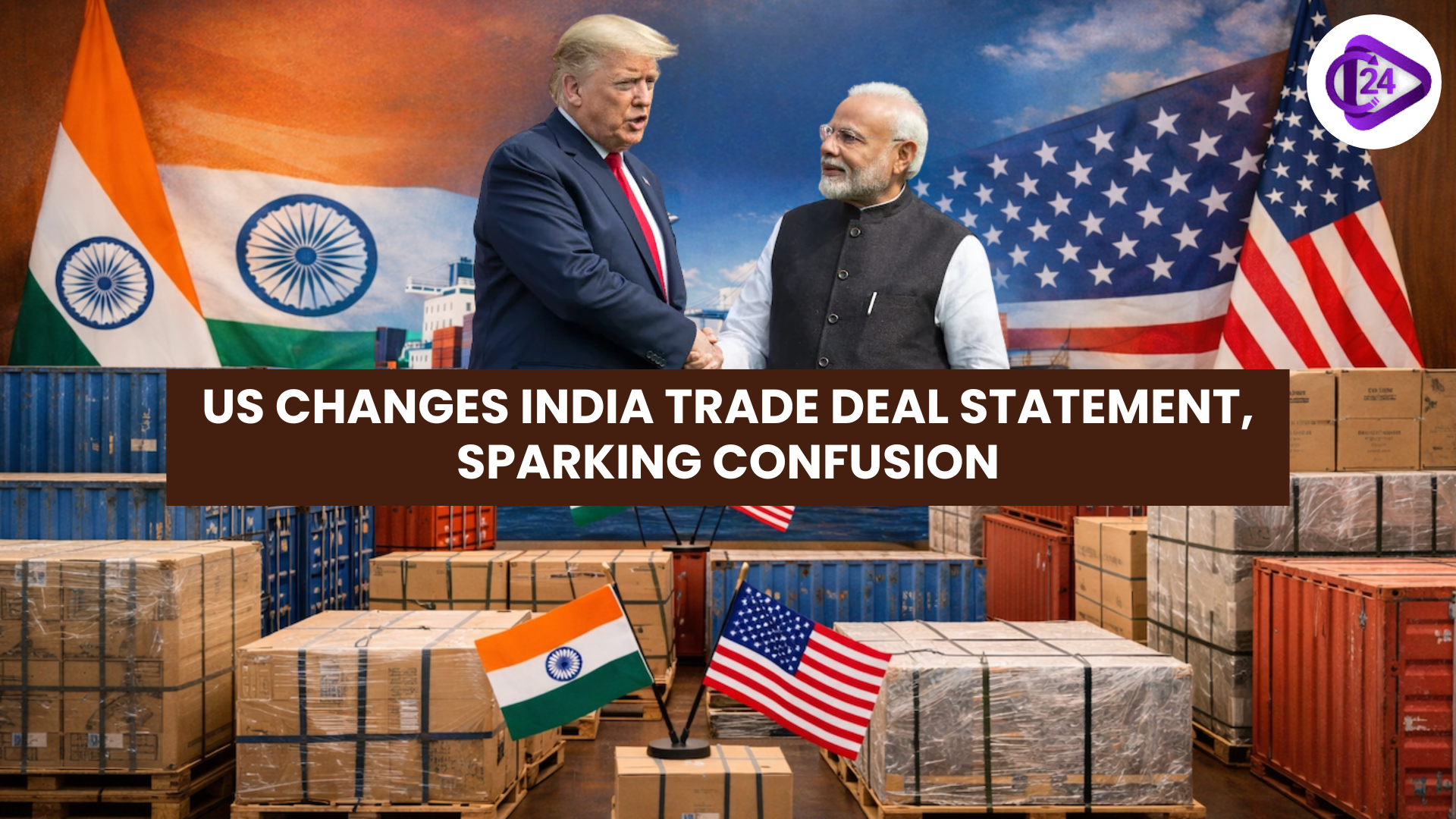
The US government changed its official factsheet on the interim trade agreement with India, which eliminated major language and introduced new ambiguity on what the deal entails. The new version deleted a reference to Indian tariff cuts in pulses, one of the staple agricultural products, and softened the language around the idea that India wants to buy $500 billion of U.S. goods but uses the word 'intends to' in place of 'committed'. It also made language modifications in electronic trade obligations. The developments have contributed to the confusion, and farmer associations and analysts have raised concerns regarding the terms and implications of the changing trade pact between the two nations.
What Goods Were Altered in the Trade Factsheet?
-
The first factsheet issued by the White House on the US interim trade agreement with India was followed by an update of the document, changing some references to products and other trade pledges.
-
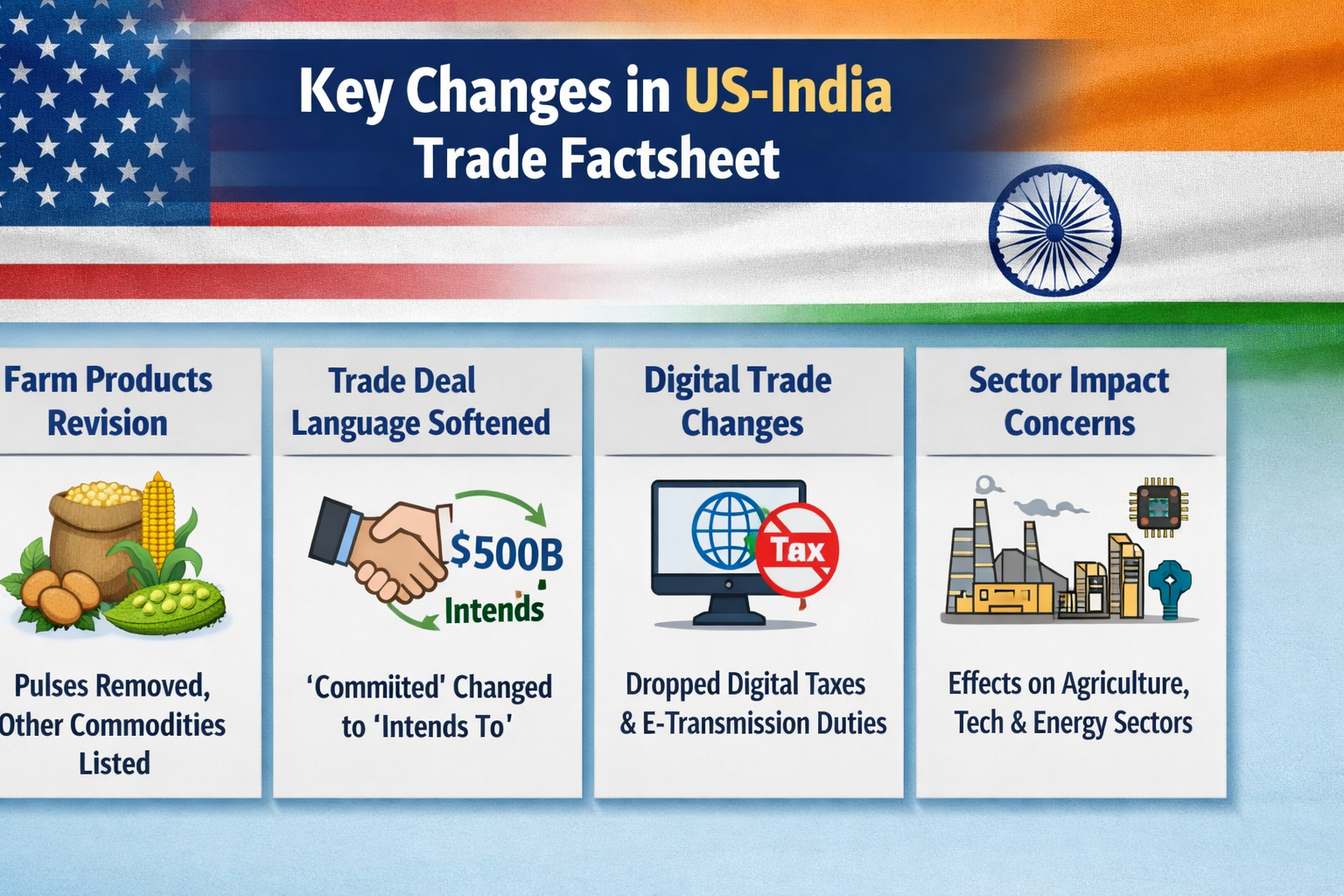
The amended one omitted any reference to the list of agricultural products of which India was claimed to cut or abolish tariffs, which raised doubts over concessions of the farm industry.
-
As pulses were omitted, other farm commodities were listed, which included dried distillers' grains (DDGs), red sorghum, tree nuts, fresh and processed fruits, soybean oil, wine and spirits.
-
The updated document also eliminated references to digital trade aspects, such as language coupled with digital services taxes and electronic transmission duties.
-
The language used in the proposed purchase of 500 billion dollars of Indian goods in the US was toned down; the language used was less firm and more speculative.
-
The amendments look like an attempt to make the factsheet more congruent with the jointly issued statement and focus less on sensitive or controversial types of products.
Why Do the Factsheet Revisions Matter for Key Sectors?
-
An amended factsheet by the US no longer included pulses on the list of agricultural products receiving tariff cuts, indicating the sensitivity of the farm sector when it comes to bilateral trade talks. Pulses are a farm crop staple in India, and any adjustment in tariffs would have a direct impact on the local farmers and food prices.
-
Excluding the pulses, the revision warning is a wake-up call to liberalise the Indian agriculture market to higher foreign competition, particularly in politically and economically sensitive markets.
-
The change in the language used in the proposed 500 billion dollars acquisition of Indian goods by the US, where milder phrases are used instead of the stronger commitment ones, impacts expectations in other areas like energy, defence, manufacturing and technology exports.
-
Electronic transmissions and digital services taxes and duties removal is a big thing for the technology and digital economy sector, since this will maintain the flexibility of the policy on digital taxation.
-
To US exporters, when products change in product listing, the potential gains of market access can be either enhanced or limited, depending on the type of product being exported and whether it is in agriculture or industrial goods.
-
In general, the revisions are important as it affects the expectation in the sector, the investor mood and the bargaining power in the fields of agriculture, digital trade, energy and manufacturing.
Conclusion (US Changes India Trade Deal Statement)
The changes in the US-India trade factsheet point to the sensitivity and dynamism of trade negotiations. Given the changes in the product references and wording, the effects are applied to the agricultural sphere, digital trade, and manufacturing industry. The episode also highlights the need to ensure clarity in official communication because a small alteration can affect the expectations of the market and the interpretation of policies.