







The Vedic Era: From Early to Later Vedic Society (1500–600 BCE)

Vedic Era (c. 1500–600 BCE) — Major Period of ancient Indian history during which the Vedas, India’s oldest sacred texts, were composed. This age is also conventionally divided by the National Council of Educational Research and Training (NCERT) into the Early Vedic Period (c. 1500–1000 BCE) and the Later Vedic...

The Vedic Era: From Early to Later Vedic Society (1500–600 BCE)
Vedic Era

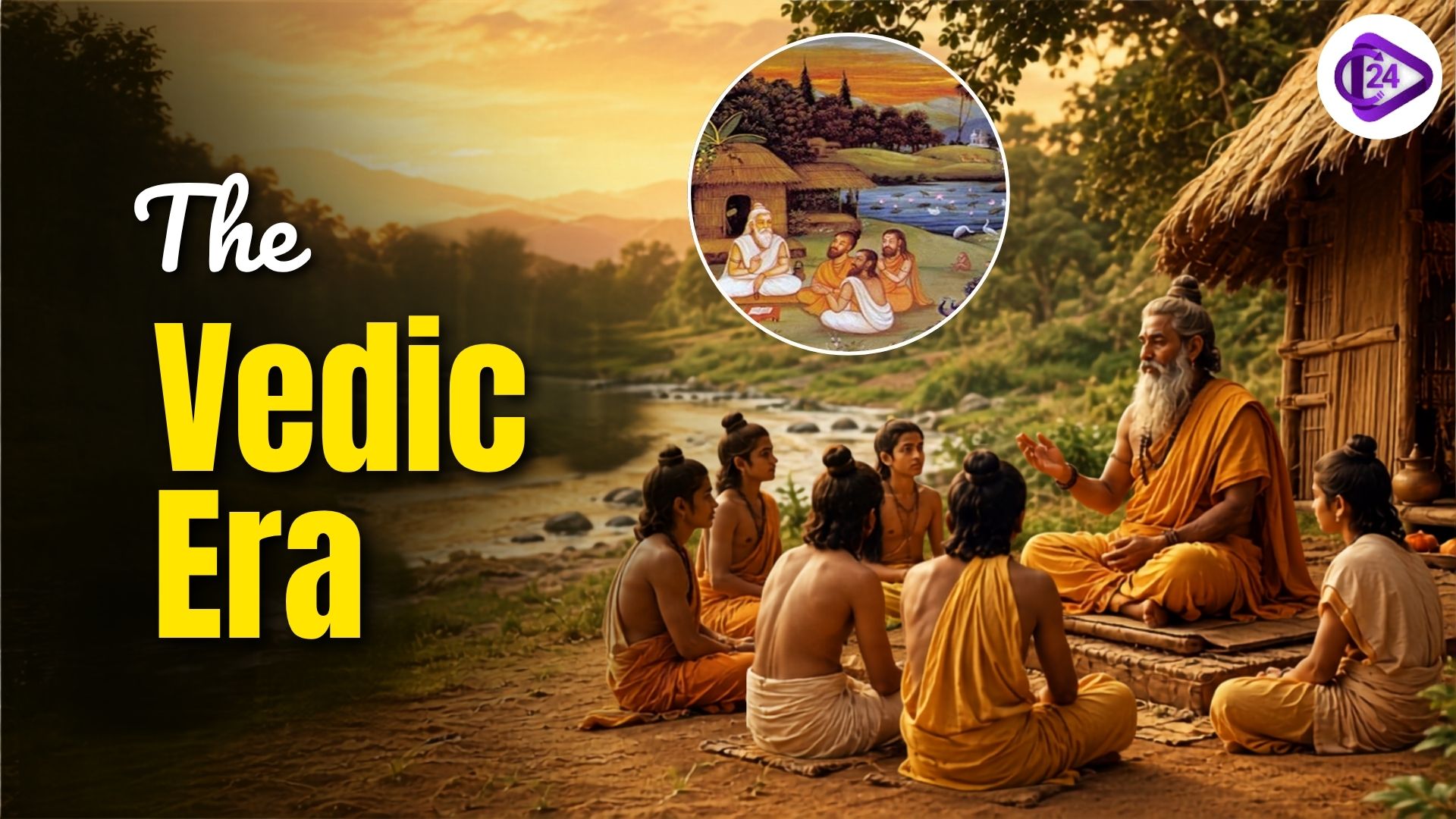
Vedic Era (c. 1500–600 BCE) — Major Period of ancient Indian history during which the Vedas, India’s oldest sacred texts, were composed. This age is also conventionally divided by the National Council of Educational Research and Training (NCERT) into the Early Vedic Period (c. 1500–1000 BCE) and the Later Vedic Period (c. 1000–600 BCE). The age saw the change from a mostly nomadic and tribal culture to one in which village-based agrarian societies were dominated by expanding kingdoms, new political systems and colonialism. It was also the origin of Indian religion, social organisation, philosophy and cultural traditions which provide the basis for subsequent civilisations.

Meaning and Concept of the Vedas

The oldest sacred literature of India, the Vedas, are basic to both Vedic Era literature and Hindu philosophy. Veda is a Sanskrit word derived from the root Vid ‘to know’ or knowledge. Written in Vedic Era Sanskrit, the Vedas were preserved through an elaborate oral tradition until being committed to writing. They include hymns, prayers, rituals, philosophical concepts, as well as texts regarding religion, society, politics and daily life during the Vedic Age.

Classification of the Four Vedas

Veda Meaning / Name Key Content Associated Texts Significance
Rig Veda Knowledge of hymns Contains hymns (Suktas) dedicated to various deities like Agni, Indra, Varuna Brahmanas, Aranyakas, Upanishads Oldest Veda; reflects early Vedic society and religion
Sama Veda Knowledge of melodies Musical chants derived mainly from the Rig Veda for ritual singing Brahmanas, Upanishads Foundation of Indian classical music and chanting tradition
Yajur Veda Knowledge of rituals Contains prose mantras used in sacrifices and rituals Brahmanas, Upanishads Guide for performing Vedic sacrifices and rituals
Atharva Veda Knowledge of spells Contains hymns, magic formulas, healing chants, and daily life practices Brahmanas, Upanishads Reflects everyday life, medicine, and early folk beliefs

Introduction to the Vedic Era Aryans

The Vedic Era Aryans were an early Indo-Aryan-speaking pastoral people who migrated into the north-western Indian subcontinent circa 1500 BCE. Much of what is known about them comes via the Vedas, which are the oldest sacred scriptures, with which their society, economy, religion and culture are intricately linked. The Vedic Aryans were semi-nomadic pastoralists, who depended on cattle rearing, particularly the cow, which in fact was a symbol of affluence. Eventually, they evolved into sedentary agricultural societies.

The Kshatriya society was organised into tribal groupings called Jana, led by a chief known as Rajan. Followers worshipped gods of nature such as Indra, Agni and Varuna with hymns and oblations. These developments served as the basis for what would evolve into Vedic Aryan culture, language, and religious traditions that would shape subsequent progress in Indian civilisation.

 Vedic Era Period (1500–600 BC)

The Vedic Era  Period in ancient India is a significant time encompassing the composition of the Vedic Era texts and the transition of society from tribal pastoralism to settled agrarianism (1500–600 BC). This is further divided into the Early Vedic Period (1500–1000 BC) and the Later Vedic Period (1000–600 BC). It represents a turning point in socio-economic organisation, religious belief and political organisation, forming the basis of early Indian civilisation.

Early Vedic Era  Period (1500–1000 BC)

  • Also known as the Rigvedic Age, where the Rigveda was composed, this is called the Early Vedic Period
  • Society was largely pastoral, with cattle farming as the dominant industry.
  • Wealth and currency were primarily measured in cows.
  • Individuals used to live in clan formation called Jana, governed by a head known as Rajan.
  • The political system was primitive and tribal, with councils such as the Sabha and Samiti.
  • It was a nature-worship religion wherein gods like Indra, Agni and Varuna were worshipped.
  • There was no system of strict castes, and most people had equal standing in society.
  • Mixed farming, combining livestock with barley cultivation (wheat through the second half of this period, to a lesser extent), became part of the economy.
  • Life was semi-nomadic for the most part, and rural in nature.

Later Vedic Era Period (1000–600 BC)

  • After this, there was the Later Vedic Period (1000–600 BC), which saw the transition of earlier pastoral life into a settlement-based agrarian society.
  • Political units grew into janapadas and early kingdoms.
  • Kingship turned hereditary and increasingly powerful with the backing of rituals such as Rajasuya and Ashvamedha.
  • With the rise of the Varna system, society became hierarchical.
  • Brahmanas gained importance because of intricate ceremonies and sacrifices.
  • The economy was dependent on agriculture, the use of iron tools, and surplus production.
  • This is when wealth started to be based on land and land became one of the main subjects for quarrel.
  • With the dominance of yajnas, religion became more ritualistic and formal.
  • Ayas: an enhanced technology in iron that advanced agriculture and implements.
  • It also structured social life in a way that was far less egalitarian.

Political Life of the Vedic Era Period 

Aspect Early Vedic Period (1500–1000 BC) Later Vedic Period (1000–600 BC)
Political Unit Jana (tribal organisation) Janapada and emerging kingdoms (Rashtra concept)
Nature of State Tribal and semi-nomadic Territorial monarchy
Chief/King (Rajan) Tribal chief, limited powers Powerful king with expanded authority
Kingship Non-hereditary, elected by tribe Hereditary monarchy
Administration Simple, based on tribal assemblies More complex and structured administration
Assemblies Sabha, Samiti, Vidatha important Sabha becomes more powerful than Samiti
Army Temporary tribal warriors Regular standing army begins to develop
Tax System Voluntary gift (Bali) Regular taxes (Bhaga, Bali, Shulka)
Position of King First among equals Supreme political authority
Role of Brahmanas Limited influence Increased power due to rituals and yajnas
Political Conflicts Mainly cattle raids Land-based territorial wars

Social Structure of Early and Later Vedic Era Society

Aspect Early Vedic Society (1500–1000 BC) Later Vedic Society (1000–600 BC)
Nature of Society Tribal, simple and egalitarian Complex, hierarchical and stratified
Basic Unit Jana and Vis (clan-based society) Larger territorial units (Janapada)
Family System Nuclear/extended family; simple structure Joint family system becomes prominent
Varna System No rigid varna division Four-fold varna system develops (Brahmana, Kshatriya, Vaishya, Shudra)
Status of Women Respectable status; participated in assemblies and education Declining status; restricted participation in public life
Marriage System Monogamy common; flexibility in norms Polygamy increases among elite; stricter social rules
Occupation Not strictly hereditary; flexible roles Occupation becomes hereditary
Social Mobility High social mobility Low social mobility due to varna system
Education & Learning Oral tradition, hymns, and learning through Vedas Formalisation of priestly education and rituals
Social Equality Relatively equal tribal society Social inequality increases
Gotra System Not present Developed and regulated marriage rules

Also Read

Revolt of 1857, Complete Histor Lodhi Dynasty (1451–1526)
Sayyid Dynasty (1414–1451) Tughlaq Dynasty (1320–1414 AD
Khilji Dynasty (1290-1320 AD Mamluk Dynasty (1206 – 1290 AD
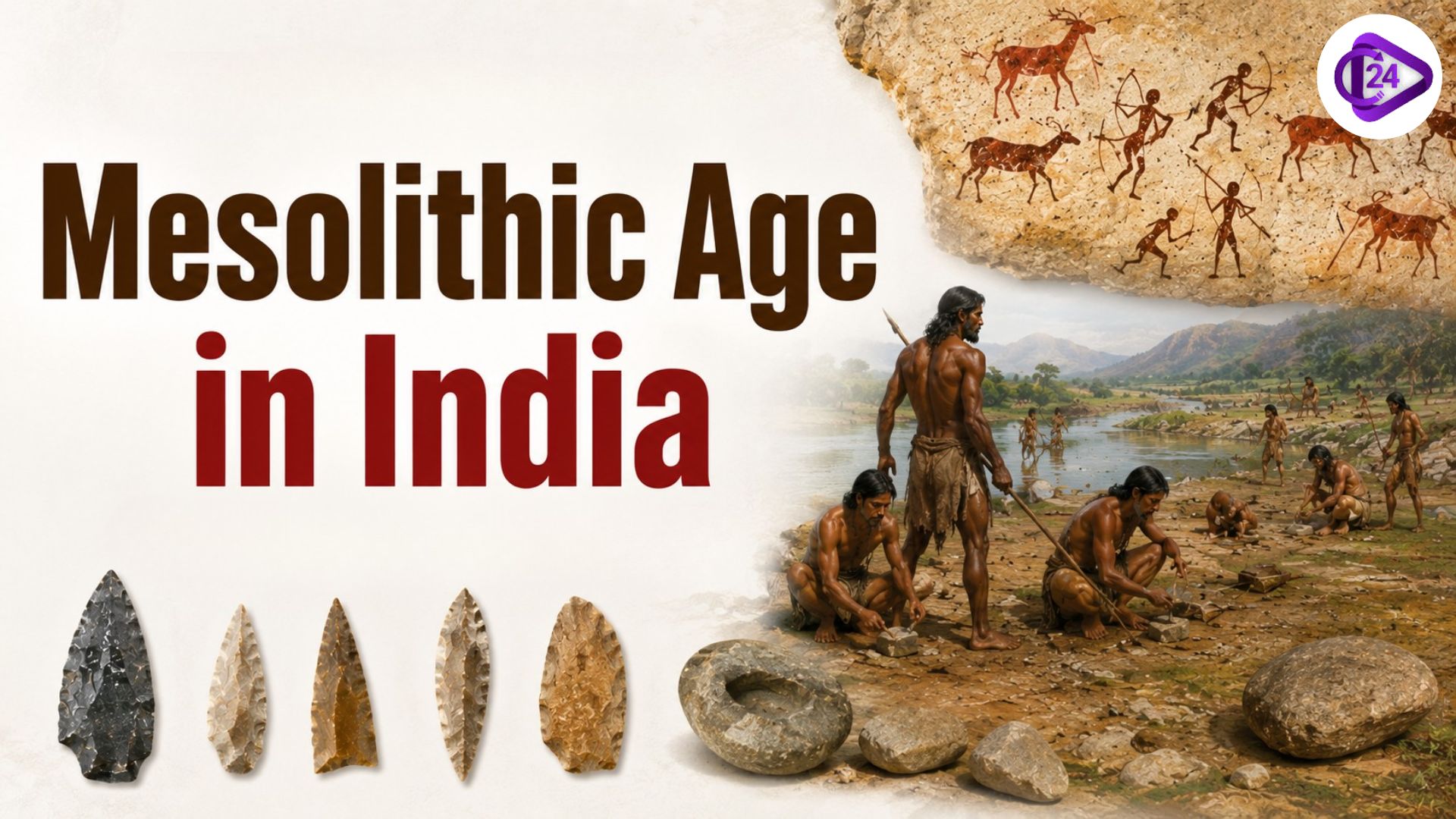
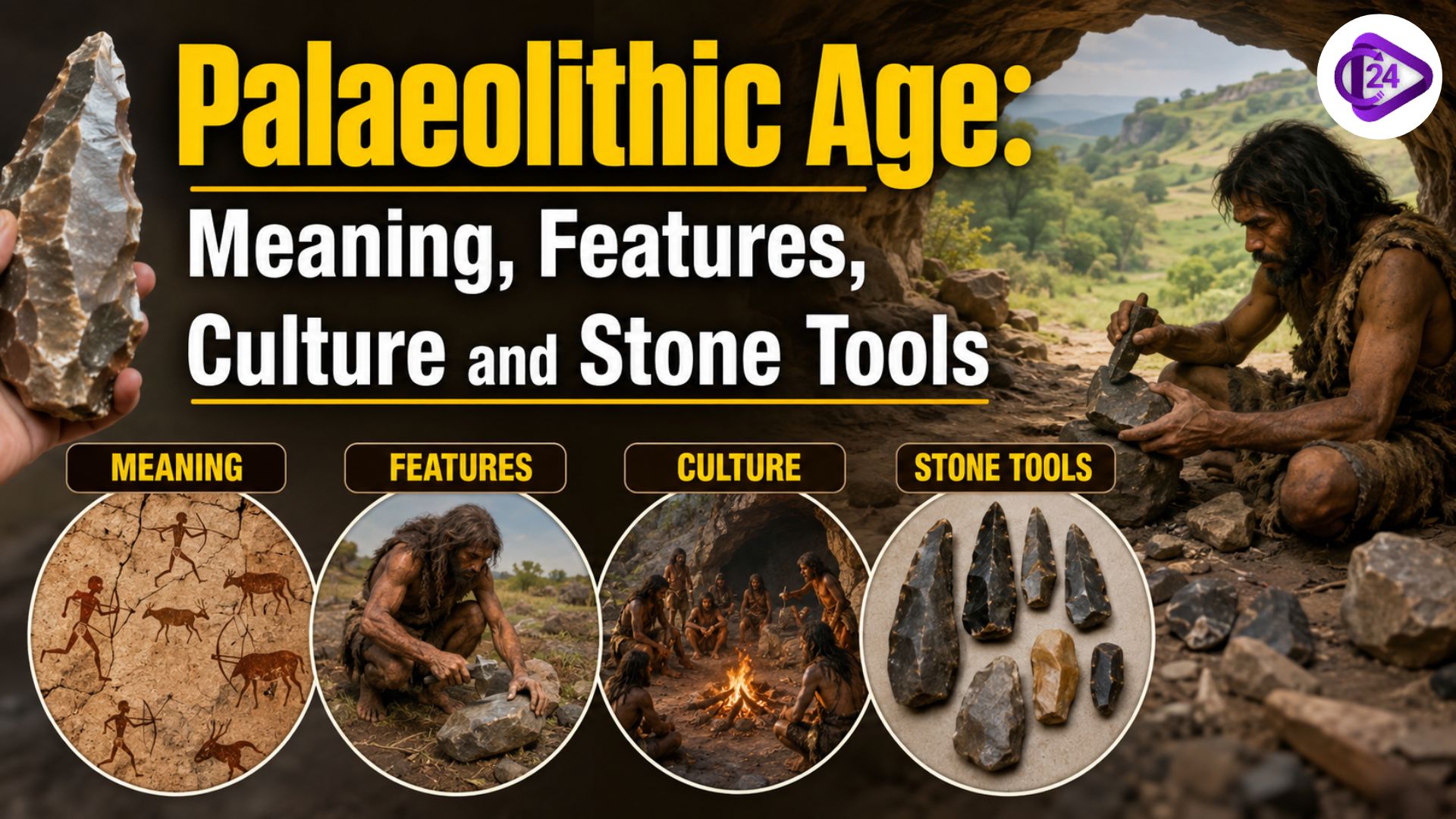
Mesolithic Age in India Palaeolithic Age

Economic Life of Early and Later Vedic Era Society

Aspect Early Vedic Period (1500–1000 BC) Later Vedic Period (1000–600 BC)
Nature of Economy Pastoral economy Agrarian economy
Main Occupation Cattle rearing Agriculture becomes dominant
Source of Wealth Cattle (especially cows) Land and agricultural produce
Agriculture Limited farming; mainly barley (yava) Expansion of crops like wheat, rice, and pulses
Use of Iron Not used; copper and bronze tools Iron (ayas) widely used for farming tools
Animal Husbandry Highly important Continues but less dominant than farming
Trade System Barter system Trade expands with surplus production
Currency/Exchange Cows used as an exchange medium Coins like Nishka begin to appear
Tax System Voluntary gift (Bali) Regular taxes like Bali, Bhaga, and Shulka
Property Concept Mainly communal and tribal Private ownership of land develops
Economic Development Simple and self-sufficient More complex and diversified economy

FAQs on the Vedic Era Period

The Vedic Period (c. 1500 – c. 600 BC) is the earliest known period of ancient India, where the Vedas were composed and a core change from tribal pastoralism to settled agriculture took place in society.
MANAS, India’s AI-Powered Digital Shield Against Drug Abuse
India, Malaysia, and Singapore Unveil I-2SEA Submarine Cable System
Vikram-1, India’s First Privately Developed Orbital-Class Rocket
Govt Sends Notice to WhatsApp Over Username Feature
Birth and Death Registrations Nearly Match Official Estimates in 2024
BJP Two-Thirds Majority, Seat Numbers and Constitutional Significance

Start Learning Today with Class24

Class24 Mobile Application

Class24 also has a mobile application so that it becomes easily accessible and convenient. This can be downloaded on an Android device. Users have appreciated this app and the content provided as 4.1 out of 5 is its rating in the App Store. People loved it because Class24 is giving content which is extremely rich in every sense. The app comprises a wide variety of features for smooth learning:

  • User-Friendly Interface: The app is categorized into various sections so that students can navigate and access various resources with ease.
  • Offline Access: The study materials can be downloaded and the student can access them even when not connected to the internet.
  • Inbuilt eBook Reader: There is a lightning-fast reader for eBooks within the app, so reading is seamless.
  • Progress Tracking: The app tracks student’s progress in preparation and keeps them organized and focused.

Courses and Subjects Offered

The total syllabus will be covered, and there are in-depth practice materials so as to give deep preparation in the courses designed to each one of them. All the subjects come under the aegis of courses offered by Class24 to meet different needs of various aspirants such as:

Preparation Tips for All Exams

Preparation tips for all exams mentioned below:

  • Previous Year Papers: Try to attempt at least 5-10 years of question papers to know the pattern of questions, how much difficulty one would face while answering, and how many frequently asked topics were in the examination.
  • Take Mock Tests: Attempt Mock Tests regularly in order to time and accuracy. You may analyze the performance and make an improvement for weak areas.
  • Focus on Time Management: Solve questions in the given time to make a habit of having speed and efficiency. Allocate time sensibly between Paper 1 and Paper 2, while appearing in the examination.
  • Current Affairs: For Current Affairs and TET exams, be updated about current affairs, teaching aptitude, and general awareness.
  • Regular Revision: Spend your daily and weekly time for revisions to not forget concepts and formulas. Use flashcards or do self-summary notes for quick revisions.
  • Understand the Exam Pattern and Syllabus: Understand the pattern of your exam paper and syllabus very well. Both Current Affairs and CSIR NET examinations are two-tier ones and involve both Paper 1, which consists of general aptitude and Paper 2 that involves specific aptitude subjects.
  • Make a Study Plan: Divide the preparation time into three phases of concept building, revision, and mock tests. Allocate more time to weaker areas while maintaining equilibrium with stronger sections.
  • Online Coaching or Study Groups: Enroll in online coaching programs like Class24 to get proper guidance and a structured approach to the study. Study groups will be useful to discuss doubts and share resources.
  • Stay Consistent and Motivated: Maintain a steady study schedule. Stay motivated by making small achievable goals.
  • Use Quality Study Materials: Suggested study material refers to a textbook, a set of previously published question papers, and web sources such as Class24.

Conclusion

Class24 is a one stop solution for aspirants preparing for Current Affairs, CSIR NET, SET, UP PGT English, UP TGT PGT, UPHESC Assistant Professor, TET, IGNOU B.Ed and other competitive exams. There are structured courses, live classes, mock tests along with the guidance of experts to assist candidates in achieving success in their respective fields.

Get success in your hand. Start study anytime anywhere.

The journey becomes simple and enjoyable when you start taking interest in it. And through our app “Class24”, we will be your trusted partners in developing that interest.

Daily Quizzes
Mock Tests
Ongoing

No ongoing tests right now.