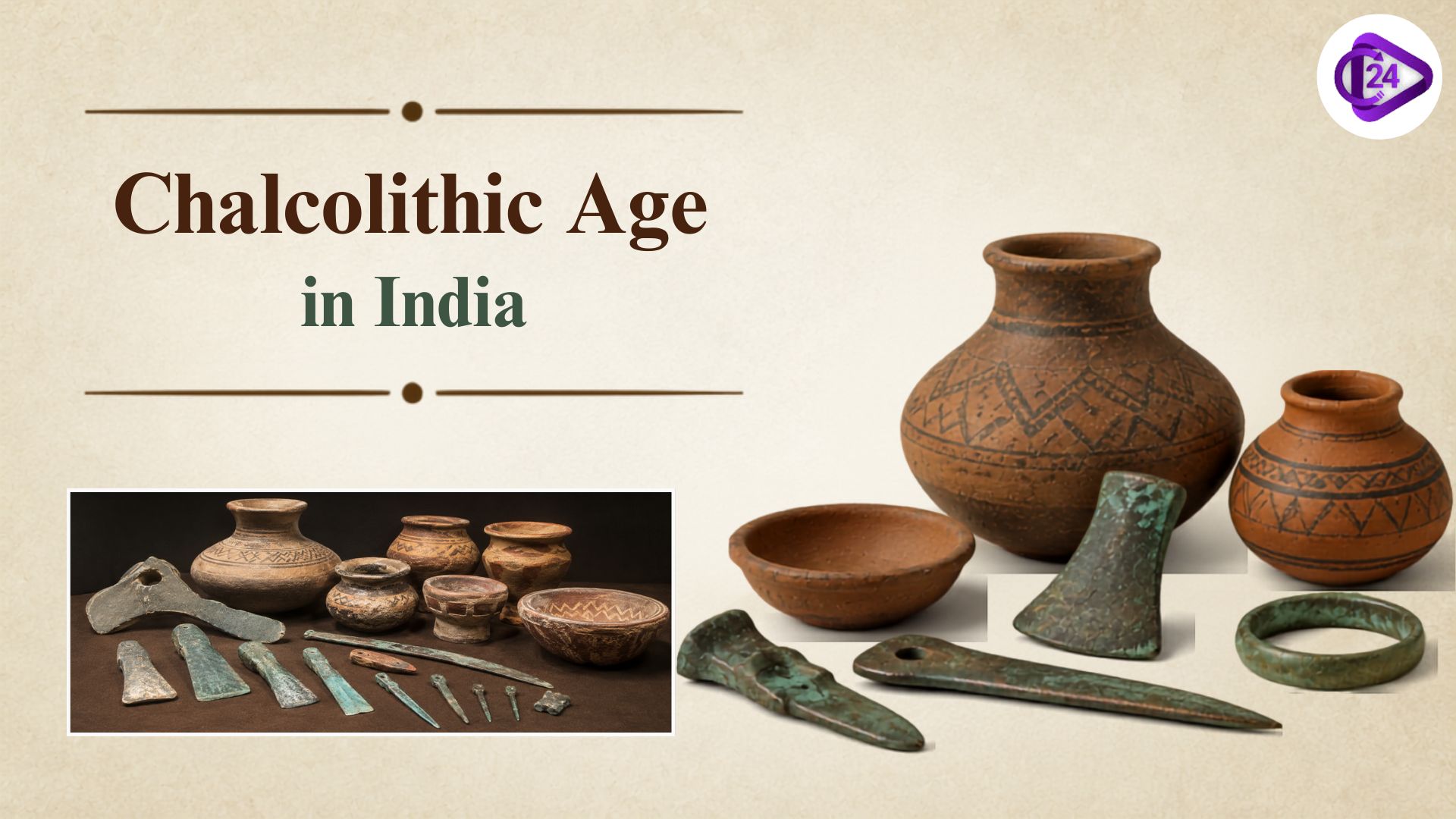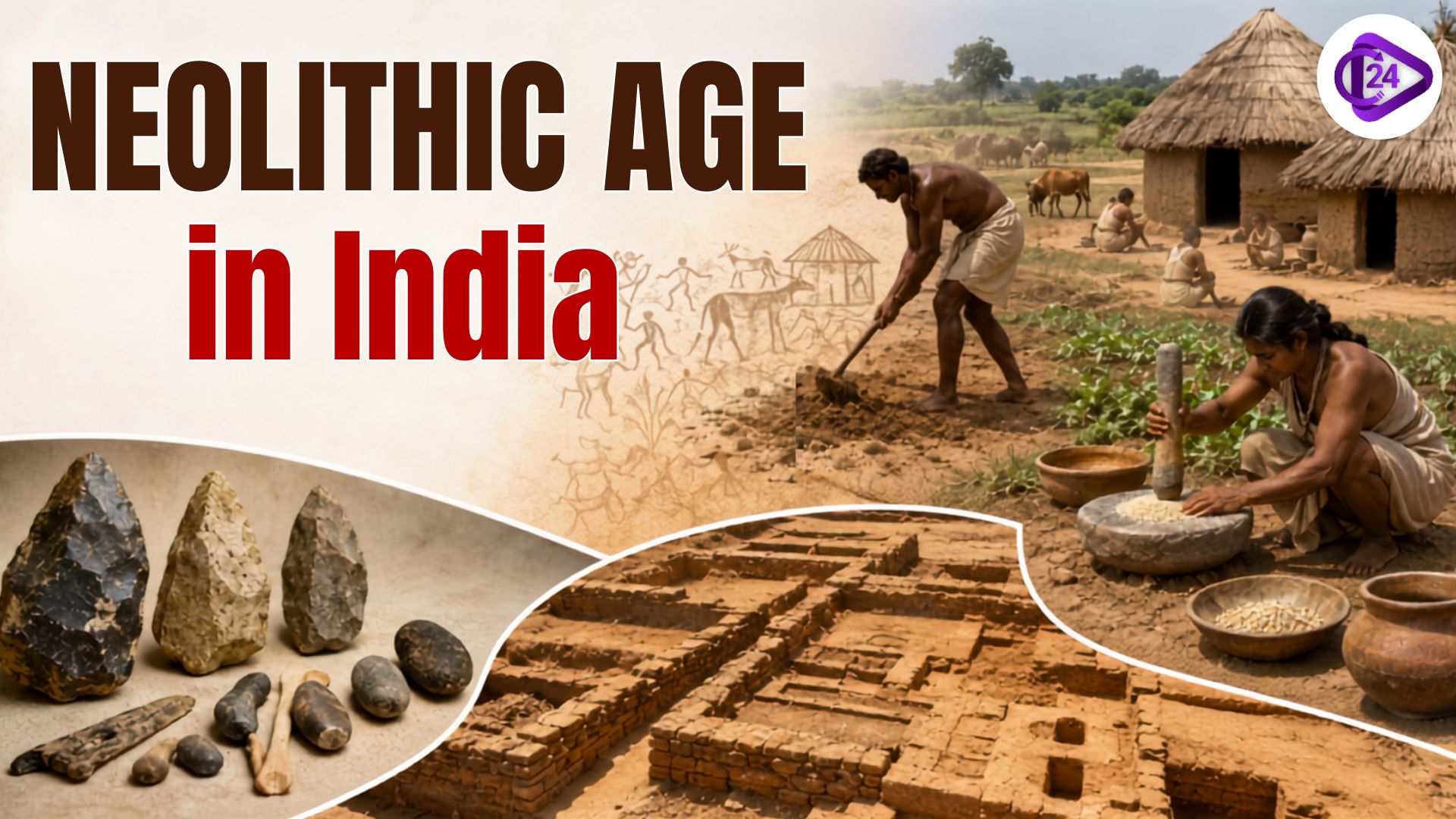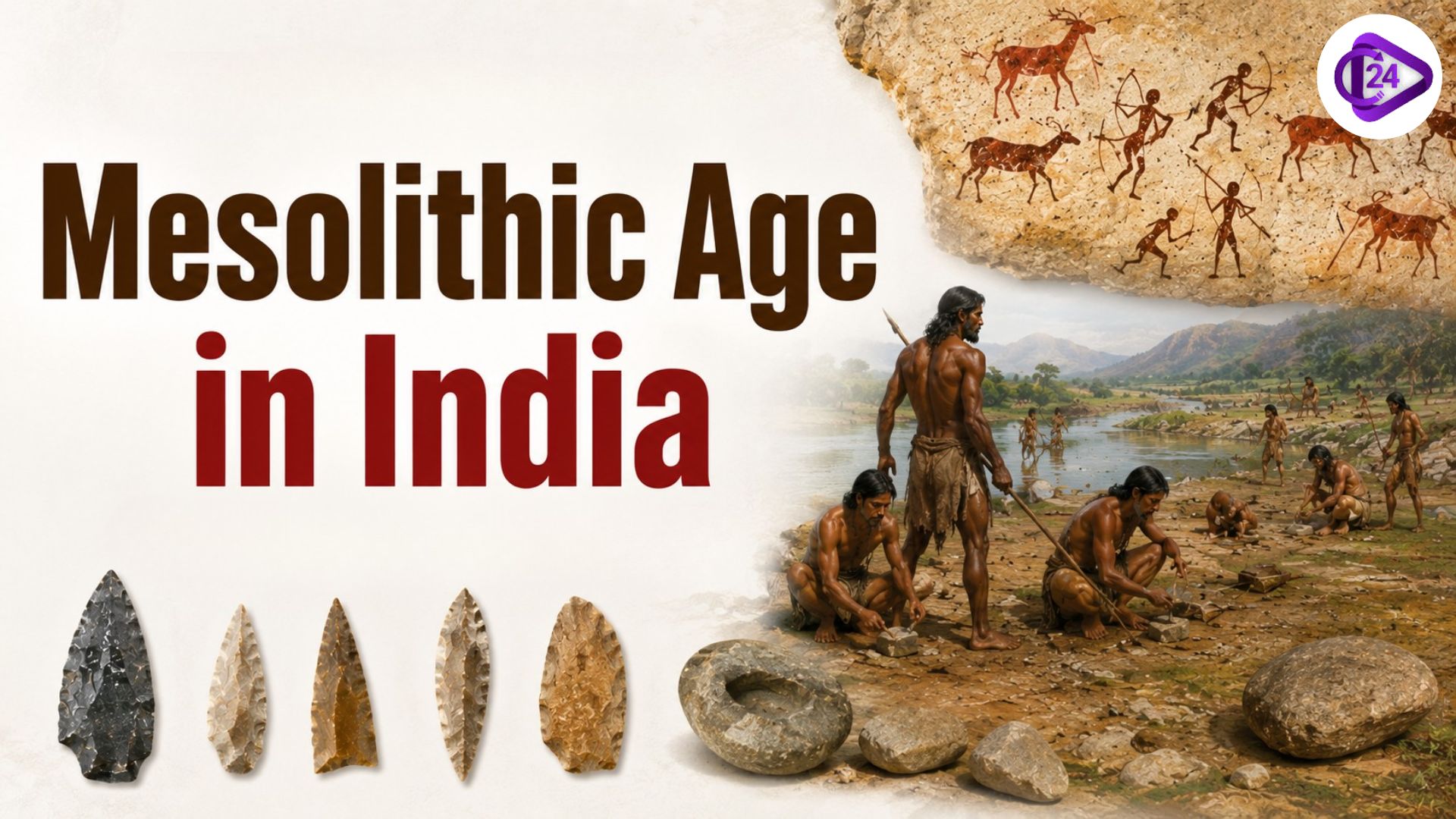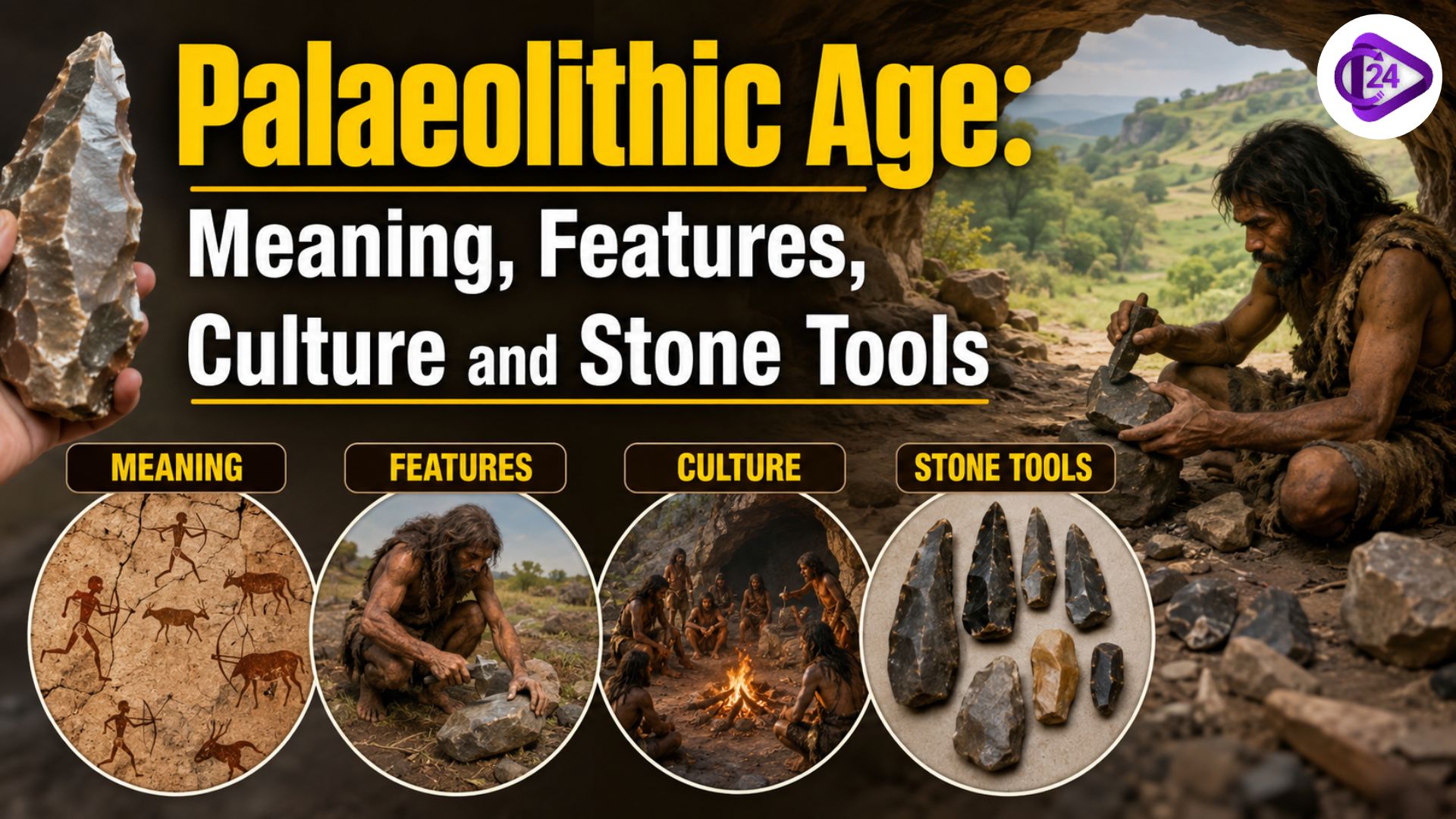







Chalcolithic Age in India (Copper-Stone Age) is a transitional stage from the Neolithic to the Iron Age during which groups of people started using copper tools with polished stone tools. Although the timeline varied by area, its period of most prolific development was c. 3000 BCE to 700 BCE. The Archaeological Survey of India and other research institutions have found evidence that at least Chalcolithic societies used settled agriculture, animal domestication, pottery making, as well as metallurgy.
However, important regional cultures, like Ahar, Malwa and Jorwe, developed unique settlement patterns along with ceramics and subsistence agriculture, paving the way for significant changes in society leading towards complex societies and protocities in India.
Chalcolithic Age in India
The Copper-Stone Age of India, more popularly known as the Chalcolithic Age in Indian prehistory, signifies an important phase when both copper tools and polished stone implements were used. This era, however, was marked by a series of additional events on the land, such as the development of permanent farming settlements, distinctive pottery traditions, early developments in metallurgy and regional cultures throughout western-central and peninsular India, as per the Archaeological Survey of India.
Excavations carried out by the Archaeological Survey of India (ASI) in the mid-20th century at Eran, Jorwe and other Chalcolithic settlements unveiled remains signifying agriculture, animal domestication, storage facilities and craft production. These findings point to an incremental migration from primitive village settlements to technologically sophisticated, organised states.
Important Chalcolithic Age Sites in India
| Chalcolithic Site | Present State | Archaeological Significance | Major Discoveries |
| Ahar (Dhoolkot) | Rajasthan | Type-site of the Ahar–Banas Culture | Black-and-Red Ware pottery, copper smelting furnaces, mud-brick houses, agricultural remains |
| Balathal | Rajasthan | Major Ahar Culture settlement | Fortified settlement, stone and mud houses, copper artefacts, storage pits, evidence of farming and animal husbandry |
| Gilund | Rajasthan | Largest Ahar Culture site | Planned settlement, mud-brick structures, seals, storage complexes, copper objects |
| Kayatha | Madhya Pradesh | Type-site of the Kayatha Culture | Microliths, copper tools, painted pottery, circular and rectangular houses |
| Navdatoli | Madhya Pradesh | Important Malwa Culture settlement | Large houses, painted Malwa Ware, granaries, beads, copper implements |
| Eran | Madhya Pradesh | Multi-cultural archaeological site | Chalcolithic habitation, copper artefacts, Black-and-Red Ware, agricultural evidence, later historical remains |
| Inamgaon | Maharashtra | Largest Jorwe Culture settlement | Planned houses, irrigation evidence, granaries, burials, copper tools, beads, pottery |
| Jorwe | Maharashtra | Type-site of the Jorwe Culture | Red painted pottery, farming settlements, copper objects, storage pits |
| Daimabad | Maharashtra | Late Chalcolithic centre | Bronze sculptures, large settlement, painted pottery, copper tools, evidence of long-distance trade |
| Prakash | Maharashtra | Tapi Valley Chalcolithic site | Black-and-Red Ware, Malwa and Jorwe cultural remains, copper artefacts |
| Nevasa | Maharashtra | Multi-period settlement | Chalcolithic houses, pottery, copper tools, agricultural remains |
| Songaon | Maharashtra | Jorwe Culture site | Mud houses, storage pits, pottery, copper implements, farming evidence |
Major Characteristics of Chalcolithic Age Cultures in India
| Chalcolithic Culture | Region | Time Period | Distinctive Features |
| Ahar–Banas Culture | South-eastern Rajasthan | c. 3000–1500 BCE | Known for Black-and-Red Ware with white paintings, extensive copper smelting, mud-brick and stone houses, agriculture, cattle rearing, and settlements along the Banas River. |
| Kayatha Culture | Western Madhya Pradesh | c. 2400–2000 BCE | One of the earliest Chalcolithic cultures of Central India, characterised by painted pottery, microliths, copper tools, circular and rectangular houses, and mixed farming. |
| Malwa Culture | Madhya Pradesh, Maharashtra and Rajasthan | c. 1900–1400 BCE | Famous for fine painted Malwa Ware, large village settlements, mud houses, wheat and barley cultivation, cattle breeding, and copper ornaments. |
| Savalda Culture | North Maharashtra | c. 2300–2000 BCE | Early farming communities with handmade pottery, mud houses, microlithic tools, copper objects, and subsistence based on agriculture and livestock. |
| Jorwe Culture | Maharashtra, Karnataka and Madhya Pradesh | c. 1400–700 BCE | Identified by red-painted Jorwe Ware, planned villages, storage pits, granaries, irrigation practices, burials beneath house floors, and advanced farming. |
| Prabhas Culture | Saurashtra, Gujarat | c. 2000–1400 BCE | Characterised by Black-and-Red Ware, copper implements, coastal settlements, agriculture, fishing, and maritime trade contacts. |
| Rangpur Culture | Gujarat | c. 2000–1500 BCE | Influenced by Late Harappan traditions, featuring painted pottery, mud-brick houses, farming, animal husbandry, and copper artefacts. |
| Daimabad Culture | Maharashtra | c. 2200–1000 BCE | Largest Chalcolithic settlement in the Deccan, notable for bronze sculptures, fortified settlement, painted pottery, copper tools, and evidence of long-distance trade. |
Also Read
Significance of the Chalcolithic Age in India
- Signifies an important milestone in Indian prehistory when copper technology appeared, along with polished stone tools.
- The ASI excavations have witnessed permanent village settlements with unevenly planned houses for living, storage and gathering pits and community structures.
- The domestication of agriculture and animal breeding is substantiated by archaeological records where wheat, barley, millets or pulses were cultivated.
- Evidence of specialised manufacturing, such as pottery making, bead manufacture and copper smelting, demonstrates a greater degree of technological and economic differentiation.
- Various, yet inside one state, variations like Ahar, Malwa, Kayatha and Jorwe portray cultural diversity and local adaptation.
- The clay, beads and copper finds also show exchange or trade networks between regions.
- The Archaeological Survey of India (ASI) says Chalcolithic sites are critical to tracing the transition from nomadic hunter-gathers to settled life, when people first began smelting copper, in addition to the development of complex societies before the advent of iron.