
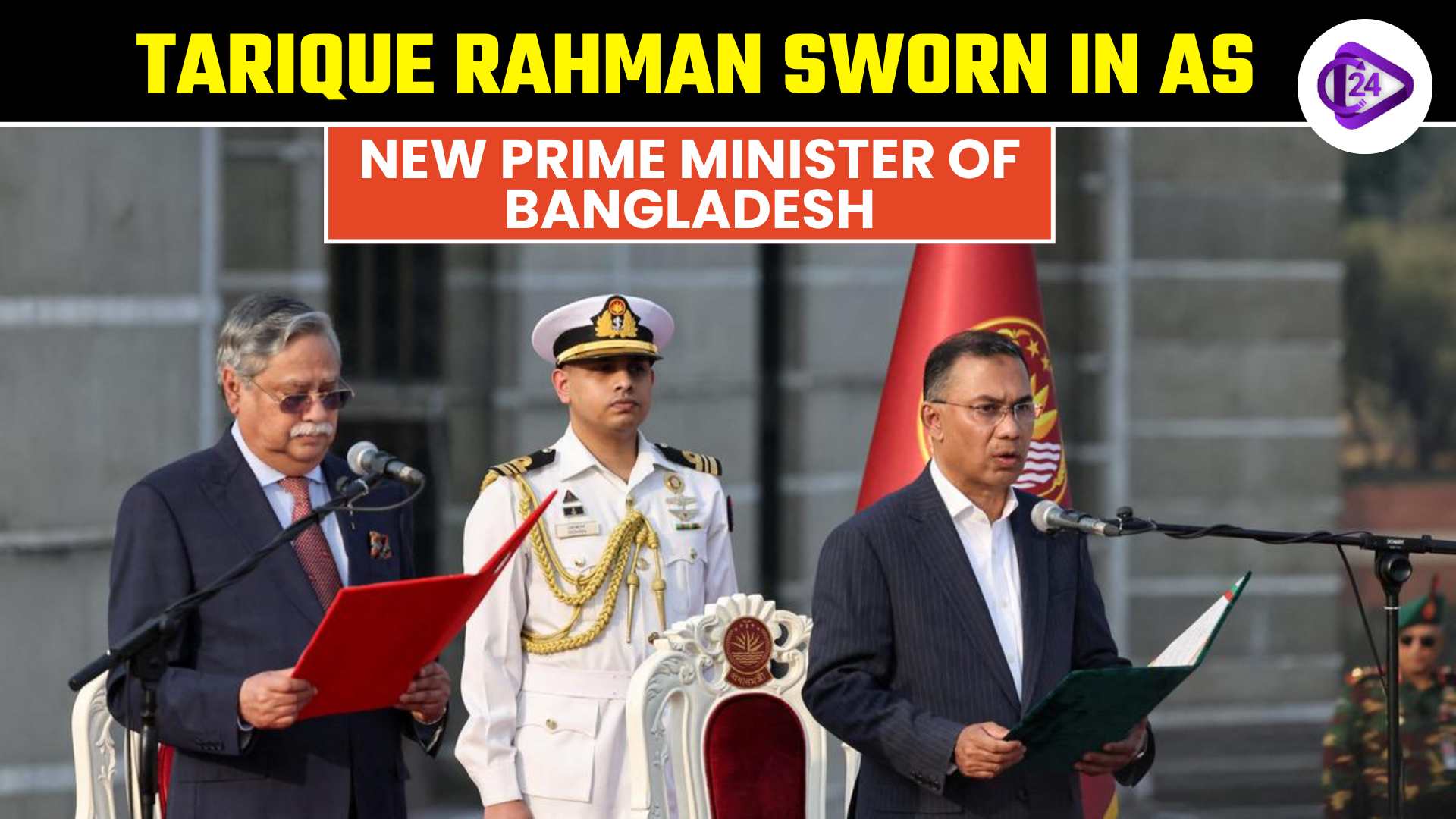
Tarique Rahman has taken the oath as the new Prime Minister of Bangladesh, marking a major turning point in the country’s political landscape. His swearing-in follows a decisive electoral mandate that reshaped national leadership after years of intense political contest. As head of government, Rahman assumes office at a time of economic challenges, institutional transition and high public expectations. His administration is expected to focus on governance reforms, economic stabilization and strengthening democratic processes. The leadership change signals a new chapter in Bangladesh’s contemporary politics, drawing regional and international attention to the country’s evolving direction.
Tarique Rahman Assumes Office as Prime Minister of Bangladesh
-
Tarique Rahman has officially taken the oath as the Prime Minister of Bangladesh, marking a significant political transition in the country.
-
He secured a decisive electoral mandate, positioning his party to form the new government after a highly contested national election.
-
The swearing-in ceremony was attended by senior political leaders, military officials, foreign diplomats and members of civil society.
-
His appointment signals a shift in Bangladesh’s leadership landscape following years of intense political rivalry and polarisation.
-
Rahman has pledged to strengthen democratic institutions, ensure the rule of law and promote transparent governance.
-
Economic stabilisation, inflation control and job creation are expected to be among his administration’s immediate priorities.
-
The new government is also likely to focus on infrastructure expansion, digital growth and attracting foreign investment.
-
Strengthening regional diplomacy, especially within South Asia, will play a key role in shaping foreign policy under his leadership.
-
Observers note that managing political reconciliation and ensuring stability will be critical challenges in the early phase of his tenure.
-
His leadership marks the beginning of a new political chapter for Bangladesh, drawing close attention from both domestic stakeholders and the international community.
The Best Asked PYQs
| Exam | Year | Question (with Options) | Correct Answer |
|---|---|---|---|
| UPSC Prelims | 2015 | The Land Boundary Agreement between India and Bangladesh, ratified in 2015, was related to: (a) Maritime trade (b) Exchange of enclaves and adverse possessions (c) River water sharing (d) Border fencing | (b) |
| UPSC Prelims | 2014 | Which one of the following rivers flows from India to Bangladesh? (a) Narmada (b) Tapi (c) Teesta (d) Godavari | (c) |
| SSC CGL | 2019 | The joint military exercise conducted by India and Bangladesh is called: (a) Yudh Abhyas (b) Sampriti (c) Garuda (d) Indra | (b) |
| CDS Exam | 2018 | India shares the longest international border with which country? (a) China (b) Pakistan (c) Bangladesh (d) Nepal | (c) |
| SSC CHSL | 2020 | The Ganga water sharing treaty (1996) was signed between India and: (a) Nepal (b) Bangladesh (c) Bhutan (d) Myanmar | (b) |
| UPSC Prelims | 2017 | Which of the following Indian states share a border with Bangladesh? 1. Assam 2. Mizoram 3. Odisha Select the correct answer: (a) 1 and 2 only (b) 2 and 3 only (c) 1 and 3 only (d) 1, 2 and 3 | (a) |
| RRB NTPC | 2021 | The river Teesta dispute is between India and: (a) Nepal (b) Bangladesh (c) China (d) Myanmar | (b) |
| UPSC Prelims | 2019 | Which one of the following is a coordinated patrol exercise between India and Bangladesh? (a) Sampriti (b) CORPAT (c) Surya Kiran (d) Indra | (b) |
| SSC CPO | 2022 | Petrapole border connects India with: (a) Nepal (b) Bhutan (c) Bangladesh (d) Myanmar | (c) |
Conclusion (Tarique Rahman Sworn in as New PM)
The swearing-in of Tarique Rahman as Prime Minister marks a significant political shift in Bangladesh. His leadership begins at a crucial moment, with expectations of economic stability, institutional reform and national reconciliation. The transition signals a new phase in Bangladesh’s governance and regional engagement.