

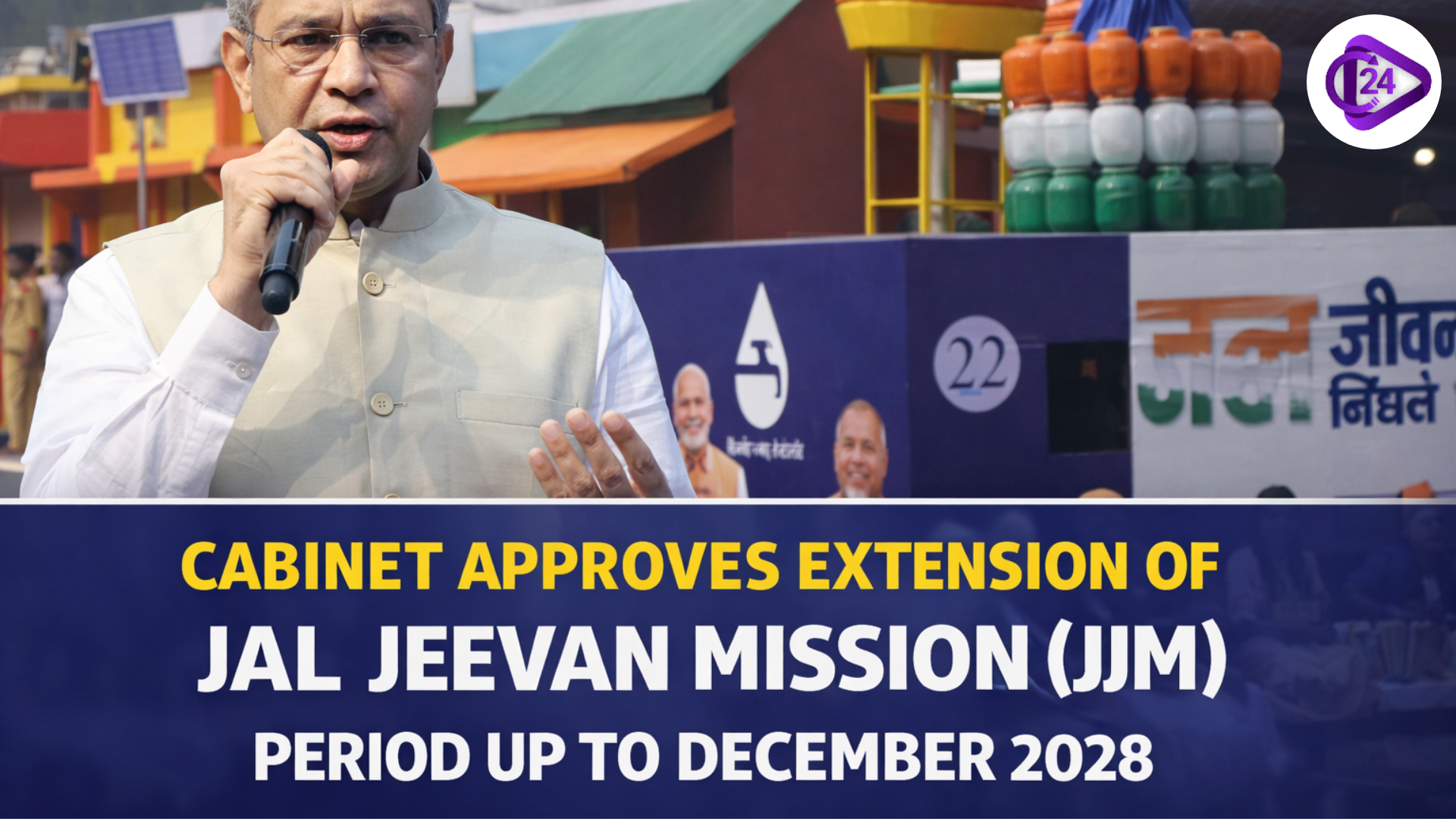
The Union Cabinet has approved the extension of the Jal Jeevan Mission (JJM) until December 2028, reaffirming the government’s commitment to ensuring safe and adequate drinking water for rural households across India. Launched in 2019, the mission aims to provide Functional Household Tap Connections (FHTCs) to every rural household, significantly improving public health, sanitation, and quality of life. The extension will allow more time for states and union territories to complete pending projects, strengthen water infrastructure, and ensure long-term sustainability of rural water supply systems. This decision is expected to accelerate progress toward universal access to clean drinking water.
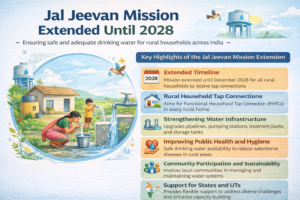
Key Highlights of the Jal Jeevan Mission Extension
The Cabinet’s decision extends the implementation period of the Jal Jeevan Mission until December 2028. Originally targeted for completion earlier, the additional time will help states finish ongoing projects, connect remaining households, and improve operational systems for long-term service delivery.
Focus on Rural Household Tap Connections
The primary objective of the mission remains providing Functional Household Tap Connections (FHTCs) to all rural households. Millions of homes have already received tap water since the scheme’s launch, reducing dependence on hand pumps, wells, and water tankers.
Strengthening Water Infrastructure
The extension will allow governments to expand and upgrade water supply infrastructure such as pipelines, pumping stations, treatment plants, and storage tanks. These improvements aim to ensure reliable water delivery and minimize supply disruptions in rural regions.
Improving Public Health and Hygiene
Access to safe drinking water directly contributes to better health outcomes by reducing waterborne diseases. Reliable tap water also supports sanitation initiatives and enhances living standards in rural communities.
Community Participation and Sustainability
The mission emphasizes the role of village-level institutions in managing and maintaining water systems. Community participation, local water committees, and training programs help ensure sustainability and responsible water use.
Support for States and Union Territories
The extended timeline provides flexibility for states and union territories to overcome logistical, geographical, and financial challenges while implementing the program effectively. It also allows for better monitoring, evaluation, and capacity building.
Conclusion (Jal Jeevan Mission)
The extension of the Jal Jeevan Mission until December 2028 reflects the continued priority of the government to achieve universal access to safe drinking water in rural India. By providing additional time, the decision enables states and local authorities to complete pending infrastructure projects and ensure reliable tap water connections for every household. The mission not only addresses water scarcity but also strengthens public health, sanitation, and rural development. With sustained investment, community participation, and improved water management practices, the extended mission is expected to play a crucial role in enhancing quality of life and supporting sustainable development in rural areas.