

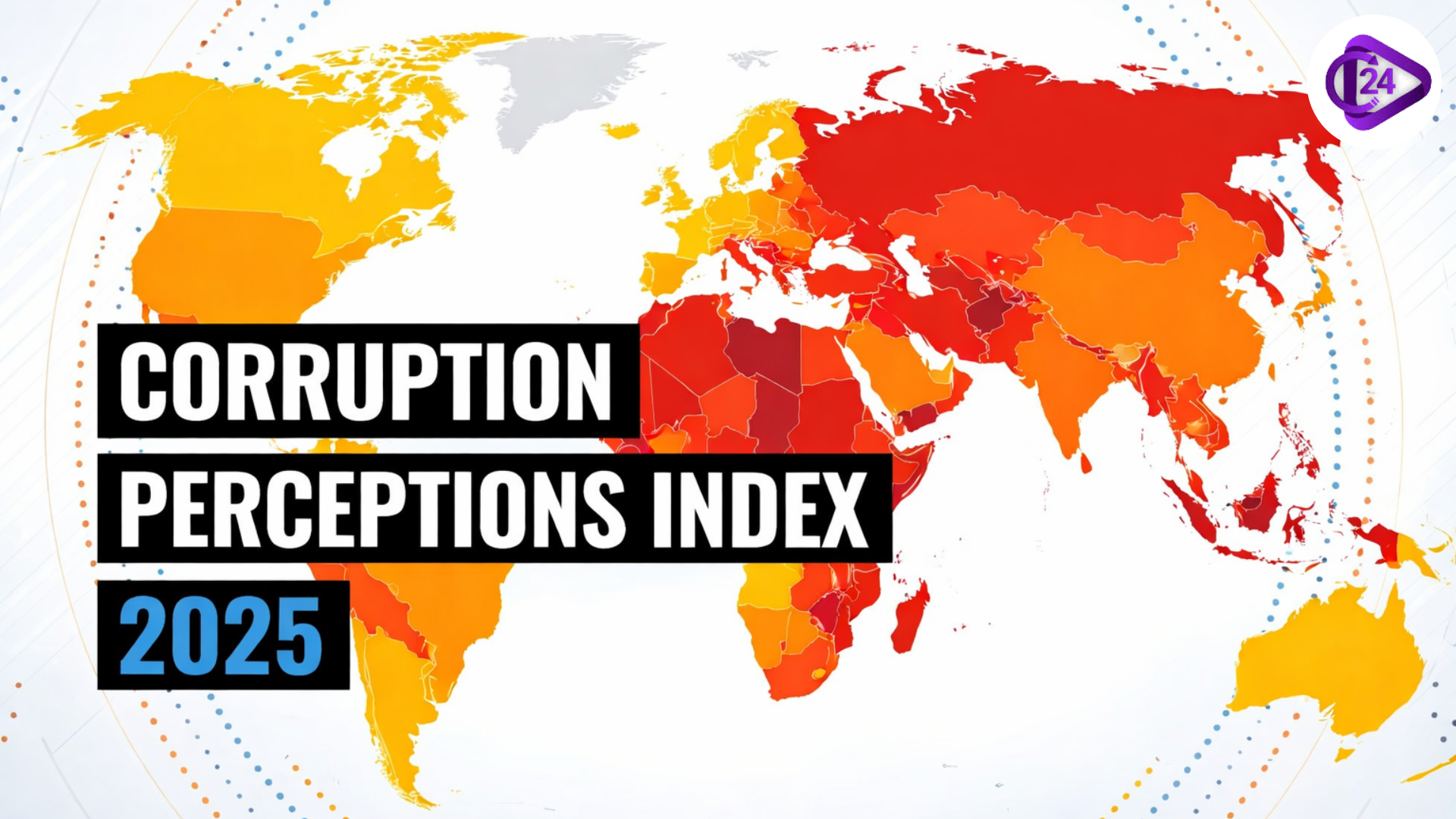
The Corruption Perceptions Index (CPI) 2025 is a widely known international Index that is used to assess the perceived rates of corruption in the public sector of any country and region. It measures countries on a scale between 0 (highly corrupt) and 100 (very clean) based on expert ratings and business polls. The 2025 issue emphasizes endemic corruption issues on a global scale, as the global rating is 42, which means that the anti-corruption practices have not improved. Most of the nations have lower scores that do not surpass 50, which portrays serious governance issues. The index is a vital reference point that policymakers, researchers and civil societies use to evaluate transparency, accountability and integrity of institutions in the world.
Key Highlights of Corruption Perceptions Index 2025
-
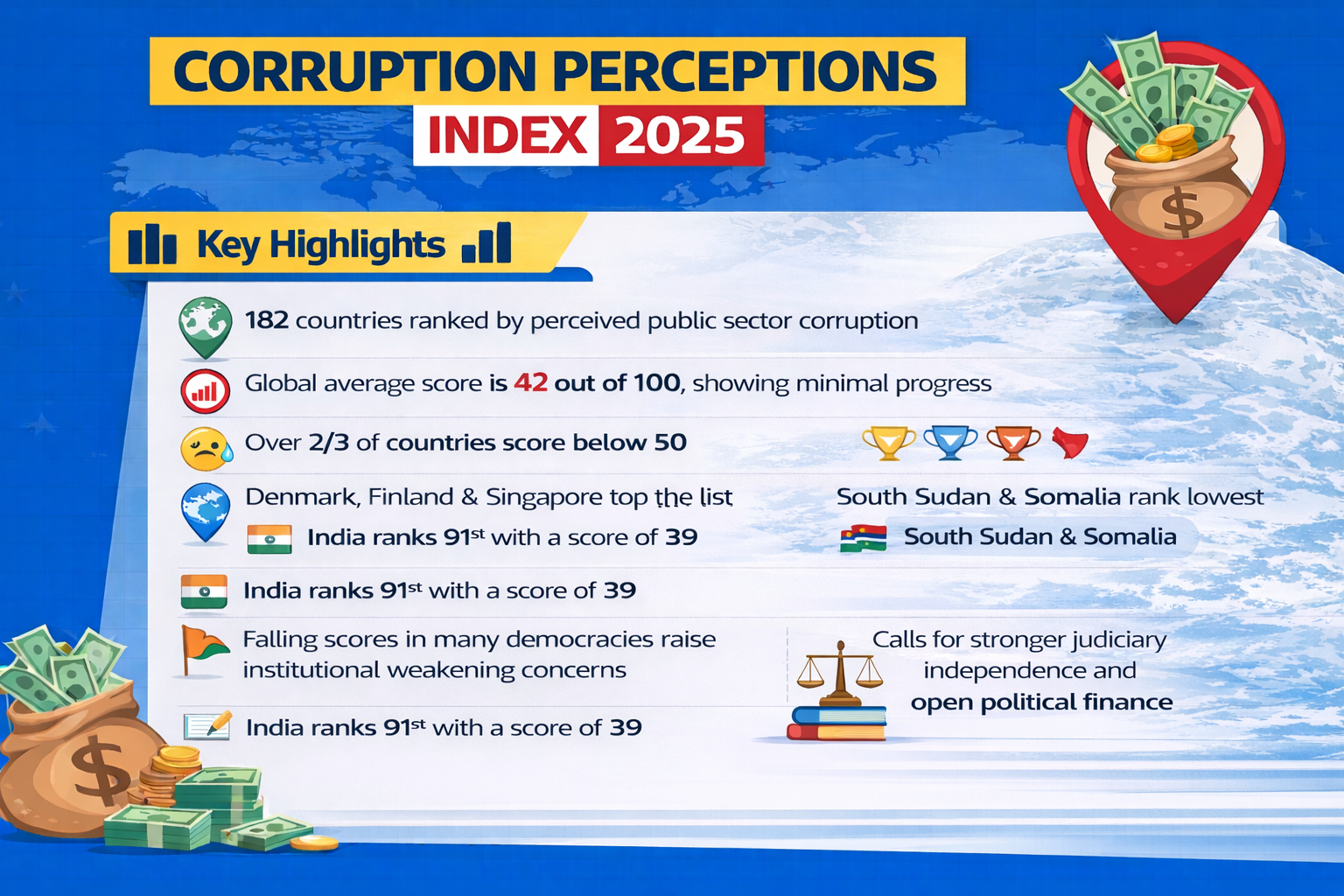
The CPI 2025 is a ranking of 182 countries and territories according to perceived corruption in the public sector.
-
Countries are ranked on a 0-100 level, with a higher score meaning a lower level of corruption.
-
The corruption index is equivalent to 42 on the global average, indicating very little improvement in the fight against corruption around the world.
-
Over 2/3 of the countries have a score lower than 50, which means that there are extensive issues related to corruption.
-
Denmark is first with Finland and Singapore in the second and third positions, which depict good governance systems.
-
The countries that are ranked lowest are South Sudan and Somalia.
-
India with the score of 39 and it is 91 st is not above the world average.
-
Some of the democracies have also witnessed falling scores; this creates a concern of institutional weakening.
-
Corruption has been associated with ineffective service delivery to the people, low investor confidence as well as the undermining of the rule of law.
-
The report highlights that there is a necessity to have greater independence of the judiciary and open political finance.
-
Freedom of media and civil society is pointed out as the key to accountability.
-
To enhance transparency and standards of governance, reforms and political commitment have to be made in the long run.
Expected MCQs on Corruption Perception
| Question | Options | Correct Answer | Explanation |
|---|---|---|---|
| The Corruption Perceptions Index (CPI) is published by: | (A) World Bank (B) Transparency International (C) UNDP (D) World Economic Forum | (B) Transparency International | CPI is released annually by Transparency International (TI), a global civil society organization that works against corruption. |
| The headquarters of Transparency International is located in: | (A) Geneva (B) New York (C) Berlin (D) Paris | (C) Berlin, Germany | Transparency International is headquartered in Berlin, Germany. |
| The Corruption Perceptions Index was first published in: | (A) 1993 (B) 1995 (C) 1998 (D) 2000 | (B) 1995 | The CPI was first launched in 1995. |
| The CPI measures corruption in which sector? | (A) Private only (B) Public only (C) Both (D) Banking only | (B) Public sector only | CPI measures perceived corruption in the public sector. |
| Countries in CPI are ranked on a scale of: | (A) 1–10 (B) 0–5 (C) 0–100 (D) 1–50 | (C) 0 to 100 | Countries are scored from 0 (highly corrupt) to 100 (very clean). |
Conclusion
Corruption Perceptions Index 2025 demonstrates that corruption is one of the world's problems that continues to occur, influencing the way the state is governed, the development of an economy, and the confidence of people in the state institutions. The report has revealed that more accountability mechanisms and transparent public systems are necessary in order to combat the stagnation of the global average of 50 and above, as many countries have a score below 50. Although there are still countries that perform high levels of integrity, other countries experience a decrease in their scores because of the weakening of control and the loss of civic space. The index is used as a reminder that fighting corruption would need a long-term political will, independent institutions, free media, and active participation of civil society to ensure inclusive growth and democratic stability across the globe.