

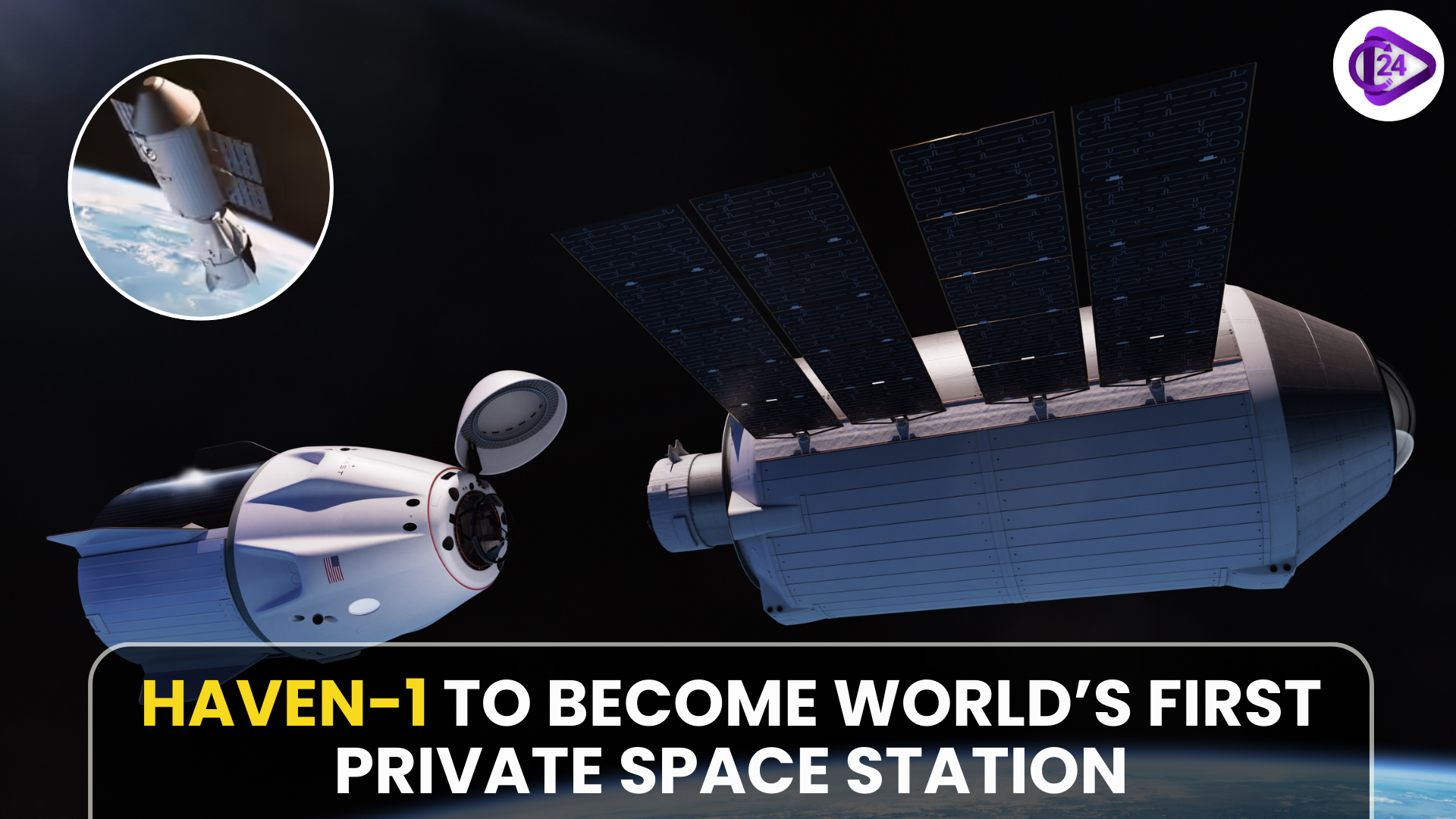
Haven-1, created by U.S. aerospace manufacturer Vast Space, will become the first commercial low Earth orbit space station worldwide, marking the first large step toward the commercialization of low Earth orbit. The station is scheduled to launch on a SpaceX Falcon 9 rocket no earlier than May 2026, as a transition to privately run orbital infrastructure (instead of government-run platforms). It has been developed in line with NASA plans to retire the International Space Station in the latter part of this decade and provide business space destinations.
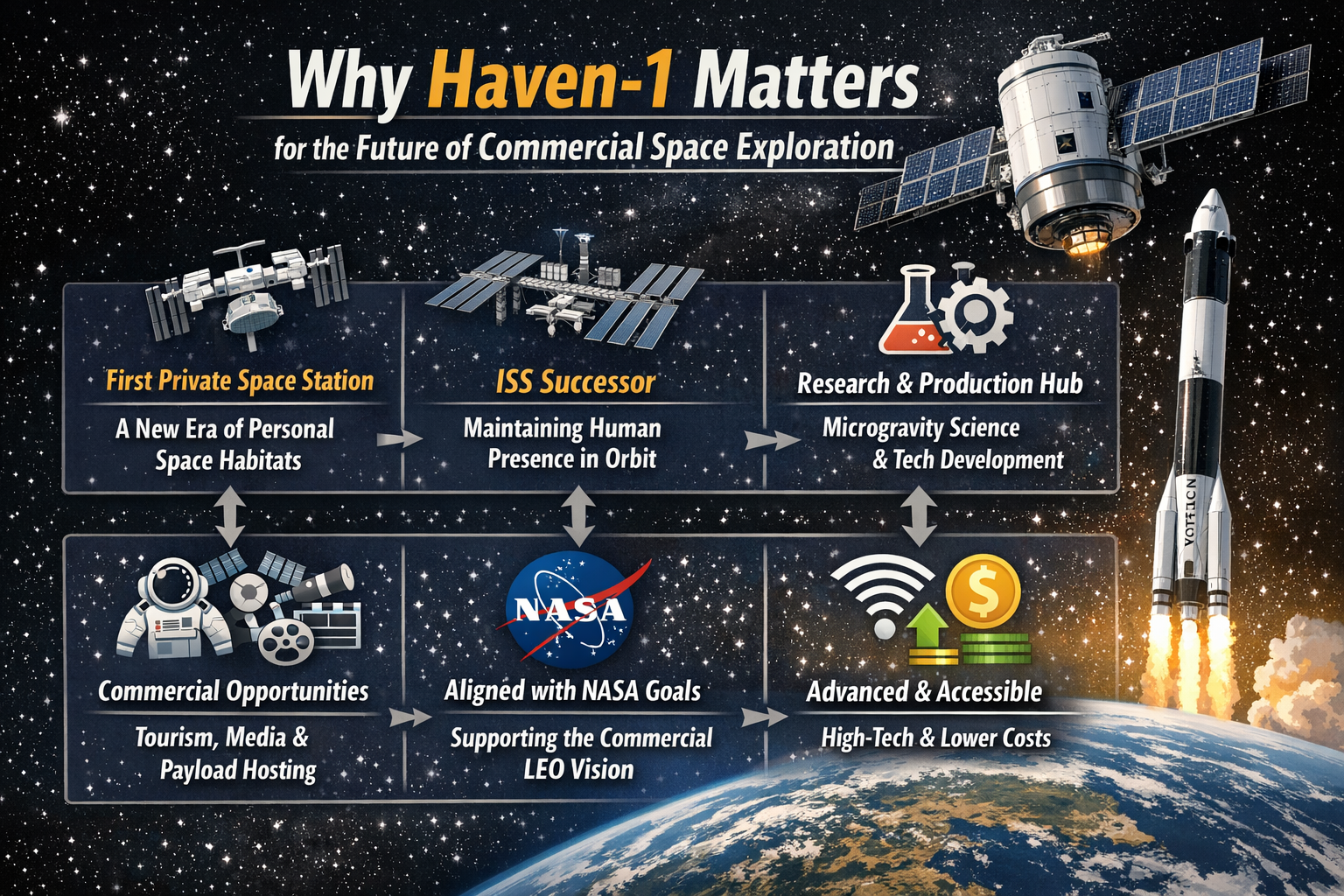
Why Haven-1 Matters for the Future of Commercial Space Exploration?
-
Introduction of the age of the personal space station: Haven-1 will be a prototype of the first fully commercial space station in the world. As a fully privately-owned individual and corporate enterprise, the space station will be based on the theory that government-controlled space platforms have been replaced by privately-owned space infrastructure.
-
Provides continuity following the ISS: With the International Space Station nearing retirement, Haven-1 will keep the human presence as well as research and commercial activity in orbit on the low Earth.
-
Enables business research and production: The station will be required in microgravity research and in-space production, and technology demonstration of private businesses, startups, and collaboration with global partners.
-
Opens new space business possibilities: Havens-1 offers short-term crewed travels, payload hosting, and commercial initiatives, including the media, outreach, and personal astronaut missions.
-
Favors the NASA commercial LEO concept: It is congruent with NASA's long-term plan to abandon its system of running space stations and buying services from commercial vendors.
-
Technology Advanced connectivity and facilities: Increased orbital connectivity: fast speeds allow real-time communications, remote experiment operations, and improved mission functions.
-
Lowers space accessibility: Private space operations and modular construction are able to reduce the cost as opposed to the other space stations run by the government.
Latest Previous Year Questions on Space Station
| Exam | Year | Question | Options | Correct Answer |
|---|---|---|---|---|
| UPSC Prelims | 2016 | Who was the first human to travel into space? | A) Neil Armstrong B) Yuri Gagarin C) John Glenn D) Alan Shepard | B) Yuri Gagarin |
| SSC CGL | 2019 | Who was the first Indian to go to space? | A) Kalpana Chawla B) Rakesh Sharma C) Sunita Williams D) Vikram Sarabhai | B) Rakesh Sharma |
| SSC CHSL | 2020 | Who became the first woman to go to space? | A) Sunita Williams B) Kalpana Chawla C) Valentina Tereshkova D) Sally Ride | C) Valentina Tereshkova |
| RRB NTPC | 2021 | Who has spent the maximum total time in space? | A) Scott Kelly B) Mikhail Kornienko C) Peggy Whitson D) Mikhail Gorbachev | C) Peggy Whitson |
| UPSC Prelims | 2018 | Who holds the record for the longest single spaceflight? | A) Scott Kelly B) Christina Koch C) Mikhail Kornienko D) Yuri Gagarin | B) Christina Koch |
| SSC GD | 2022 | Sunita Williams belongs to which country? | A) UK B) India C) USA D) Russia | C) USA |
| State PSC | 2017 | How many days did Rakesh Sharma stay in space? | A) 5 days B) 7 days C) 8 days D) 10 days | C) 8 days |
| SSC MTS | 2020 | Who visited space the maximum number of times? | A) Sunita Williams B) Peggy Whitson C) Yuri Gagarin D) Neil Armstrong | B) Peggy Whitson |
| Defence Exams | 2021 | The International Space Station orbits the Earth approximately every: | A) 60 min B) 90 min C) 120 min D) 180 min | B) 90 minutes |
| RRB Group D | 2019 | ISS is located in which orbit? | A) GEO B) Polar Orbit C) Low Earth Orbit D) Elliptical Orbit | C) Low Earth Orbit |
Conclusion (World’s First Private Space Station ‘Haven-1’)
Haven-1 is a new era in space exploration because it has become the first-ever privately used space station in the world. It is a future of commercial spaceflight, allowing research, innovation, and other missions in low Earth orbit, as well as the bridging of the post-International Space Station era.