
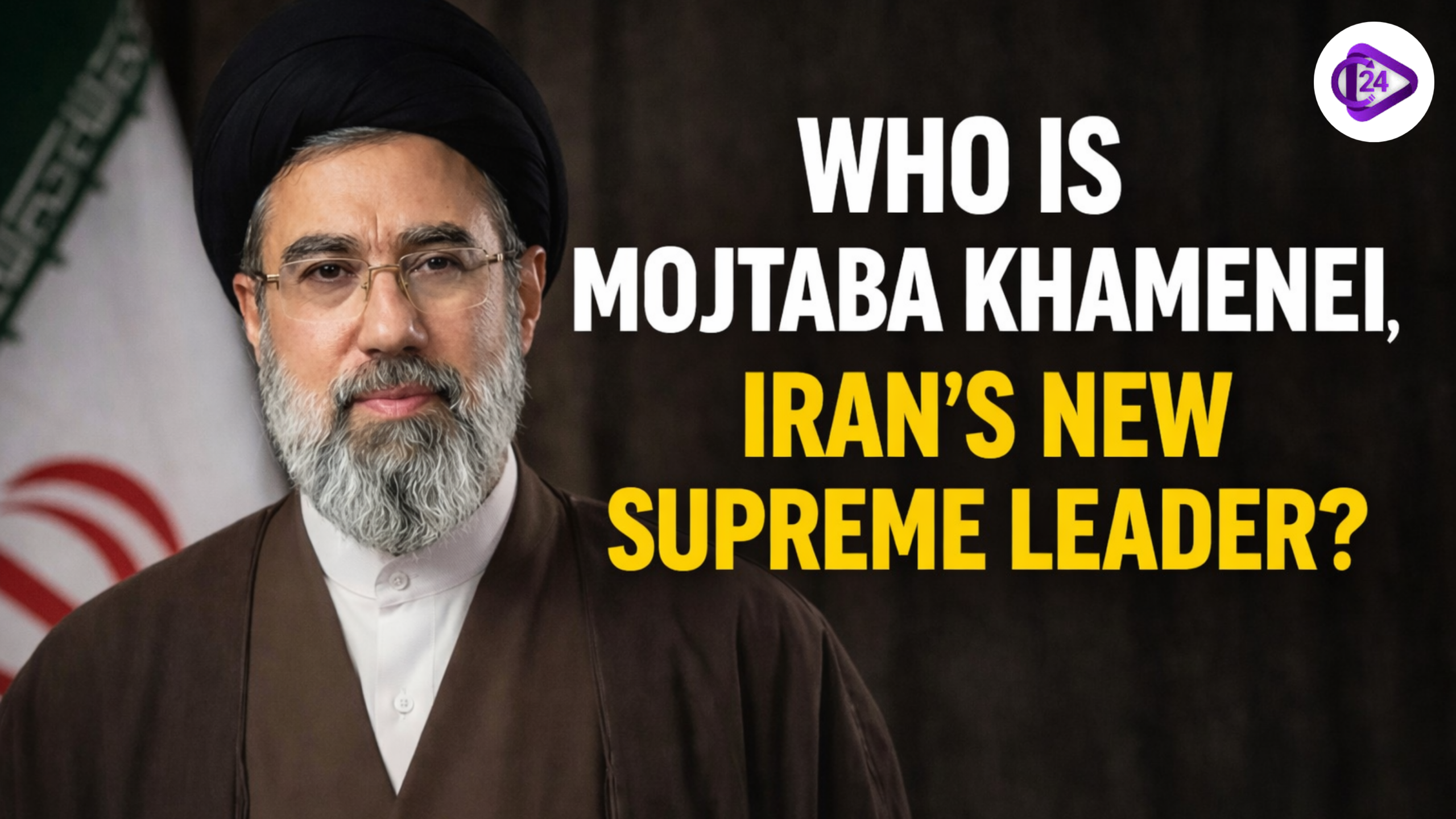
Mojtaba Khamenei became the third Supreme Leader of Iran on 8 March 2026, succeeding his father Ali Khamenei. He was chosen by the powerful Assembly of Experts after his father’s death during an escalating regional conflict. A mid-ranking Shiite cleric educated at the Qom seminary, Mojtaba had long been influential behind the scenes in Iran’s political and security establishment. His appointment marks a historic moment because it is the first time leadership in the Islamic Republic has passed from father to son, raising debates about dynastic succession in a system founded after the 1979 revolution.
Key Facts About Mojtaba Khamenei
-
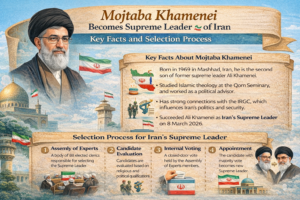
Mojtaba Khamenei was born in 1969 in Mashhad, Iran, and is the second son of former supreme leader Ali Khamenei.
-
He studied Islamic theology at the Qom Seminary, one of the most important centers of Shia religious education.
-
Before becoming supreme leader, he held influence as a political and security adviser within the office of the Supreme Leader.
-
Mojtaba had strong connections with the Islamic Revolutionary Guard Corps (IRGC), which plays a major role in Iran’s politics and regional security strategy.
-
In March 2026, the Assembly of Experts elected him as Iran’s third supreme leader, the country’s highest political and religious authority.
-
The Supreme Leader has ultimate authority over the military, judiciary, media, and major state policies, making the role more powerful than the president.
-
His appointment occurred during a major regional crisis involving Iran, Israel, and the United States, adding global attention to the leadership transition.
-
Analysts believe his leadership signals continuity of Iran’s hardline political and foreign policy approach.
-
The succession has sparked debate because the Islamic Republic was originally created to reject hereditary monarchy, yet leadership passed from father to son.
-
As supreme leader, Mojtaba now holds the final authority in Iran’s political system, shaping domestic governance and foreign policy decisions.
Process of Choosing Iran’s Supreme Leader
-
The Supreme Leader of Iran is selected by the Assembly of Experts, an influential clerical body responsible for appointing and supervising the country’s highest authority.
-
The Assembly of Experts currently consists of about 88 Islamic scholars and clerics who specialize in Islamic jurisprudence and political theology.
-
Members of this assembly are elected by the Iranian public every eight years, but only candidates approved by the Guardian Council can contest these elections.
-
When the position of Supreme Leader becomes vacant due to death, resignation, or incapacity, the Assembly of Experts convenes to select a successor.
-
The assembly evaluates potential candidates based on religious scholarship, political wisdom, justice, and leadership capability as required by Iran’s constitution
-
Eligible candidates are usually senior Shiite clerics (Ayatollahs) with strong knowledge of Islamic law and influence within religious institutions.
-
Members hold closed-door deliberations, discussing the qualifications and political acceptability of possible candidates.
-
After discussions, the assembly conducts an internal vote, and the candidate who gains a majority of votes becomes the new Supreme Leader.
-
If a leader cannot immediately be chosen, a temporary leadership council consisting of senior officials may carry out the leader’s duties until the appointment is finalized.
-
Once selected, the Supreme Leader becomes the highest political and religious authority in Iran, with control over the military, judiciary, and major state policies.
Finn Allen Scores Fastest Century in T20 World Cup
Conclusion
The selection of Iran’s Supreme Leader reflects the unique blend of religion and politics within the Islamic Republic. The powerful Assembly of Experts holds the constitutional authority to appoint and supervise the leader, ensuring religious legitimacy and political leadership. This process highlights the central role of clerical institutions in shaping Iran’s governance and long-term policy direction.