

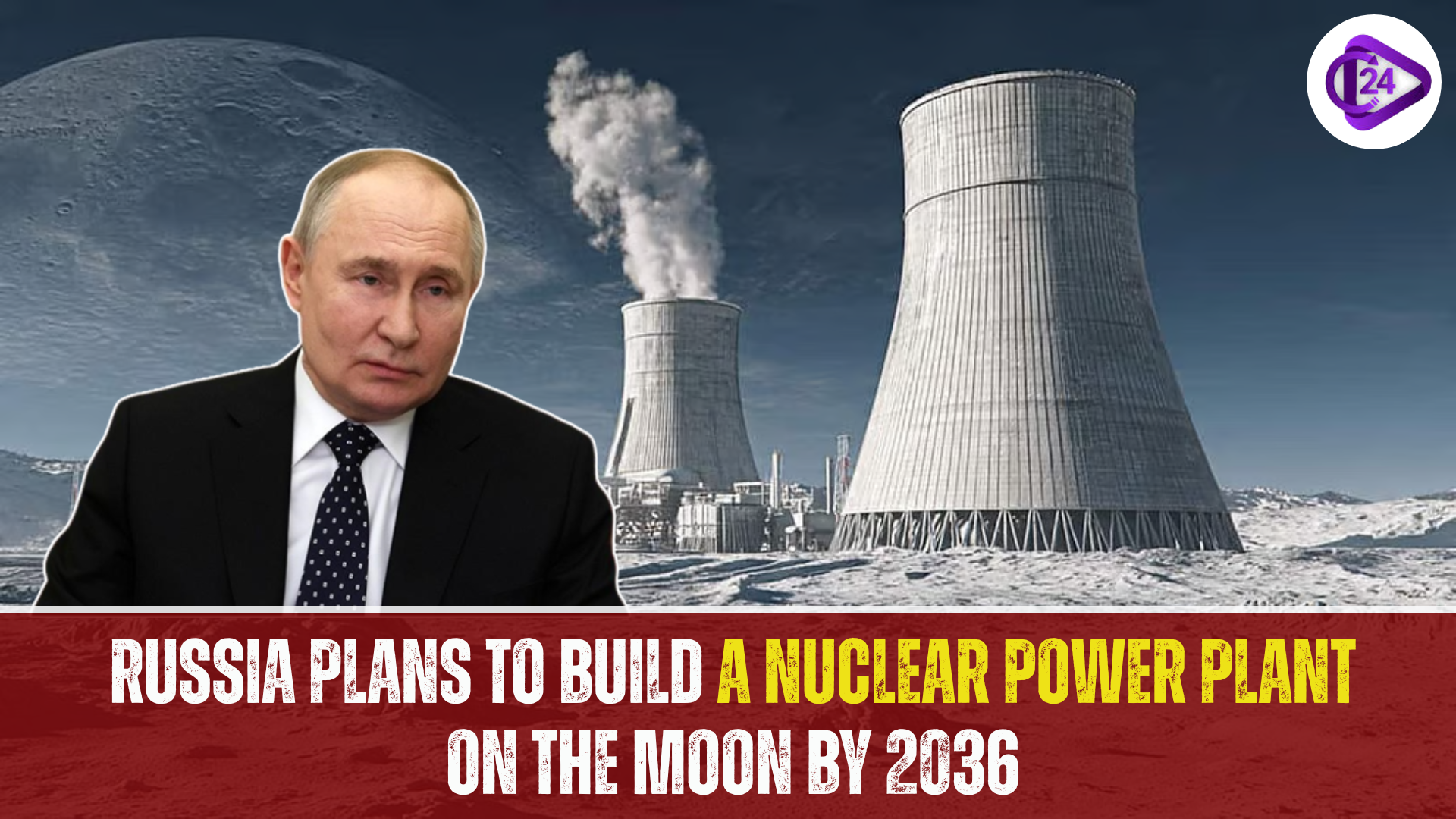
The state space corporation Roscosmos in Russia declared that they are building a nuclear-powered energy station to be placed on the moon by 2036 to aid in its long term exploration plans of the moon, as well as collaborative missions with China. This project entails a contract entered into with the Lavochkin Association to build the lunar power infrastructure and launch it in space to power up the rovers, the observatories, and the International Lunar Research Station. The venture would be a strategic change of the short-term missions to the sustainable operations in space and in off-Earth and increased cooperation between the space and nuclear sector in Russia, also Rosatom and the Kurchatov Institute.
Why a Nuclear Power Plant on the Moon?
-
Russia is already intending to construct a Nuclear power facility on the Moon by 2036 to provide constant and uninterrupted energy to its long term lunar exploration programme.
-
The plant is to supply lunar rovers, an observatory and infrastructure of the joint Russian-Chinese International Lunar Research Station.
-
According to Roscosmos, this project will contribute to the process of leaving one-time missions behind and moving on to a permanently working scientific lunar base.
-
The reason to select nuclear power is that it can deliver constant power irrespective of the long night of the Moon, which would support long operation.
Previous Year Questions Moon and Mission
| Exam | Year | Question | Answer |
|---|---|---|---|
| UPSC Prelims | 2008 | SELENE-1 lunar mission belongs to which country? | Japan |
| UPSC Prelims | 2009 | Which planet has the highest number of natural satellites? | Jupiter |
| UPSC Prelims | 2015 | Ocean tides are mainly caused by the gravitational pull of which bodies? | Moon and Sun |
| RRB Gorakhpur | 2009 | When was Chandrayaan-1 launched? | 22 October 2008 |
| SSC CPO | 2019 | From where was Chandrayaan-1 launched? | Sriharikota |
| BSSC CGL | 2022 | What was India’s first Moon mission? | Chandrayaan-1 |
| Maharashtra PSC | 2019 | In which month was Chandrayaan-1 launched? | October 2008 |
| UPSSSC Mandi Inspector | 2019 | What was the launch date of Chandrayaan-1? | 22 October 2008 |
| NHPC JE | 2023 | Which was India’s first lunar mission? | Chandrayaan-1 |
| SSC | 2020 | The Moon is a — | Natural satellite |
| Railways | 2018 | The Moon completes one revolution around the Earth in — | About 27.3 days |
| SSC | 2017 | How is the Moon’s atmosphere? | Very thin / negligible |
| Defence | 2016 | Does the Moon rotate on its axis? | Yes |
| State PSC | 2021 | What did Chandrayaan-1 discover on the Moon? | Presence of water molecules |
| SSC | 2023 | What is the name of Chandrayaan-3’s rover? | Pragyan |
| SSC | 2023 | What is the name of Chandrayaan-3’s lander? | Vikram |
| State PSC | 2023 | Where did Chandrayaan-3 land on the Moon? | South polar region |
| SSC | 2016 | A lunar eclipse occurs when — | Earth comes between the Sun and the Moon |
| Railways | 2019 | The most common surface feature on the Moon is — | Craters |
| Defence | 2020 | How is the temperature on the Moon? | Extremely high in the day and very low at night |
Conclusion (Nuclear Power Plant on the Moon)
The construction of a nuclear power station on the Moon can revolutionize space exploration because it entails the availability of a reliable energy supply that is used in long missions, lunar bases, and the conducting of scientific experiments. It would be in favor of constant human presence, the possibility to deploy advanced technology, and a significant move towards the future of human people beyond the Earth.