


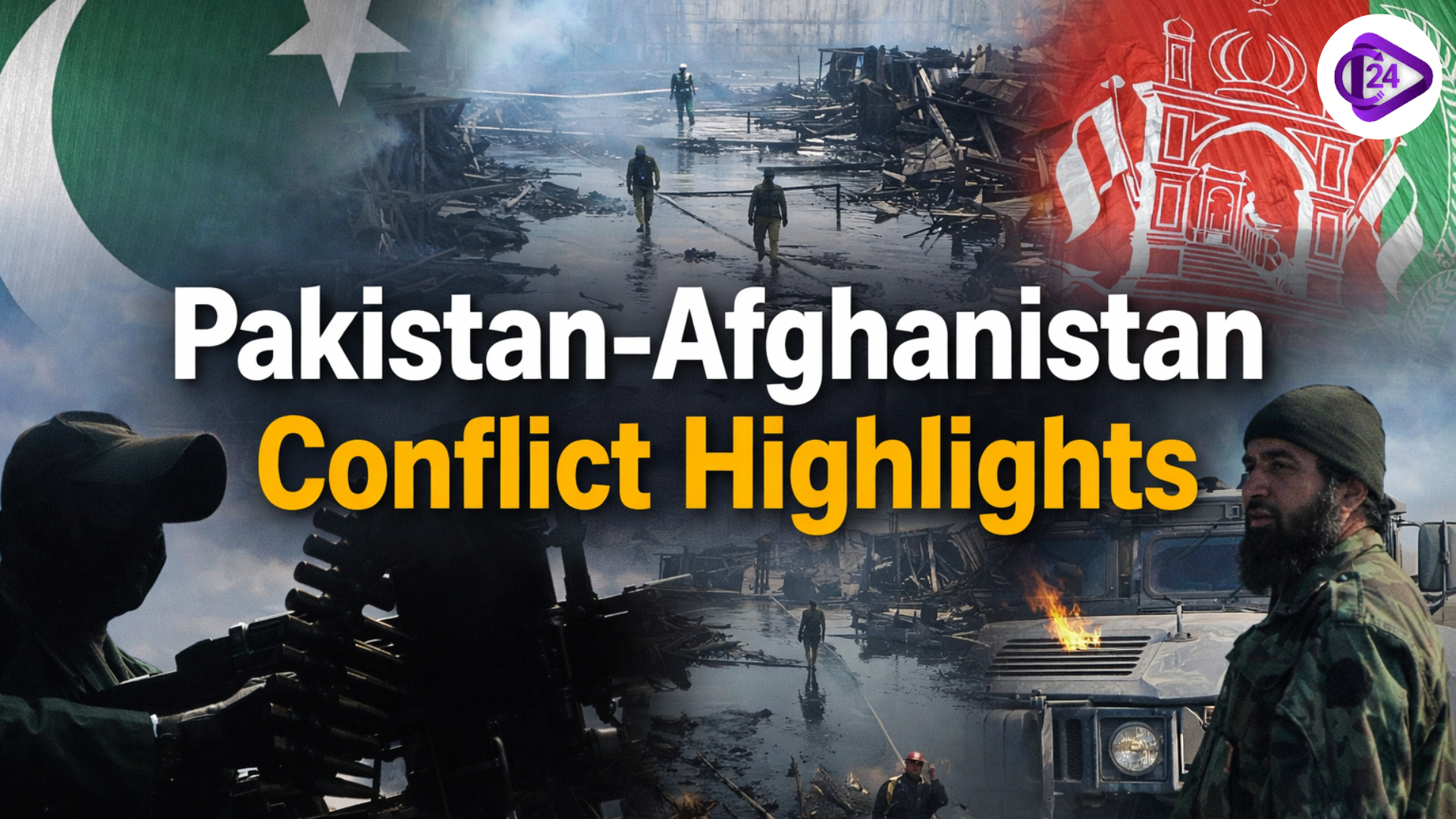
The conflict between Pakistan and Afghanistan has escalated sharply in 2026, creating one of the most pressing security challenges in South Asia. Tensions intensified after Pakistan launched airstrikes inside Afghan territory, claiming they targeted militant bases along the Durand Line. Afghan authorities strongly reject these claims, arguing that strikes have hit civilian areas, including hospitals and residential zones, raising concerns about violations of sovereignty and international law. Hundreds of civilians have reportedly died or been injured, and thousands have been displaced. This crisis has also raised alarm among regional and global actors, including the United Nations, which has called for restraint and thorough investigations. Meanwhile, China and other diplomatic actors have attempted to mediate, urging both countries to engage in dialogue and prevent further escalation. The situation reflects longstanding mistrust, unresolved security disputes, and challenges in counter‑terrorism cooperation between Islamabad and Kabul.
Key Security and Diplomatic Highlights of Pakistan-Afghanistan Conflict
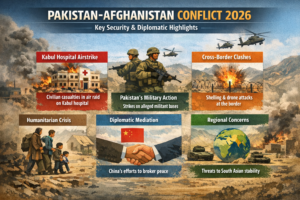
- Kabul Hospital Airstrike: In March 2026, the Omid Addiction Treatment Hospital in Kabul was struck by air raids, reportedly killing hundreds. Afghan authorities described this as a civilian-targeted attack, while Pakistan asserted that militant infrastructure was targeted.
- Pakistan’s Military Stance: Pakistan has characterised its operations as an “open war” against militants operating from Afghan soil, particularly targeting groups like the Tehrik‑i‑Taliban Pakistan (TTP). Afghanistan has denied harbouring militants and condemned repeated cross-border strikes.
- Cross-Border Clashes: There have been exchanges of fire, including drone strikes and artillery incidents, along the disputed border. Civilians living near the border are facing increased risk and displacement.
- Humanitarian Impact: Tens of thousands of people have been displaced due to fighting. Trade, transport, and access to essential services have been disrupted, worsening economic and social hardships.
- Diplomatic Efforts: China has played a mediating role, urging both Pakistan and Afghanistan to stop hostilities and engage in talks. International organisations, including the UN, have called for investigations into civilian casualties and emphasised adherence to humanitarian law.
- Regional Implications: The ongoing conflict threatens broader South Asian stability. Neighbouring countries are monitoring the situation closely, highlighting the urgent need for effective border management and counter-terrorism cooperation.
Diplomatic Developments between India and Afghanistan
India and Afghanistan share a long-standing strategic partnership, underpinned by historical, cultural, and economic ties. Over the past two decades, India has emerged as one of Afghanistan’s largest development partners, investing in infrastructure projects such as the Zaranj–Delaram highway, Salma (Afghan-India Friendship) Dam, and numerous healthcare and educational initiatives. These projects have strengthened bilateral cooperation and enhanced regional stability.
In recent years, India has actively engaged with Afghanistan through diplomatic channels, supporting the Intra-Afghan peace talks and maintaining a technical presence in Kabul despite political uncertainties. Even after the Taliban’s takeover in 2021, India has emphasised humanitarian assistance and continued dialogue to safeguard its strategic interests.
Bilateral relations also focus on trade and connectivity, with initiatives like the Chabahar Port corridor, linking Afghanistan to India via Iran, promoting economic integration and regional connectivity. Both nations have prioritised counter-terrorism cooperation, peace-building, and capacity development to address security challenges.
These ongoing diplomatic developments between India and Afghanistan reflect India’s commitment to a stable and prosperous Afghanistan, highlighting the importance of continued collaboration in security, trade, and humanitarian domains.
IISc Professor Arpita Patra Summits World’s Highest Volcano
Conclusion – Pakistan-Afghanistan Conflict Highlights
The Pakistan–Afghanistan conflict underscores persistent regional security challenges, cross-border tensions, and humanitarian concerns. Civilian casualties and militant activities have escalated hostilities, prompting international calls for restraint. Diplomatic efforts, including mediation by China and advocacy by the United Nations, remain crucial to de-escalation, stability, and fostering long-term peace between both nations while safeguarding regional strategic interests.