


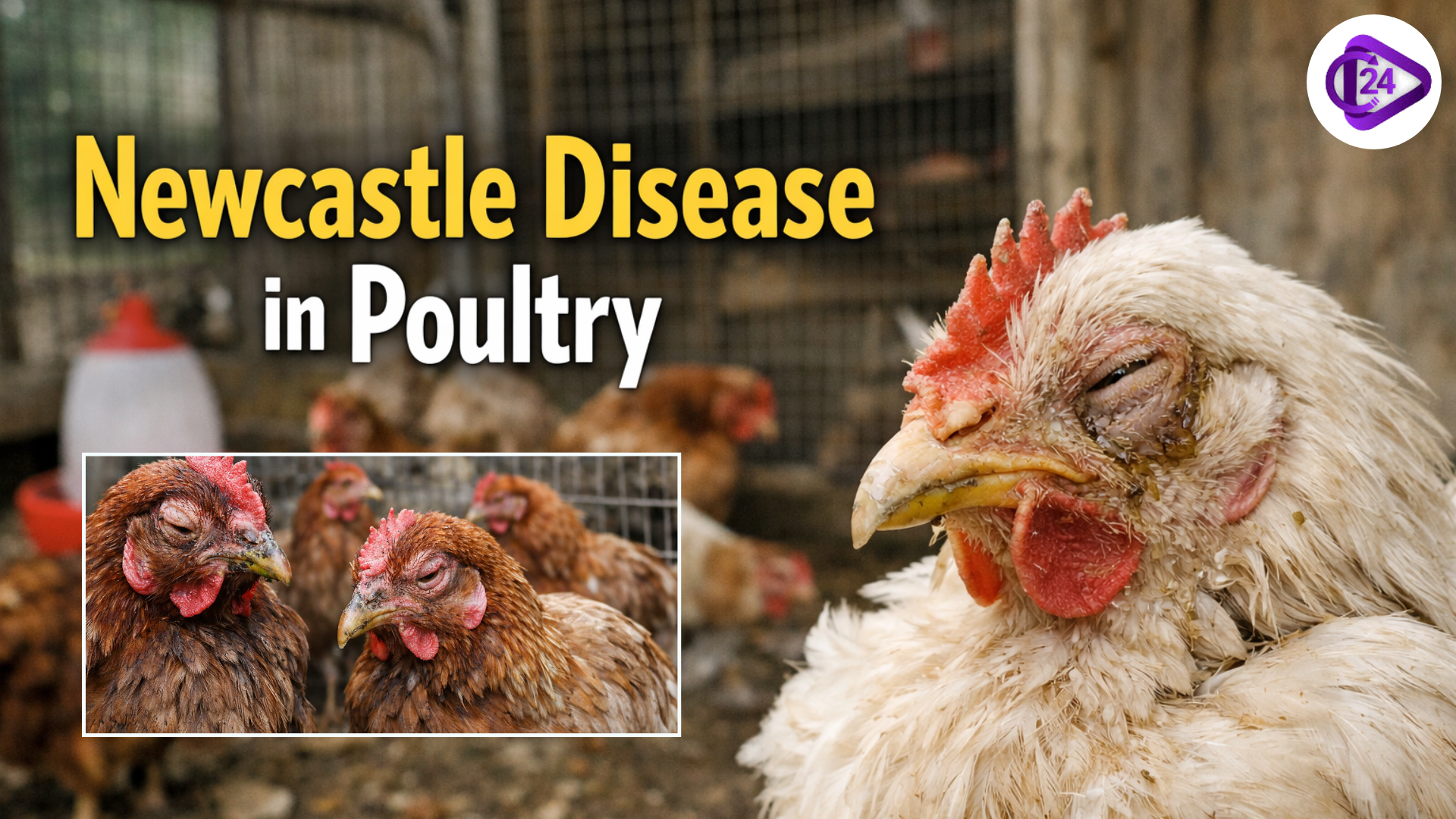
The Newcastle Disease outbreak has been a recent one, raising concerns in Europe, with numerous cases reported in 2026. Official surveys conducted by the Department for Environment, Food and Rural Affairs and European animal health authorities have indicated that the disease is spreading to countries such as Poland, Germany, and Spain. Avian influenza is a very contagious viral disease that afflicts poultry and other birds, leading to massive losses in the agricultural sector. The cases that have re-emerged, including commercial farm infections, have heightened the biosecurity concerns and elevated the level of risk overall in Europe.
Newcastle Disease Spreads Across Europe: Impact & Risk Factors
- Several countries in Europe, including Poland, Germany, Spain, Lithuania, and Slovakia, have officially reported cases of the disease.
- Poland is the most affected nation, and the outbreaks in 2026 affected up to 1.8 million birds.
- Germany reported its first outbreak since 2008 (or decades for poultry), meaning that it has re-emerged in areas that were controlled.
- Poultry farms in Spain, both commercial and non-commercial, have also experienced outbreaks.
- The disease is induced by avian paramyxovirus type-1 (APMV-1) and is transmitted very fast among birds.
- It impacts the respiratory, digestive, and nervous systems, which in most cases causes high mortality rates in poultry.
- The symptoms in the infected birds are coughing, sneezing, paralysis, diarrhoea, and lack of appetite.
- The outbreak has seen authorities raising the risk levels in some areas, such as Great Britain, to medium.
- Transmission is associated with the flight of wild birds, commerce, infected equipment, and farm biosecurity breaches.
- The European Commission has put in place emergency control areas and movement restrictions to control the disease.
- Vaccination exists but is not quite efficient, and that is why strict biosecurity is necessary.
- Governments note that Newcastle disease is a notifiable disease, and they should report suspected cases immediately.
- International trade and poultry farming are at risk of facing a severe economic threat due to the outbreak.
- Continuous monitoring systems, such as the Animal Disease Information System (ADIS), are monitoring cases in Europe.
- Experts caution that unless containment measures are well adhered to, the disease can keep on spreading to the west.
MCQs on Poultry
Which disease is commonly known as Bird Flu?
A. Newcastle Disease
B. Avian Influenza
C. Swine Flu
D. Rabies
Answer: B. Avian Influenza
Explanation: Avian Influenza is a viral disease in birds, commonly called Bird Flu.
Avian Influenza is caused by which virus family?
A. Coronavirus
B. Orthomyxoviridae
C. Retroviridae
D. Flaviviridae
Answer: B. Orthomyxoviridae
Explanation: Influenza viruses belong to the Orthomyxoviridae family.
Which of the following diseases spreads most rapidly among poultry in India?
A. Tuberculosis
B. Avian Influenza
C. Malaria
D. Cholera
Answer: B. Avian Influenza
Explanation: It spreads quickly among birds and causes major outbreaks.
The primary host of H5N1 virus is:
A. Humans
B. Birds
C. Cattle
D. Fish
Answer: B. Birds
Explanation: H5N1 mainly infects birds but can sometimes spread to humans.
Which organisation monitors global animal diseases?
A. WHO
B. FAO
C. OIE (World Organisation for Animal Health)
D. UNESCO
Answer: C. OIE (World Organisation for Animal Health)
Explanation: OIE tracks and manages animal disease outbreaks worldwide.
Zoonotic diseases are those which:
A. Affect only animals
B. Spread from animals to humans
C. Spread only through water
D. Affect plants
Answer: B. Spread from animals to humans
Explanation: Zoonotic diseases transmit between animals and humans.
Which of the following is NOT a poultry disease?
A. Avian Influenza
B. Newcastle Disease
C. Foot and Mouth Disease
D. Infectious Bursal Disease
Answer: C. Foot and Mouth Disease
Explanation: It mainly affects cattle, not poultry.
Which measure is most effective in controlling poultry diseases?
A. Increasing imports
B. Biosecurity measures
C. Ignoring symptoms
D. Open farming
Answer: B. Biosecurity measures
Explanation: Hygiene and restricted movement prevent disease spread.
Which disease caused a major poultry crisis in India multiple times?
A. Dengue
B. Avian Influenza
C. HIV
D. Tuberculosis
Answer: B. Avian Influenza
Explanation: Bird Flu outbreaks have led to large poultry losses in India.
Swine Flu (H1N1) primarily spreads through:
A. Water
B. Air droplets
C. Soil
D. Food only
Answer: B. Air droplets
Explanation: It spreads via coughing, sneezing, and close contact.
Consider the following statements regarding Avian Influenza:
- It is caused by viruses of the Orthomyxoviridae family.
- It primarily affects birds but can infect humans.
- It spreads only through contaminated water.
Which of the statements given above is/are correct?
A. 1 and 2 only
B. 2 and 3 only
C. 1 only
D. 1, 2 and 3
Answer: A. 1 and 2 only
Explanation: It spreads through contact, air, and surfaces—not only water.
With reference to zoonotic diseases, consider the following statements:
- They can be transmitted from animals to humans.
- All viral diseases are zoonotic.
- They include diseases like rabies and avian influenza.
Which of the statements given above is/are correct?
A. 1 and 3 only
B. 2 and 3 only
C. 1 only
D. 1, 2 and 3
Answer: A. 1 and 3 only
Explanation: Not all viral diseases are zoonotic.
Consider the following pairs (disease – primary host):
- H5N1 – Birds
- H1N1 – Pigs
- Foot-and-Mouth Disease – Poultry
Which of the pairs given above is/are correctly matched?
A. 1 and 2 only
B. 2 and 3 only
C. 1 only
D. 1, 2 and 3
Answer: A. 1 and 2 only
Explanation: Foot-and-mouth disease affects cattle, not poultry.
PM Inaugurates Samrat Samprati Museum at Koba Tirth in Gandhinagar
Conclusion – Newcastle Disease
Newcastle disease continues posing a significant risk to the health of poultry in the world because of its high transmissibility and the cost implications. It can cause massive death and trade losses to affect the respiratory, digestive, and nervous systems in birds. Strict biosecurity, early detection, and vaccination measures need to be put in place to ensure effective control. Being a notifiable disease, it is important to report promptly. In general, poultry industries and food security on the global level require constant supervision and proactive strategies to avoid outbreaks.