






List of RBI Governors in India: Tenure, Contributions & Key Facts

RBI Governors: The Reserve Bank of India (RBI) is India’s central bank, established on 1 April 1935. The reserves act as a Regulator that oversees all activities conducted in the country to maintain monetary stability. There have been 26 Governors of the RBI since its establishment, and their contributions...

List of RBI Governors in India: Tenure, Contributions & Key Facts
RBI Governors

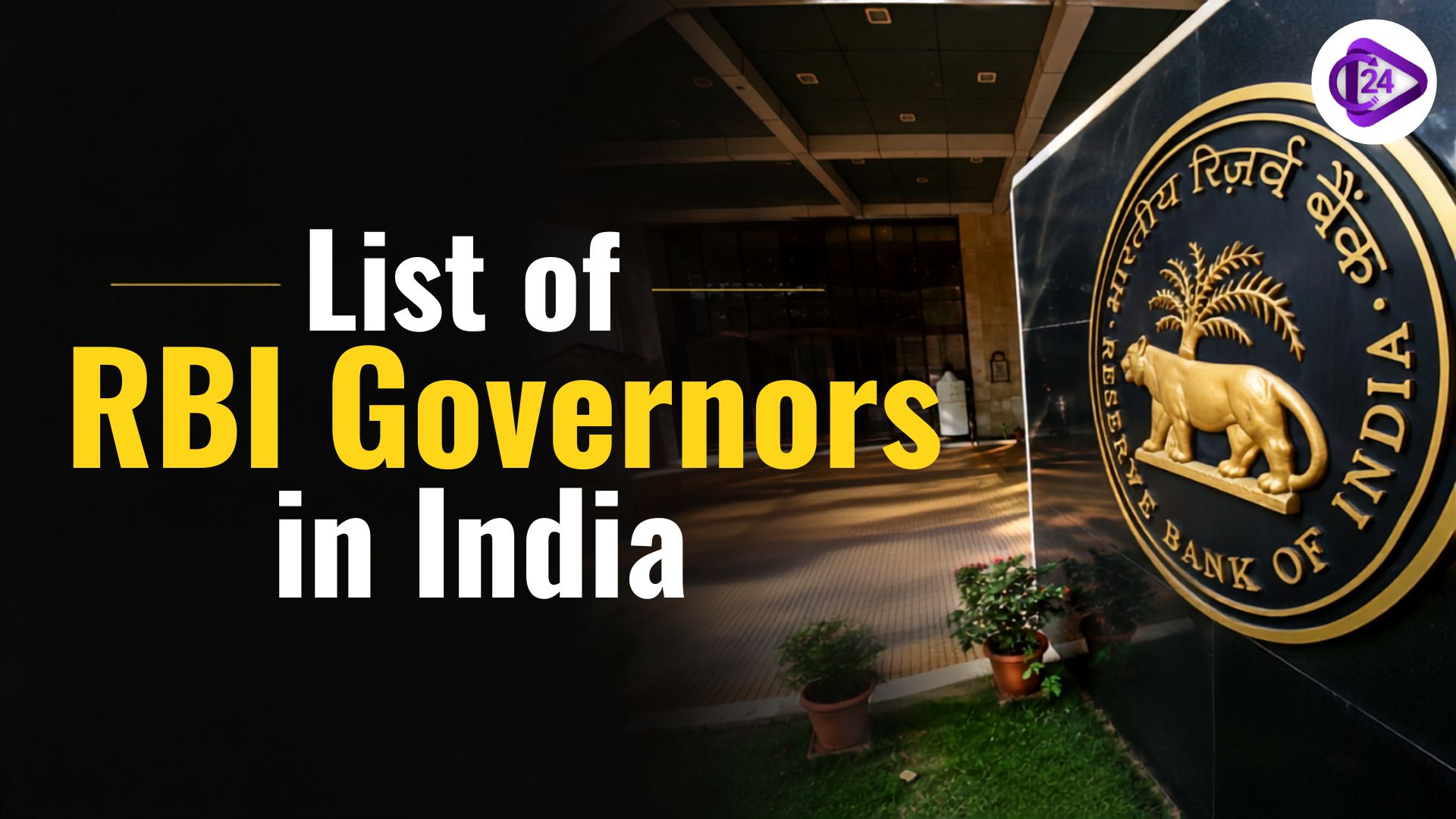
 RBI Governors: The Reserve Bank of India (RBI) is India’s central bank, established on 1 April 1935. The reserves act as a Regulator that oversees all activities conducted in the country to maintain monetary stability. There have been 26 Governors of the RBI since its establishment, and their contributions have played a vital role in the development of India’s financial and economic policies. Ever since Sir Osborne Smith (the first RBI Governor) to the present Shri Sanjay Malhotra, they all have contributed through radical to strategic reforms, key monetary policy decisions, successful containment of inflation, financial inclusion initiatives and more importantly, banking regulation. In this article, List of RBI Governors in India (1935–2026)

List of RBI Governors from 1935 to 2026, Complete Timeline

RBI Governors List 1935 to 2026: The complete timeline of all 26 Governors of the Reserve Bank of India – tenures, notable contributions and milestones. It provides a brief account of the evolution of India’s monetary policy, financial stability and banking system from 1935, when the RBI was founded, and the leadership at that time. Below the List of RBI Governors from 1935 to 2026 table

List of RBI Governors in India (1935–2026): Name & Tenure

S. No. RBI Governor Tenure
1 Sir Osborne Smith 1 Apr 1935 – 30 Jun 1937
2 Sir James Braid Taylor 1 Jul 1937 – 17 Feb 1943
3 Sir C. D. Deshmukh 11 Aug 1943 – 30 Jun 1949
4 Sir Benegal Rama Rau 1 Jul 1949 – 14 Jan 1957
5 K. G. Ambegaonkar (Acting) 14 Jan 1957 – 28 Feb 1957
6 H. V. R. Iengar 1 Mar 1957 – 28 Feb 1962
7 P. C. Bhattacharya 1 Mar 1962 – 30 Jun 1967
8 L. K. Jha 1 Jul 1967 – 3 May 1970
9 B. N. Adarkar (Acting) 4 May 1970 – 15 Jun 1970
10 S. Jagannathan 16 Jun 1970 – 19 May 1975
11 N. C. Sen Gupta (Acting) 19 May 1975 – 19 Aug 1975
12 K. R. Puri 20 Aug 1975 – 2 May 1977
13 M. Narasimham 3 May 1977 – 30 Nov 1977
14 Dr I. G. Patel 1 Dec 1977 – 15 Sep 1982
15 Dr. Manmohan Singh 16 Sep 1982 – 14 Jan 1985
16 A. Ghosh (Acting) 15 Jan 1985 – 4 Feb 1985
17 R. N. Malhotra 4 Feb 1985 – 22 Dec 1990
18 S. Venkitaramanan 22 Dec 1990 – 21 Dec 1992
19 Dr. C. Rangarajan 22 Dec 1992 – 21 Nov 1997
20 Dr. Bimal Jalan 22 Nov 1997 – 5 Sep 2003
21 Dr. Y. V. Reddy 6 Sep 2003 – 5 Sep 2008
22 Dr. D. Subbarao 5 Sep 2008 – 4 Sep 2013
23 Dr Raghuram G. Rajan 4 Sep 2013 – 4 Sep 2016
24 Dr Urjit R. Patel 4 Sep 2016 – 11 Dec 2018
25 Shri Shaktikanta Das 12 Dec 2018 – 10 Dec 2024
26 Shri Sanjay Malhotra 11 Dec 2024 – Incumbent (2026)

First Governor of the RBI, Sir Osborne Smith – RBI Governors

The first Governor of the RBI, Sir Osborne Smith, held office from 1 April 1935 to 30 June 1937, right from the time of establishment of the RBI. He had been a professional banker who worked with the Bank of New South Wales, Commonwealth Bank of Australia and was subsequently Managing Governor at Imperial Bank of India. He was forced to resign before the completion of his term due to some differences with the Government of India over exchange rate policies and interest rate policies, while he was in office. Interestingly, none of the Indian banknotes was signed by Sir Osborne Smith while he served as RBI Governor.

Major RBI Governors and Their Key Reforms – RBI Governors

RBI Governor Tenure Key Reforms & Contributions
Dr. C. Rangarajan 1992–1997 Led financial sector reforms after the 1991 economic liberalisation, strengthened prudential banking norms, improved financial regulation, enhanced foreign exchange management, and laid the foundation for India’s modern monetary policy framework.
Dr. Bimal Jalan 1997–2003 Strengthened foreign exchange reserve management, maintained monetary stability during the Asian Financial Crisis, improved investor confidence, and enhanced India’s macroeconomic stability.
Dr. Y. V. Reddy 2003–2008 Introduced prudent banking regulations, conservative monetary policies, stronger risk management, and capital adequacy measures that helped India withstand the 2008 Global Financial Crisis.
Dr. D. Subbarao 2008–2013 Managed the Global Financial Crisis by adopting monetary easing, liquidity support measures, and policy interventions to maintain financial stability and support economic growth.
Dr Raghuram G. Rajan 2013–2016 Introduced the Flexible Inflation Targeting Framework, launched the Asset Quality Review (AQR) to identify NPAs, licensed Small Finance Banks and Payment Banks, and strengthened banking transparency and monetary policy credibility.
Dr Urjit R. Patel 2016–2018 Implemented the Monetary Policy Committee (MPC) framework, institutionalised committee-based interest rate decisions, managed monetary policy during the post-demonetisation period, and reinforced inflation targeting.
Shri Shaktikanta Das 2018–2024 Led the RBI during the COVID-19 pandemic, introduced liquidity support measures and regulatory relief, expanded UPI and digital payments, and oversaw the pilot launch of the Central Bank Digital Currency (Digital Rupee/e₹).

List of RBI Governors in India (1935–2026) FAQs

Mr Osborne Smith was the Governor of the Reserve Bank of India on its establishment. After the formation of the RBI, he was in office from 1 April 1935 to 30 June 1937.
World Bank Income Classification 2026: India Remains a Lower-Middle-Income Economy
Bhavya Industrial Park Scheme: Objectives, Features, Benefits & Key Highlights
PM Modi Receives Indonesia’s Highest Civilian Honour, Bintang Adipurna
PCMA Applies Equally to All Citizens, Allahabad High Court Rules
IIM Bangalore to Establish Its First International Campus in Indonesia
Padma Shri ‘Bridge Man of India’ Girish Bharadwaj Dies at 76

Start Learning Today with Class24

Class24 Mobile Application

Class24 also has a mobile application so that it becomes easily accessible and convenient. This can be downloaded on an Android device. Users have appreciated this app and the content provided as 4.1 out of 5 is its rating in the App Store. People loved it because Class24 is giving content which is extremely rich in every sense. The app comprises a wide variety of features for smooth learning:

  • User-Friendly Interface: The app is categorized into various sections so that students can navigate and access various resources with ease.
  • Offline Access: The study materials can be downloaded and the student can access them even when not connected to the internet.
  • Inbuilt eBook Reader: There is a lightning-fast reader for eBooks within the app, so reading is seamless.
  • Progress Tracking: The app tracks student’s progress in preparation and keeps them organized and focused.

Courses and Subjects Offered

The total syllabus will be covered, and there are in-depth practice materials so as to give deep preparation in the courses designed to each one of them. All the subjects come under the aegis of courses offered by Class24 to meet different needs of various aspirants such as:

Preparation Tips for All Exams

Preparation tips for all exams mentioned below:

  • Previous Year Papers: Try to attempt at least 5-10 years of question papers to know the pattern of questions, how much difficulty one would face while answering, and how many frequently asked topics were in the examination.
  • Take Mock Tests: Attempt Mock Tests regularly in order to time and accuracy. You may analyze the performance and make an improvement for weak areas.
  • Focus on Time Management: Solve questions in the given time to make a habit of having speed and efficiency. Allocate time sensibly between Paper 1 and Paper 2, while appearing in the examination.
  • Current Affairs: For Current Affairs and TET exams, be updated about current affairs, teaching aptitude, and general awareness.
  • Regular Revision: Spend your daily and weekly time for revisions to not forget concepts and formulas. Use flashcards or do self-summary notes for quick revisions.
  • Understand the Exam Pattern and Syllabus: Understand the pattern of your exam paper and syllabus very well. Both Current Affairs and CSIR NET examinations are two-tier ones and involve both Paper 1, which consists of general aptitude and Paper 2 that involves specific aptitude subjects.
  • Make a Study Plan: Divide the preparation time into three phases of concept building, revision, and mock tests. Allocate more time to weaker areas while maintaining equilibrium with stronger sections.
  • Online Coaching or Study Groups: Enroll in online coaching programs like Class24 to get proper guidance and a structured approach to the study. Study groups will be useful to discuss doubts and share resources.
  • Stay Consistent and Motivated: Maintain a steady study schedule. Stay motivated by making small achievable goals.
  • Use Quality Study Materials: Suggested study material refers to a textbook, a set of previously published question papers, and web sources such as Class24.

Conclusion

Class24 is a one stop solution for aspirants preparing for Current Affairs, CSIR NET, SET, UP PGT English, UP TGT PGT, UPHESC Assistant Professor, TET, IGNOU B.Ed and other competitive exams. There are structured courses, live classes, mock tests along with the guidance of experts to assist candidates in achieving success in their respective fields.

Get success in your hand. Start study anytime anywhere.

The journey becomes simple and enjoyable when you start taking interest in it. And through our app “Class24”, we will be your trusted partners in developing that interest.

Daily Quizzes
Mock Tests
Ongoing

No ongoing tests right now.