

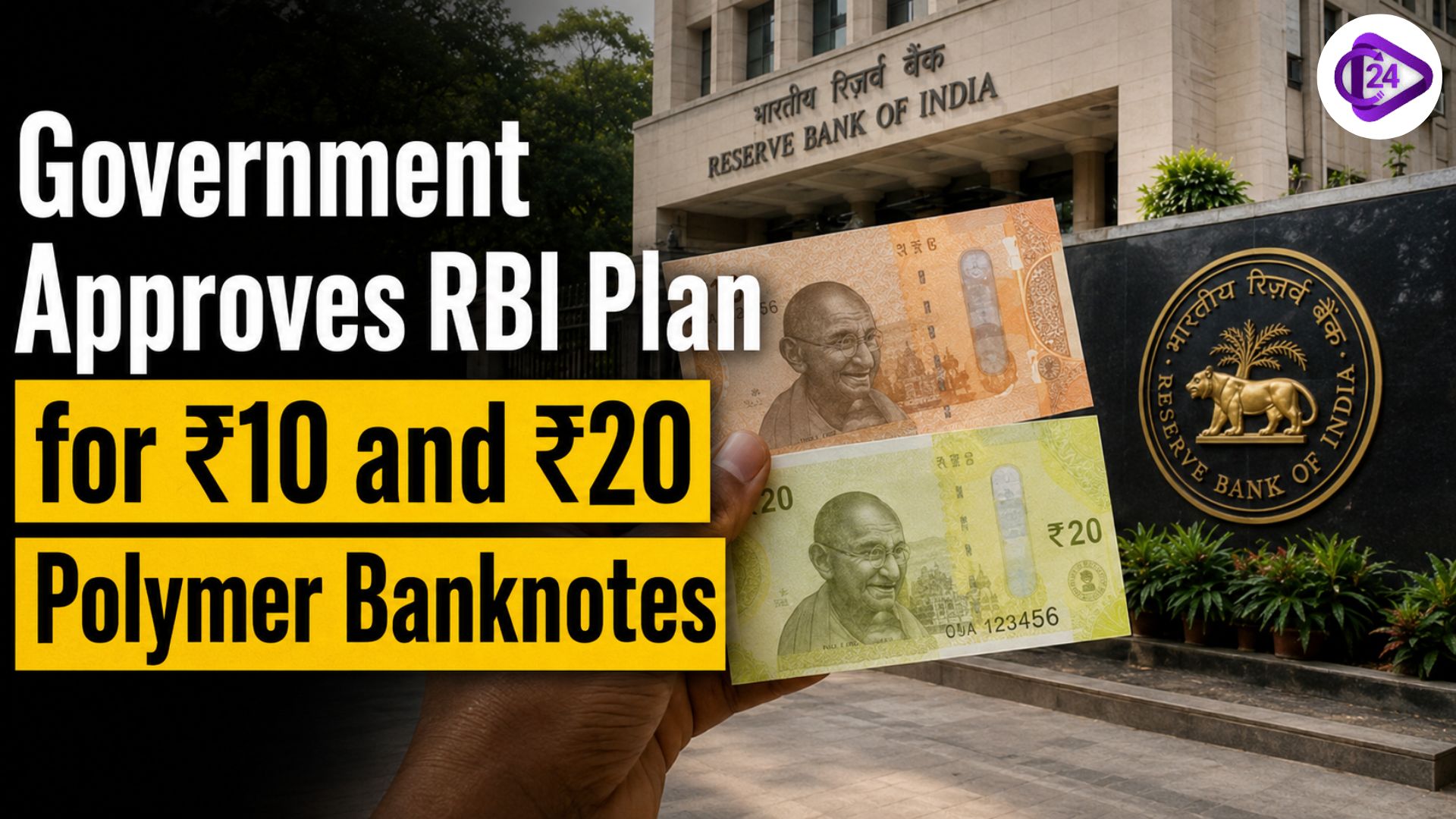
Polymer Banknotes: The Reserve Bank of India (RBI) initiative of field trials of banknotes priced at ₹10 and ₹20 in polymer has been approved by the Government of India. The initiative paves the way for India to explore its journey into polymer notes as an alternative to paper money. This works out to a total of 2 billion polymer notes (1 billion ₹10 and 1 billion ₹20) being tested, bringing the total to 2 billion. Put another way, 1 billion ₹10 polymer notes and 1 billion ₹20 polymer notes will be tested for a total of 2 billion.
The RBI bank note polymer bank note 2026 is an initiative to evaluate the durability, security, cost, usability and performance of polymer bank notes in normal use. Polymer banknotes, commonly referred to as plastic banknotes or plastic currency notes, are engineered to withstand water, dirt and physical damage.
Why in News?
The RBI polymer notes trial is in the news with the Central Government giving its approval to the RBI’s proposal for field trials of polymer notes of ₹10 and ₹20.
Out of the 1 billion ₹10 polymer banknotes and 1 billion ₹20 polymer banknotes, a total of 2 billion polymer currency notes will be issued.
The field trial will give the RBI an idea about the operational performance of polymer banknotes in the field. Durability, security, cost, handling, and convenience of public use will be evaluated.
The government has also stated that there is no plan to introduce the polymer currency in the place of the paper currency so far. So, the latest development is not a problem with regard to India’s currency system, but a trial of new currency technology.
Key Highlights of RBI Polymer Banknotes 2026
| Particular | Details |
| Authority | Reserve Bank of India (RBI) |
| Approval | Government of India |
| Polymer Notes | ₹10 and ₹20 |
| Purpose | Field Trial |
| ₹10 Polymer Notes | 1 Billion |
| ₹20 Polymer Notes | 1 Billion |
| Total Trial Quantity | 2 Billion |
| Other Name | Plastic Banknotes |
| Existing Paper Currency | Continues |
| Regular Issuance | Subject to Trial Results |
What Are Polymer Banknotes?
Polymer banknotes are banknotes made from a synthetic polymer material instead of the traditional banknote paper. They are also known as plastic banknotes or paper-plastic banknotes.
Polymer notes are flexible, unlike paper notes, and are more resistant to moisture, dirt and physical wear and tear. These features can help to extend the life of banknotes in circulation.
Polymer currency is not an unknown phenomenon worldwide, as polymer notes have been issued in certain countries for specific denominations. The RBI polymer banknotes trial 2026 is now underway to study the technology in making banknotes in India.
The field trial of the ₹10 and ₹20 notes will provide insights into the effectiveness of polymer notes in the Indian large and diverse cash circulation system.
Why Is RBI Testing Polymer Banknotes?
The overall purpose of the plastic notes trial by the RBI is to understand if polymer currency offers tangible benefits over the traditional paper banknotes.
Low-denomination notes worth ₹10 and ₹20 are often required for daily transactions. They are in high circulation, so they may be folded, exposed to dust, moisture, etc., and handled numerous times.
The field trial of RBI’s polymer ₹10 and ₹20 banknotes would help in determining:
- Resistance to wear and tear, impact, vibration, and stress.
- Resistance to water and moisture contaminated with oils, dyes or solvents.
- Demonstrates resistance to dirt and wear.Resists dirt and wear
- Circulation life
- Security features
- Anti-counterfeiting capabilities
- Manufacturing cost
- Public acceptance
- To be compatible with banking systems.To be compatible with banking systems
- Performance in daily encounters
Benefits of Polymer Banknotes in India
- Improved Durability: The polymer notes are considerably more durable and can be readily folded and handled many times.
- Water Resistant: They are more resistant to water and moisture than paper notes.
- Extended Circulation Life: Polymer notes could last longer in circulation.
- Enhanced Security: Advanced anti-counterfeiting features can be included on the Polymer notes.
- Less Wear and Tear: They are not as easily damaged by dirt, tearing or physical damage.
- Reduced Frequency of Replacement: Frequency of replacement may be reduced with longer-lasting notes.
- Easy maintenance: Notes produced of polymer can be simpler to facilitate servicing and maintenance.
- Better Quality of Money: They can contribute toward increased quality of banknotes on the market.
Previous Year Questions on Indian Currency
| Exam & Year | Question | Options | Answer |
| SSC CGL 2019 | ₹1 currency note is issued by whom? | A) RBI B) Ministry of Finance C) SBI D) SEBI | B) Ministry of Finance |
| SSC CHSL 2021 | Who signs the ₹1 currency note in India? | A) RBI Governor B) Finance Secretary C) Finance Minister D) President | B) Finance Secretary |
| SSC CGL 2018 | Who signs Indian currency notes other than ₹1 notes? | A) Finance Minister B) RBI Governor C) Prime Minister D) Finance Secretary | B) RBI Governor |
| SSC CGL 2021 | In which year was the Reserve Bank of India established? | A) 1930 B) 1935 C) 1947 D) 1950 | B) 1935 |
| SSC CGL 2020 | In which year was the RBI nationalised? | A) 1935 B) 1947 C) 1949 D) 1950 | C) 1949 |
| SSC CGL 2022 | What is the full form of SDR? | A) Special Drawing Rights B) Special Deposit Reserve C) Standard Drawing Rights D) Special Development Reserve | A) Special Drawing Rights |
| UPSC Prelims 2019 | SDR is associated with which international organisation? | A) World Bank B) IMF C) WTO D) ADB | B) IMF |
| UPSC Prelims 2020 | SDR is an international reserve asset created by which organisation? | A) WTO B) IMF C) World Bank D) BIS | B) IMF |
| SSC CGL 2022 | In which year was the Indian Rupee symbol ₹ officially adopted? | A) 2008 B) 2009 C) 2010 D) 2012 | C) 2010 |
| SSC CGL 2020 | Who designed the Indian Rupee symbol ₹? | A) D. Udaya Kumar B) Raghuram Rajan C) Bimal Jalan D) Urjit Patel | A) D. Udaya Kumar |
| SSC CHSL 2019 | Where is the headquarters of the RBI located? | A) New Delhi B) Mumbai C) Kolkata D) Chennai | B) Mumbai |
| SSC CGL 2018 | In which year was the Mahatma Gandhi Series of banknotes introduced? | A) 1987 B) 1996 C) 2000 D) 2005 | B) 1996 |
| SSC CGL 2021 | Which institution manages India’s foreign exchange reserves? | A) Ministry of Finance B) RBI C) SEBI D) SBI | B) RBI |
| IBPS PO 2021 | Which Act provides the legal basis for the issue of banknotes by the RBI? | A) RBI Act, 1934 B) Banking Regulation Act C) SEBI Act D) Companies Act | A) RBI Act, 1934 |
| SSC CGL 2022 | Which institution has the sole right to issue banknotes in India, except ₹1 notes? | A) SBI B) RBI C) SEBI D) NABARD | B) RBI |
Sarvesh Kushare Wins India’s First CWG 2026 High Jump Silver Medal
Conclusion
The progress of the new polymer banknotes of ₹10 and ₹20 is a significant advancement in India’s banking system. The RBI will test the polymer currency for its durability, security, circulation life, cost and usability. Current paper money, however, will still be in use. This field trial will help enter the polymer banknote for wider use in the future in India. The topic is also significant for competitive exams because RBI, Indian currency, banknote printing, currency management and monetary policy are related to this topic.