


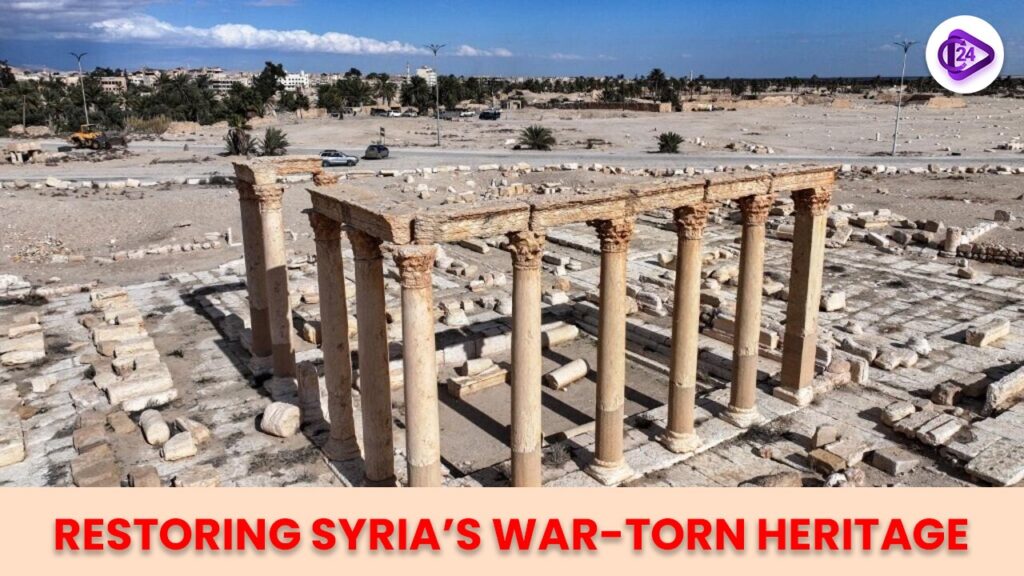
Syria plans to restore all three of its heritage sites Palmyra Crac des Chevaliers and the Dead Cities for the purpose of developing tourism and enhancing its damaged economy. War, looting activities combined with natural disasters perpetrated major destruction across Syria. All three sectors including IS militants, government forces and rebel groups contributed to these damages. The sites have received remote monitoring from UNESCO since 2015 yet they encounter blocking factors including dangerous conditions and budget limitations and illicit digging activities. Local conservationists believe that heritage revival tactics will create employment opportunities and visitor attraction which will defend Syria's cultural heritage as an essential pathway to economic growth and historical preservation.
Introduction
-
Syria undertakes restorative projects to revitalize historical sites thus attracting tourists who will help reconstruct its economy ravaged by war.
-
Extended destruction occurred at Palmyra and Crac des Chevaliers and the Dead Cities because of war destruction and looting in addition to natural disasters.
-
These restorative measures hold great importance for Syria because they protect its cultural heritage yet simultaneously drive economic development.
Significance of Syrian Heritage Sites
-
Palmyra (UNESCO World Heritage Site):
-
A 2,000-year-old Roman-era trade hub on the ancient Silk Road.
-
The annual number of tourists who visited reached 150,000 each month until the beginning of the 2011 civil war.
-
The IS terrorist group committed its destruction of historical monuments including the Temple of Bel the Baalshamin temple and the Arch of Triumph.
-
-
Crac des Chevaliers:
-
The Romans constructed this medieval Crusader castle which emerged during that period.
-
During the Syrian Civil War the area underwent severe bombardment followed by substantial damage from the recent earthquake.
-
-
Dead Cities:
-
More than 700 deserted Byzantine towns dating from the 1st century exist in the region.
-
Buildings such as churches and houses together with tombs continue to stand but they endure damage from thieves and unlicensed excavation activities.
-
Impact of War on Heritage Sites
-
Destruction by Islamic State (IS):
-
The Islamic State carried out enormous artifact theft while attacking what they considered to be sinful religious monuments.
-
Notable destruction of Palmyra’s historic temples and antiquities.
-
-
Government and Rebel Forces' Impact:
-
Heavy bombardment of Crac des Chevaliers and Dead Cities by Assad's forces.
-
The military bases occupying historic sites included Russian troops who used Fakhr al-Din al-Ma’ani Castle for their barracks operations.
-
Artefacts were systematically smuggled to hidden markets through the combination of illegal archaeological activities and theft.
-
Role of UNESCO and International Efforts
-
UNESCO took charge of remote monitoring Syrian heritage through satellite imagery analysis and reported data starting in 2015.
-
Under proper security conditions UNESCO will provide technical help for reconstruction projects.
-
The year 2019 brought to light from UNESCO experts that thorough research studies must precede any extensive restoration operations.
-
The historic artifacts need to be located through collaboration between local conservationists and the Directorate of Antiquities and Museums.
Potential Benefits of Heritage Restoration
-
The restoration of cultural heritage sites presents a chance to draw oversea tourists who will contribute to economic growth.
-
Cultural Preservation: Protection of Syria’s historical identity and legacy.
-
Economic Revitalization: Job creation in conservation, tourism, and local industries.
Conclusion
-
Local tourist arrivals together with preservation work indicate positive signs for Syria's historical sites to recover from their present state.
-
Proper preservation and rebuilding of Syria's valuable heritage requires coordinated action from UNESCO together with local authorities assisted by international support.