
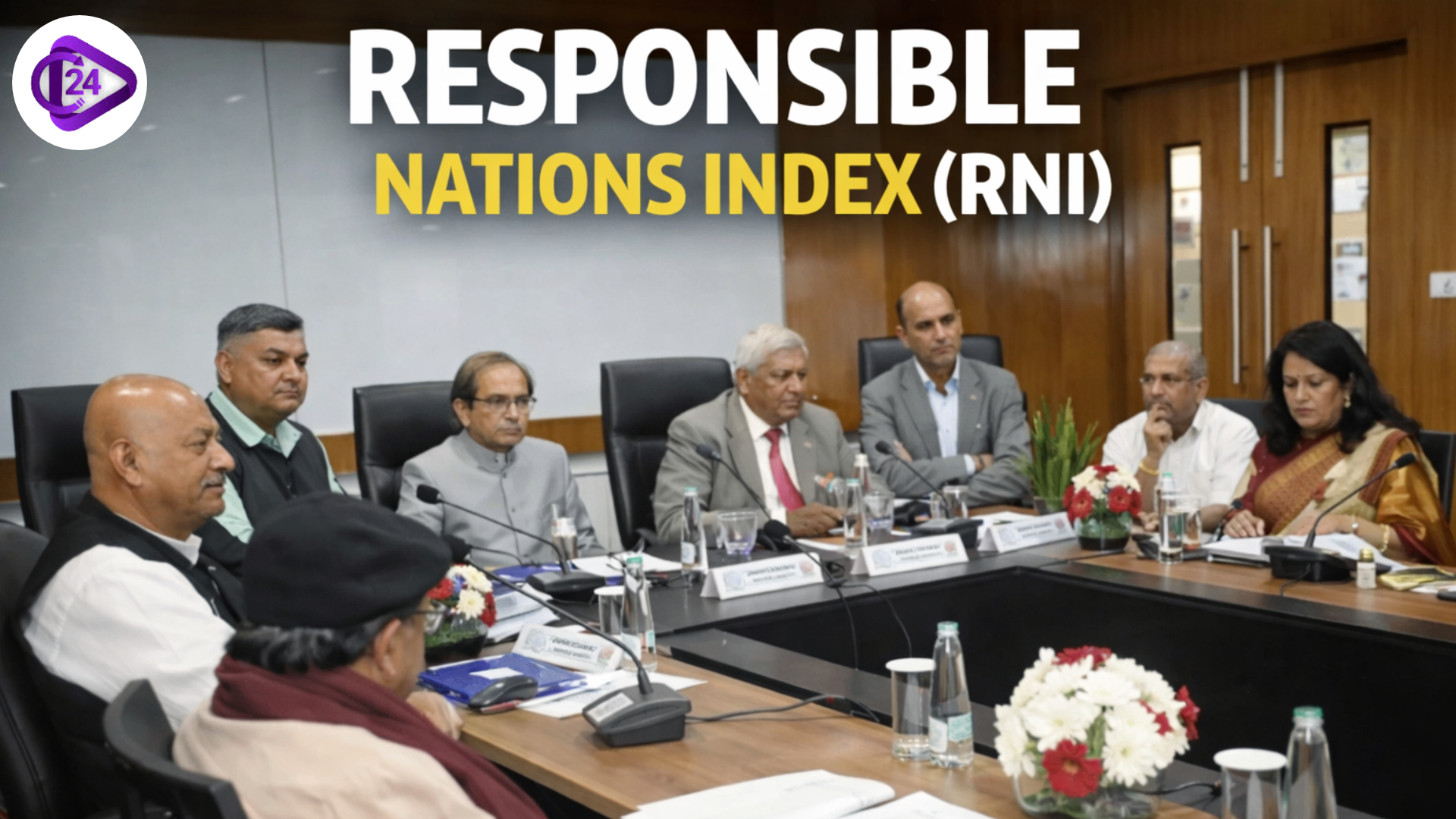
Responsible Nations Index (RNI) is an international assessment system that is not based on the economic or military strength of the states but rather on how well they take care of their citizens and the environment, as well as international peace and co-operation. It moves the world evaluation on the old GDP-based measures to a values-based approach that revolves around ethical management, societal welfare, environmental management and global accountability. The RNI also deals with 154 countries, it has transparent and globally sourced data, and it is organised around three main dimensions, which are internal responsibility (citizen welfare and justice), environmental responsibility (climate action and resource stewardship), and external responsibility (peace and cooperation).
Responsible Nations Index (RNI) 2026: India’s Global Ranking and Key Insights
-
A global index, the Responsible Nations Index (RNI), is a ranking of countries based on their responsibilities to citizens and the planet and not just on GDP and power-centric indicators.
-
Formulated in consultation with prominent educational and policy centres, such as JNU, IIM Mumbai and Dr Ambedkar International Centre.
-
It spans 154 countries with transparent data that is globally sourced.
-
RNI contains responsibility in three aspects, namely internal responsibility, environmental responsibility and external responsibility.
-
It tries to embrace ethical governance, sustainability, and global cooperation globally.
-
The index makes countries focus on social welfare, climate change, and world peace.
-
It sets a standard of responsible policing and international responsibility.
-
India has been working actively in the conceptualisation as well as the launching of RNI.
-
Concentrates on the value-based evaluation and not the traditional economic or military evaluation.
-
It is a monitoring device used by people, policymakers, and other international bodies with moral authority.

Conclusion (Responsible Nations Index (RNI)
Responsible Nations Index (RNI) is a revolutionary scheme that gives nations a rating on ethical governance, social and environmental well-being, and global responsibility. It promotes values instead of coercion; it urges countries and even India to think more in terms of sustainable development, national well-being, and international collaboration and make the global community more responsible and accountable.