


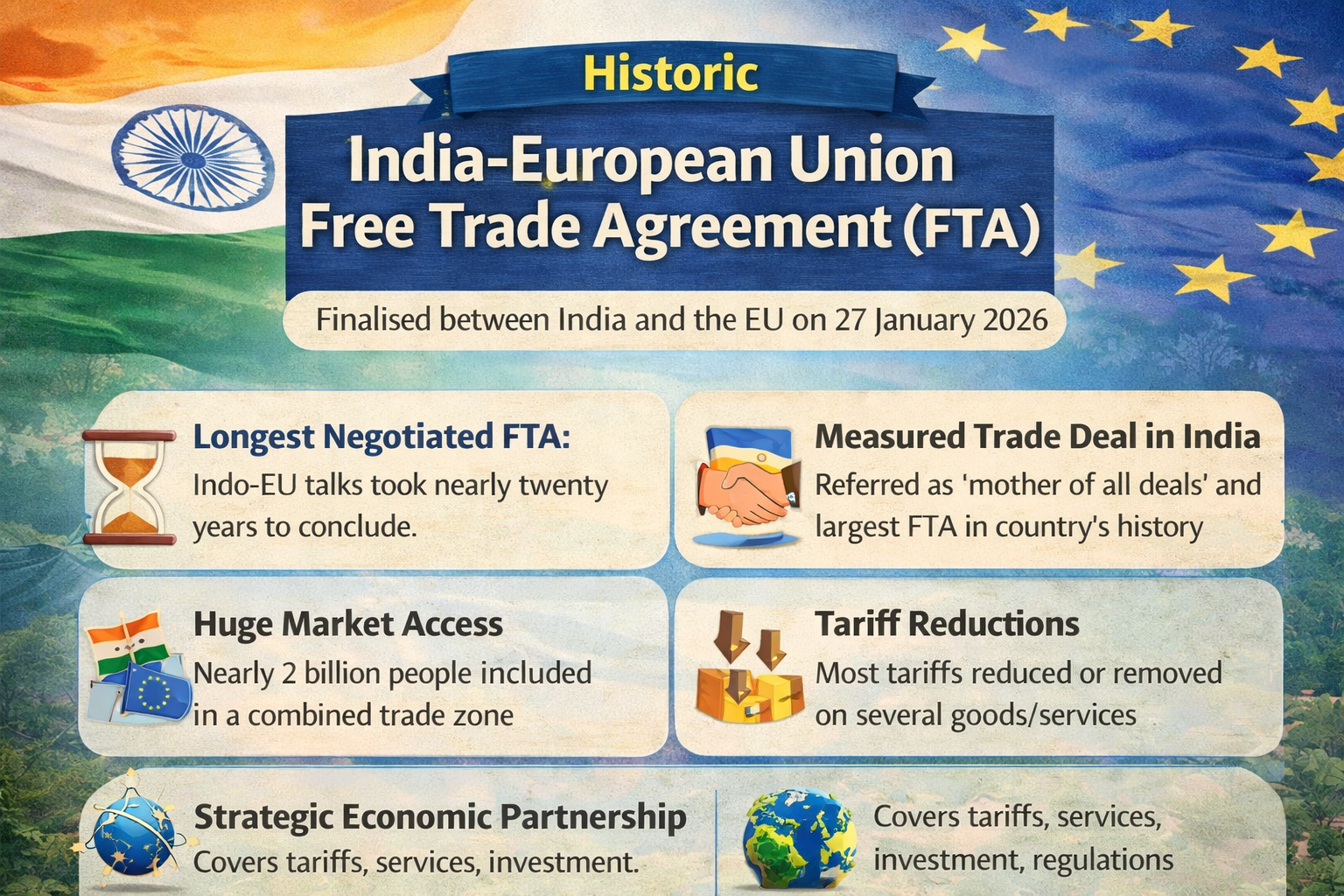
The India-European Union Free Trade Agreement (FTA) is one of those historic trade agreements that were finalised between the Republic of India and the European Union on 27 January 2026, after almost twenty years of discussions. It seeks to open up trade and investment by shrinking or getting rid of tariffs on a large variety of goods and services, and boost regulatory collaboration and market access between the two economies. India is also looking to reduce tariffs on major imports, in India including automobiles and other industrial goods, and the EU will significantly reduce tariffs on Indian exports, which will see economic integration between the two sides and generate new business opportunities in various sectors.
What Makes the India-EU FTA Historic?
-
Longest Negotiated FTA: Indo-EU talks took almost twenty years to end.
-
Measured Trade Deal in India: The largest FTA in the history of the Indian country was referred to as the mother of all deals.
-
Huge Market Access: The result is the inclusion of both India and the 27 member states of the EU into one free trade area of close to 2b billion people.
-
Tariff Reductions: Most tariffs will be reduced or removed on several products, which will boost export and import activities.
-
Strategic Economic Partnership: It not only encompasses tariffs but also its area of interest is on services, investments, cooperation on regulations and integrated economies
India–EU FTA: Key Sectors That Will Benefit
-
Textiles & Apparel: Indian textile, garments and clothing industries will enjoy zero-tariff to the market of the EU with increased export competitiveness and market share.
-
Leather & Footwear: Removal of tariff on leather products and boots increases the export of the industries, which are intensive in labour, thus expanding the EU demand.
-
Gems & Jewellery: Lowered or eliminated import duties open up to the Indian exporters the high value jewellery market in the EU to Indian exporters.
-
Chemicals & Pharmaceuticals: The reduction in the tariffs on chemical and pharmaceutical products is a step to enhance a stronger India in the advanced markets in Europe.
-
Engineering & Capital Goods: Preferential treatment to engineering goods, machinery and industrial goods augments access to Indian exporters and competitiveness.
-
Agricultural & Processed Foods: Indian food products such as tea, coffee, spices and processed foods are enjoying greater access to the market, which sustains rural communities.
-
Services Sector: Greater accessibility of IT, telecommunication, business and professional services benefits the growth of service-exports.
-
Automobile and Auto Components: Bilateral integration and trade. Phased tariff reductions on automobiles and components open up bilateral trade and integration opportunities.
Conclusion (India–EU FTA)
The India-European Union (Free Trade Agreement) denotes a historic step in the bilateral economic relations. It favours major industries of textile, leather, pharmaceuticals, engineering items, agriculture and services by lowering tariffs, enhancing accessibility of markets and encouraging investment. This agreement is likely to enhance export and employment opportunities as well as enhance India's position in global value chains. Other than trade, FTA promotes regulatory co-operation, sustainable development, and strengthens strategic economic interdependence between India and the EU. In general, it preconditions further economic integration, the rise of competitiveness, and long-term development of the two economies.