

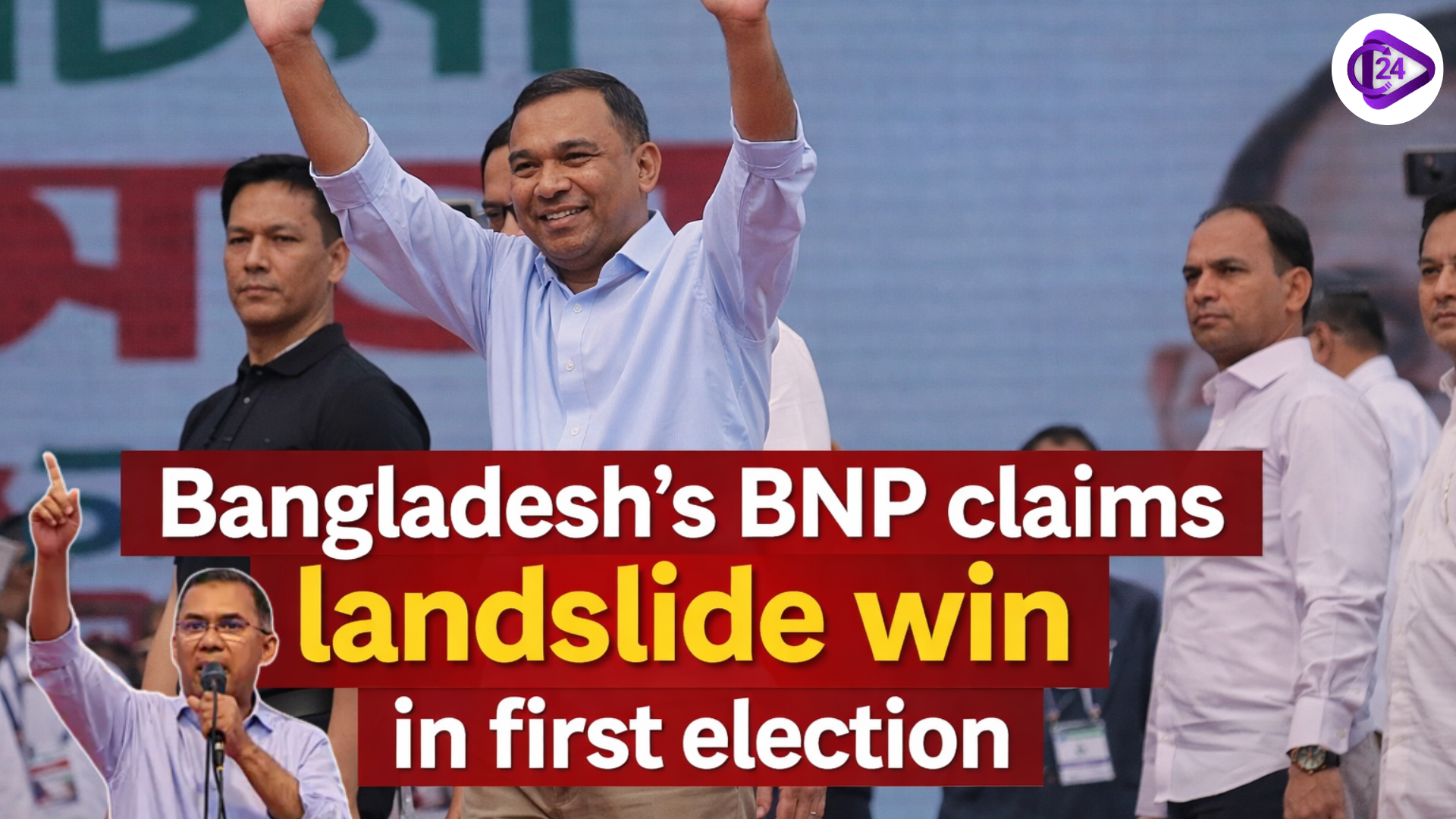
The general election of 2026 in Bangladesh was the first countrywide election held in the country since the 2024 uprising that overthrew the long-time governing party of Sheikh Hasina. The official findings and the Election Commission indicated thatthe Bangladesh Nationalist Party (BNP) under the leadership of Tarique Rahman had swept the election to secure a majority in the Jatiya Sangsad and a decisive victory, which saw Rahman become the next prime minister of the country. It was reported that the vote attracted an attendance of about 60 per cent and was held together with a constitutional referendum on governance reforms. It is an important indication of a significant change in the politics of Bangladesh following years of anarchy and temporary governance.
Highlights of the Bangladesh Nationalist Party (BNP)
-
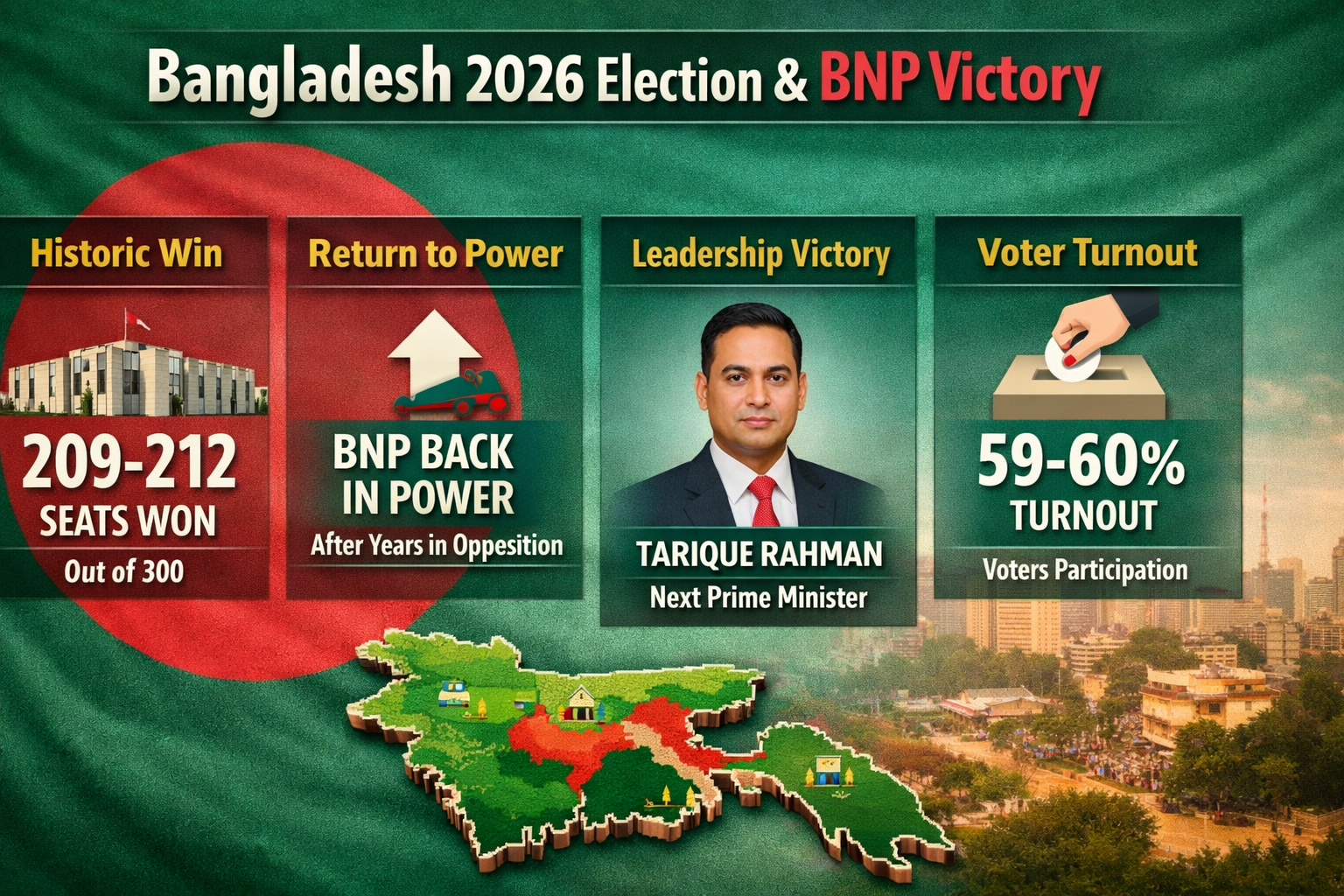
Historic win: The BNP has won decisively in the first parliamentary elections since the 2024 outburst. According to official and media reports, the party and allies obtained only 209-212 seats out of 300, significantly higher than the 151-seat majority threshold in Jatiya Sangsad (Bangladesh parliament).
-
Return to power: This outcome is a political comeback of the BNP after several years in opposition, following contentious polls and unrest during the ruling party's rule.
-
Regionalness: The party gained widespread victory not only in urban areas but in rural areas as well, controlling most parts of central and northern areas, with other parties gaining in some border areas.
-
Leadership victory: Tarique Rahman, the leader of the party, secured victories in Dhaka-17 and Bogura-6 and is likely to become the prime minister.
-
Voter turnout: Approximately 59-60% of eligible voters cast their votes.
About: New Leader of Bangladesh, Tarique Rahman
-
Full name and position: Born 20 November 1965, Tarique Rahman is a Bangladeshi politician who will take over after the 2026 elections as the prime minister. He has been the chairman of the Bangladesh Nationalistic Party (BNP) and a winner of Dhaka-17 and Bogura-6
-
Family background: He is the eldest son of former President Ziaur Rahman and former Prime Minister Khaleda Zia, making him an heir of one of the biggest Bangladeshi political families.
-
Education: Rahman studied at BAF Shaheen College, Dhaka, along with Dhaka Residential Model College, graduated with higher secondary at Adamjee Cantonment College, and entered the University of Dhaka, majoring in law and then international relations, but dropped out.
-
Political career: He entered the politics of the BNP in the late eighties, ascending to the party ranks. Rahman spent a period of approximately 17 years in self-imposed exile in London, and then he returned towards the end of 2025 to campaign.
-
Public image: His leadership, which is a blend of reform promises and controversy were determined by his absence and contribution in an important shift in politics.
Conclusion (Bangladesh Election 2026)
The 2026 election in Bangladesh is a pivotal point in the history of politics in this state. The BNP winning the election by a landslide is an indication of the changing mood of people after the 2024 uprising and years of instability. The new leadership mandate is bringing about high expectations of reforms, stability, and recovery of the economy during the coming years.