

Daily Quizzes
Mock Tests
No tests attempted yet.
Select Category
Evidence Suggests Russia Blew Up the Kakhovka Dam in Ukraine: What We Know

Enquire Now
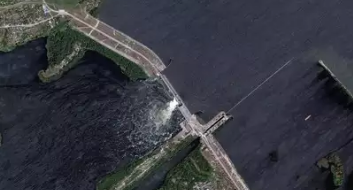
The destruction of the Kakhovka Dam on June 6, 2023, remains one of the most devastating and controversial events of the Russia-Ukraine war. Located on the Dnieper River in Kherson Oblast, the dam had been under Russian military control since early 2022, and its collapse unleashed catastrophic flooding across southern Ukraine. While Moscow denied any involvement and instead accused Kyiv of sabotage, a growing body of independent investigations, satellite imagery, and expert analysis points toward Russia as the party responsible.
This article breaks down the key evidence, the timeline of events, the humanitarian and environmental fallout, and the ongoing international response.
Background: A Dam Under Russian Occupation
The Kakhovka Hydroelectric Power Plant, completed in 1956, was the final dam in a cascade along the Dnieper River. It played a critical role in the region - supplying electricity, irrigation for farmland, and drinking water to numerous towns and cities, including areas near Crimea. Its reservoir was roughly the size of the U.S. Great Salt Lake.
Russian forces seized control of the dam within days of launching their full-scale invasion of Ukraine in February 2022. It remained under Russian occupation until it was destroyed in an explosion in the early hours of June 6, 2023, between 2:00 and 2:54 AM local time.
The Core Evidence Pointing to Russia
Several independent lines of evidence, compiled after the collapse, converge on the conclusion that the dam was destroyed from within by an internal explosion, rather than external shelling or structural failure alone.
- New York Times investigation: Citing engineers and explosive experts, the NYT reported that its investigation found evidence suggesting an explosive charge in a passageway running through the dam's concrete base detonated, destroying the structure on June 6. The paper's blunt conclusion was that the evidence clearly pointed to an explosion set off by the side controlling the dam - Russia.
- International legal experts: A team of legal experts assisting Ukrainian prosecutors concluded in preliminary findings that it was "highly likely" the collapse was caused by explosives planted by Russian forces.
- Truth Hounds "SUBMERGED" report: This detailed investigative report concluded there is at least a reasonable basis to believe the explosion was caused by the Russian Armed Forces, based on seismic data, eyewitness testimony, and satellite imagery. The report also noted that the presence of Russian troops at the site, evidence of prior mining of the dam, and a strategic elevation of water levels beforehand further support this conclusion.
- Institute for the Study of War (ISW) analysis: Russian military statements warning of an alleged Ukrainian plan to strike the dam were, according to ISW, likely intended to set information conditions to later blame Ukraine, while the resulting floods were used to cover a Russian retreat from the area.
- Satellite monitoring research (2024): A study published in Communications Earth & Environment by University of Houston researchers used satellite radar (InSAR) data to track structural movement of the dam over several years. Researchers found that the dam began deforming as early as June 2021 - well before the actual collapse in June 2023, and that the dam suffered its collapse while under Russian control, with independent investigations concluding Russia likely destroyed it to prevent a Ukrainian counterattack. Lead researchers noted displacements in different segments of the dam were visible up to two years prior to the collapse, suggesting long-term stress on the structure that may have been compounded by the eventual explosion.
Russia and Ukraine's Competing Narratives
| Claim | Russia's Position | Ukraine's Position |
|---|---|---|
| Who caused it | Blames Ukraine for sabotage | Blames Russia for planted explosives |
| Motive attributed to other side | Says Ukraine wanted to cut water supply to Crimea and distract from a stalled counteroffensive | Says Russia wanted to flood the battlefield to slow a Ukrainian advance and cover troop withdrawal |
| Control of the dam at time of collapse | Confirmed - Russian forces held the site | Confirmed - Russian forces held the site |
| Independent verification | Denies involvement; no independent evidence supports Ukraine's role | Backed by NYT investigation, legal experts, and Truth Hounds report |
| Reported deaths | 59 reported by Russian authorities | Local health workers in Oleshky estimated 200–300 deaths |
Humanitarian and Environmental Impact
The Kakhovka Dam collapse triggered one of the worst environmental and humanitarian disasters of the war:
- Massive flooding submerged dozens of towns and villages on both banks of the Dnieper River, forcing tens of thousands of residents to evacuate.
- Farmland across southern Ukraine was destroyed by floodwaters, threatening the region's agricultural output for years.
- Drinking water access was cut off for numerous communities that relied on the reservoir.
- The Kakhovka Reservoir, once part of a UNESCO World Network of Biosphere Reserves, drained rapidly, causing long-term ecological damage to wetlands and river ecosystems.
- Human rights investigators have since documented the event as a possible environmental war crime, citing the scale and foreseeability of the harm caused.
Ongoing Investigations
Independent field missions have continued gathering evidence in the years since. Investigators from groups like Truth Hounds conducted interviews with affected local residents in the months after the collapse, followed by expert missions to assess long-term hydrological changes from the draining of the reservoir. However, researchers note that the most heavily affected left bank of the Dnipro River remains largely inaccessible, since that area continues to be under Russian occupation - a factor that continues to limit full on-the-ground verification.
It's worth noting that Reuters, among other outlets, has stated it could not independently verify the specific cause of the explosion, reflecting the broader reality that a definitive, court-tested legal finding on exact responsibility is still pending - even as the weight of open-source and forensic evidence leans toward Russian responsibility.
Frequently Asked Questions