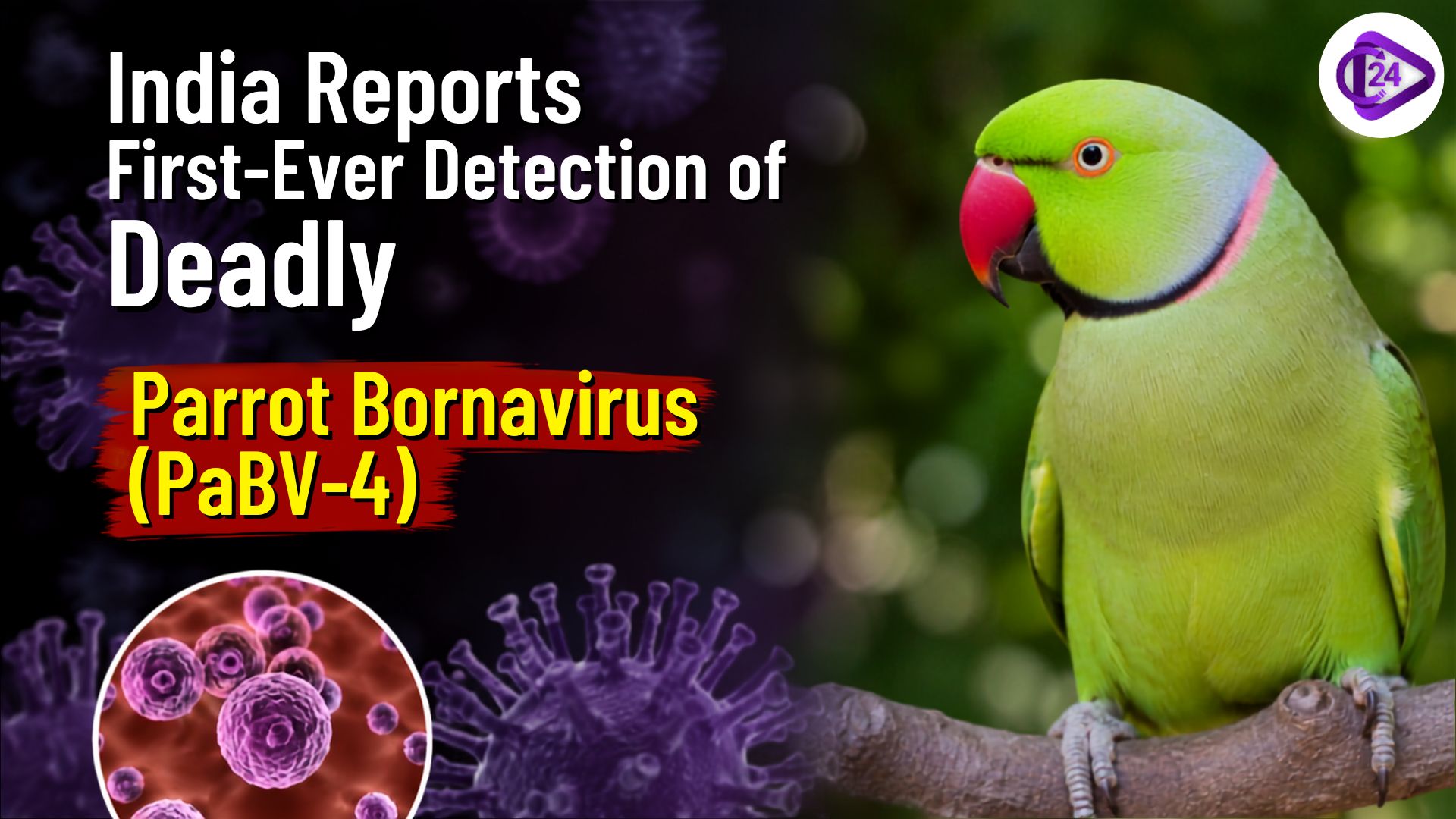


Parrot Bornavirus 4 (PaBV-4) has been first reported in India by researchers as a highly contagious virus that affects parrots and other psittacine birds primarily. A group of Indian scientists has been able to identify and genetically characterise the virus in captive birds and, for the first time, establish that the virus is circulating in the country. The finding is important because Proventricular Dilatation Disease (PDD) is a serious neurological and digestive disease that is frequently fatal in infected birds, caused by the PaBV-4. The discovery has led to worry among the wildlife conservation community, captive breeding programmes, zoos and the exotic bird trade in India.
Why in the news?
Researchers have identified and genetically characterised the virus in psittacine birds in India, and it is the first detection in the country. The report was based on a multi-institutional scientific study and indicates the importance of improving surveillance of diseases among captive bird populations. PaBV-4 has been described as a major threat to bird conservation and breeding programmes, as infected birds can be asymptomatic and still spread the disease.
India’s First Detection of PaBV-4: Key Highlights
| Particular | Details |
| Virus | Parrot Bornavirus 4 (PaBV-4) |
| First Detected in India | 2026 |
| Virus Type | Single-stranded RNA Virus |
| Virus Family | Bornaviridae |
| Genus | Orthobornavirus |
| Disease Caused | Proventricular Dilatation Disease (PDD) |
| Affected Birds | Parrots, Macaws, Cockatoos, Parakeets, Lovebirds and other Psittacine birds |
| Major Concern | High mortality in captive birds and risk to conservation programmes |
World Bank Income Classification 2026
What is Parrot Bornavirus 4 (PaBV-4)?
The Parrot Bornavirus 4 (PaBV-4), is an extremely contagious RNA virus that is part of the Bornaviridae family and Orthobornavirus genus. It primarily affects psittacine birds, such as parrots, macaws, cockatoos, parakeets, conures and lovebirds.
It infects the nervous system and digestive tract, causing one of the most severe diseases of captive parrots throughout the world, called Proventricular Dilatation Disease (PDD). Infected birds can look healthy but still be able to spread the virus to other birds.
What is PVDD?What is Proventricular Dilatation Disease (PDD)?
Proventricular Dilatation Disease (PDD) is a disease that progresses and can be fatal, resulting from the infection of the stomach with PaBV-4. It is harmful to the nerves which govern the digestive system, and sometimes also to the brain and spinal cord.
Symptoms of PDD
- Progressive weight loss
- Regurgitation or vomiting
- The seeds are excreted in the feces without being digested.
- Swelling of the bird’s glandular stomach (proventriculus)
- Coordination and balance problems (ataxia)
- Tremors and paralysis
- Sudden death in extreme cases
What is the mode of transmission of PaBV-4?
However, the mode of transmission is still under investigation and is thought to be spread via:
- Contact with infected birds – Direct or Indirect.
- Saliva and nasal secretions.
- Bird droppings (faeces)
- Food and water that are contaminated
- Feather dust
- Transmission from infected parents to eggs (possible vertical transmission)
- The greatest difficulty is that infected birds can exhibit no symptoms and spread the virus constantly.
Why is the First Detection in India Important?
This is significant as India’s captive population of parrots, aviaries, rescue centres, zoos and breeding centres is increasing.
Significance
- India’s first official evidence of PaBV-4 circulation.
- Increases wildlife disease monitoring.
- Conserves endangered parrot species in captivity.
- Supports the One Health approach through enhanced monitoring of animal diseases.
- Assists veterinary authorities in creating biosecurity plans for bird conservation.
Prevention and Control Measures – Parrot Bornavirus
No vaccine or antiviral medicine has been approved for use with PaBV-4.
Recommended Measures
- Health screening of all captive birds regularly.
- Isolation of suspected and/or infected birds.
- Ensure a high level of hygiene in aviaries.
- Take advantage of RT-PCR tests for early diagnosis.
- Do not interbreed newly imported birds with healthy birds.
- Improve disease surveillance at zoos and bird breeding centres.
Conclusion on First Detection of Parrot Bornavirus-4
India is the first country to detect Parrot Bornavirus 4 (PaBV-4). This detection was a new important event in wildlife disease surveillance. The virus is known to infect parrots and birds closely related to them, but its identification shows the importance of biosecurity, early disease detection and ongoing monitoring of captive bird populations. This will lead to enhanced surveillance and conservation of threatened bird species, thereby mitigating the risk of future outbreaks in India’s ornamental aviculture sector.