
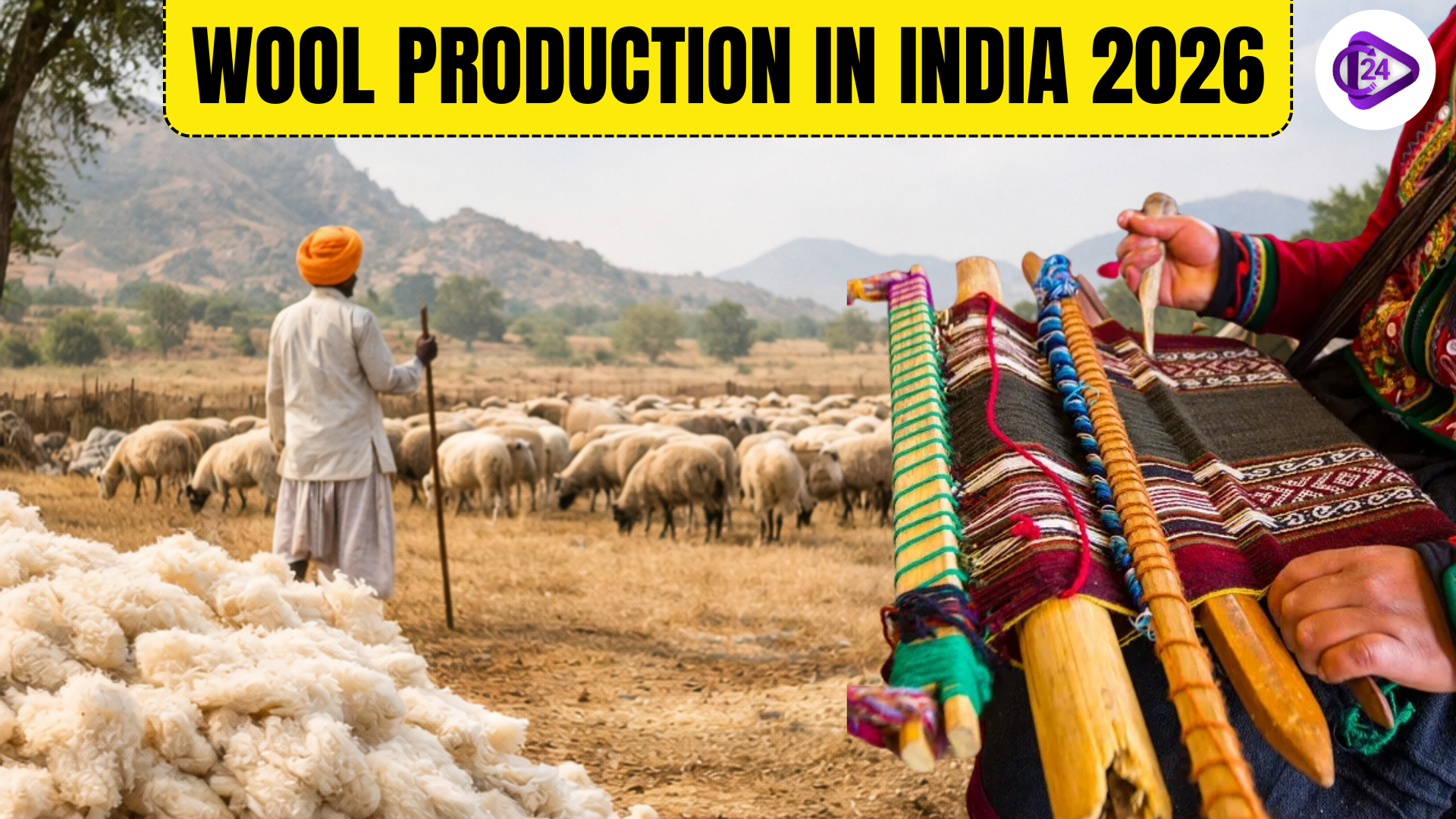
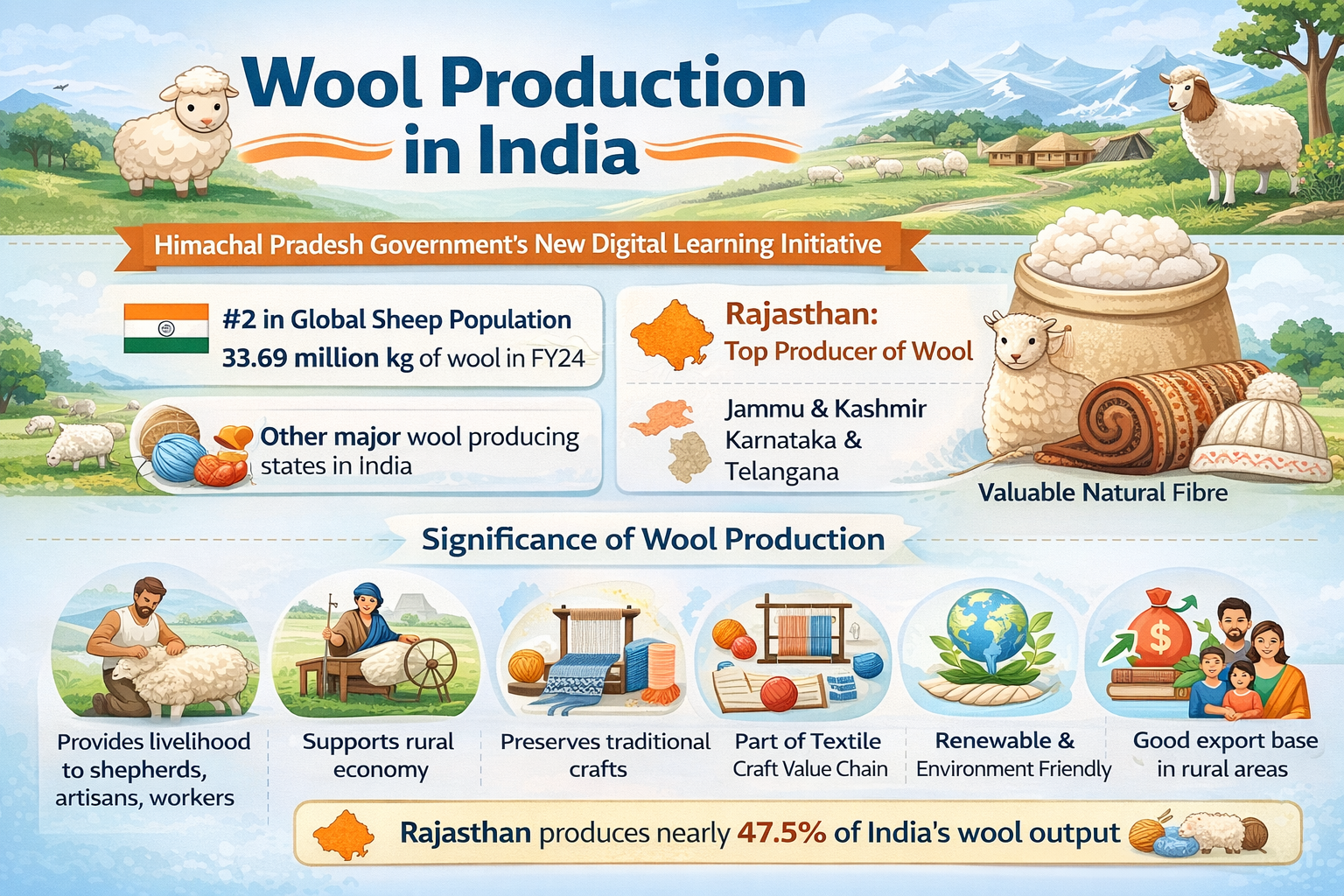
India is another major wool producer, which is a natural fibre used in winter clothing, carpets and industrial products. India is ranked as the second-largest sheep nation in the world and is one of the greatest wool-producing countries, producing approximately 33.69 million kg of wool in FY24. The wool and woollen industry is an industry that helps the rural population to survive and provides both organised and unorganised industries. The major wool-producing state is Rajasthan, which produces almost 47.5 percent of the total output of the country. Next comes Jammu & Kashmir and other states include Karnataka and Telangana. This notwithstanding, most of the time the domestic demand exceeds the production, necessitating imported finer wool.
Significance of wool production
-
Wool is a valuable natural fibre that finds application in winter wear, carpets, floor blankets, rugs and industrial fabrics.
-
India is also one of the countries with a high number of sheep in the world and hence wool production is a major component of the livestock industry in India.
-
The wool industry offers livelihood and employment to millions of people, particularly the shepherds, weavers, artisans and the workers in rural and semi-urban regions.
-
The production of wool helps the rural economy as it providesa stable income to the small and marginal farmers.
-
It contributes significantly to the conservation of traditional crafts such as carpet weaving, shawl making and handloom industries.
-
The industry is a part of the value chain in the textile sector, which aids in shearing, sorting, spinning, weaving, dyeing, and finishing.
-
Wool is renewable and biodegradable, thus making it an environmentally friendly fibre which is in line with the sustainable development objectives.
-
India has a good export base in the markets of woollen products, which have added to its export earnings.
-
The quality and productivity of wool is improved by the development of improved sheep breeds and modern processing.
-
Wool production will also contribute to decreasing migration, as there will be employment opportunities created in rural areas.
Highest Wool-Producing State in 2026
In 2026, Rajasthan is the largest wool-producing state in India, which sends the highest percentage of national wool production, as it is the state with a huge sheep population and its healthy climatic conditions.
Conclusion
The production of wool in India is important to sustain the livelihood of the rural population, the livestock industry and the textile industry. The large sheep population, agro-climatic conditions that are varied, have ensured that India can develop high levels of wool production in terms of quality and quantity. The industry has the ability to create jobs, conserve traditional art, and conserve the utilisation of the natural resources. Nevertheless, there are still such problems as low productivity, poor quality of wool, and its reliance on the imports of fine wool. Wool production has the potential of enhancing competition with improved breeding methods, improved infrastructure and policy support, such that it can serve the rural Indian economy and textile development better.