

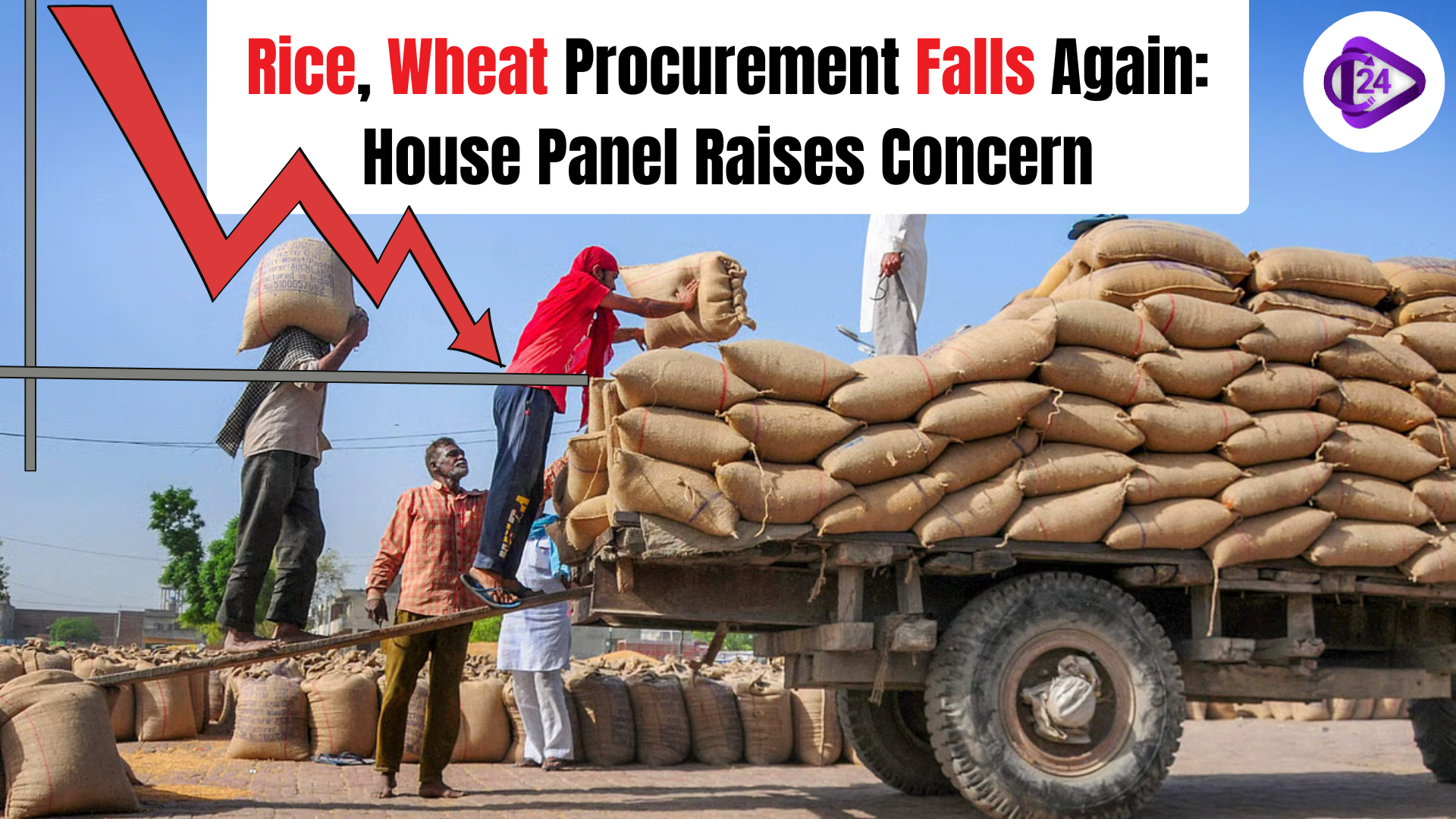
India’s food security framework is facing renewed scrutiny as rice and wheat procurement levels remain consistently low, raising concerns among policymakers. A parliamentary panel has flagged the issue, highlighting potential risks to the Public Distribution System (PDS) and buffer stock maintenance. Procurement shortfalls can impact price stability, farmer income assurance, and the government’s ability to manage food supply during emergencies. Factors such as changing crop patterns, market price fluctuations, and logistical challenges have contributed to this trend. Addressing these concerns is crucial to ensure long-term food security and maintain a balanced agricultural economy.
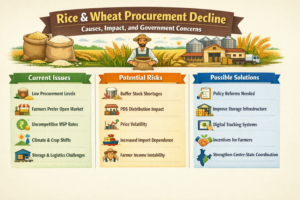
Rice & Wheat Procurement Decline: Causes, Impact, and Government Concerns
-
Rice and wheat procurement levels have declined in recent cycles, raising policy concerns.
-
A parliamentary panel has highlighted risks to national food security.
-
Lower procurement may affect buffer stock availability for emergencies.
-
The Public Distribution System (PDS) depends heavily on adequate grain procurement.
-
Farmers may prefer selling in open markets due to better prices.
-
Minimum Support Price (MSP) may not always be competitive with market rates.
-
Climate change and erratic weather impact crop yields.
-
Shifts toward alternative crops reduce wheat and rice cultivation areas.
-
Storage and logistical issues can hinder efficient procurement.
-
State-level variations in procurement policies affect overall performance.
-
Reduced stocks can lead to price volatility in domestic markets.
-
The government may need to increase imports if shortages persist.
-
Food inflation risks may rise due to supply constraints.
-
Procurement inefficiencies can affect farmer income stability.
-
Policy reforms may be required to strengthen procurement mechanisms.
-
Digital tracking and modernisation can improve supply chain efficiency.
-
Incentives for farmers could encourage higher participation in procurement.
-
Strengthening infrastructure like warehouses and cold storage is essential.
-
Coordination between central and state agencies is crucial.
-
Ensuring sustainable agriculture practices can stabilise long-term production.
PYQs on Rice and Wheat
| Exam Name | Year | Question | Options | Answer |
|---|---|---|---|---|
| UPSC Prelims | 2020 | Which among the following is the largest producer of rice in the world? | A. India B. China C. Indonesia D. Bangladesh |
B. China |
| SSC CGL | 2021 | Which country is the second-largest producer of rice in the world? | A. India B. China C. Vietnam D. Thailand |
A. India |
| RRB NTPC | 2022 | Wheat is mainly grown in which type of soil in India? | A. Black soil B. Alluvial soil C. Laterite soil D. Desert soil |
B. Alluvial soil |
| SSC CHSL | 2020 | Which state is the largest producer of wheat in India? | A. Punjab B. Haryana C. Uttar Pradesh D. Bihar |
C. Uttar Pradesh |
| UPSC Prelims | 2018 | Rice cultivation requires which of the following conditions? | A. Low temperature & low rainfall B. High temperature & high rainfall C. Cold climate D. Dry climate |
B. High temperature & high rainfall |
| SSC GD | 2022 | Which soil is most suitable for rice cultivation? | A. Black soil B. Alluvial soil C. Red soil D. Laterite soil |
B. Alluvial soil |
| RRB Group D | 2021 | Which is the largest wheat-producing state in India? | A. Punjab B. Haryana C. Uttar Pradesh D. Rajasthan |
C. Uttar Pradesh |
| SSC MTS | 2023 | Wheat is a ______ crop. | A. Kharif B. Rabi C. Zaid D. Cash crop |
B. Rabi |
| NDA | 2021 | Rice is mainly a ______ crop. | A. Rabi B. Kharif C. Zaid D. Plantation |
B. Kharif |
| CDS | 2022 | Which nutrient is most required for wheat growth? | A. Nitrogen B. Phosphorus C. Potassium D. Calcium |
A. Nitrogen |
| UPSC Prelims | 2017 | Which state is the largest producer of rice in India? | A. Punjab B. Uttar Pradesh C. West Bengal D. Andhra Pradesh |
C. West Bengal |
| SSC CPO | 2023 | The ideal temperature for wheat cultivation is around? | A. 10–15°C B. 20–25°C C. 25–30°C D. 30–35°C |
B. 20–25°C |
SC Orders Maternity Leave for All Adoptive Mothers
Conclusion – Rice & Wheat Procurement Falls Again
The continued decline in rice and wheat procurement raises serious concerns about India’s food security and agricultural stability. It highlights challenges in MSP effectiveness, farmer participation, and supply chain efficiency. Addressing these issues through policy reforms, better incentives, and improved infrastructure is essential. Ensuring adequate buffer stocks and strengthening procurement systems will be crucial to maintain price stability, support farmers, and secure the nation’s long-term food needs.