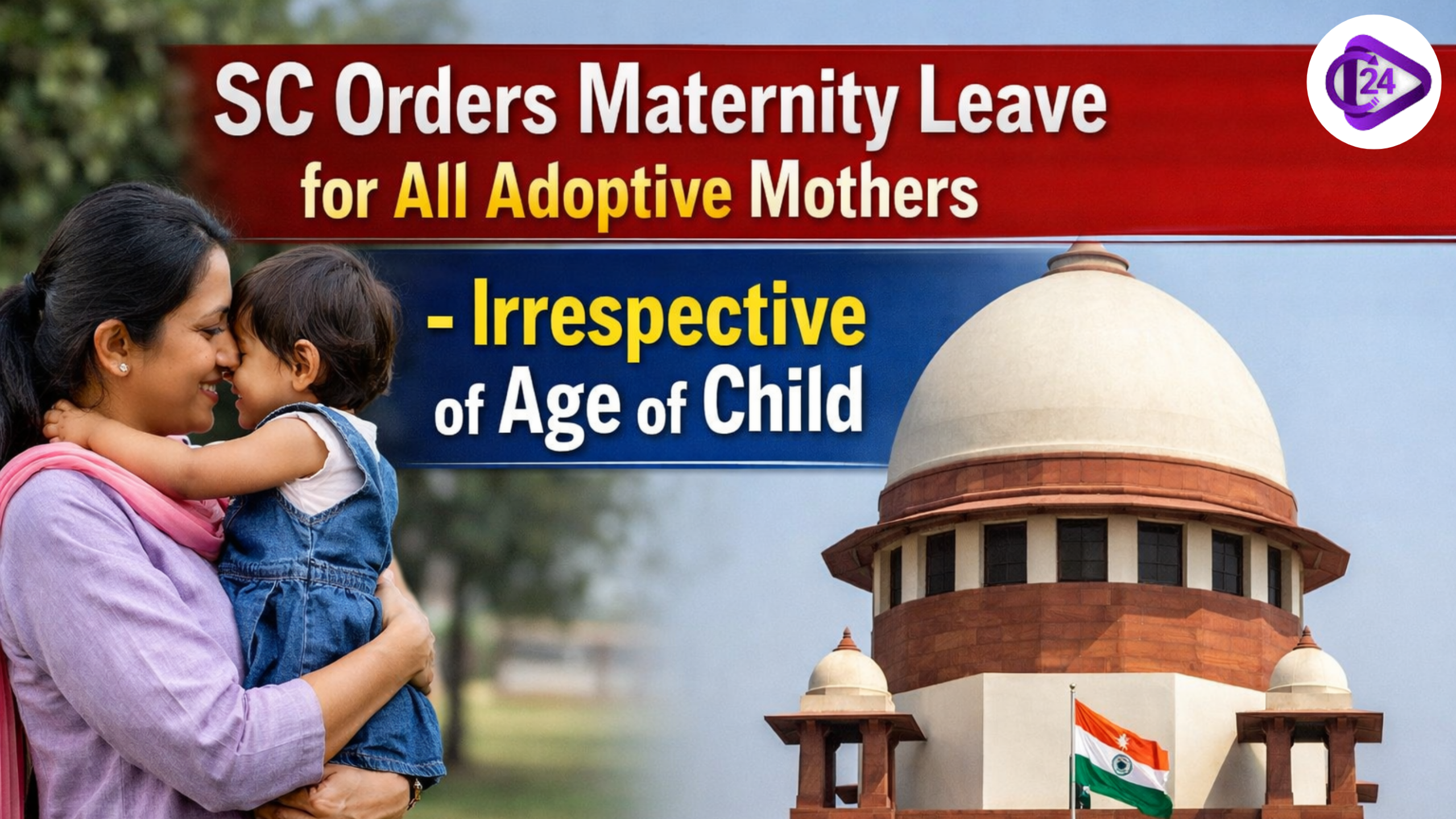
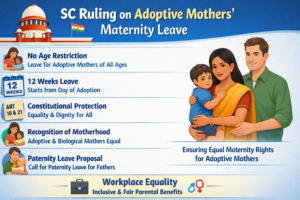
The Supreme Court of India has issued a landmark ruling granting maternity leave to all adoptive mothers, regardless of the child’s age. Previously, the Code on Social Security, 2020, limited maternity benefits to mothers adopting children below three months old. The Court declared this restriction discriminatory and unconstitutional, affirming that motherhood extends beyond biological birth. Under the new directive, every adoptive or commissioning mother is entitled to 12 weeks of maternity leave from the day the child is handed over. The judgement emphasises that denying leave based on the child’s age violates Article 14 (Equality) and Article 21 (Personal liberty and dignity) of the Constitution. Justices JB Pardiwala and R Mahadevan highlighted the importance of recognising adoptive motherhood and recommended that the government consider implementing paternity leave as a social security benefit. This decision strengthens gender equality and parental rights, ensuring adoptive mothers receive equal protection in the workplace nationwide.
Key Highlights – SC Ruling on Adoptive Mothers’ Maternity Leave
-
No Age Restriction: Adoptive mothers are now eligible for maternity leave regardless of the child’s age.
-
12 Weeks Leave: Leave entitlement starts from the date the child is handed over.
-
Constitutional Protection: Age-based limitations violated Articles 14 & 21.
-
Recognition of Motherhood: The court affirmed that adoptive motherhood carries the same responsibilities as biological motherhood.
-
Paternity Leave Suggestion: Bench urged the government to consider a legal provision for fathers.
-
Workplace Equality: Promotes inclusive parental benefits and strengthens gender equality in employment.
Best PYQs on the Supreme Court
1. UPSC Prelims 2024
The Supreme Court of India’s advisory jurisdiction is mentioned under which article?
Options:
A) Article 130
B) Article 138
C) Article 143
D) Article 147
Answer: C) Article 143
Explanation: Article 143 allows the President to seek the Supreme Court’s opinion on legal or public importance matters.
2. UPSC Prelims 2024
The right to privacy is protected under which article of the Constitution?
Options:
A) Article 14
B) Article 19
C) Article 21
D) Article 25
Answer: C) Article 21
Explanation: The Supreme Court declared the right to privacy as part of Article 21 (Right to Life and Personal Liberty) in the Puttaswamy judgment.
3. SSC CGL 2022
Which Article states that the law declared by the Supreme Court is binding on all courts in India?
Options:
A) Article 140
B) Article 141
C) Article 142
D) Article 144
Answer: B) Article 141
Explanation: Article 141 ensures uniformity in law by making Supreme Court judgments binding across all courts.
4. RRB NTPC 2021
Under which Article is the Supreme Court of India established?
Options:
A) Article 123
B) Article 124
C) Article 131
D) Article 136
Answer: B) Article 124
Explanation: Article 124 provides for the establishment, composition, and appointment of judges of the Supreme Court.
5. SSC CHSL 2020
Under which article can a citizen directly approach the Supreme Court for the enforcement of fundamental rights?
Options:
A) Article 19
B) Article 21
C) Article 32
D) Article 226
Answer: C) Article 32
Explanation: Article 32 is called the “heart and soul of the Constitution” as it allows individuals to directly approach the Supreme Court for rights enforcement.
6. RRB Group D 2019
Which article gives the Supreme Court the power to do “complete justice”?
Options:
A) Article 136
B) Article 141
C) Article 142
D) Article 144
Answer: C) Article 142
Explanation: Article 142 empowers the Supreme Court to pass any order necessary to ensure complete justice in a case.
7. SSC CGL 2018
Under which article does the President of India seek advice from the Supreme Court?
Options:
A) Article 141
B) Article 142
C) Article 143
D) Article 144
Answer: C) Article 143
Explanation: Article 143 provides advisory jurisdiction where the president can refer matters to the Supreme Court.
8. RRB NTPC 2017
Which article deals with the original jurisdiction of the Supreme Court?
Options:
A) Article 129
B) Article 131
C) Article 136
D) Article 137
Answer: B) Article 131
Explanation: Article 131 gives the Supreme Court exclusive power to hear disputes between the Centre and the States.
9. SSC MTS 2019
Under which article can the Supreme Court review its own judgement?
Options:
A) Article 137
B) Article 138
C) Article 139
D) Article 140
Answer: A) Article 137
Explanation: Article 137 allows the Supreme Court to review its own judgements or orders.
10. UPSC Prelims 2016
Under which article does the Supreme Court have appellate jurisdiction in constitutional cases?
Options:
A) Article 132
B) Article 133
C) Article 134
D) Article 136
Answer: A) Article 132
Explanation: Article 132 provides appellate jurisdiction of the Supreme Court in constitutional matters from the High Courts.
New Parasitic Wasp Species Discovered in Assam Tea Estate
Conclusion
The Supreme Court’s ruling on maternity leave for adoptive mothers marks a progressive step toward equality and inclusive workplace policies. By removing age-based restrictions, it reinforces constitutional values of dignity and non-discrimination. This decision not only strengthens parental rights but also promotes a more humane and supportive framework for adoptive families across India.