
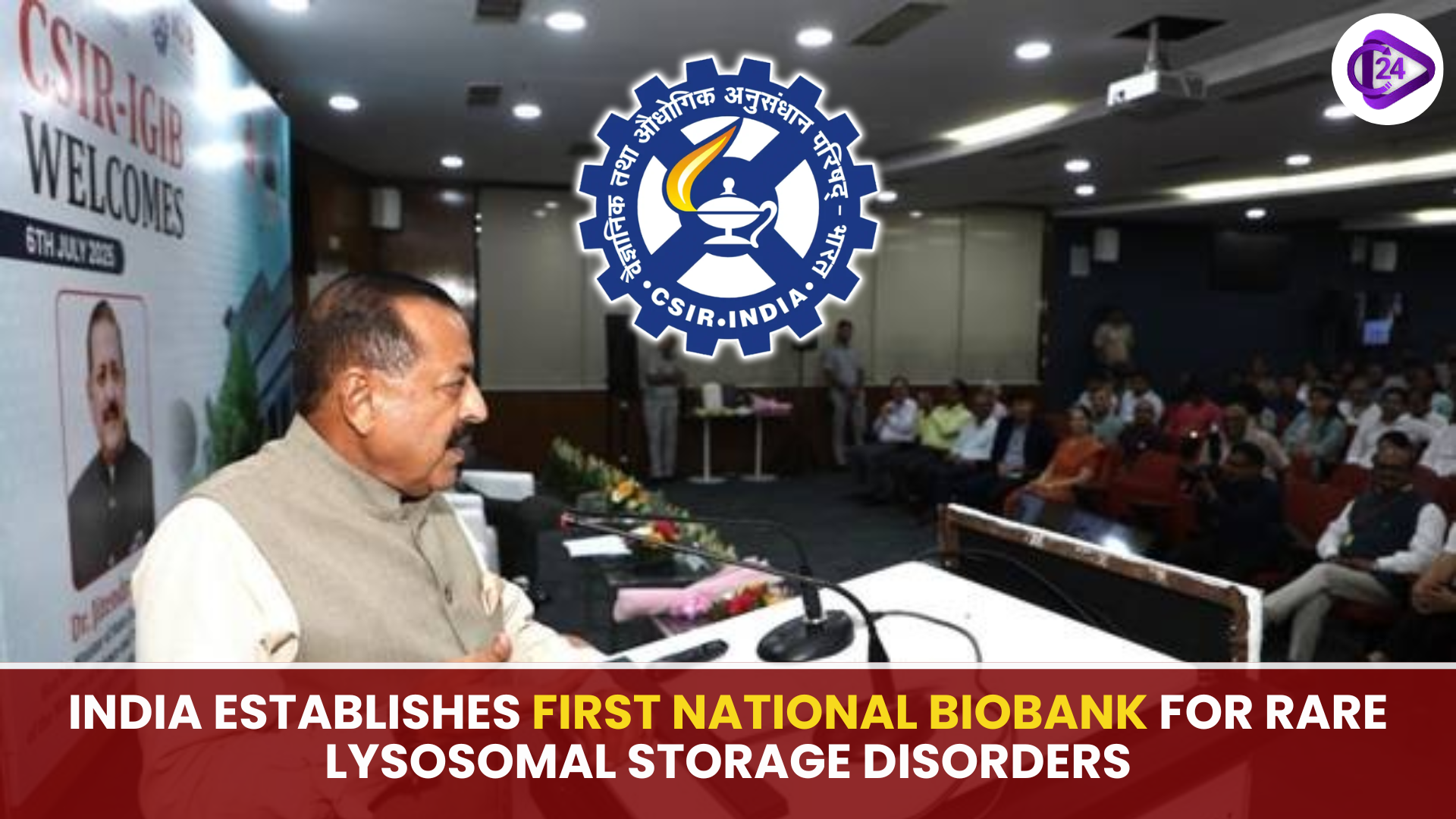
The first national biobank in India specialising in rare lysosomal storage disorders (LSDs) has already been opened in a bid to improve research, diagnosis, and treatment of cases of complex genetic disorders. The biobank, which is organised by the Foundation of Research in Genetics and Endocrinology (FRIGE) in Ahmedabad and funded by the Department of Biotechnology (DBT), invites biological samples and detailed clinical, biochemical, and genetic data of 530 patients distributed across 15 states that were gathered by 28 medical and research institutions. It combines blood, plasma, and DNA information to assist the researchers in coming up with testing equipment and cost-effective treatment approaches for LSDs, a classification of over 70 uncommon metabolic conditions that lack various treatment approaches.
What are Lysosomal Storage Disorders (LSDs)?
-
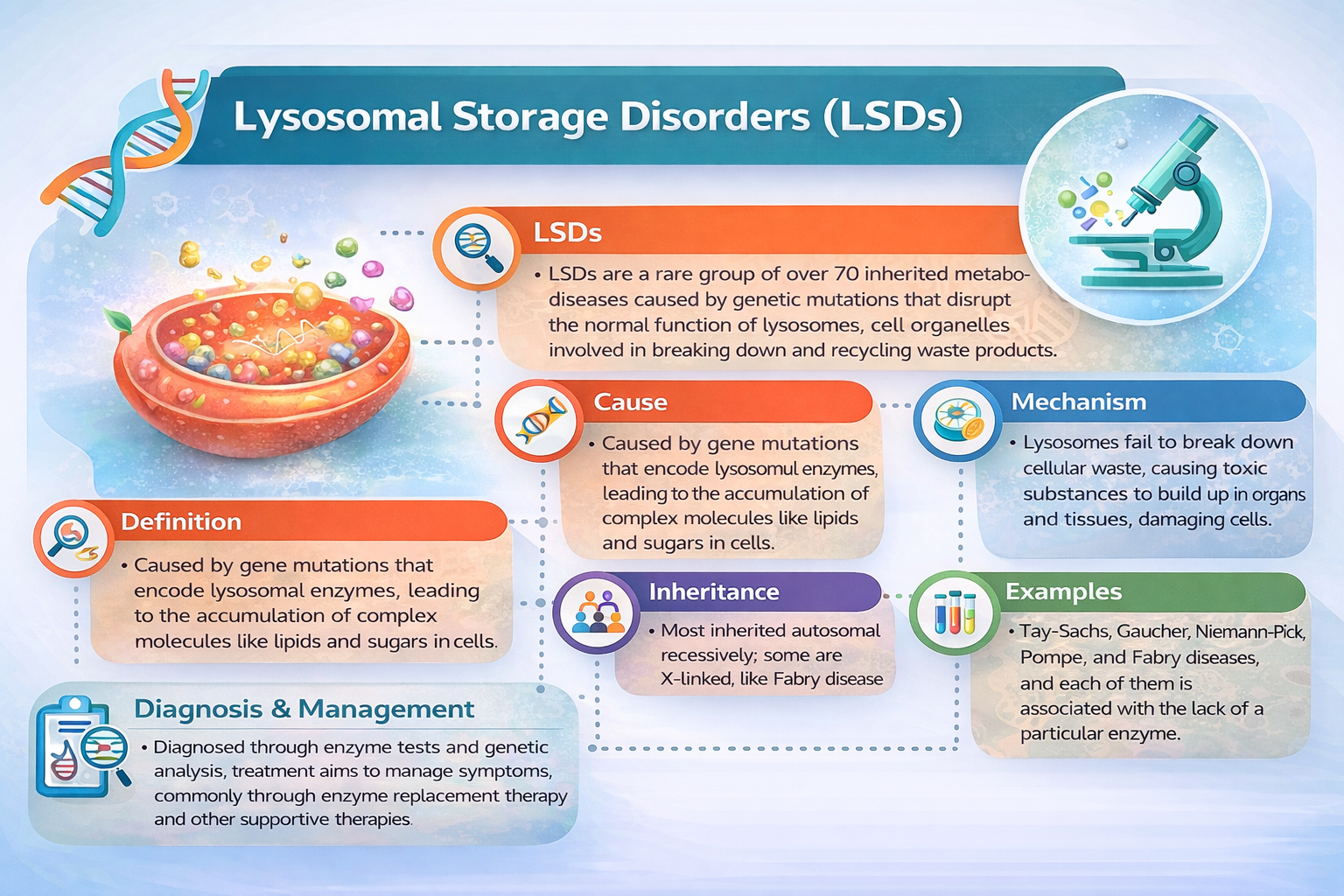
Definition: LSDs are a race of over 70 rare inherited metabolic diseases that result in genetic mutations that disrupt the normal functioning of lysosomes, the cell organelles involved in breaking down and recycling waste products. In the case of the absence of an enzyme or its defectiveness, wastes accumulate within the cells and damage them.
-
Cause: These disorders are caused by gene mutations that encode lysosomal enzymes or associated proteins, so that the molecules that are complex, such as lipids and sugars, are not broken down.
-
Mechanism: Lysosomes serve as the recycling mechanism in the cells. In case of their inability to process cellular waste, toxic substances build up in organs and tissues, damaging cells and disrupting the functions of organs.
-
Inheritance: LSDs are mostly inherited in an autosomal recessive fashion, although some are X-linked, such as Fabry disease.
-
Clinical effects: The symptoms are very diverse; they may be related to the brain, bones, liver, spleen, heart, and nervous system, and they are often dependent on the type and severity.
-
Examples: Some examples of LSDs are Tay-Sachs, Gaucher, Niemann-Pick, Pompe, and Fabry diseases, and each of them is associated with the lack of a particular enzyme.
-
Diagnosis and management: The diagnosis is usually made with the help of an enzyme test and genetic analysis, and treatment is aimed at relieving the symptoms, including enzyme replacement therapy and other forms of treatment.
PYQs on Disorder and LSD
| Exam | Year | Question (MCQ with Options) | Answer |
|---|---|---|---|
| NEET (UG) | 2020 | Tay-Sachs disease is caused by a deficiency of: (A) Hexosaminidase A (B) Tyrosinase (C) Catalase (D) Pepsin |
(A) Hexosaminidase A |
| UPSC CSE (Prelims) | 2017 | Gaucher, Pompe and Niemann-Pick diseases are: (A) Viral diseases (B) Lysosomal storage disorders (C) Autoimmune disorders (D) Nutritional deficiencies |
(B) Lysosomal storage disorders |
| NEET (UG) | 2018 | Down syndrome is caused by: (A) Monosomy X (B) Trisomy 21 (C) Deletion of chromosome 5 (D) XXY condition |
(B) Trisomy 21 |
| SSC CGL | 2019 | Sickle cell anaemia results from a mutation in: (A) Collagen (B) Insulin (C) Beta-globin chain (D) Albumin |
(C) Beta-globin chain |
| CDS (IMA) | 2019 | Lysosomes are called “suicide bags” because they: (A) Produce energy (B) Control cell division (C) Contain hydrolytic enzymes (D) Store DNA |
(C) Contain hydrolytic enzymes |
| NEET (UG) | 2016 | Most lysosomal storage disorders follow: (A) Autosomal dominant (B) Autosomal recessive (C) X-linked (D) Mitochondrial inheritance |
(B) Autosomal recessive |
| State PSC | 2021 | Fabry disease is inherited as: (A) Autosomal recessive (B) Autosomal dominant (C) X-linked recessive (D) Polygenic |
(C) X-linked recessive |
| NEET (UG) | 2019 | Phenylketonuria (PKU) is due to a deficiency of: (A) Lactase (B) Phenylalanine hydroxylase (C) Maltase (D) Lipase |
(B) Phenylalanine hydroxylase |
Conclusion (India’s 1st National Biobank for Rare LSD)
The establishment of the first National Biobank on Rare Lysosomal Storage Disorders in India is a big stride in enhancing research and diagnosis of rare genetic diseases. It will help India in the effective management of the rare disorders by gathering clinical and biological information on a national front, thereby aiding in early diagnosis and better treatment options, as well as low-cost interventions