


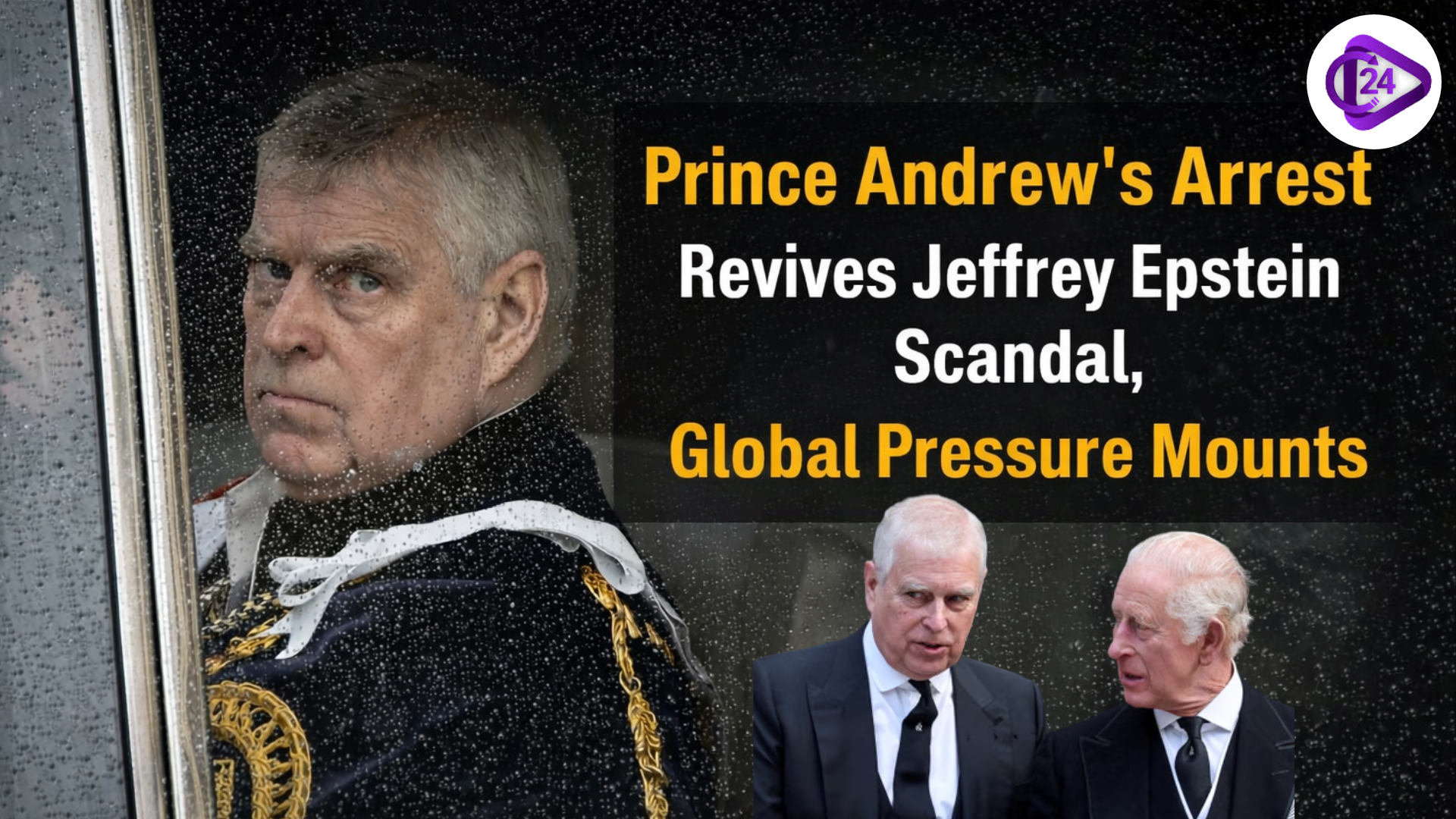
The reported arrest of Prince Andrew has reignited global scrutiny over his past association with convicted sex offender Jeffrey Epstein. The development has revived international debate about accountability, transparency, and the influence of powerful individuals linked to Epstein’s network. For years, Andrew’s relationship with Epstein has drawn public criticism, legal challenges, and reputational consequences for the British royal family. Renewed legal attention has intensified calls in both the United Kingdom and the United States for a deeper investigation into remaining unanswered questions surrounding Epstein’s connections. The situation has once again placed issues of elite privilege, justice, and institutional responsibility at the centre of global discussion.
Key Highlights of Prince Andrew’s Arrest: Revives Jeffrey Epstein Scandal
-
Prince Andrew, formerly a senior member of the British royal family, was reportedly arrested on 19 February 2026 in connection with allegations linked to his past association with Jeffrey Epstein.
-
Authorities investigated claims related to alleged misconduct during his tenure as the United Kingdom’s trade envoy, including accusations of inappropriate information sharing.
-
Law enforcement officials conducted searches at properties associated with him as part of the broader inquiry.
-
He was later released under investigation, with legal proceedings still under review.
-
The arrest has drawn significant attention in both the United Kingdom and the United States, intensifying calls for transparency and accountability regarding individuals connected to Epstein’s network.
-
The development has renewed public debate over institutional responsibility, elite privilege, and the handling of high-profile investigations.
-
Representatives of the royal family indicated cooperation with authorities, emphasising that legal processes must proceed independently.
-
Victims’ advocates and legal experts have described the arrest as a potentially significant moment in ongoing efforts to address unanswered questions surrounding the Epstein case.
-
The situation continues to evolve, with global media closely monitoring further legal and political developments.
About Former Prince Andrew
-
Prince Andrew was born on 19 February 1960 and is the third child of Queen Elizabeth II and Prince Philip.
-
He previously held the title Duke of York and was once considered a senior working member of the British royal family.
-
Andrew served in the Royal Navy for over 20 years and took part in the Falklands War in 1982.
-
From 2001 to 2011, he worked as the United Kingdom’s Special Representative for International Trade and Investment.
-
His public role was significantly reduced after controversies linked to his association with Jeffrey Epstein.
-
In recent years, he has stepped back from official royal duties.
Conclusion (Prince Andrew’s Arrest Connection for Jeffrey Epstein)
The reported arrest of Prince Andrew in connection with matters linked to Jeffrey Epstein has intensified global scrutiny of powerful individuals associated with the disgraced financier. The development has renewed calls for transparency, accountability, and equal application of the law, regardless of status or influence. It also highlights ongoing public concern over unresolved aspects of the Epstein case and the broader network surrounding him. As investigations continue, the situation underscores the importance of due process, institutional responsibility, and restoring public trust in legal and governance systems both in the United Kingdom and internationally.