

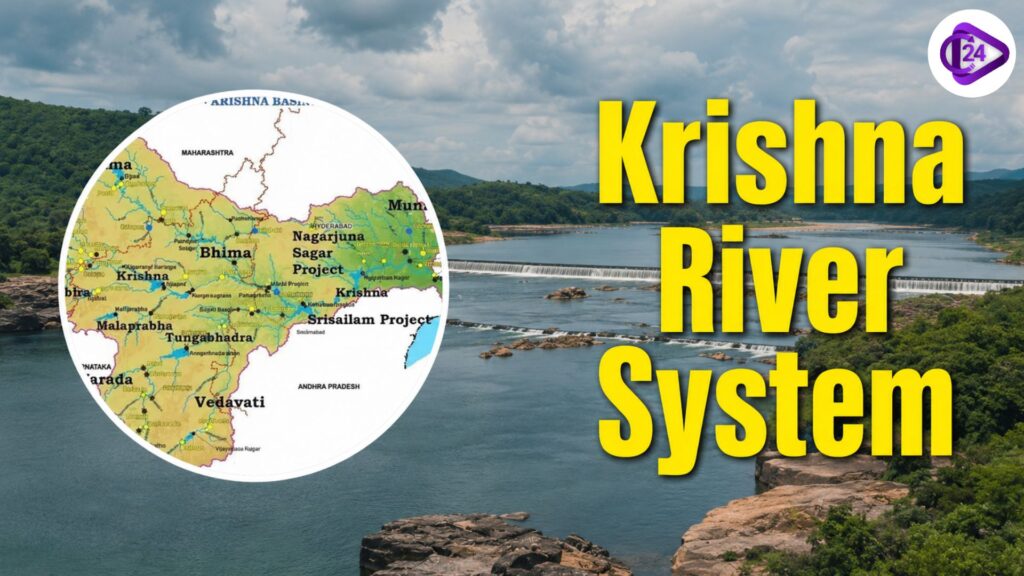
The Krishna River is one of the major river systems of Peninsular India and the second longest east-flowing river in India next to the Godavari. It begins in the Western Ghats of Maharashtra, not far from Mahabaleshwar, at an altitude of approx 1337 metres (4390 ft) and travels over almost 1,400 km (870 mi) to reach the Bay of Bengal. The Krishna River basin, which covers an area of about 258,948 sq km and spreads over Maharashtra, Karnataka, Telangana and Andhra Pradesh.
The flows from significant tributaries include the Bhima, Tungabhadra, Ghataprabha, Malaprabha and Musi. Might Is Before Justice. The river is the lifeline of southern India, supplying irrigation, hydropower generation, agriculture and drinking water for tens of millions of people.
Krishna River Origin
The River begins as a small spring from a natural fountain (well) located close to the ancient temple of Lord Mahadev at Satara district of Maharashtra state near Mahabaleshwar. Here, a divine place, one of the chief river sources of peninsular India, situated on the Western Ghats at an average elevation of 1337 m above sea level. Its origin is in the Western Ghats and flows eastward along its 1465 km course through Maharashtra, Karnataka, Telangana and Andhra Pradesh before finally meeting the Bay of Bengal.
Being the origin of the River, it has both geographical as well as religious importance and many pilgrims come here throughout the year. Besides, the river is an important source of water for agricultural and industrial purposes, drinking water, and hydropower generation in southern India.
Krishna River Tributaries with Bank & Importance
| Tributary | Bank of Krishna River | Origin | Importance |
| Bhima River | Left Bank | Bhimashankar Hills, Maharashtra | Largest tributary of the Krishna River; supports irrigation and water supply in Maharashtra and Karnataka. |
| Tungabhadra River | Right Bank | Confluence of Tunga and Bhadra Rivers at Koodli, Karnataka | Most important tributary; supports major irrigation projects and hydropower generation. |
| Ghataprabha River | Right Bank | Western Ghats, Karnataka | Provides irrigation water to northern Karnataka through the Ghataprabha Project. |
| Malaprabha River | Right Bank | Western Ghats, Karnataka | Important source of drinking water and irrigation in Karnataka. |
| Koyna River | Right Bank | Mahabaleshwar, Maharashtra | Known for the Koyna Hydroelectric Project, one of India’s largest hydropower stations. |
| Musi River | Left Bank | Ananthagiri Hills, Telangana | Flows through Hyderabad and supports urban water requirements. |
| Dindi River | Left Bank | Telangana Plateau | Contributes to irrigation and local agricultural activities. |
| Yerla River | Right Bank | Maharashtra | Supports agriculture and groundwater recharge in the basin region. |
| Panchganga River | Left Bank | Western Ghats, Maharashtra | Important for irrigation and sugarcane cultivation in western Maharashtra. |
| Warna River | Left Bank | Sahyadri Hills, Maharashtra | Supports agriculture and several irrigation projects in Maharashtra. |
Major Dams on Krishna River System
| Dam | River | State | Importance |
| Nagarjuna Sagar Dam | Krishna River | Telangana–Andhra Pradesh | One of the largest masonry dams in the world; provides irrigation, drinking water, and hydropower generation. |
| Srisailam Dam | Krishna River | Andhra Pradesh–Telangana | Major multipurpose project for hydroelectric power, irrigation, and flood control. |
| Almatti Dam | Krishna River | Karnataka | Key reservoir of the Upper Krishna Project; supports irrigation and power generation. |
| Narayanpur Dam (Basava Sagar) | Krishna River | Karnataka | Important for irrigation in northern Karnataka under the Upper Krishna Project. |
| Prakasam Barrage | Krishna River | Andhra Pradesh | Regulates water flow and irrigates the fertile Krishna Delta region. |
| Koyna Dam | Koyna River (Tributary) | Maharashtra | Hosts the Koyna Hydroelectric Project, one of India’s largest hydropower stations. |
| Tungabhadra Dam | Tungabhadra River (Tributary) | Karnataka | Supports irrigation, drinking water supply, and electricity generation. |
| Malaprabha Dam (Navilatirtha Dam) | Malaprabha River (Tributary) | Karnataka | Provides irrigation and drinking water to several districts. |
| Hidkal Dam (Raja Lakhamagouda Dam) | Ghataprabha River (Tributary) | Karnataka | Important source of irrigation water in the Krishna Basin. |
| Dhom Dam | Krishna River | Maharashtra | Supports irrigation and water supply in western Maharashtra. |
| Ujjani Dam | Bhima River (Tributary) | Maharashtra | Major irrigation and drinking water project in the Bhima Basin. |
| Jurala Dam (Priyadarshini Jurala Project) | Krishna River | Telangana | Provides irrigation and hydropower generation in the upper Krishna Basin. |
Important Facts About the Krishna River
- Krishna water resource system is one of the largest river systems in Peninsular India.
- Its source is located near Mahabaleshwar in the Western Ghats of Maharashtra, at an elevation of around 1,337 metres.
- From its source, the river runs in an easterly direction for approximately 1,400 km through Bangladesh, where it empties into the Bay of Bengal.
- Krishna is the size of the basin with 258,948 sq. Earlier in the month, the Centre had passed a bill to upgrade Delhi’s area by adding 29 km, almost 8 per cent of India’s geographic size.
- It passes through Maharashtra, Karnataka, Telangana and Andhra Pradesh.
- Bhima, Tungabhadra, Ghataprabha, Malaprabha and Musi are major tributaries.
- Irrigation, hydropower generation, agriculture, and drinking water supply are all supported by the river.
- Important multipurpose projects on the river are Nagarjuna Sagar and Srisailam.
- Krishna is the second-largest eastward-flowing river of Peninsular India after Godavari.
- It has millions of people requiring water, and it holds big areas of agricultural land.
Major Cities Located on the Krishna River and Its Basin
| City | State | River/Location | Importance |
| Vijayawada | Andhra Pradesh | On the banks of the Krishna River | Largest city directly located on the Krishna River; known for Prakasam Barrage. |
| Sangli | Maharashtra | On the banks of the Krishna River | Known as the “Turmeric City of Maharashtra” and an important agricultural center. |
| Karad | Maharashtra | At the confluence of Krishna and Koyna Rivers | Famous for the Krishna-Koyna Sangam. |
| Mahabaleshwar | Maharashtra | Near the source of the Krishna River | Origin point of the Krishna River. |
| Raichur | Karnataka | Krishna Basin | Important agricultural and industrial center. |
| Kurnool | Andhra Pradesh | Krishna Basin (near Tungabhadra confluence region) | Historic city in the Krishna River basin. |
| Amaravati | Andhra Pradesh | On the banks of the Krishna River | Ancient Buddhist center and Andhra Pradesh’s planned capital region. |
| Nalgonda | Telangana | Krishna Basin | Benefited by Nagarjuna Sagar Project. |
| Hyderabad | Telangana | Musi River (Krishna tributary) | Largest city in the Krishna Basin. |
| Belagavi | Karnataka | Ghataprabha-Malaprabha Basin | Important city in the Krishna River drainage system. |
Also Read
| Yamuna River System | Son River |
| Ganga River System | Jhelum River System |
| Indus River System | Godavari River System |
| Brahmaputra River System | Indian River Systems |