

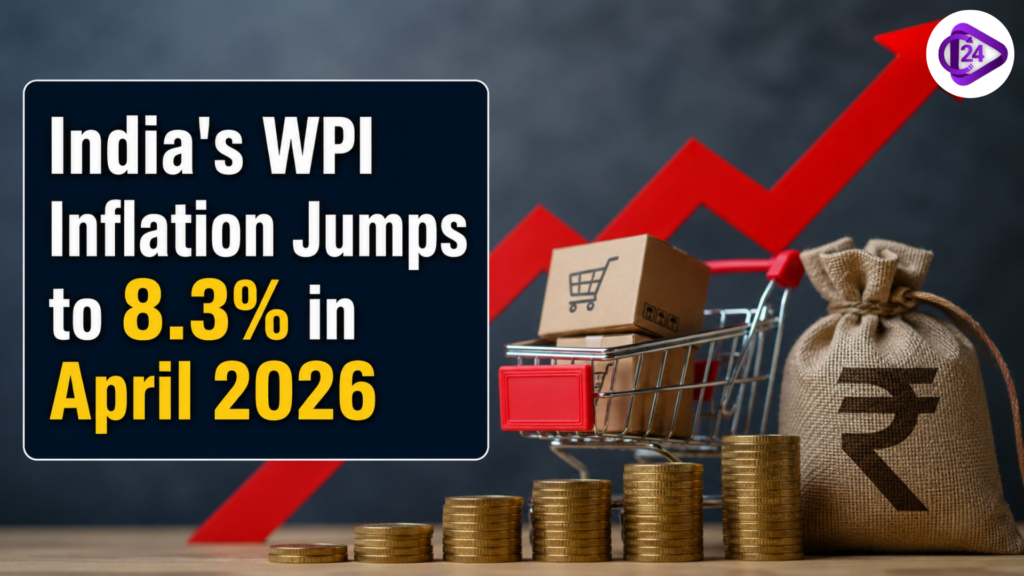
India’s Wholesale Price Index (WPI) inflation is climbing steeply to 8.3% in April 2026, the highest in almost three and a half years. This increase was primarily attributed to the high prices of fuel and power, crude petroleum and high manufacturing costs. Official data from the Department for Promotion of Industry and Internal Trade (DPIIT) show the effect of soaring global energy prices and geopolitical scenario as fuel and power inflation surged sharply. The sudden surge in WPI has added to the worry about input costs, industrial output and the likely upcoming pressure on retail inflation and monetary policies in India.
Key Highlights of India’s WPI Inflation Rise in April 2026
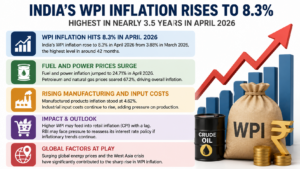
- WPI inflation rate rose to 8.3% in April 2026 from 3.88% during March 2026 in India.
- This is the highest wholesale inflation level in around 42 months.
- Greater fuel, power, crude oil and natural gas prices were the primary drivers of the inflation increase.
- Fuel and power inflation accelerated to 24.71% in April 2026, after a performance of 17.08% in the previous month.
- Prices charged for petroleum and natural gas jumped 67.2% from their previous levels.
- Manufactured products inflation recorded 4.62% and the level of industrial input costs increased.
- The food inflation within WPI also rose from 1.85% to 2.31%.
- The India WPI rose considerably on account of some sharp increases in crude oil prices as well as the WAP crisis in the West Asia region.
- Higher WPI inflation, thought by economists, will, at some juncture, impact retail inflation (CPI) with some lag.
- Retail inflation (CPI) in India for the month of April 2026 remained in the RBI target range of 2 – 6%.
- If inflation is high going forward, the Reserve Bank of India can be put to test to reverse its interest rate policy changes.
- WPI is released every month by DPIIT to provide information on the trends of wholesale commodity prices across various sectors.
PYQs on Inflation
| Exam Name & Year | Question | Options | Correct Answer |
| UPSC Prelims 2020 | WPI in India is released by which organization? | A) RBI B) DPIIT C) NITI Aayog D) SEBI | B) DPIIT |
| SSC CGL 2021 | WPI measures changes in prices at which level? | A) Retail B) Consumer C) Wholesale D) Export | C) Wholesale |
| RBI Grade B 2022 | Which inflation index is targeted by RBI for monetary policy? | A) WPI B) CPI C) IIP D) GDP Deflator | B) CPI |
| Banking Awareness 2023 | Rising fuel prices generally increase which type of inflation? | A) Cost-push inflation B) Demand-pull inflation C) Core inflation D) Fiscal inflation | A) Cost-push inflation |
| UPSC Prelims 2018 | Inflation caused by rising production costs is known as? | A) Hyperinflation B) Stagflation C) Cost-push inflation D) Demand inflation | C) Cost-push inflation |
Conclusion – India’s WPI
The sharp spike in WPI inflation to 8.3% in April 2026 is a sign of the rising pressure from the global energy markets and inflationary pressures in the domestic production. Higher prices for fuel and manufactured goods could have an impact on businesses, transportation and consumer goods in the months ahead. For now retail inflation is in check but if wholesale inflation is a constant it can slowly seep into the economy. The trend of the inflation figures will remain under the close watch of the policy makers and Reserve Bank of India before making any big monetary policy moves. The recent official data suggests that today, external influence on geopolitics and crude oil price movements still determines the inflation picture in India.