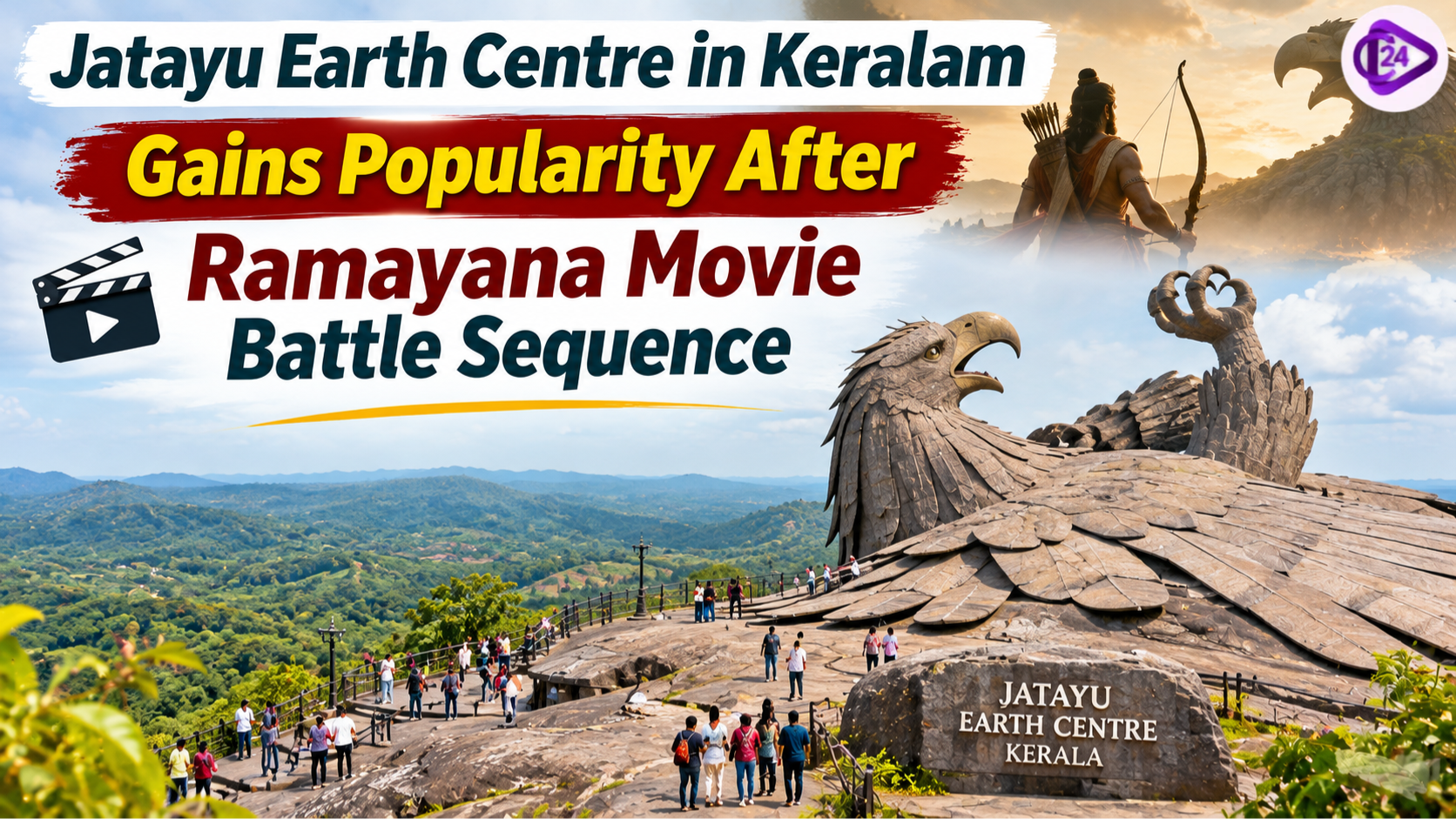


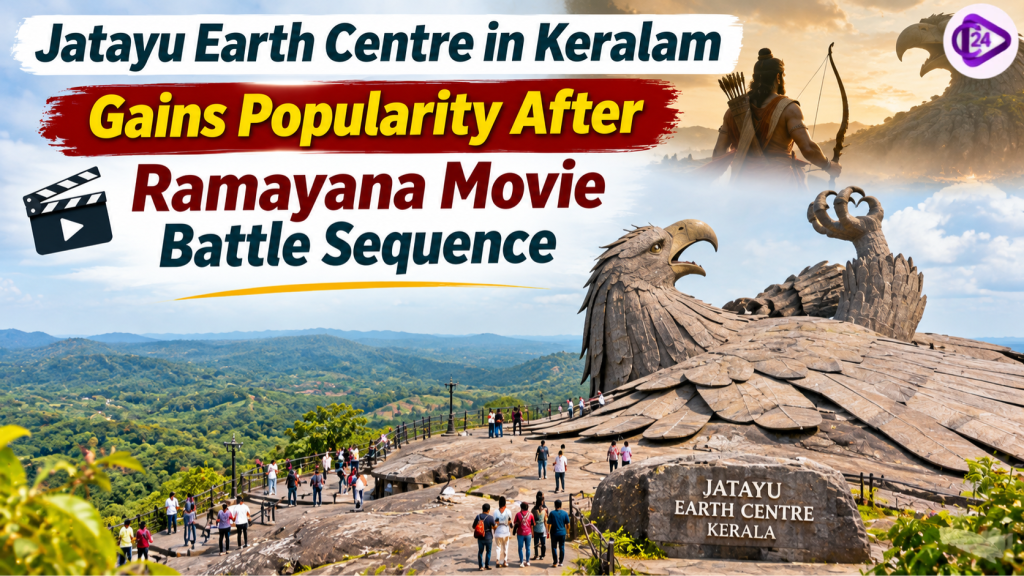
The Jatayu Earth Centre in Keralam has gained renewed attention following the popular battle sequence between Jatayu and Ravana in the film Ramayana: Part 1. The film’s depiction of the legendary battle, in which Jatayu attempts to rescue Goddess Sita from Ravana, has generated significant interest on social media and travel platforms. Located in Chadayamangalam in Kollam district, the centre is known for its massive Jatayu sculpture, panoramic views and adventure tourism facilities. The growing online attention is also expected to support tourism and local businesses in the region.
Why Is Jatayu Earth Center in the News?
The Jatayu Earth Center became a trending tourist destination after the release of Ramayana: Part 1, directed by Nitesh Tiwari.
The film features an aerial battle between Ravana and Jatayu, who tries to stop Ravana from abducting Sita in his Pushpak Vimana. The dramatic visual presentation of this episode from the Ramayana has encouraged viewers to learn more about Jatayu and visit the real-world sculpture dedicated to the legendary bird.
Social media reels, travel videos and discussions comparing the film’s battle sequence with the giant Jatayu sculpture have further increased the destination’s visibility.
What Is Jatayu Earth Center?
The Jatayu Earth Center, also known as Jatayu Earth’s Center Nature Park, is a major tourism attraction in Keralam.
It is located at Chadayamangalam in Kollam district and is built around a monumental sculpture of Jatayu.
Important Features of Jatayu Earth Center
- Location: Chadayamangalam, Kollam district, Keralam.
- Main Attraction: Giant Jatayu bird sculpture.
- Sculptor: Rajiv Anchal.
- Sculpture Length: Approximately 200 feet.
- Tourism Activities: Cable car rides, adventure activities and nature tourism.
- Landscape: Rocky hill with panoramic views of the surrounding region.
The sculpture is promoted as the world’s largest bird sculpture. It represents Jatayu from the Hindu epic Ramayana and symbolises courage, sacrifice and the protection of women.
Who Was Jatayu in the Ramayana?
Jatayu is an important character in the Hindu epic Ramayana. He was a divine bird and a close friend of King Dasharatha, the father of Lord Rama.
According to the Ramayana, when Ravana abducted Goddess Sita and carried her towards Lanka, Jatayu attempted to rescue her.
Jatayu’s Battle with Ravana
- Jatayu noticed Ravana carrying Sita away in his Pushpak Vimana.
- He challenged Ravana and attempted to stop the abduction.
- A fierce battle took place between Jatayu and Ravana.
- Ravana injured Jatayu by cutting his wings.
- Jatayu fell to the ground and later informed Lord Rama about Sita’s abduction.
Jatayu’s sacrifice represents bravery, loyalty and the willingness to fight against injustice.
How Is the Ramayana Movie Increasing Tourism at Jatayu Earth Center?
The battle sequence in Ramayana: Part 1 has brought renewed attention to the Jatayu Earth Center. The visual connection between the film and the giant sculpture has encouraged tourists to explore the destination.
According to the centre’s management, the destination traditionally receives around 2,500 visitors daily, with numbers reaching approximately 5,000 during peak tourist seasons.
The increase in online enquiries indicates the possibility of higher tourist arrivals in the coming months.
Impact on Local Tourism
The growing popularity of the destination can benefit several sectors:
- Hotels and Resorts: Increased tourist arrivals can generate demand for accommodation.
- Local Transport: Taxi operators and transport services may receive more business.
- Tour Guides: Local guides can benefit from increased interest in the Ramayana connection.
- Small Businesses: Restaurants and local shops may experience higher customer demand.
- Adventure Tourism: The centre’s recreational facilities may attract more visitors.
Significance of Jatayu Earth Center
The Jatayu Earth Center represents the combination of mythology, art, nature and tourism. Its massive sculpture provides a modern representation of an important episode from the Ramayana.
The recent popularity following the film also highlights how cinema and digital media can promote lesser-known tourism destinations. It demonstrates the potential of cultural storytelling to support regional tourism and economic development.