
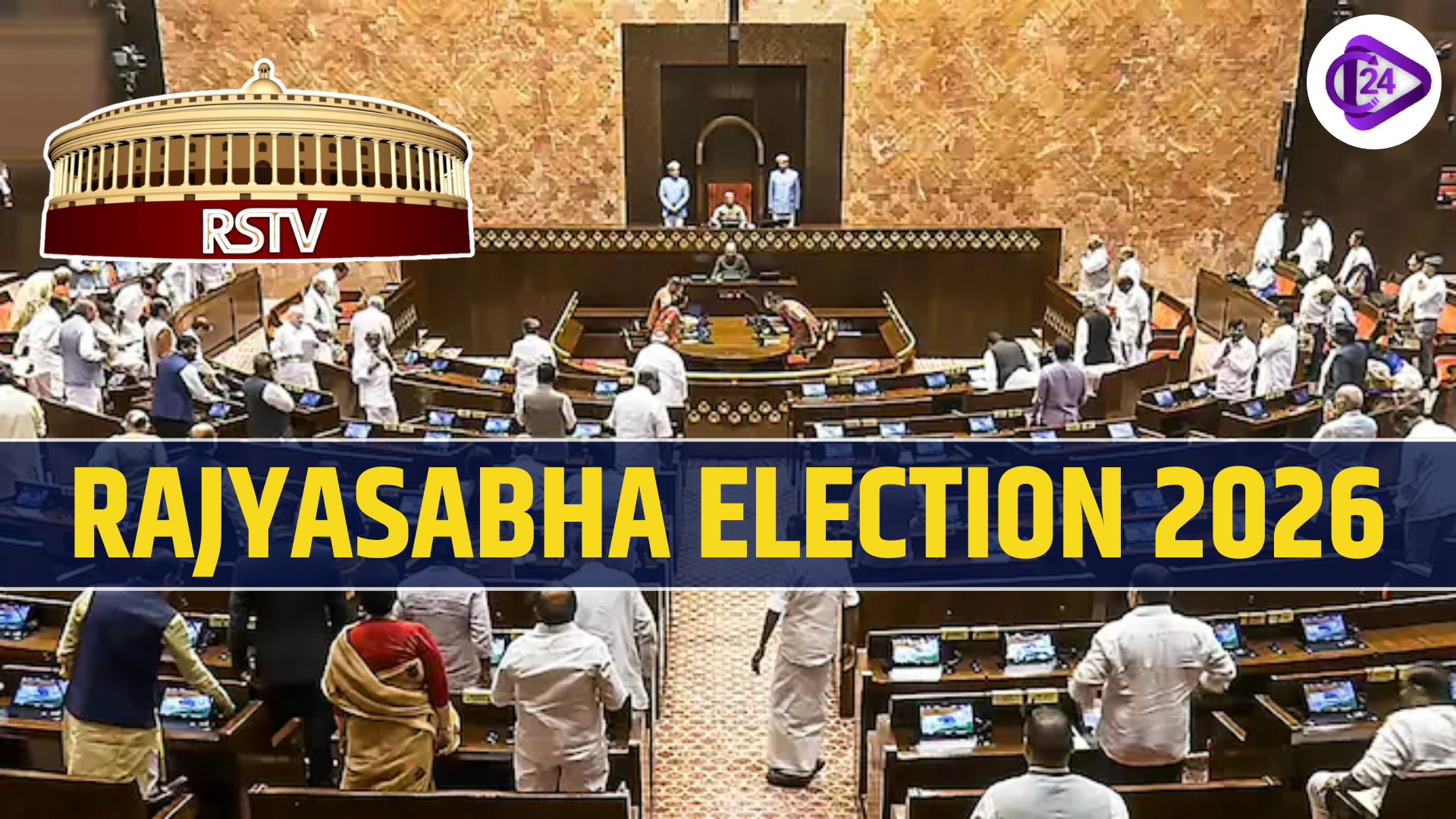
The Rajya Sabha Election 2026 is scheduled as part of the regular biennial cycle to fill seats in India’s upper house of Parliament. According to the Election Commission of India, polling is set for March 16, 2026, to elect members for 37 seats across 10 states where terms are coming to an end. These elections are indirect, with elected members of state legislative assemblies casting their votes through a proportional representation system using the single transferable vote. The outcome is significant, as it will determine party strength in the Council of States and influence the passage of key national legislation.
How Is the Rajya Sabha Election Conducted?
-
Members of the Rajya Sabha are elected indirectly, not by the general public. They are chosen by elected members of state legislative assemblies and, in certain union territories, by members of their respective electoral bodies, as provided under the constitution.
-
The election process is administered by the Election Commission of India, which issues the schedule covering nominations, scrutiny, withdrawal of candidature, polling, and counting of votes.
-
The system used is proportional representation through the single transferable vote (STV) method. This ensures that seats are allocated in proportion to the strength of political parties in the state assembly.
-
Instead of casting one simple vote, MLAs rank candidates in order of preference on the ballotpaper.
-
A specific vote quota is calculated using a prescribed formula. A candidate must secure this minimum number of votes to be declared elected.
-
Voting is conducted through an open ballot system, meaning MLAs must show their marked ballot to their authorised party agent before placing it in the ballot box.
-
After counting and transferring preference votes, candidates who meet the required quota are officially declared elected to the Rajya Sabha.
PYQs on Rajya Sabha
| Question | Answer |
|---|---|
| Consider the following statements about the Rajya Sabha: (1) It has no power to reject or amend a Money Bill, (2) It cannot vote on Demands for Grants, (3) It cannot discuss the Annual Financial Statement. Which of the statements given above is/are correct? |
Only (1) is correct. |
| About the Rajya Sabha: (1) It is not subject to dissolution, (2) Its term is five years, (3) One-third of members retire every two years, (4) Minimum age of a member is less than 25 years. Which of the statements given above are correct? |
(1) and (3) are correct. |
| How many members of the Rajya Sabha can be nominated by the President of India? (a) 10 (b) 12 (c) 14 (d) 16 |
(b) 12 |
| Seats allocated to states in the Rajya Sabha are based on: (a) Fertility rate (b) Per capita income (c) Birth rate (d) Population of the state |
(d) Population of the state |
| Who elects members to the Rajya Sabha? (a) Direct public vote (b) President of India (c) Elected Members of State Legislative Assemblies (d) Governors of States |
(c) Elected Members of State Legislative Assemblies |
Conclusion (Rajya Sabha Election)
The Rajya Sabha election plays a vital role in maintaining the federal structure of India’s parliamentary system. Through indirect voting and proportional representation, it ensures fair representation of states in national lawmaking. The process strengthens democratic balance, continuity, and stability in Parliament, contributing to informed debate and responsible governance.