

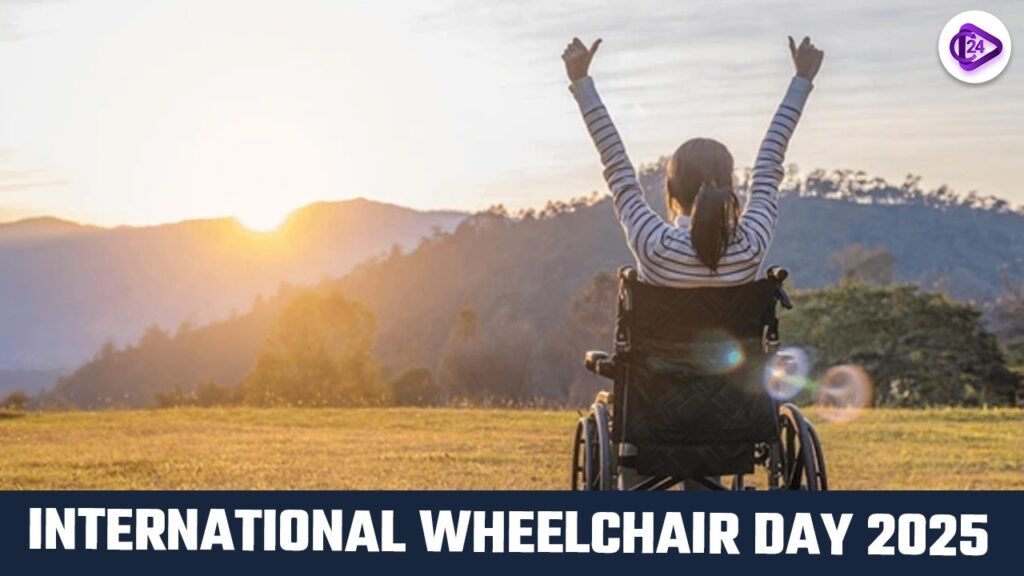
Indian citizens with physical disabilities (Divyangjan) received programs across the nation in 2025 during International Wheelchair Day under the Department of Empowerment of Persons with Disabilities (DEPwD) belonging to the Ministry of Social Justice and Empowerment to promote accessibility together with independence and inclusion for disabled individuals. Trusted organizations used different approaches including seminars and awareness campaigns in addition to wheelchair distribution events and sports participation and technological device-related discussions.
Definition of Persons with Disabilities (PwDs)
-
UNCRPD classifies PwD as individuals who have permanent physical or mental impairments or intellectual or sensory disabilities which prevent their equal participation in society.
-
Under Section 2(u) of the Rights of Persons with Disabilities Act 2016 (RPwD Act) PwD members fall into 21 disability categories including those affected by speech and language and learning and acid attacks.
Prevalence of Disability in India
-
The National Family Health Survey (NFHS) (2019-2021) showed that the number of disabled individuals in India decreased to 1% after revealing 2.2% or 26.8 million cases reported in the 2011 Census.
2011 Census Data:
-
20% of PwDs have movement disabilities.
-
19% have visual impairments.
-
19% have hearing impairments.
-
8% have multiple disabilities.
National Sample Survey (NSS):
-
Higher prevalence in rural areas (2.3%) than urban areas (2.0%).
-
More common among males (2.4%) than females (1.9%).
-
52.2% of PwDs aged 7+ are literate.
-
Secondary education as well as higher education levels are present in 19.3% of PwDs aged 15 and above.
World Health Organization (WHO) – 2019 Brief Disability Model Survey:
-
Indian adults face an emergency situation regarding disability rights protection and accessibility since 16% suffer from severe disabilities.
Constitutional & Legal Provisions
1. Constitutional Provisions
-
Article 41 (Directive Principles of State Policy – DPSP):
-
Under Article 41 the State has responsibility to give persons in need of public assistance access to education and work benefits together with health care services for disability or unemployment or sickness or aging disabilities.
-
-
Article 46:
-
The State receives instructions from this clause to advance educational programs and economic benefits for disadvantaged communities that include people with disabilities.
-
Social justice and exploitation protection is guaranteed by this provision.
-
2. Legal Framework
-
Rights of Persons with Disabilities (RPwD) Act, 2016
-
The RPwD Act of 2016 replaced the Persons with Disabilities Act from 1995 for compliance with the provisions of the UNCRPD.
-
The approach adopts human rights principles to improve the disability inclusion process.
-
This section guarantees equal treatment for all citizens plus it protects access to community environments and protects people from mistreatment.
-
-
National Trust Act, 1999
-
The National Trust Act protects people who have autism along with cerebral palsy and mental retardation and multiple disabilities by offering legal guardianship support.
-
Challenges Faced by PwDs in India
1. Employment & Economic Participation
-
The employment figures show that less than one third (34 lakh) of one crore three lakh potential PwD workers secured jobs.
-
Most employed PwDs work in IT and Retail sectors although disability inclusion lacks uniformity across all industry sectors.
2. Discrimination & Social Stigma
-
The stigma faced by PwDs prevents them from participating completely in social life.
-
Penalization through sexual and physical abuse occurs more often to disabled girls and women than to able-bodied females.
3. Health Issues
-
Multiple disabilities develop because of birth problems and maternal medical problems as well as malnutrition and physical accidents.
4. Accessibility & Inclusion
-
Limited access to healthcare, education, and employment.
-
PwDs face additional exclusion through inadequate infrastructure when combined with inaccessible transportation.
5. Education
-
Inclusive teaching remains difficult since there are insufficient trained professionals combined with inaccessible educational facilities.
Government Initiatives & Policies
1. Unique Disability Identification (UDID) Portal
-
National database for PwDs.
-
This identity system delivers individuals with a special disability ID which promotes clear access to needed benefits.
2. National Policy for Persons with Disabilities, 2006
-
Person with Disability Access aims to establish equity through full participation across all activities in society.
-
The program provides three fundamental areas of support which include physical care alongside educational development and economic restoration.
3. Deendayal Disabled Rehabilitation Scheme (DDRS)
-
This initiative gives financial backing to NGOs which develop education and rehabilitation initiatives.
4. Accessible India Campaign (Sugamya Bharat Abhiyan) functions as a key national initiative.
-
The initiative seeks to enable access to public buildings along with transport systems and Information and Communication Technology infrastructure.
5. National Action Plan for Skill Development of PwDs
-
Focuses on vocational training & employment generation.
6. Harmonized Guidelines for Universal Accessibility, 2021
-
This initiative helps to develop India's national objective of creating an inclusive and accessible society.
7. ‘Divyang’ – Changing Social Perception
-
The Prime Minister introduced the term 'Divyang' as an alternative for 'Viklang' to create favorable attitudes about people with disabilities.
8. Supreme Court Rulings on Accessibility
-
The judiciary declared that PwDs possess accessibility rights on a fundamental level.
-
The government has initiated plans to establish harsher punishment systems aimed at those who do not follow accessibility standards.
-
Sugamya Bharat Yatra represents one of several initiatives that seek to enhance access in public areas.
Way Forward
-
The fulfillment of disability inclusion in India requires:
-
Stronger enforcement of disability laws.
-
Greater investment in accessible infrastructure.
-
Awareness campaigns focused on stigma reduction need to be implemented as a public initiative.
-
State-specific policies addressing regional disparities.
-
Conclusion
The 2025 International Wheelchair Day celebrations throughout India moved the nation forward by supporting people with disabilities. These initiatives strengthened government dedication toward constructing an inclusive society by improving accessibility and promoting mobility access and raising awareness.