

Day: March 3, 2025

Exercise Desert Hunt 2025: India’s Special Forces Joint Drill

The Indian Air Force conducted Exercise Desert Hunt 2025 at Air Force Station Jodhpur from 24th to 28th February 2025. This integrated special forces training involved Para (Special Forces) of the Army, MARCOS of the Navy, and Garud Commandos of the Air Force. The exercise aimed to enhance joint combat capabilities, interoperability, and mission coordination in real combat scenarios. It focused on counter-terrorism, hostage rescue, precision strikes, and urban warfare tactics. This military drill strengthens India’s national security preparedness and strategic response abilities.

The Indian Air Force conducted Exercise Desert Hunt 2025 as an integrated special forces training for all services at Air Force Station Jodhpur between 24th and 28th February 2025. During this exercise all three components of Special Forces operations collaborated through a training exercise conducted in a realistic combat setting.

Key Points

Aspect

Details

Name

Exercise Desert Hunt 2025

Place

Air Force Station Jodhpur

Date

24th to 28th February 2025

Forces Involved

  1. Para (Special Forces) – Army

  2. MARCOS – Navy, Garud Commandos – Air Force

Objective

Enhance interoperability, coordination, and synergy among Special Forces; improve combat readiness for security challenges

Objective:

  • The purpose was to build improved joint operational capabilities and mutual coordination between Air Force, Army and Navy Special Forces units.

  • This initiative produces better combat readiness abilities enabling rapid security threats handling.

Key Operations Conducted:

  • Airborne insertion and precision strikes.

  • Hostage rescue and counter-terrorism operations.

  • The forces conducted missions during combat free-fall and urban warfare conditions.

Supervision & Strategic Importance:

  • Tiered military leaders evaluated the joint military doctrines.

  • Through this exercise national security received a boost because of successful joint operations between military services.

Conclusion

The combat capabilities of the Indian Armed Forces together with their operational synergy and joint operational preparedness were exhibited during Exercise Desert Hunt 2025. The drill achieved its crucial role by combining Special Forces from each service branch thus advancing national security efforts against contemporary security threats.

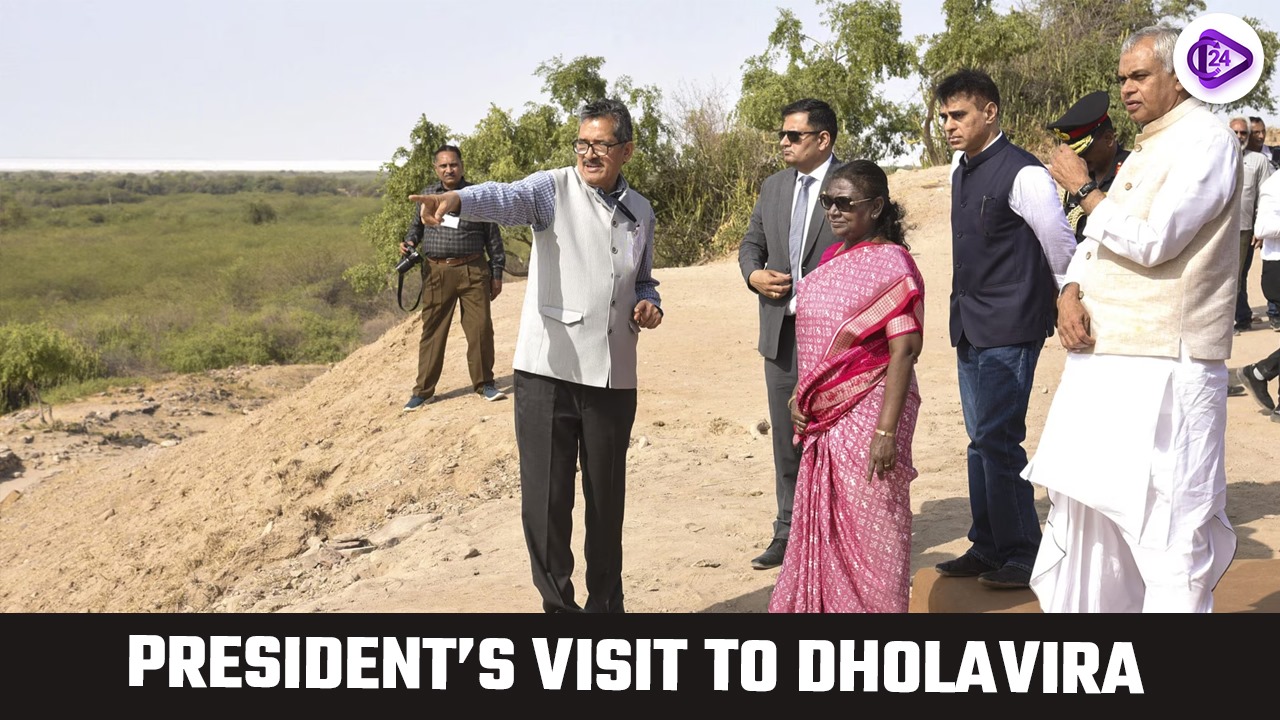
President’s Visit to Dholavira: A Celebration of India’s Ancient Heritage

The UNESCO World Heritage Site Dholavira received high praise from President Droupadi Murmu when she visited the remote location in Gujarat. At Dholavira the President thanked the Archaeological Survey of India (ASI) for their committed work in guarding Harappan Civilization remains. Dholavira achieved status as India's 40th World Heritage Site becoming the initial Indus Valley Civilization (IVC) location to receive this prestigious acknowledgment near the nation.

Significance of Dholavira

  • One of the best-preserved and most advanced sites of the Harappan Civilization.

  • The site fingerprints its urban organization system alongside complicated water management systems and defensive urban construction.

  • The Archaeological Survey of India conducted excavations at Dholavira from 1990 until 2005 which uncovered seven different chronological phases during the time period from 3000 BCE to 1500 BCE.

Archaeological & Historical Importance

  • UNESCO Recognition (2021): Attracts global scholars, archaeologists, and history enthusiasts.

  • Crucial for Understanding IVC: Provides insights into trade, town planning, and cultural links with other Bronze Age civilizations like Mesopotamia and Oman.

Key Features of Dholavira

1. Location & Strategic Importance

  • The Great Rann of Kachchh hosts Khadir Bet Island where the settlement of Dholavira exists in Kachchh District within Gujarat state.

  • The site exists on the path of the Tropic of Cancer.

  • Dholavira differs from other cities of the Indus Valley Civilization by being situated on a strategic location because it could facilitate trade with Mesopotamia and Oman while other cities built near rivers.

2. Archaeological Discoveries

  • Various artifacts discovered at Dholavira include terracotta pottery alongside beads and gold and copper adornments and seals along with fish hooks, working tools, animal figurines and foreign-made vessels.

  • A copper smelter at the site indicates that people had developed advanced techniques for metallurgical processing.

  • Stone Inscriptions: Contains ten large inscriptions in the Indus script, possibly the world’s earliest sign board.

  • The excavation at Dholavira has failed to reveal any human remains which distinguishes it from other Harappan archaeological sites.

3. Unique Architectural & Engineering Features

  • Several interconnected water reservoirs make up Cascading Water Reservoirs which represent an advanced water storage and conservation system.

  • Nine Gates with Special Architectural Designs Display Full-Fledged Defensive Systems.

  • Funerary Architecture: Features tumulus-like structures similar to Buddhist stupas.

  • Two Multi-Purpose Grounds: Used for trade, festivities, and public gatherings.

  • You will find extensive stone construction throughout Dholavira even though this architecture stands apart from other Harappan sites.

Decline of Dholavira

  • Aridity and resource depletion occurred because of climate change as Saraswati and other rivers dried out.

  • The downfall of Mesopotamia brought catastrophic consequences for local industries and their commercial operations.

  • The former navigable surface of the Great Rann of Kachchh turned into a muddy flat terrain which isolated the region from its commercial routes.

  • During the time of Harappa people shifted in large numbers to inhabit the Ganges Valley as well as South Gujarat and Maharashtra because of better resource availability.

Other Important Harappan Sites in Gujarat

  • The city of Lothal served IVC as its major port where workers built docks, worked with copper and arranged 21 skeletons inside its cemetery.

Other Sites:

  • The archaeological site of Rangpur exists within Surendranagar District of Gujarat and represents the first excavated location of the Harappan period discovered within the state.

    • Rojdi (Rajkot District) – Early Harappan settlement.

    • Prabhas (Gir Somnath District) – Evidence of Harappan trade.

    • Lakhabaval (Jamnagar District) & Deshalpar (Bhuj Taluka, Kutch) – Smaller Harappan towns.

Other UNESCO World Heritage Sites in Gujarat

  • Historic City of Ahmedabad

  • Rani ki Vav (Patan)

  • Champaner-Pavagadh Archaeological Park

Conclusion

During his visit to Dholavira the president showcased both the significance of cultural heritage preservation and archaeological research development in India. Her observation of Harappan engineering achievements demonstrates why people should develop better awareness through conservation efforts to deepen insights into India's ancient cultural heritage.

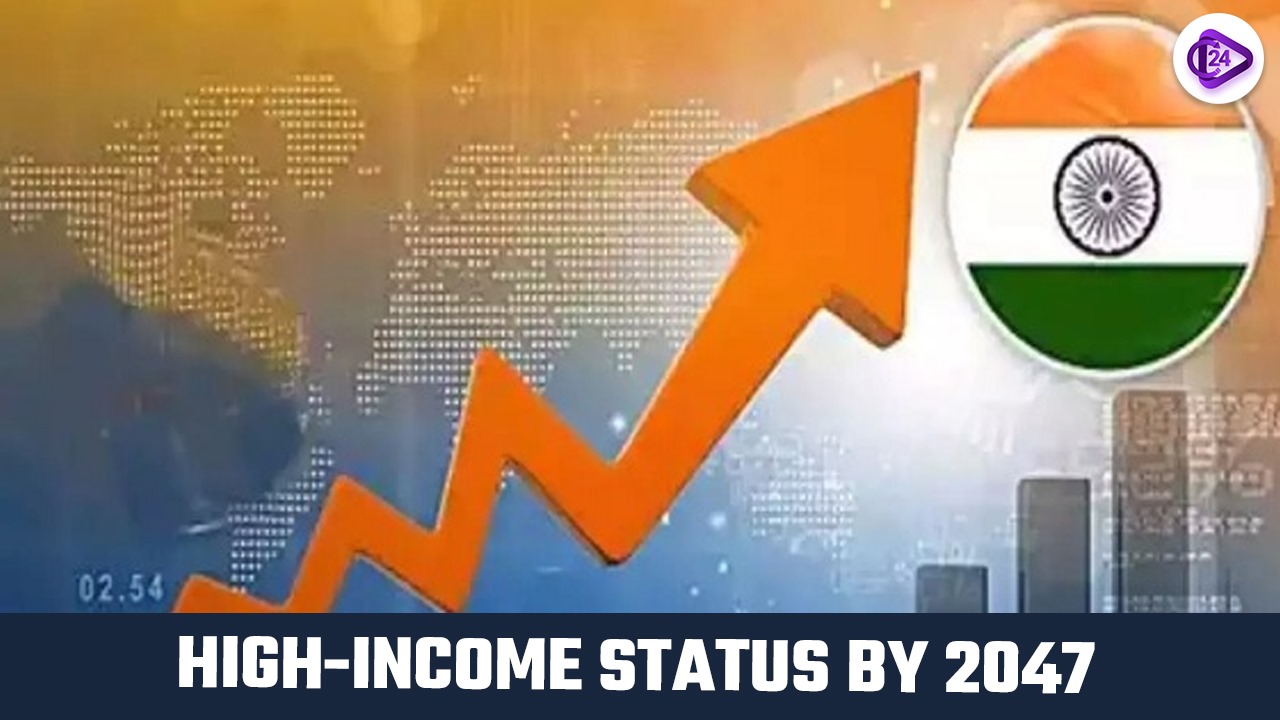
India Needs Accelerated Reforms to Achieve High-Income Status by 2047: World Bank

The World Bank released the ‘India Country Economic Memorandum’ which highlights the requirement for expedited reforms to enable India's future advancement to high-income status during the year 2047.  This study draws comparisons between India's growth patterns with world economies because such advancement risks coming to a halt unless genuine reform measures are implemented. Financial-sector efficiency overlaps with increased public and private investments as well as trade liberalization for job creation through specific development strategies at the state level. According to moderate reform forecasts India will grow economically at an average rate of 6.6% but accelerated reforms could lift the growth to 7.8%. The implementation of such reforms will strengthen economic productivity while attracting more investments and establish long-term economic stability that enables India to achieve high-income nation status.

Key Findings of the Report

Global Experience in Economic Transition

  • The successful transformation of middle-income to high-income status during two decades exists almost exclusively within Chile and four other nations including Romania and Poland and the Czech Republic and Slovakia.

  • The economies of Brazil together with Mexico and Turkey have experienced long-term stagnation as upper-middle-income nations.

  • Strong reform programs with determined execution provide the only solution for India to escape economic stagnation.

India’s Growth and Investment Projections

  • India needs its Gross National Income to expand over eight times from existing levels of $2,540 (2023) to greater than $14,005 to classify its economy as high-income.

Under a moderate reform scenario:

  • Investment: Peaking at 37% of GDP by 2035.

  • Economic Growth: Averaging 6.6% annually.

  • Under optimal conditions Total Factor Productivity (TFP) will achieve its peak growth rate of 2.5%.

  • Female Labor Force Participation (FLFPR): Increasing to 45% by 2045.

With accelerated reforms:

  • The investment percentage of GDP will rise to 40% throughout 2035.

  • The yearly economic growth rate will cross 7.8% which will lead to high-income transition.

  • TFP Growth would peak at 2.7%.

  • The female labor force participation rate in India is expected to increase to 55% by 2050.

Key Reform Areas

1. Financial-Sector Reforms

  • Efficient credit allocation as well as risk reduction should be maintained.

  • The expansion of corporate bond markets enables more enterprises to obtain long-term financing across the economy.

  • The accessibility of credit should improve for all Micro, Small and Medium Enterprises (MSMEs).

2. Boosting Private and Public Investments

  • The government should invest more public funds into industries which naturally attract private capital investments including:

  • Agriculture & allied industries.

  • Urban development.

  • Transport & logistics infrastructure.

3. Trade and Foreign Direct Investment (FDI) Liberalization

  • Open trade through reduced protectionism will make companies more competitive.

  • The participation in Global Value Chains (GVCs) must be strengthened as a way to enhance export volumes and productivity rates.

  • The government should address market dominance by reducing state control over petroleum along with IT equipment and cement industries.

4. Creating Quality Jobs

  • The economy should experience development in sectors where labor plays a significant role to meet labor force requirements.

  • Development of MSMEs will expand the economic market to create additional employment opportunities in the economy.

  • The service industries of hospitality together with trade along with communications require support through:

    • Better infrastructure.

    • Easing entry barriers.

    • Enhance intermediate manufacturing by:

    • Reforming labor laws.

    • Improving land availability.

    • Upgrading logistics networks.

5. State-Specific Growth Strategies

  • The development process needs to tackle differences in state incomes to support overall inclusivity.

  • A large-scale migration program between states should occur to stabilize the relationship between available workers and available jobs.

  • Implement differentiated policy approaches:

  • Less-developed states: Strengthen economic fundamentals.

  • States which have already developed should focus their attention on implementing next-generation reform initiatives.

Conclusion

An India Country Economic Memorandum published by the World Bank emphasizes that the country requires a complete reform program to reach high income status by 2047. The mission requires financial-sector operation improvements coupled with investment growth and trade facilitation and job creation along with distinct policies for each state.

International Wheelchair Day 2025: India’s Push for Disability Inclusion

Indian citizens with physical disabilities (Divyangjan) received programs across the nation in 2025 during International Wheelchair Day under the Department of Empowerment of Persons with Disabilities (DEPwD) belonging to the Ministry of Social Justice and Empowerment to promote accessibility together with independence and inclusion for disabled individuals. Trusted organizations used different approaches including seminars and awareness campaigns in addition to wheelchair distribution events and sports participation and technological device-related discussions.

Definition of Persons with Disabilities (PwDs)

  • UNCRPD classifies PwD as individuals who have permanent physical or mental impairments or intellectual or sensory disabilities which prevent their equal participation in society.

  • Under Section 2(u) of the Rights of Persons with Disabilities Act 2016 (RPwD Act) PwD members fall into 21 disability categories including those affected by speech and language and learning and acid attacks.

Prevalence of Disability in India

  • The National Family Health Survey (NFHS) (2019-2021) showed that the number of disabled individuals in India decreased to 1% after revealing 2.2% or 26.8 million cases reported in the 2011 Census.

2011 Census Data:

  • 20% of PwDs have movement disabilities.

  • 19% have visual impairments.

  • 19% have hearing impairments.

  • 8% have multiple disabilities.

National Sample Survey (NSS):

  • Higher prevalence in rural areas (2.3%) than urban areas (2.0%).

  • More common among males (2.4%) than females (1.9%).

  • 52.2% of PwDs aged 7+ are literate.

  • Secondary education as well as higher education levels are present in 19.3% of PwDs aged 15 and above.

World Health Organization (WHO) – 2019 Brief Disability Model Survey:

  • Indian adults face an emergency situation regarding disability rights protection and accessibility since 16% suffer from severe disabilities.

Constitutional & Legal Provisions

1. Constitutional Provisions

  • Article 41 (Directive Principles of State Policy – DPSP):

    • Under Article 41 the State has responsibility to give persons in need of public assistance access to education and work benefits together with health care services for disability or unemployment or sickness or aging disabilities.

  • Article 46:

    • The State receives instructions from this clause to advance educational programs and economic benefits for disadvantaged communities that include people with disabilities.

    • Social justice and exploitation protection is guaranteed by this provision.

2. Legal Framework

  • Rights of Persons with Disabilities (RPwD) Act, 2016

    • The RPwD Act of 2016 replaced the Persons with Disabilities Act from 1995 for compliance with the provisions of the UNCRPD.

    • The approach adopts human rights principles to improve the disability inclusion process.

    • This section guarantees equal treatment for all citizens plus it protects access to community environments and protects people from mistreatment.

  • National Trust Act, 1999

    • The National Trust Act protects people who have autism along with cerebral palsy and mental retardation and multiple disabilities by offering legal guardianship support.

Challenges Faced by PwDs in India

1. Employment & Economic Participation

  • The employment figures show that less than one third (34 lakh) of one crore three lakh potential PwD workers secured jobs.

  • Most employed PwDs work in IT and Retail sectors although disability inclusion lacks uniformity across all industry sectors.

2. Discrimination & Social Stigma

  • The stigma faced by PwDs prevents them from participating completely in social life.

  • Penalization through sexual and physical abuse occurs more often to disabled girls and women than to able-bodied females.

3. Health Issues

  • Multiple disabilities develop because of birth problems and maternal medical problems as well as malnutrition and physical accidents.

4. Accessibility & Inclusion

  • Limited access to healthcare, education, and employment.

  • PwDs face additional exclusion through inadequate infrastructure when combined with inaccessible transportation.

5. Education

  • Inclusive teaching remains difficult since there are insufficient trained professionals combined with inaccessible educational facilities.

Government Initiatives & Policies

1. Unique Disability Identification (UDID) Portal

  • National database for PwDs.

  • This identity system delivers individuals with a special disability ID which promotes clear access to needed benefits.

2. National Policy for Persons with Disabilities, 2006

  • Person with Disability Access aims to establish equity through full participation across all activities in society.

  • The program provides three fundamental areas of support which include physical care alongside educational development and economic restoration.

3. Deendayal Disabled Rehabilitation Scheme (DDRS)

  • This initiative gives financial backing to NGOs which develop education and rehabilitation initiatives.

4. Accessible India Campaign (Sugamya Bharat Abhiyan) functions as a key national initiative.

  • The initiative seeks to enable access to public buildings along with transport systems and Information and Communication Technology infrastructure.

5. National Action Plan for Skill Development of PwDs

  • Focuses on vocational training & employment generation.

6. Harmonized Guidelines for Universal Accessibility, 2021

  • This initiative helps to develop India's national objective of creating an inclusive and accessible society.

7. ‘Divyang’ – Changing Social Perception

  • The Prime Minister introduced the term 'Divyang' as an alternative for 'Viklang' to create favorable attitudes about people with disabilities.

8. Supreme Court Rulings on Accessibility

  • The judiciary declared that PwDs possess accessibility rights on a fundamental level.

  • The government has initiated plans to establish harsher punishment systems aimed at those who do not follow accessibility standards.

  • Sugamya Bharat Yatra represents one of several initiatives that seek to enhance access in public areas.

Way Forward

  • The fulfillment of disability inclusion in India requires:

    • Stronger enforcement of disability laws.

    • Greater investment in accessible infrastructure.

    • Awareness campaigns focused on stigma reduction need to be implemented as a public initiative.

    • State-specific policies addressing regional disparities.

Conclusion

The 2025 International Wheelchair Day celebrations throughout India moved the nation forward by supporting people with disabilities. These initiatives strengthened government dedication toward constructing an inclusive society by improving accessibility and promoting mobility access and raising awareness.

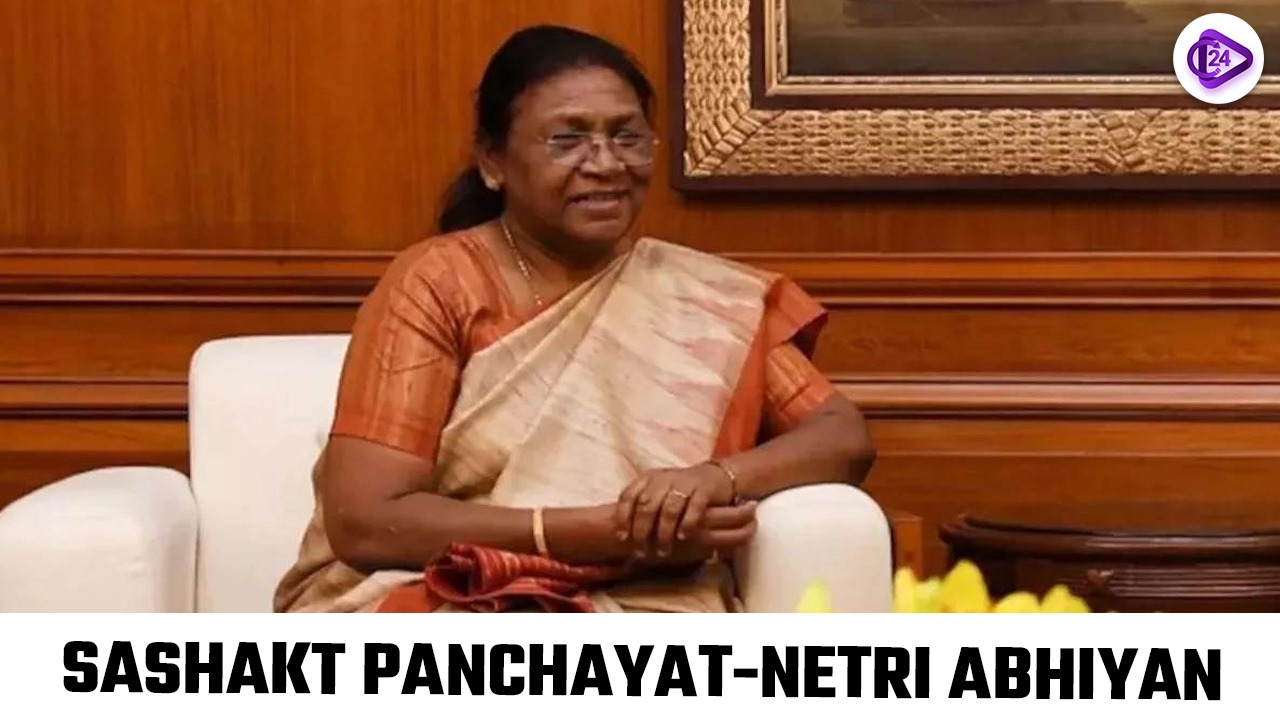
Sashakt Panchayat-Netri Abhiyan: Empowering Women Leaders in Local Governance

The Ministry of Panchayati Raj established the “Sashakt Panchayat-Netri Abhiyan” for launch on 4th March 2025 at Vigyan Bhawan in New Delhi during a National Workshop. The Sashakt Panchayat-Netri Abhiyan employs an initiative to strengthen Women Elected Representatives (WERs) of Panchayati Raj Institutions (PRIs) through leadership development and decision-making improvements and active governance participation. Territorial administrators Smt. Annpurna Devi together with Union Ministers Shri Rajiv Ranjan Singh will lead more than 1,200 women representatives during the workshop at Vigyan Bhawan in New Delhi on 4th March 2025. The event will feature panel presentations alongside training module launch activities and the introduction of material explaining violence laws targeting females.

Key Points

Strategic Initiative:

  • Through its Sashakt Panchayat-Netri Abhiyan initiative the program targets both leadership development and capability growth for women members in PRIs.

  • The initiative works to enhance female presence at the critical governance level alongside their involvement in making decisions.

Key Highlights of the Workshop:

  • Participation of 1,200+ women Panchayat leaders from across India.

  • Recognition and felicitation of exemplary women leaders in Panchayati Raj.

  • Launch of specific training modules for Women Elected Representatives.

  • The session introduced a fundamental book about gender-based violence and dangerous practices for all national representatives.

Panel Discussions:

  • The workshop focused on “Women’s Participation and Leadership in PRIs” through systematic research on governance changes after raising female participation in decision-making.

  • This research investigates the implementation of local female leadership governance programs aimed at dealing with health, education, security and digital transformation issues.

Government and International Participation:

  • High-level representatives of ministries and UNFPA and TRIF organizations must attend the event.

  • UNFPA organizes cultural shows to honor achievements made by women.

Alignment with National Vision:

  • Nari Shakti (women's power) in nation-building stands as the core concept that PM Modi presented in both 'Mann Ki Baat' broadcast of the 119th episode and his vision.

  • The development should concentrate on building Gram Panchayats that are free from gender bias and maintain both safety and inclusivity.

Conclusion

Sashakt Panchayat-Netri Abhiyan represents a significant milestone in.getLocal government empowerment through improved women leader development. The initiative demonstrates India’s dedication to rural development and gender equality because it brings together 1,200 women leaders through discussions and policy launches. Through its inclusive governance approach the initiative seeks to develop women's decision-making power to create socially neutral and gender-aware Panchayats.

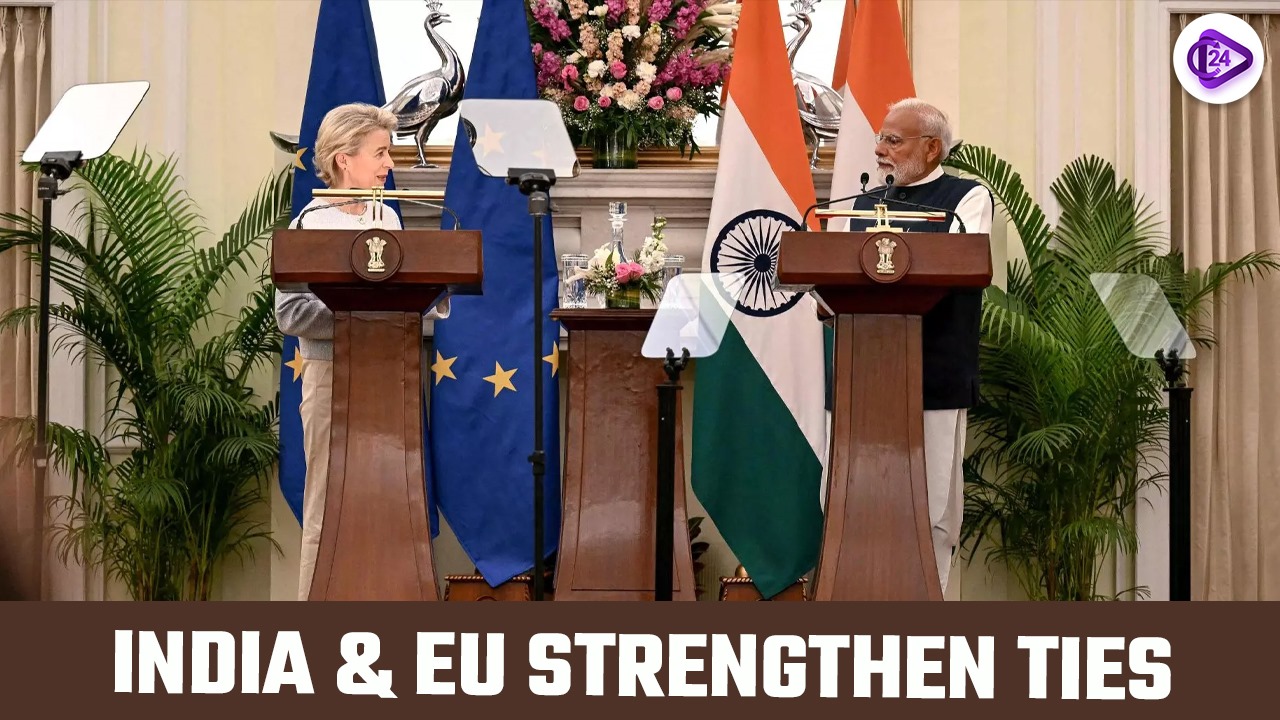
EU and India: Strengthening Ties Amidst Global Shifts

During her India visit European Union President Ursula von der Leyen established a crucial milestone for India-EU diplomatic relations as both parties made strong agreements about economic development along with defense and technological advancement. During previous years India along with the EU failed to advance their diplomatic ties because of economic interests and geopolitical differences. Changing global political dynamics such as US policy adjustments and growing China-related anxieties have led both parties to prioritize building up their alliance. The primary objective is to finalize the Free Trade Agreement (FTA) during this year to strengthen economic and geopolitical ties within the global power structure shift.

Key Highlights of the Visit

High-Level Engagement

  • Von der Leyen brought twenty-two of her twenty-seven cabinet members, demonstrating that the two sides put high importance on their relationship.

  • The main purpose of this visit involved revitalizing political associations together with economic bonds and security bonds as well as technological connections.

Geopolitical Context

  • The presidency of Donald Trump together with changing US-Europe relations creates a pressing need for closer cooperation between India and the EU.

  • The China challenge along with an unclear US economic policy makes India and the EU seek alternate partnership options.

Economic & Trade Relations

  • The free trade agreement between India and the EU has been held up since 2013 but strategic priorities have elevated it to the forefront.

  • The continuous expansion of Chinese trade deficits with India has prompted both forces to initiate urgent trade deal negotiations.

  • Implementation success depends heavily on energetic political support from both Modi and von der Leyen to prevent bureaucracies from extending negotiations.

Significance

  • Enhancing India-European Union partnership goes beyond economic aims because geopolitical factors play an important role.

  • A well-implemented FTA between India and the EU will serve to enhance their economic resistance against global economic challenges.

  • This event represents a movement from simple cooperation toward establishing a joint program to mold the world's changing framework.

Conclusion

Geopolitical shifts along with economic considerations create a vital period for the India-EU relationship. Active cooperation between the two sides requires immediate attention in the areas of trade and technology along with security matters. A successful completion of the FTA will support economic bond development and advance the international strategic position of both parties. Strategic political determination from both India and the EU enables them to build a strong partnership resulting in a balanced multipolar global system.

Bhutan’s Strategic Role in India’s Regional Diplomacy: Budget 2025-26 Insights

India deeply depends on Bhutan for its regional strategy as China increases its presence in South Asia. A new milestone in Indian-Bhutanese friendship emerges through the Union Budget 2025-26 which provides Bhutan with ₹2,150 crore as the largest neighbor rating. The financial aid enables Bhutan to enhance its economic independence through infrastructure development as well as trade and hydropower partnerships. Through sustained Indian support Bhutan safeguarded its status as a reliable partner in both security-related commitments and economic development of the region.

Key Takeaways

Bhutan as India’s Largest Aid Recipient

  • India provides Bhutan with a financial support of ₹2,150 crore which exceeds the contributions to all other neighboring countries.

  • India uses this financial assistance to build stability across multiple economic and political aspects of Bhutan's national interests.

  • India adopts attempts by China to increase its power throughout the Himalayas.

Geopolitical Significance

  • Due to its strategic position adjacent to the Siliguri Corridor Bhutan plays an essential part as a defensive barrier against Chinese military advances.

  • In 2017 when Chinese forces tried to occupy Doklam Bhutan demonstrated its essential role as a strategic asset for India's security framework.

  • Through ongoing Indian backing Bhutan maintains its political autonomy and China holds less sway over the nation.

Hydropower & Economic Cooperation

  • Through its hydropower facilities Bhutan generates revenue which constitutes 40% of its national budget and sends to India.

  • Major projects: Tala, Chukha, Mangdechhu, Punatsangchhu, Kholongchhu.

  • Budget 2025 allocates further resources to develop hydropower plants which provide India with economical renewable energy sources.

Expanding Collaboration

  • Infrastructure: The creation of border roads with trade facilitation centers that include modern checkpoint installations.

  • Trade Relations: Trade flows from Bhutan now benefit from its entrance into the BBIN corridor that connects them to Indian ports.

  • Digital Economy: Adoption of RuPay & UPI for seamless cross-border transactions.

  • Future Focus: Climate resilience, digital economy, green hydrogen initiatives.

Why Does It Matters?

  • Financial support in the 2025 budget manifests Bhutan's strategic alignment to remain a trusted alliance and secure geographical barriers as well as an economic partner against increasing Chinese regional influence. 

  • With present market developments progressing India and Bhutan may create a relationship that can function as a blueprint for South Asian cooperative initiatives.

Conclusion

The aid India provides to Bhutan exceeds monetary assistance because it secures the stability of both nations and facilitates their shared economic development in the region. India demonstrates its leadership role in developing enduring collaboration by increasing its support to Bhutan while China seeks to deepen South Asian presence.

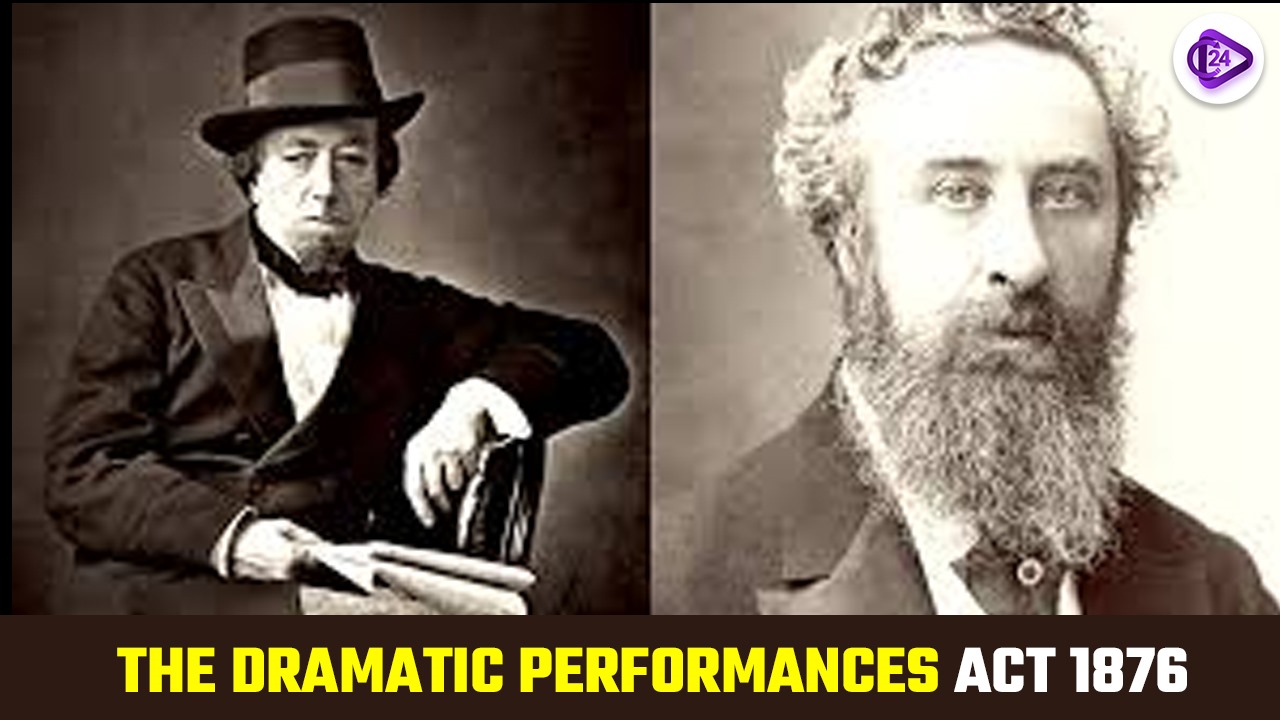
The Dramatic Performances Act, 1876: A Colonial Tool of Suppression

The British government through the Dramatic Performances Act of 1876 obtained special powers to ban public performances considered seditious and defamatory and obscene. India experienced the Act as a tool to silence nationalist feelings across the nation. The court declared it unconstitutional in 1956 but the Allahabad High Court allowed the continuing presence of this law until the Modi administration eliminated it during their campaign to remove outdated legislation in the year 2017.

Context

  • On March 1, 2025 PM Modi expressed puzzlement about the survival of Dramatic Performances Act, 1876 which enabled the arrest of public dancers and forbidden specific performances even though India had gained independence 75 years ago.

Origins and Purpose

  • The law received its initial enactment in 1876 with the aim to limit Indian discontent against foreign occupation.

  • Targeted plays, pantomimes, and other performances critical of British rule.

  • The law contained provisions for performance bans along with search authorization and imprisonment penalties.

Legal Provisions

  • The law granted extensive authorities to the government for banning entertaining shows considered either scandalous or seditious.

  • Magistrates received authorization to manage intercepting theater materials while acting on their own behalf.

  • Persons who violated the Act faced a maximum three-month imprisonment term with associated financial penalties.

Post-Independence Status

  • The Allahabad High Court declared this law unconstitutional on grounds of violating Article 19 which protects freedom of speech (1956).

  • Particular state variations of this law persisted in Tamil Nadu and were also active in Madhya Pradesh and Karnataka even after the Censorship Act expired.

  • Courts in Madras dismissed the Tamil Nadu version of the act during 2013.

Repeal Under Modi Government

  • A formal act in 2017 removed the law when the government conducted efforts to delete outdated regulations.

  • The Modi administration has eliminated over 2,000 outdated laws which improved the functioning of governance.

  • Although the government removed some outdated colonial laws from the books it kept the sediment law as well as made alternative modifications to remaining legal code.

Other Colonial Laws of the Era

1. Vernacular Press Act, 1878

  • British Indian Viceroy Lord Lytton introduced this piece of legislation.

  • The British government designed this legislation to prevent Indian-language newspapers from attacking their colonial control regime.

  • The government acquired control over printing machines together with authority to stop the distribution of publications which were deemed seditious.

  • The English-language newspapers had unrestricted freedom and faced no restrictions while vernacular newspapers (local Indian language) became specific targets for government censorship.

  • Indian intellectuals together with journalists staged protests until the British Viceroy Lord Ripon abolished the legislation in 1882.

2. Sedition Law, 1870

  • British authorities incorporated the Sedition Law into the Indian Penal Code through its Section 124A.

  • Through this law the government implemented penalties for speech and writing materials which instigated hatred and disaffection or rebellion against British governance.

  • Authorities employed this law to suppress the activities of Indian freedom fighters including Bal Gangadhar Tilak and Mahatma Gandhi as well as Bhagat Singh.

  • The law enforced sentences of life imprisonment together with other extreme punishments.

  • Since independence the legal code has persisted in India but opponents have disputed its implementation against those who raise dissent.

Conclusion

As a colonial leftover the Dramatic Performances Act 1876 emerged from British rule to suppress artistic and political activities. When the constitutional court declared this law unconstitutional in 1956 the Indian government continued to work toward eliminating obsolete legislation which finally resulted in its official repeal in 2017. Current discussions aim to resolve whether India should maintain the remaining colonial laws beyond the Dramatic Performances Act.

New Discoveries: Two Jumping Spider Species Recorded in India for the First Time

A research team working together identified two fresh species of jumping spiders Epidelaxia falciformis and Epidelaxia palustris within the Shendurney Wildlife Sanctuary located in the Western Ghats. Scientists have established Epidelaxia as a genus which now exists in Indian territory following its initial discovery in Sri Lanka. The scientific article in Zootaxa demonstrates how the area possesses great biological diversity.

Significance of Discovery

  • First record of the Epidelaxia genus in India.

  • The genus Epidelaxia now reaches from Sri Lanka into Indian territory.

  • Highlights the rich biodiversity of the Western Ghats.

Research Collaboration

  • The research team consisted of scientists from the University of Kerala who collaborated with Saveetha Medical College and Bharata Mata College.

  • Research results from Zootaxa appeared in Volume 22 Issue 2 of February 2025.

Species Characteristics

  • Epidelaxia falciformis (4.39 mm)

    • Males: Brown carapace with a yellow-brown stripe.

    • Females: Yellow triangular-shaped mark on prosoma.

  • Epidelaxia palustris (Males: 4.57 mm, Females: 3.69 mm)

    • Males: Pale brown band along the side of the body.

    • Females: Similar coloration with white orbital setae around the eyes.

Adaptation & Habitat

  • This species lives in the thick wooded area of Western Ghats.

  • The sexual organs of these species hold distinct features which allow identification of different species during the mating process.

About Shendurney Wildlife Sanctuary

  • Location & Geography

    • The sanctuary exists within Kollam district of Kerala where it sits in the southern region of Western Ghats.

    • Covers 172 sq. km., part of Agasthyamala Biosphere Reserve.

    • Hilly terrain with deep ravines.

  • Drainage System

    • Major rivers: Shendurney, Kazhuthuruthy, Kulathupuzha.

    • The Kallada River receives its water from three merging streams.

  • Flora

    • Vegetation: Tropical evergreen, semi-evergreen, and moist deciduous forests.

    • This habitat received its name from Gluta travancorica (local name 'Chenkurunji') which stands as an endemic tree among the surroundings.

  • Fauna

    • The animals found in Shendurney Wildlife Sanctuary include elephants together with tigers and leopards while nearby exist gaurs and sambar deer and barking deer and wild boars and bonnet macaques.

    • Endemic species: Nilgiri langurs, lion-tailed macaques.

    • The forest area supports more than 200 bird species such as the great Indian hornbill, Malabar pied hornbill along with white-bellied treepie and multiple woodpecker and raptor species.

  • Ecological Significance

    • The area acts as a biodiversity hotspot intended to protect endangered wildlife species.

    • Part of Agasthyamala Biosphere Reserve, crucial for conservation efforts.

Conclusion

The Western Ghats became home to Epidelaxia falciformis and Epidelaxia palustris marking an important addition of Epidelaxia species outside Sri Lanka. The ecological variety of this region gets stronger as researchers find new evidence supports the study of its arachnid biodiversity.

Blue Ghost Lunar Landing: Firefly Aerospace’s Historic Moon Mission

Blue Ghost became the second commercial spacecraft managed by Firefly Aerospace to successfully land on the Moon after its successful mission. The mission simultaneously connects NASA with private companies to deliver studies of the Sea of Crises. Blue Ghost achieved a successful landing in contrast to its predecessor Odysseus whose impact led to an overturned position. Experts confirm that private enterprises will lead both the expense reduction and lunar exploration advancement process.

Mission Details

  • Firefly Aerospace performed the Blue Ghost launch on January 15.

  • Targeted Sea of Crises, a lunar crater visible from Earth.

  • The vehicle achieved its intended goal of landing and it continues to operate after completing its mission unlike previous attempts made by private companies.

Significance of the Landing

  • The mission accomplished the initial fully successful autonomous lunar landing by a private organization.

  • The mission uses modern landing technology which private companies have developed to fulfill a decade-long absence since Apollo missions.

  • The establishment of robotic and human exploration at the Moon became possible through this achievement.

Role of Private Companies

  • NASA develops partnerships with commercial organizations to cut expenses.

  • The introduction of competitive commercial operations between firms will create more economical and proficient lunar mission solutions.

  • Potential for resource extraction, like water for astronauts.

Indian Context: Private Sector in Space Exploration

ISRO and Private Companies Collaboration

  • Through IN-SPACe (Indian National Space Promotion and Authorization Center) the Indian Space Research Organisation (ISRO) works together with private industry entities.

  • The initiative seeks to stimulate the participation of private companies in space exploration campaigns.

Mission Similar to Blue Ghost: Vikram-S by Skyroot Aerospace

  • The introduction of Vikram-S established India as a nation with its first private space launch vehicle.

  • The launch conducted by Skyroot Aerospace using its Vikram-S space launcher was successful on November 18th 2022 under the mission Prarambh.

  • The mission demonstrated that private private sector entities can contribute effectively to space technology even though it was not a lunar exploration project.

Future Private Missions in India

  • The Agnibaan Rocket developed by Agnikul Cosmos is set to launch into orbit during 2024 as a private-sector space vehicle.

  • The Indian startup combination between Dhruva Space and Bellatrix Aerospace continues developing satellites along with propulsion solutions to explore deep outer space.

ISRO continuous support to private lunar exploration

  • ISRO announced that it intends to establish guidelines allowing private companies to participate in lunar as well as planetary missions.

  • After Chandrayaan-3's triumph Indian private enterprises became motivated to fund lunar exploration projects.

  • Private sector participation stands to gain access to Gaganyaan (India's first manned space mission) while Lubrication Resource Utilization represents another upcoming program.

Challenges & Opportunities

  • Challenges:

    • High cost of lunar exploration.

    • Advanced robotics together with radiation-protection systems need development.

    • Competition with global private space companies like SpaceX and Firefly Aerospace.

  • Opportunities:

    • Private lunar landers and rovers for resource extraction (e.g., water, minerals).

    • Development of low-cost launch vehicles for commercial and scientific exploration.

    • India possesses the capability to lead collaborative efforts in Artemis Accords along with global space programs.

Conclusion

The Blue Ghost landing represents an essential advancement in commercial outer space operations by demonstrating the ability of private companies to accomplish lunar surface operations. Adopted improvements in private-public collaboration will advance sustainable lunar exploration through facilitating human missions as well as deep space adventurations.

Frequently Asked Questions (FAQs)

The current affairs cover recent national and international events related to UPSC, SSC, Banking, Railways, and State PCS.

You need to read about the current affairs daily, and revise them every week and every month to keep them longer in your memory.

Yes, Class24 provides free downloadable Daily Current Affairs PDFs for easy revision.

Yes, you can practice MCQs and quizzes to boost your exam preparation.

Absolutely. The content is written in simple, easy-to-understand bilingual language suitable for beginners.

Go to class24.com and click on the current affairs section directly, where you find everything that you need.

ssc-toppers

Start Learning Today with Class24

Related current affairs

Class24 offers free video lectures for smart preparation, covering CGL, CPO, CHSL, MTS, and GD exams. Learn from expert faculty, revise concepts easily, practice with PYQs, and improve speed and accuracy through high-quality, exam-focused video lessons anytime, anywhere.

Get success in your hand. Start study anytime anywhere.

The journey becomes simple and enjoyable when you start taking interest in it. And through our app “Class24”, we will be your trusted partners in developing that interest.

Daily Quizzes
Mock Tests
Ongoing

No ongoing tests right now.